
BACK

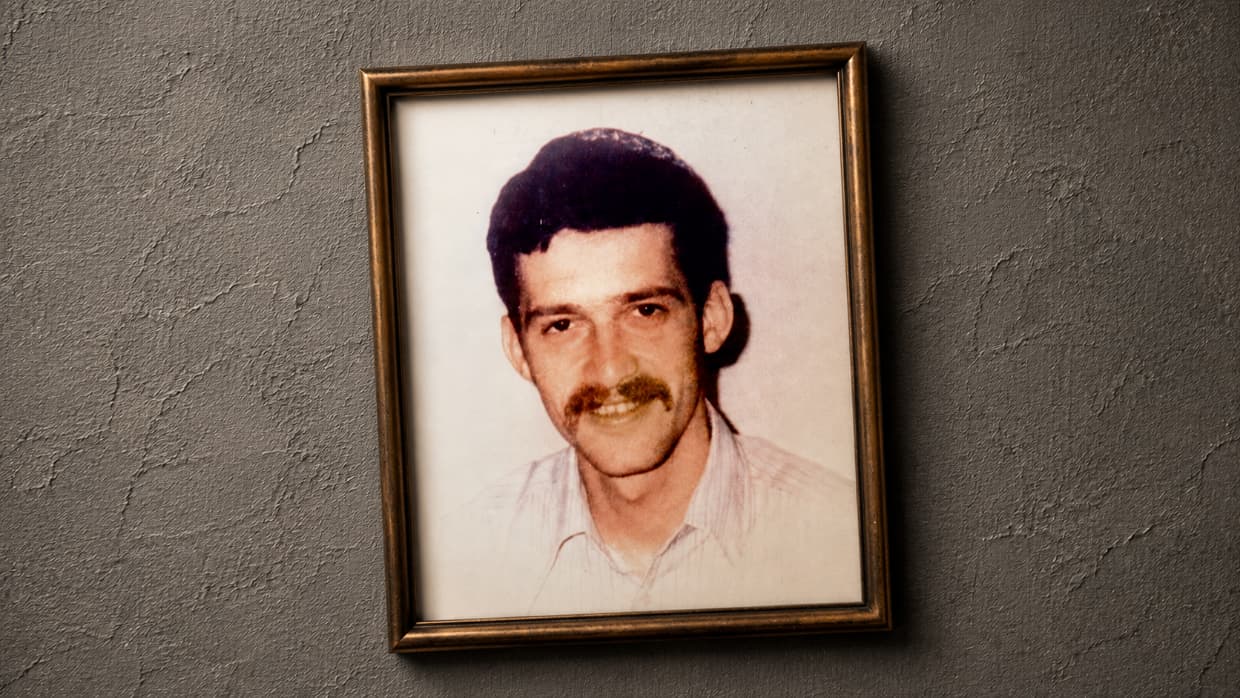
Marian Halicki

By January 1943, hunger was widespread in the ghetto. Sometimes, local Ukrainians would slip in to sell food to starving Jews for a very high price. One day Gladys' father came to her and said, "I've arranged for you to go into hiding. There is a Ukrainian farmer who has agreed."

"I'm not going," Gladys said firmly. On that day she did not go.

A few days later her father said, "Get dressed, you're going." His tone of voice indicated he would not be contradicted. Being a respectful and obedient daughter, Gladys knew there was no point in engaging her father in a fight. His tone indicated that there was nothing left to discuss.

In order to get past the ghetto gate, Gladys' father paid off a Ukrainian guard. The two walked through, and there stood a man waiting to take Gladys away. She had already said good-bye to her mother, who promised she would be following soon. Then she hugged and kissed her father and began to walk away with the man. She looked back at her father, standing there waving in a reddish tweed coat with matching hat. This would be the last time she would ever see him. It is the image that always remained with her.

The man took Gladys by train to Lvov. He told her to hold on to him and not say a word. They went to an apartment in a formerly Jewish area. Once inside, the man sat down beside his wife at the gas stove to warm himself while Gladys was told to go to sleep in a cold, dark bedroom in the back. The couple had also taken Gladys' winter coat under whose fur collar her mother had sewn in some money. Terrified and cold, Gladys wondered why she had allowed herself to leave her parents. Better to die with them, than be alone with people who might kill her, she thought. Somehow, Gladys managed to sleep through the night, and in the morning when she got back her coat, it was clear that they had found the money but had not taken it. This stopover was all part of her father's arrangement for her, and eventually her mother and other family members, to go into hiding.

The next morning, Gladys went with the man to a big house on a corner on the other side of town. There was a great deal of activity going on inside, and the man told her to sit down and wait. After a while, another man entered. He was, she later learned, only fifty-seven years old, but to Gladys, at fourteen years of age, he seemed ancient. She immediately felt comfortable and safe with him. His name was Marian Halicki, and he reminded her of Wolf, a man with no family of his own who worked in her father's gasoline station, ate meals with her family, and slept in the local synagogue.

Afraid of being caught on a train, Mr. Halicki decided to take her by foot to his house on the outskirts of town. The snow was deep, and the going was rough. Finally, they reached the house and when they got inside, but before anything more could be said, there was a knock on the door. "Go," he said to the woman, and she took Gladys to hide inside a cupboard built into the wall.

It was only his brother who had knocked, but everyone was afraid of everyone else, and there could not be enough caution exercised. After some time, Gladys' aunt arrived. After that another aunt came. Finally, her mother arrived. They were in hiding for a few weeks when they received news that the entire ghetto had been liquidated. Gladys' father had remained behind. Because of the bus company, Gladys' father knew many Poles and Ukrainians with whom he was on excellent terms. He had calculated that when the time came, he would have an opportunity to get both himself and his aged father out of the ghetto and into hiding - if not with his wife and daughter then with any number of other Gentiles he knew. Tragically, he had misjudged the Germans' effeciency and had not had time to make further arrangements. He was killed on March 25, and his father, Itzhak Landau, was killed a week later.


In June when people learned that the liquidation of the Lvov ghetto was going to take place, Gladys' mother asked Mr. Halicki to get out her brother, Yaakov, and his wife. Mr. Halicki agreed. At that point, Mr. Halicki was hiding Gladys, her mother, two aunts, the young woman Gladys met when she arrived, and her mother and brother, and there was no financial incentive for him to take an additional risk. The family had no more money to give him. Rather, he was taking this risk for moral reasons. He wanted to save them.

Mr. Halicki returned from Lvov with only Yaakov's wife, Tony. When asked what happened, he explained that Yaakov had said he still had to go into the ghetto to retrieve something and that Mr. Halicki should return for him in half an hour. When he came back to pick up Yaakov, he saw that he had already been loaded onto a German truck. Uncle Yaakov was taken to Janowska, a labor camp in Lvov, where he perished.

For eighteen months, this group of people lived together in hiding, in Mr. Halicki's workroom. Mr. Halicki was a locksmith, and with the money he had been given, he had fixed up the room so his neighbors could not detect that people were living there. There was one window in the room covered by a curtain. Even so, everyone in hiding walked around crouched as low as possible so they would not be seen. Not once did anyone dare to peek through this curtain to look at the blue sky or the stars at night. Even when alone in the house, they spoke to one another only in whispers.

When people came into the house, family members would creep up the ladder into the attic and stay there until the coast was clear. The only thing that might have given away their presence was Mr. Halicki's little dog. It had grown very attached to them, and when they climbed into the attic, the dog would sit and stare up at the ceiling, yearning for them to come down.


They had nothing to eat. Mr. Halicki had no money, and there was almost nothing left to sell. When they could, they embroidered pretty patterns on pieces of torn clothing for Mr. Halicki to sell in the market. Sometimes he would find them old sweaters. They would unravel them, wash the wool, and knit new sweaters. These, too, he sold to help buy a little food from time to time. With small snippets of leftover wool, they knitted a pair of gloves or a hat, also for sale. Despite all the efforts, they were still starving. During the last three months of the war, there was absolutely no food. Mr. Halicki would pick leaves from a nearby tree, and they would cook them in water to make a pretend soup. There were simply too many of them and virtually no money.

Mr. Halicki was not only committed this group of Jews but was also a member of the A.K., an underground organization that fought the Nazis. He made gun parts in his workshop and transported weapons from one part of the city to another.

And his neighbors were suspicious. One woman in particular kept track of the water he drew from the well, and one day she confronted him.

"Why are you using so much water?" she asked.

"I have to keep clean," he answered. "My wife comes every Sunday, and she wants to see the house in perfect shape."

The wife did come to visit every Sunday after spending the week in town with their daughter. She was too frightened to stay in the same house with hidden Jews and the gun-running operation.

The neighbor across the street, an old man named Balitzki, was also suspicious. "Mr. Halicki," he would say, "why are you always carrying so much water? You must have Jews." To put these suspicions to rest, Mr. Halicki washed the dog in the yard and then took out every stick of furniture and washed it thoroughly. Of course, this activity was all a show. The water was for the Jews, who needed to bathe and drink as much as they could since they were not eating.

When the Russian bombs started falling, the camp in Lvov was liquidated. The Germans burned the Jewish bodies in an area called Piaski not far from Halicki's house, and Gladys and the others could smell the stench of burning bodies. They were terrified. Then the Hungarian soldiers came into the town, retreating with the front. When word got out that they were looking for places to live, everyone was sure they would come to Mr. Halicki's house. They were extremely frightened of this possibility. After all, how long could they go undetected in the attic? Fortunately, the Hungarians never came.

Then, in an ironic twist, the Ukrainian neighbor who had confronted Mr. Halicki about his water usage was afraid that the Russians would take her husband away when they took over the area. She begged Mr. Halicki to hide him. He did, putting the husband in the shed in the garden while the Jews remained in the house.

When the fighting ended not long afterward, Mr. Halicki had the Jews walk out two by two. He was still afraid that his neighbors would discover that he had hidden Jews. July 26, 1944 was their day of liberation.


from: "Darkness and Hope," by Sam Halpern, Shengold Publishers, Inc., New York, 1996

buy this book from Amazon.com


Back to Home Send us Email aish.edu The Israel Experience Spirituality & Personal Growth The Weekly Torah Portion Torah in the Modern World Sign our Guestbook
   BACK