







 What Repentance Really Means in Judaism




15 min read
8 min read
< 1 min read
8 min read





An ancient Jewish tradition ties the moon's cycle to a 3,000-year-old lesson on failure and renewal.
At 6:35 p.m. on April 1, 2026, the Artemis II astronaut crew launched from Kennedy Space Center in Florida aboard NASA's Orion spacecraft (figure a), lifting off with 8.8 million pounds of thrust. More than half a century after the last manned moon mission, they were headed back.
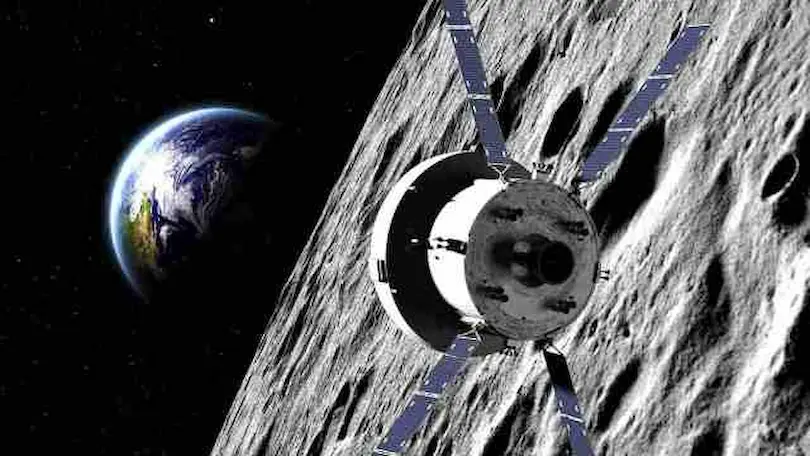 Illustration of NASA’s Orion spacecraft as it begins its four-day journey back to Earth. Photo credit: NASA
The astronauts never touched down, but they came within 4,067 miles of the lunar surface, close enough to run a wide range of scientific investigations that will pave the way for astronauts who may one day land, live, and work there. They captured more than 7,000 images: earthset, earthrise, impact craters, lava flows, our Milky Way galaxy, fractures in the moon's surface, and striking color variations across the terrain (figure b).
Most of us will never become astronauts or set foot on the moon. So how can we have a part in this thrilling trip?
The Torah contains a commandment called Kiddush Levanah -- literally "the sanctification of the moon" -- observed once a month. During the first two weeks of each month, while the moon is waxing (growing fuller), Jews step outside and recite a blessing praising God for creating the heavens, setting the celestial bodies into their orbits, and giving the moon the power to renew itself. Through this blessing, the moon's renewal becomes a moment of holiness.
There's a tradition, when reciting Kiddush Levanah, to declare: "David, king of Israel, is alive and enduring!" King David ruled ancient Israel roughly 3,000 years ago, and Jewish tradition holds that the future Messiah will descend from his line. But David died long ago, and no one from his dynasty sits on a throne today. So what does it mean to call him "alive"?
 The New Moon
The Maharal, a leading 16th century rabbi and philosopher from Prague, explains that true "life" isn't just existing -- it's the capacity to improve and renew yourself.1 Inanimate objects are at their best the moment they're made, then only wear down. David was different. He made mistakes over the course of his life, like anyone does. The incident with Bathsheba, and his role in the death of her husband, Uriah, is one of the most failures in the Bible. Later in life, he ordered a census of Israel against God's wishes, bringing tragedy on the nation.
But he always got back up.
After the incident with Bathsheba, David didn't hide from what he'd done. He accepted the prophet Nathan's rebuke without excuse, and channeled his anguish into some of the most searing prayers ever written, the Psalms of repentance still recited today. When the census brought a plague on the nation, he didn't blame his people. He begged God to direct the punishment at him alone, and built an altar on the very spot to turn tragedy into an act of atonement. Each time, David's response to failure wasn't to stay down. It was to turn the fall into the next step forward.
David’s kingdom collapsed too. And yet David remains "alive and enduring," because his royal line is destined to rise again.
The moon's cycle mirrors David's story. 2 It wanes and shrinks. At times it disappears from view entirely. And yet it endures forever because it always finds its way back to fullness.
The moon represents our own ability to recover after we've messed up, to rise again after falling. Our drive for truth and meaning can flicker or fade. But we can always tap into what David and the moon both teach: that we can reignite that flame and renew ourselves, no matter how many times it's gone out.
Life was never meant to be a straight line of perfection. Falling short doesn't mean failing. We can still reach the greatest heights simply by getting back up. Like the moon, and like King David, we're built to endure.
Just as the moon disappears and always finds its way back to light, David never let his failures define him. He owned them, grew from them, and kept moving forward. His story is a reminder that our own falls don't define us either. What matters is whether we get back up.











Wonderfully inspiring; thank you!
Beautiful idea. Welcome to R. Sampson as a new aish.com author!