







 What Two Hebrew Words Reveal About Israeli Democracy

4 min read
5 min read





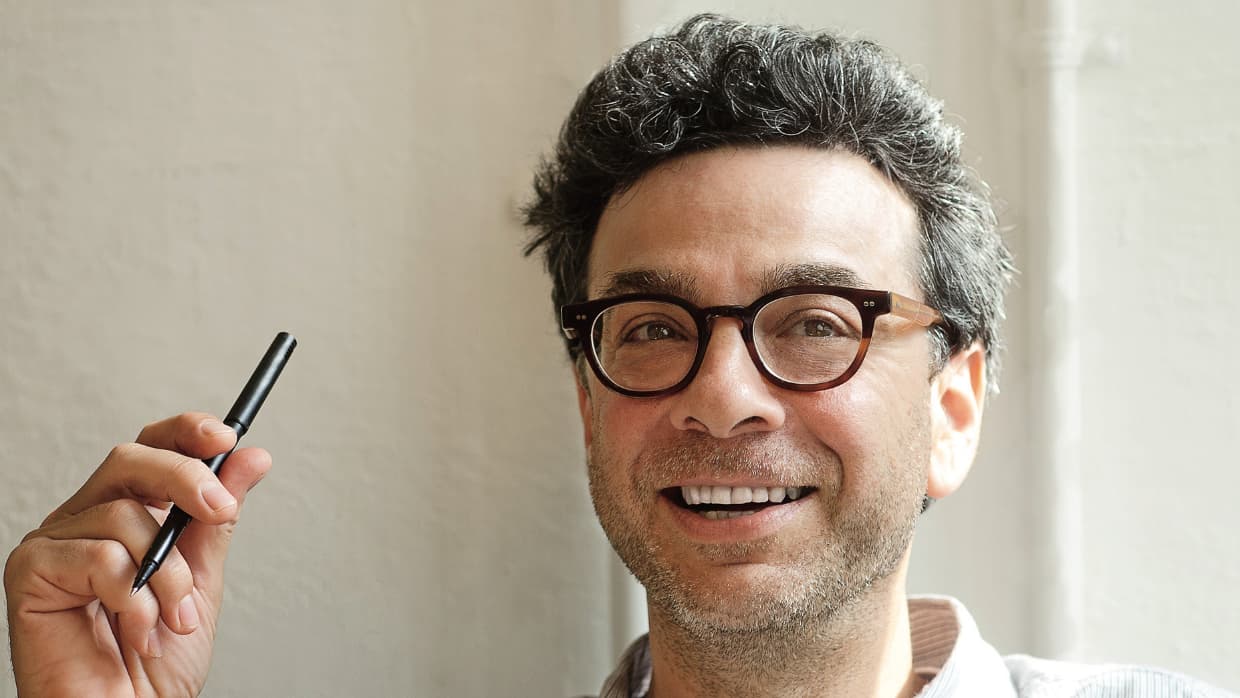
Dubner grew up Catholic and served as an altar boy. When he discovered his parents were Jewish, it launched a search for his identity that changed everything.
Long before author and podcaster Stephen Dubner published his international bestselling book, Freakonomics, he wrote and published a lesser-known bestseller called Choosing My Religion, a deeply moving and inspiring memoir about growing up in a strictly Catholic home in upstate NY and later discovering that both of his parents were actually Jewish.
During WWII, before they had even met, Dubner’s parents had each converted to Catholicism and left behind the Jewish traditions and connections of their families. While they never hid the fact that they were born Jewish, Stephen and his seven siblings did not know the story or even the names of their grandparents and great grandparents until Dubner began his own spiritual journey later in life. Stephen found it curious that his father would sing “My Yiddishe Mama” and eat gefilte fish when the family returned from Mass on Sunday.
Dubner’s drama teacher, Ivan Kronenfeld, also had an impact on him, telling the young student that he “would have been plenty Jewish enough for Hitler.” As Dubner searched for his identity, he discovered the many gifts that Judaism had been waiting for him to embrace.
Throughout his childhood, Dubner struggled to believe in the tenets of the Catholic religion practiced in his home. He dutifully went to church, said the rosary with his family and even served as an altar boy, but Stephen could not authentically relate to the beliefs that were taught to him.
He kept trying to have faith and follow the path that his parents wanted him to follow. After his father’s sudden death when he was 10-years-old, Stephen began to slowly search for his own truth. This search eventually brought him to a synagogue in New York where he saw the Torah being brought out of the ark for the first time.
Dubner writes, “And then the Torah was brought out...The air itself seemed to grow lighter, easier to breathe…I tumbled into a bone-deep understanding. I too threw myself at the Torah, awkwardly scraping it with my fingers, lifting my fingers to my lips. A resonance, a deep gratefulness, a relief-blistered its way inside me: It is the book they are venerating here…The way a Jew greeted the Torah, as though it contained everything he would ever need, everything that had ever been known and everything that could ever be known.”
The respect and love for the Torah that permeated the air resonated with Dubner and inspired his lifelong journey in studying Judaism’s sacred text, continually asking questions and discovering new insights as he paved the way back to his Jewish roots.
Growing up, caught in the confusion of beliefs that defined the soul as a kind of report card that would block or grant his entry to heaven, Dubner wasn’t sure he wanted a connection with that kind of soul. When he was hired to edit a book on the teachings of the late Rabbi Schneerson, he was drawn to Judaism’s view of the soul as a mode of connection to God.
“First came simple things: spending my last waking moments each night considering what I’d done that day and why; breathing a thank you to God every morning for the new day; reminding myself constantly and often to little avail, that I was not the center of the universe. And I tried, though this was most difficult, to listen to what my soul had to say.”
The Jewish concept that the soul yearns to connect and unite with its divine source taught Dubner that his inner life was a vast sea of potential. His soul had the potential to be shaped by the thousands of years of wisdom hidden within his Jewish legacy. He began to see the soul as a gift that could help him grow and become more than he was the day before.
One of the most challenging parts of Dubner’s childhood was that he was discouraged from asking any questions about religion. Whenever he was confused by a practice or a belief, his parents encouraged him to have faith.
Curious and bright, Dubner wanted to understand, not just to believe.
But Dubner was curious and bright; he wanted to understand, not just to believe. When he began learning about Judaism, he was inspired by how deeply Jewish wisdom values questions. Not only are questions tolerated, they are praised and desired.
As Dubner continued to learn, he realized that even after he found an answer, he would find someone else with a new question that brought him to an even deeper understanding.
Dubner wrote, “Within the tradition of Judaism, I was allowed, even encouraged, to question God’s existence. What mattered most were my actions. Good intentions are lovely; good deeds are harder, and better.”
Dubner discovered that he could question and struggle with all his beliefs and still be a “good Jew”. He didn’t have to have perfect answers to practice his Judaism or perform a mitzvah.
During his journey, Dubner began to distance himself from the emphasis on enduring suffering. The idea that we are all here just to endure and that children were born guilty before they could even speak did not resonate with him. He felt like there was no progression towards a better world and no potential chance to make a choice to create that light-filled world.
As he made his way back to his Jewish roots, Dubner found the gift of hope being returned to him: “The notion of revolution and of progress. But especially the belief in a happy ending – the belief that our lives are not meant to be simply endured but to be exalted, for even an animal can endure, but only we, who were made in the image of God, have the capacity to fling ourselves toward sanity, toward celebration, toward a happy ending.”
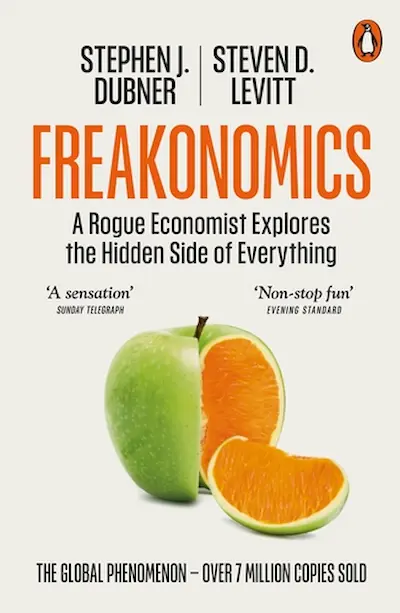 Today Dubner has a well-known podcast in which he interviews people from all different fields and walks of life, and he is about to debut his first television show called “Better in Person.”
In an Aish.com interview with Dubner, we discussed the onslaught of antisemitism and how it has affected him. Dubner said, “The global rise in antisemitism since October 7 has been shocking but also not all that surprising. History does often repeat itself (or at least rhyme) and, when things go sideways, Jews tend to be a scapegoat. When I was making my way back to Judaism years ago, a Jewish friend asked why I wanted to ‘break my way back into prison’. I examined my own family history closely, and of course I saw evidence of widespread and massive antisemitism, and while ‘never again’ is a powerful slogan, it takes a lot of muscle to enforce. I do believe we will all see better days.”
For millions of Jews who grew up with little connection to their heritage, Dubner's story is an invitation. The gifts he uncovered — meaning, questions, soul, hope — belong to anyone willing to claim them.










I read 'Choosing My Religion' after I started listening to and enjoying Stephen Dubner's podcasts - the book was amazing. It was fascinating to hear his story and the stories of his parents and family and I was inspired by his journey. I appreciate his sharing such a personal story and wish him much success and happiness in the future.
I've been a big Freakonomics fan since the very beginning. Dubner is a special person - very kind, caring and extremely smart. I wish he would continue his journey and spend more time studying Torah and perhaps dip his toe into Orthodox Judaism. Of course, he will end up exploring the economics of Torah observance, and then he will be enthralled by the beauty of the Torah and Hashem!
So interesting and thought provoking! Would love to know more, such as did any of his siblings follow his path to any extent? Their family's story makes me conscious of the possible myriad of people who exist who have no idea that they are halachic Jews.
Many thanks to the commenter who provided a link to read Mr. Dubner's book.
Dubner is a very courageous person. It takes guts to break away from the prison of your upbringing and make such a life change, but I'm discovering through Tora learning the ultimate power of it! Also, as can be seen here, the power of being a Jew, permeats generations.
I read his book last year and really enjoyed it. Aside from his own spiritual journey, it was interesting to dive into the stories of why his parents left Judaism, for opposite reasons: his mother had a very secular background that couldn't help with her existential questions, while his father's family was observant but lacked the same warmth and intellectual curiosity that would later draw Dubner in.
If anyone's interested, you can read it for free with an OpenLibrary account (here under its other title, "Turbulent Souls"):
https://openlibrary.org/works/OL1939126W/Turbulent_Souls?edition=key%3A/books/OL18280266M
Great!
Rabbi Simcha Bunam Bonhart of Przysucha (1765–1827) used to say, “Everyone must have two pockets, with a note in each pocket, so that he or she can reach into the one or the other, depending on the need. When feeling lowly and depressed, discouraged or disconsolate, one should reach into the right pocket, and, there, find the words: “For my sake was the world created.” But when feeling high and mighty one should reach into the left pocket, and find the words: “I am but dust and ashes.” – from Tales of the Hasidim, by Martin Buber.
Mr Dubner expressed my thoughts and feelings that lead me to chose Judaism in the 1970’s. Questioning and having multiple answers being lauded drew me to become Jewish in 1972. Before then religion was just a dogmatic act! I truly believe Judaism saved my life! BH 💙
I read The book Turbulent Souls many years ago . Read the book it is wonderful!
Interesting person. Looking forward to discovering more about him.
This is a great story and very inspiring! I'm motivated to purchase his book and seek out his podcast!
I read Steven Dubner's book turbulent souls many years ago. EVERYONE should read this monumental l work. Period!