







 Those Shameful Thoughts and What They Really Say about You

17 min read
8 min read
9 min read




Separated by war, distance, and years of silence, a niece finally reunites with her long-lost uncle.
A few months ago, a distant cousin from Chicago whom I had never met contacted me.
She was researching our family genealogy and wanted to verify some details about our relatives from London and Australia. As we spoke, she told me that she had uncovered approximately 1,500 names spanning 15 pages of family history. I was amazed.
But as grateful as I was for all those names from the past, one name bothered me.
Uncle Donald.
I hadn't seen him in 26 years. The last time I had spoken to him was more than 15 years ago.
As far as I knew, he might still be alive.
Surrounded by 1,500 names on a family tree, I couldn't stop thinking about the one living branch we had lost.
Donald was born in London before World War II.
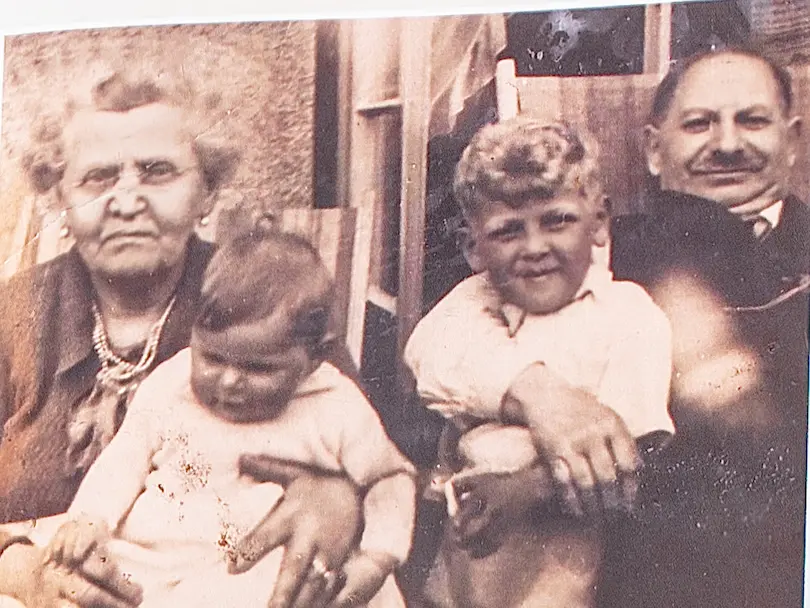
When the German bombing of London began, the British government evacuated children from the city. Donald, eight years old, and his five-year-old sister, Myra, were sent away from their parents to live with non-Jewish host families.
Donald later told me that those years were terribly painful. He experienced antisemitism and was bullied and mistreated. He learned to box because he needed to defend himself, and to protect his beloved little sister.
Their father, my grandfather Efraim, remained in London and served as an air-raid warden during the war.
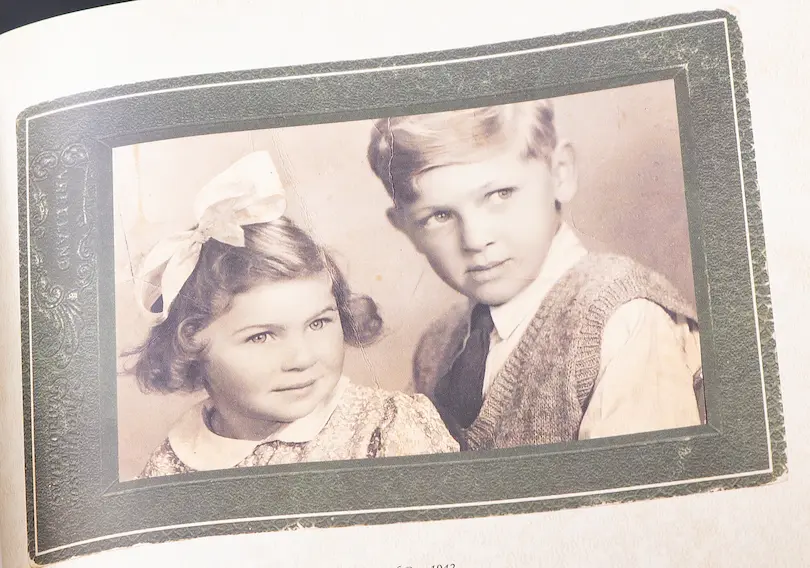 Myra and Donald
The family survived, but life was not easy.
Donald remembered the poverty of the postwar years. He once waited in line for hours for the extraordinary luxury of receiving an orange.
I knew my uncle as a funny, warm man, but underneath that humor was a survivor. He had learned very young that life could change overnight and that sometimes you had to fight to protect the people you loved.
In the early 1950s, my grandparents, my father and his siblings left England for Sydney, Australia, hoping to rebuild their lives.
Then tragedy struck again. A few years after the family arrived in Australia, my grandfather Efraim died suddenly at just 48 years old. He left behind his wife, Lily, and five children, including a baby girl only three weeks old.
Donald was 18. Devastated, he left and joined the navy.
My grandmother eventually gathered the rest of the family and moved to Los Angeles, while Donald remained in Australia.
The family tried to stay connected through letters and telephone calls, but this was long before WhatsApp, FaceTime and inexpensive international communication. There were continents between them, enormous time differences and increasingly different lives.
Slowly, the connections frayed.
Donald married a Seventh-day Adventist woman in Australia and built a family there.
Growing up, I saw him only three times: once when I was a teenager, at my grandmother's funeral in Los Angeles, and finally at a family reunion in Scottsdale, Arizona, 26 years ago.
But those visits mattered to me. Donald made me laugh. He was affectionate and I felt loved by him.
Time and distance may have weakened our connection, but in my heart, he was still my Uncle Donald.
Fifteen years ago, I contacted Donald because I wanted to preserve our family's oral history. We spent considerable time on the telephone.
That was when he told me the stories I had never fully understood: the war, the evacuation, the antisemitism, the host families, the poverty, his little sister, his father's death and his decision to join the navy.
I began to see my uncle differently. I admired him.
This was a little Jewish boy who had been sent away from his parents during a war, who had learned to fight because he was being attacked for being a Jew, who had protected his younger sister and who had endured tremendous loss.
Yet somehow, after those conversations, the years passed again. Eventually, we lost touch.
I knew that he had divorced and remarried. I had heard that at one point he divided his time between Las Vegas and a houseboat.
And then I knew almost nothing, until that genealogy call.
I told my cousins Tara and Rachelle how much it bothered me that we could identify hundreds upon hundreds of deceased relatives, yet I didn't know what had happened to my own uncle.
They began searching social media. Rachelle was relentless.
Within 24 hours, she found a woman on Facebook who appeared to be Donald's step-granddaughter. She was in Mobile, Alabama.
Then came the message I had been waiting for: Donald was alive.
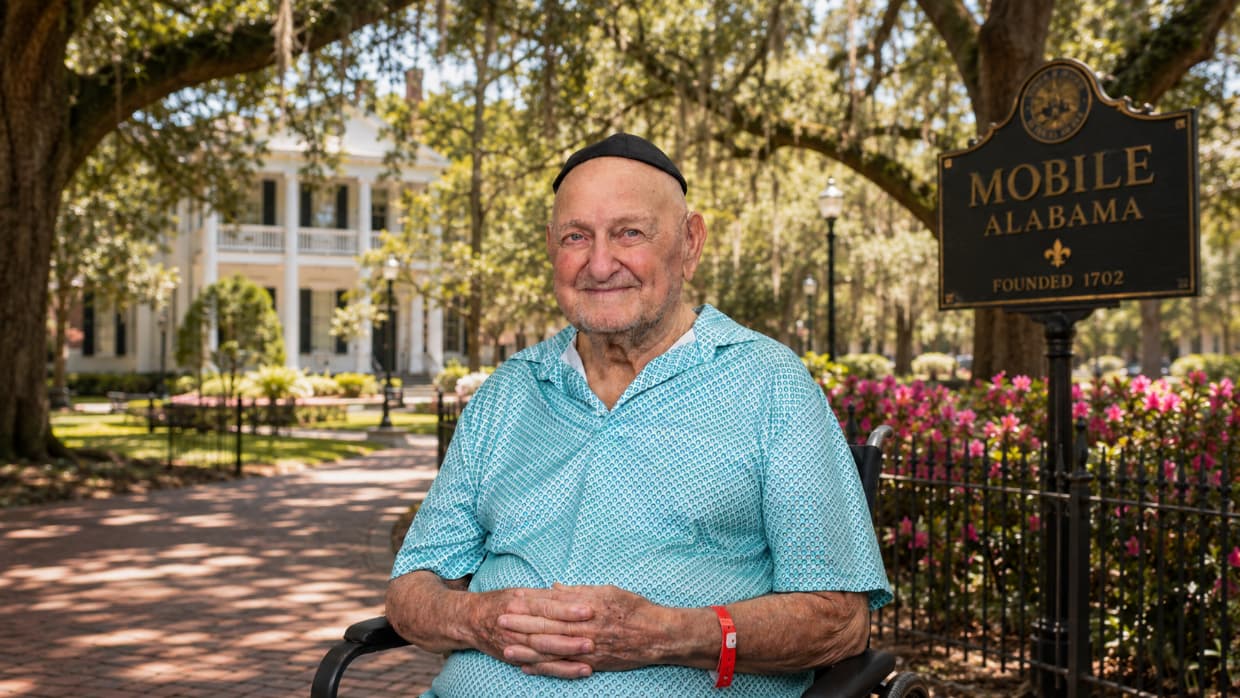
He was over 90 years old and living in a nursing home in Mobile. I immediately called the nursing home.
After 26 years, I had found my uncle.
The step-granddaughter connected us with her mother, Donald's stepdaughter, and conversations began moving across the branches of our family.
Donald's stepdaughter arranged a FaceTime call between Donald and his younger sister Myra—the little girl he had protected during the war. Myra is now 88 and also lives in a nursing home.
Decades after they had ridden a train together through wartime England, brother and sister were looking at each other again on a screen.
The call was joyous and deeply emotional.
Then I thought about Donald's daughter in Perth, Australia. She had not spoken with her father in many years.
Rabbi Yosef Goldwasser of Chabad of Mobile helped us arrange another FaceTime call. Another broken connection had been restored.
An entire family was beginning to find one another.
As the founder of the Meis Mitzvah Project to advocate for dignified Jewish burial for Jews who might otherwise be forgotten, when I learned that Donald was over 90 and living far from his Jewish relatives, my mind immediately went to a practical question: What will happen when he dies?
I wanted to make certain that arrangements were in place for him to receive a Jewish burial.
To my tremendous relief, Donald's stepdaughter and wife agreed and signed the necessary paperwork. When I contacted Rabbi Yosef Goldwasser of Chabad of Mobile to ask what Jewish resources were available for Donald, he went to visit him.
Then he went again. He brought Jewish connection into Donald's room. He helped him put on tefillin. Donald remembered the prayers and became emotional. Rabbi Goldwasser began bringing him challah for Shabbat and continued visiting him.
Something inside my uncle responded.
I had been concentrating on making sure Donald would someday be buried as a Jew. I was thinking about his death; the rabbi was thinking about his life. There was still time for him to live as a Jew.
A person can travel thousands of miles, decades can pass and families can fracture. Religious observance can fade and a Jewish child can be sent away during a war, grow up, join the navy, marry, divorce, remarry and eventually find himself in a nursing home in Mobile, Alabama.
But something can remain. That Jewish spark can become covered But it doesn't disappear.
My son said to me, “Mom, you have to go to Mobile.” I knew he was right.
As the trip approached, I was nervous. Twenty-six years is a long time. Who would Donald be now? Would he recognize me? Would he even want to see me?
I had changed enormously since our last meeting. I had become an observant Jew, building my life increasingly around Judaism, Shabbat and my relationship with God.
I had built a beautiful Jewish family. I now had children and five grandchildren.
But the stronger my Jewish life became, the more I longed for a connection with my non-religious relatives. I didn't want Judaism to make my world smaller. I wanted it to teach me how to love my family more deeply.
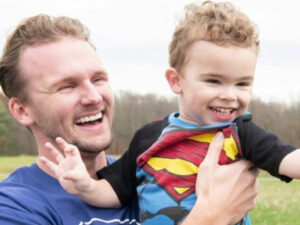
This trip represented something I wanted my son Azriel to see.
I was about to travel 1,500 miles to visit an elderly great-uncle he had never met. It cost money and time. It took time. And that was precisely why I wanted Azriel there.
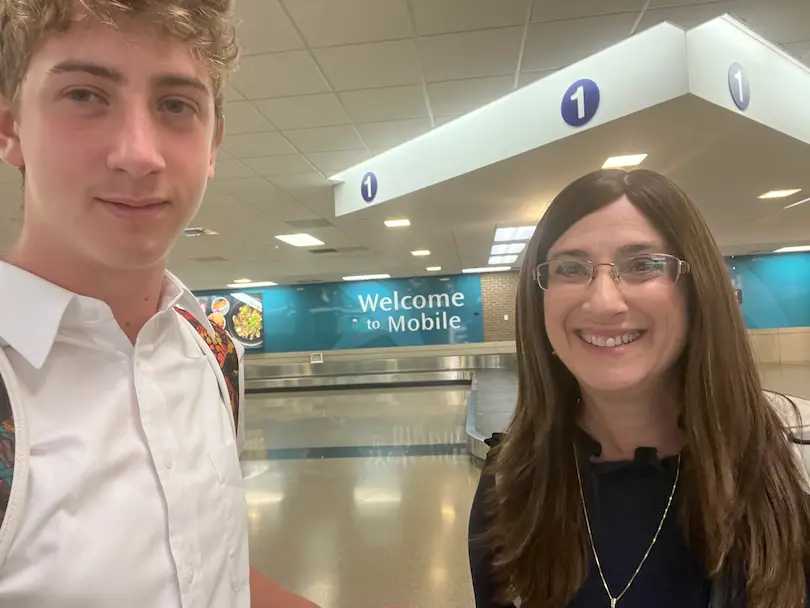 Landing in Mobile, Alabama with my son Azriel
I wanted my actions to say something that words couldn't: This is what our family is worth.
No matter how much time has passed, we are still family.
My mission has become not only to build my Jewish family forward, through my children and grandchildren, but also to reach backward and sideways, to reconnect the branches that have drifted apart.
So Azriel and I boarded the plane for Alabama.
Walking into the nursing home, I felt a mixture of excitement and fear.
Then I saw him, my Uncle Donald.
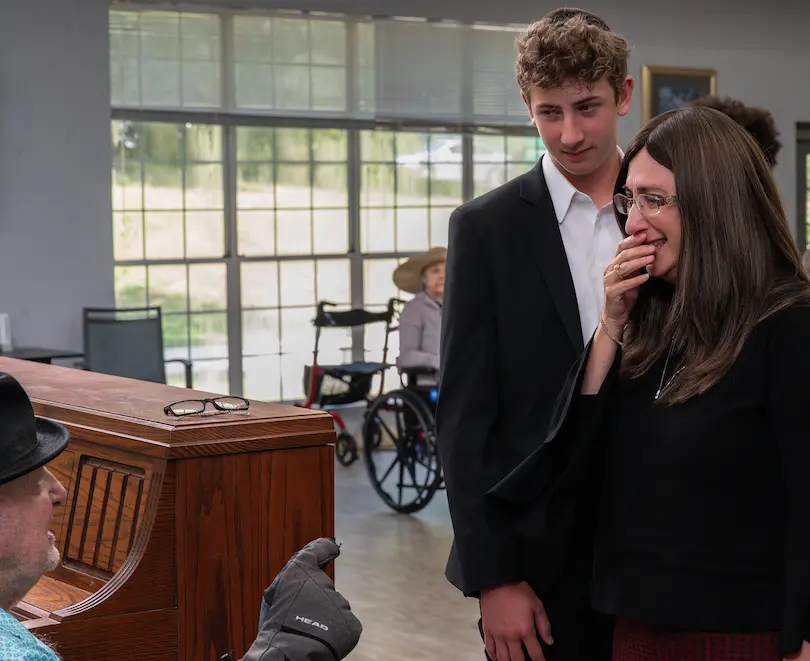
I had brought him a tallit and a Kiddush cup. But I had also brought something even more personal: a family picture book containing photographs and the oral history I had written from the stories Donald himself had told me during those telephone conversations 15 years earlier.
We opened it together.
Donald looked at the photographs. He recognized his Bubbe, his parents and siblings.
The years seemed to collapse. These weren't names on a genealogical chart anymore. They were his people.
When I gave him the tallit, he was thrilled. He put it on and wore it with such dignity, he looked like a prince.
Then I gave him the Kiddush cup. He was astonished and delighted, holding it as though I had given him something priceless.
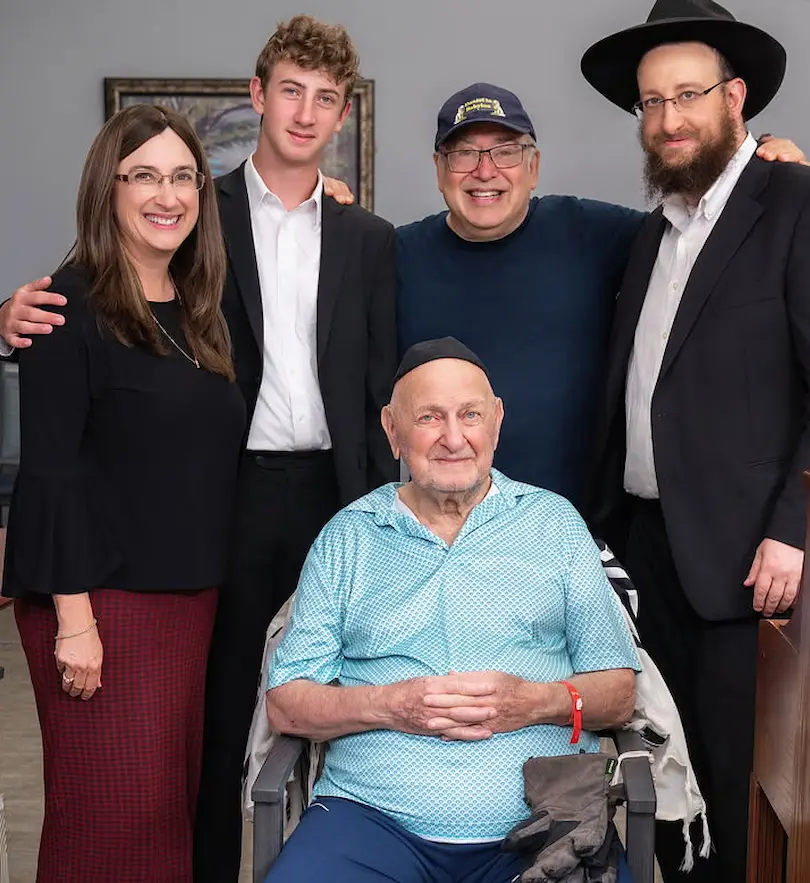
Watching him, I realized that we didn’t simply located Donald. We told him:
You belong to us.
You are part of this family.
You are part of the Jewish people.
We didn't forget you.








B"H What a beautiful and inspiring story and message. Robin, your efforts yielded something so special. You don't give up!
Beautiful, thank G!d!
Wonderful story, tears and goosebumps. Thank you for sharing. My family history is Russia and Romania and USA.
Still crying
What a beautiful anc heartwarming story, and family reunited after all these years
Thank you for this magnificent story.
Wonderful, inspiring story..Thank you so much for sharing it!
Beautiful story.
It's such a beautiful story. I love it!
What a truly amazing story, Robin. What a beautiful soul you have, and your relaying this story touches my heart, and all hearts, deeply. What a blessing you are. Thank you for sharing.
Wow!! Wonderful story. Thank you.
Thank you for this beautiful article and the efforts you've made over the decades. I would love to know how he ended up in Mobile and does he have anyone else in the area.
Terrific story and important message!
Thank you Robin for sharing this heartwarming story.
Robin, you accomplished such an amazing thing by bringing your uncle back to closeness with his family and roots. You are a very admirable person for this and all of your other incredible accomplishments! May Hashem bless you with bracha, hatzlacha, gezunt, and nachas from your entire family!
Beautiful. Thank you for sharing.
Wonderful
Amazing and beautiful story! Rabbi Goldwasser an family are amazing as well.
It has taken me awhile to compose myself after reading this article. Robin you are an amazing amazing woman. I am so grateful to Hashem that you were able to connect with your uncle and bring yediskeit back in to his life. May Hashem continue to Bless you your family and your dear uncle.