







 The Red Cross’s Jewish Problem

6 min read
5 min read
5 min read




Dr. Naomi Vilko, a psychiatrist and only child of two Holocaust survivors, reflects on the "secondhand smoke" of trauma and the resilience that let her parents rebuild after losing everything.
Dr. Naomi Vilko has spent nearly half a century helping people heal from trauma. Since beginning her career in psychiatry in 1978, she has treated patients struggling with post-traumatic stress disorder, addiction, depression, and the invisible wounds left by tragedy. Yet long before she understood trauma as a physician, she lived with it as the only child of two Holocaust survivors.
Born in New York City in 1952, four years after her parents immigrated to America from Prague, Dr. Vilko grew up in a home profoundly shaped by the Holocaust.
Most Holocaust survivors rarely discussed what they had endured. “They believed they were protecting their children,” Dr. Vilko explains. “Many wanted to forget, to build new lives, and not relive what they had survived. But children are remarkably perceptive. We sensed the losses even when no one described them.”
She has spent years reflecting on how trauma moves through generations.
“The children did not experience the Holocaust firsthand,” she explains, “but many of us lived with what I call the secondhand smoke. Even when parents didn’t speak, children breathed in the effects.”
Her own parents were different in one important respect.
“My parents talked about their lives before the war. They told me about slave labor, Auschwitz, and what happened to our family. But they never wanted to remain there. They chose not to live in the past.”
Instead, they focused on rebuilding.
“They constantly encouraged me to use my mind, work hard, and take advantage of every opportunity America offered. They believed that surviving carried with it a responsibility to build.”
Before the Holocaust, Dr. Vilko’s parents had lived comfortable, meaningful lives in Kiryaháza, a town in what was then a Hungarian area of Czechoslovakia.
Her father, William Vilko, born Bela Vilkovic in 1909, came from a respected Orthodox family. His father was a successful businessman and served as the Rosh Kahal of the local synagogue, while his mother, Dinchi Grunwald Vilkovic, came from a distinguished Chassidic dynasty.
“My father had a wonderful life before the war,” Dr. Vilko says. “He was successful in business. He was married and had a little boy named Alfred.”
Following the Munich Agreement, Hungary annexed the region, and anti-Jewish laws quickly transformed everyday life.
“My father was drafted repeatedly into Hungarian slave labor.”
Eventually he was deported to a ghetto and then to Auschwitz. “There, his wife and little son were murdered almost immediately.”
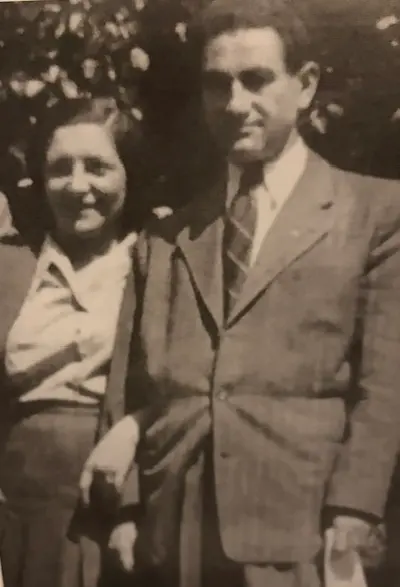 Olga Weissberger and William Vilko
Her mother, Olga Weissberger, was born in the same town in 1921. Her father was a successful businessman and one of the community’s few outspoken Zionists.
“My grandfather believed passionately that Jews belonged in their own homeland.”
Because Kiryaháza did not have a Hebrew high school, Olga lived with another family while attending the prestigious Hebrew Gymnasium in nearby Munkács.
“She graduated in 1939 and spoke fluent Hebrew for the rest of her life.”
When Germany occupied Hungary in 1944, everything changed. “My mother’s family was taken to the ghetto and then deported to Auschwitz.”
She was the only survivor. “She lost everyone.”
When the war ended, both William and Olga returned separately to Kiryaháza. Neither expected to find much.
“They went back simply to see whether anyone had survived.” Almost no one had. But they found one another.
“My parents fell in love after the war.”
Beginning again required extraordinary courage.
“They managed to sell what little property remained and escaped to Prague with other survivors.”
They married in the historic Altneuschul in March 1946.
“My parents always spoke of Prague with gratitude because it represented a beginning.”
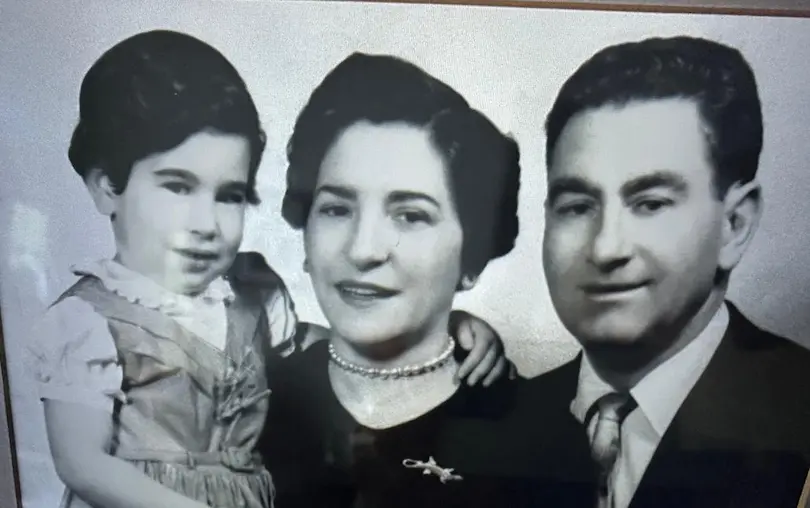 My parents and me
Two years later, in March 1948, they immigrated to New York.
“My mother used to say America gave us the chance to live again.”
Four years later, Naomi was born. “I was their only child.”
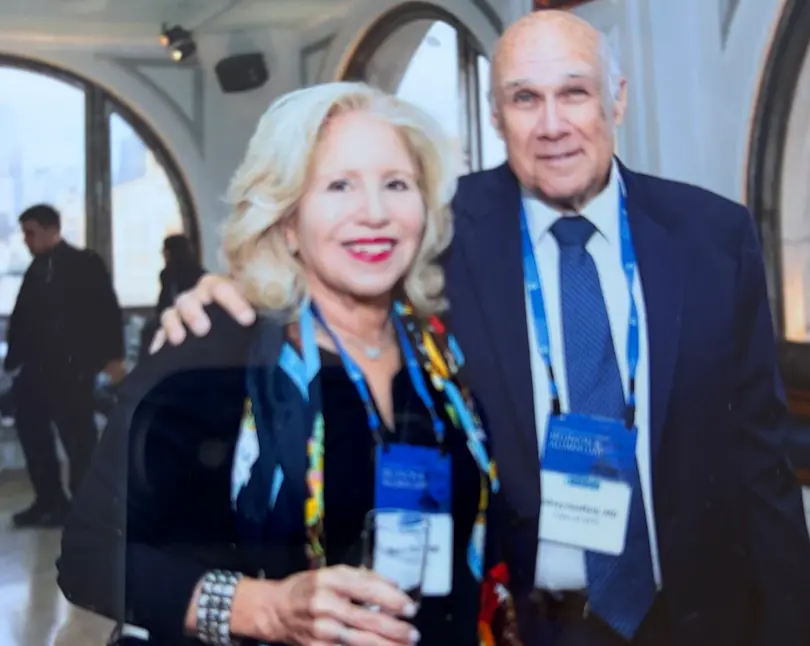 Dr. Naomi Vilko with her husband Dr. Sidney Goldfarb
Dr. Naomi Vilko went on to build a life that reflected both her parents’ resilience and her own determination. She married Dr. Sidney Goldfarb, himself the child of Holocaust survivors, and together they raised a family, continuing the legacy of survival into new generations.
Dr. Vilko believes one of the greatest accomplishments of Holocaust survivors receives too little attention.
Her parents had lost parents, siblings, children, homes, businesses, possessions, language, culture, and nearly every branch of their family tree. “But they never lost their ability to love.”
She has often reflected on that remarkable achievement.
“My parents did not raise me in anger. They did not teach me bitterness. They expected me to live, to learn, and to build.”
“My parents remained proud Jews and passionate Zionists.” For them, the establishment of the State of Israel represented far more than a political event. “It was proof that the Jewish people had survived. After everything they had witnessed, Israel gave them hope.”
The Holocaust was never absent from their home. It was present in family photographs showing relatives who were gone.
"It was felt during holidays when many family members were missing. It came up in questions that had no answers. I grew up understanding that our family had once been much larger.”
The absence became its own presence.
“I never met my grandparents. I never knew my father’s son Alfred, who was 9 years old when he was murdered. I had almost no extended family. Those losses became part of my childhood even though they happened before I was born.”
Yet her parents refused to allow absence to become their identity.
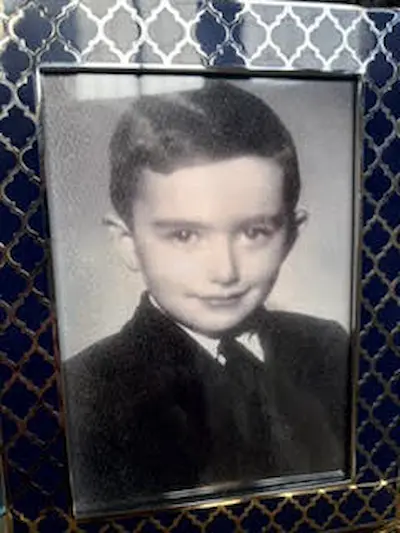 Alfred was murdered at age 9
“My parents believed the greatest victory was to continue living. This carried me through life. I was just 10 years old when my father died from a stroke. He was just 53 years old and his death can be attributed to what he endured during the Holocaust. Growing up, my father often suggested that I should go to medical school and become a doctor."
That lesson to embrace life fully became the foundation upon which she built her own life.
In the years following the attacks of September 11, 2001, Dr. Vilko’s professional work took on renewed urgency. Drawing on both her psychiatric training and her personal understanding of trauma and resilience, she worked with individuals and families affected by the attacks, helping them process grief, fear, and dislocation.
“After 9/11, I saw again how suddenly lives can be shattered,” she says. “But I also saw the same human capacity to endure and rebuild that I had witnessed in my own family.”
Her work during that period deepened her commitment to helping others navigate loss without losing their sense of purpose.
“It reinforced what my parents taught me,” she reflects. “That even after unimaginable events, life must go on.”









Although I knew the basic story, I found this telling of our family's past, moving, warm-hearted, significant and important for all of us.
Lenny Markovitz
Congratulations to Aish for bringing naomi’s story to us. She and her husband Sid are showing us the resiliency of the Jewish people. Thank Hashem that their parents survived the holocaust. The benefits are for all of us. Both grew up and became doctors helping others overcome their health problems. This is a lesson for all the anti semites. Instead of wallowing in their family’s misfortune they contribute to the well being of society. They also have been strong and vocal supporters of several Jewish causes and are very tied to Israel.
I know the story well. Am related to Naomi. An inspiring story.
Thank you for this article about this inspiring family!
I am also an only child of survivors. My parents lost spouses and children. from my earliest memory they always talked about the people who were lost. The wod that was used was "they didn't come back". When I was a child I didn't know what that meant and I always though that my brother and sister were out there somewhere waiting to retutn