







 The Red Cross’s Jewish Problem

8 min read
13 min read
17 min view




It sounds like an easy yes. Here’s why I believe Judaism says no.
Elon Musk recently posted a funny Babylon Bee sketch about killing Adolf Hitler.
A young progressive activist travels back in time to 1933 and bursts in on Hitler while he sits painting in his apartment. She announces that she has come from the year 2026 to kill him. He seems more inconvenienced than alarmed, and asks her politely why.
She explains that he is a fascist who used the power of the state to crush the people he disliked, and that she has come to stop him. He brightens considerably. He likes the sound of using the power of the state to crush the people you dislike.
Over the next few minutes the two of them work through her politics item by item, and he enthusiastically agrees with nearly all of it. By the end she cannot bring herself to shoot and she leaves.
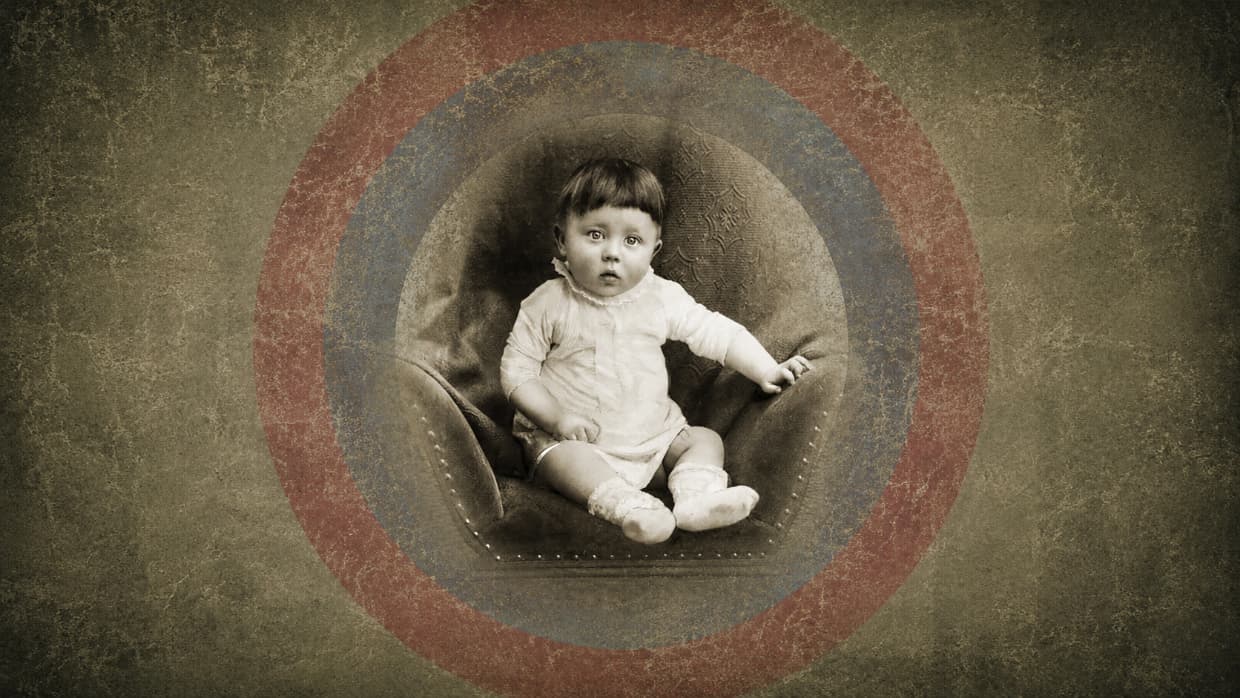
It's a good satire based on an old philosophical question: If you could go back in time and kill Hitler as a baby, would you?
The New York Times Magazine discussed the question a decade ago.
There’s a Jewish approach that almost nobody gives.
The arithmetic beneath the question looks easy. On one side of the scale there is an infant, a few days old, in a bedroom in Braunau am Inn in the spring of 1889. On the other side there are six million Jews, and a war that killed tens of millions more. One squeeze of a trigger and none of it happens. Isn’t killing baby Hitler a no-brainer?
But the question is a lot more complicated than it looks because that simple trade-off only works if the whole century follows from the one crib. Kill the baby and the Nazi party never rises, the war never comes, the extermination camps are never built.
Every part of that is an assumption and you’re betting a child's life on all of it holding.
Most people who think about the question seriously end up in one of two places; both of them are versions of that same worry.
The first is historical. Hitler was not the sole cause of what happened to us. Remove him and you have not removed the antisemitism that ran through European civic life and state policy for centuries, or the humiliation and collapse that followed the First World War, or the thousands upon thousands of ordinary people across a dozen countries who carried out the killing with their own hands and did not need much persuading. The forces were already in the water. He rode them expertly and made them far worse, but he did not invent them.
The second is the time-travel paradox. In a famous Twilight Zone episode the assassin succeeds and Hitler's mother quietly raises a substitute child under the same name. That child grows up to do all of it anyway. In one novel, the attempt on his life is itself the thing that turns him into an antisemite.
Both of these arguments are about consequences: don't shoot because you cannot know what happens next. Which means that if you could know, you should shoot.
That is where Judaism’s approach parts company.
In the biblical story, Hagar and her son Ishmael have been sent away from Abraham's household. They wander, their water runs out, and the boy begins to die. Hagar sets him down under a bush and moves off a distance, because she cannot bear to watch her child die. Then God hears the boy's voice, opens her eyes, and shows her a well.
A well-known rabbinic reading imagines the ministering angels watching this and objecting. They know what Ishmael's descendants will one day do to Abraham's other descendants. So they ask: Master of the universe, for a boy whose children will kill Your children with thirst, You are creating a well?
As Rabbi Benjamin Blech masterfully explained, God does not tell them they have the future wrong. He asks them a different question altogether. Right now, is he righteous or wicked?
Righteous, they answer.
Then by his present deeds I judge him. (Genesis Rabbah 53:14)
God does not dispute a single word of the angel’s forecast. But it’s not relevant. Even with the future laid out in front of you, the boy in the desert is judged by who he is on the morning you find him.
That’s why you can’t shoot baby Hitler in 1889.
The baby in Braunau am Inn was not yet evil.
If a person can be justly killed for what he is going to do in the future, then what he is going to do must already be fixed, and his life is not a sequence of choices but the playing out of a sentence passed before he was born. Judaism places free will at the foundation of its belief system. The baby in Braunau am Inn was not yet evil. He was a person who would go on to make, across the following 40 years, a long chain of decisions, every one of which could have gone another way, and not one of which he had made yet.
Pull the trigger and you are announcing that the child never had a choice, eradicating free will from the equation. That goes against the essence of Judaism.
If you don't have genuine freedom to choose, then how can you be held responsible? How can the Torah command you to do anything? How can there be such a thing as transgression, or growth, or repentance? The whole structure collapses.
Maimonides writes:
Free will is granted to all men. If one desires to turn himself to the path of good and be righteous, the choice is his. Should he desire to turn to the path of evil and be wicked, the choice is his...
This principle [free will] is a fundamental concept and a pillar on which rests the totality of the Torah and mitzvot as (Deuteronomy 30:15) states: "Behold, I have set before you today life and good, death and evil." Similarly, (Deuteronomy 11:26) states, "Behold, I have set before you today the blessing and the curse," implying that the choice is in your hands…
God desired that man have free choice and be responsible for his deeds, without being pulled or forced. Rather, he, on his own initiative, with the knowledge which God has granted him, will do anything that man is able to do.
Therefore, he is judged according to his deeds. If he does good, he is treated with beneficence. If he does bad, he is treated harshly. –Rambam, Laws of Repentance, Ch 5
Without free will, you're just a puppet. With it, you're a partner with God in creation. That changes everything about how you see your life, your choices, your responsibility.
None of this makes Judaism naive about evil. The Talmud teaches, “If someone comes to kill you, rise early and kill him first” (Berakhot 58a).
The first act recorded of Moses is killing an Egyptian who was in the middle of murdering a Hebrew slave. Innocence is not a permanent status. It ends the second a person chooses to do evil, and we are obligated to respond.
So no, you can’t kill baby Hitler in 1889. Not because history would have found another way around him, and not because you might have the wrong baby, but because he hadn’t done anything wrong yet. Killing Hitler the man, in 1941, mid-crime? That's a moral obligation.












If one believes in God (Christian, Jew, Muslim, whatever else), then I suspect one would feel free, and be inclined to preemptively kill a baby Hitler. After all, it is well within the context and domain of superstition, ancient fairy tales and dogmatic "beliefs," that human violence often emerges. If one does not believe in, or questions, a God (atheist, agnostic), then I suspect he/she just may be a moral humanist and quite reluctant to kill any baby based on what he/she may do in the future.
I didn't totally understand the premise of the article. Do we assume or somehow know that baby Hitler will be adult Hitler? Then I would imagine we would all agree he should be killed. Even though there are no lack of antisemites in the world, he was responsible for the death of so many. (Btw, my father in law grew up in Poland and told me that as anti-Semitic as the Polish people were, they were no match for the Germans and also Ukrainians.) And if we don't know his future, then how could he be killed? I agree with the comment that if there was any idea about his future, it's hard to imagine anyone who wouldn't shoot.
Humans have no right to punish others; only God does. Yet, we have done so.
HaShem did not "allow" the holocaust.
Humanity did.
He gave a transmission, expects it to be followed, coded it with if A then Blessings, if B the Curses programming.
There is no other transmission.
It is very simple: If humanity continues to not follow Instructions, humanity and earth will continue to degrade on their downward path.
Freedom of choice is fundamental in Judaism. Yet hashem knows what choices you will make, not because it's predetermined, but because knowing your nature he can predict your response to circumstances and the consequences.
However, the issue of going back in time seems simple: you know what will happen. But, you don't know how your actions in the past might affect the future you thought you knew. Many science fiction stories have dealt with in interesting ways.
It all comes down to the 'grandfather paradox'. What would happen if you went back in time and killed your grandfather before your father was born? You wouldn't be born and therefore could no longer go back and kill your grandfather.
No.
Because if you're a time traveller and go back in time, you must never, ever do anything that will affect the future, ie, our present.
Also Hashem permitted the Shoah and it's not for us to question Him.
The big question that people ask when they went through the Holocaust was why Hashem let this happen, some people that were religious before the Holocaust became non religious and were angry at Hashem, for losing their family and what they went through in ghettoes, concentration camps, labour camps, so this question js kind of a paradox any answer seems wrong anyway a evil person would come and murder 6 million Jews and 5 million others, and the populations of different countries helped this mass murder happen, and now other countries have a problem when Israel defends itself from its enemies, the world likes dead Jews instead of Jews to defend themselves
Nothing can happen without Hashem willing it so.
All I can think is that Hashem permits anti-semitism in order to encourage Jews to make aliyah.
There were righteous people during the Holocaust that died for kaddish Hashem including my mom's( obm) family
Sending you a hug.
May Israel always successfully defend itself!
This essay made the dubious clear!
Great!
While this hypothetical may stimulate some interesting conversations, we need to address the real world problem: at what point has an evil emerged that we must act? Do we have to wait for a murderer to be in the act of murder before we can take action to stop him? If not as a baby, at what point in Hitler's life would it become appropriate to kill him? Are you saying not before 1941?
Looking more broadly: With the proliferation of "self-defense" justifications for killings (I could name numerous examples), the morality of justifiable homicide is desperately in need of clarification. We should focus on that and not on Amalekites.
BTW, I think you have missed the intent of that Musk video which portrays the time-traveler as being as evil as Hitler. It is highly offensive.
Ben sorer umoreh?
We identify Hitler as an Amalekite. We were - and still are - supposed to blot out Amalek. Identifying Hitler as such, we would be 100% correct to kill him even as a baby. And also his parents.
The comment about Ishmael does not fit because Amalek's attack and the wickedness of the Canaanites happened afterward.
Is there an ability to define a person, even as evil as Hitler, as Amalek to the extent that the law would permit killing him without the existence of a prophet or court of the Great Assembly to judge the matter?
No there isn't. Certainly not a baby. King Saul was in fact commanded by the prophet Samuel in Hashem's name to kill Agag king of Amalek, which he delayed doing, and that resulted in Haman's (and probably Hitler's) great-great-ancestor being born. So theoretically there is such a thing in Judaism, but practically speaking we can't identify in advance nowadays absent prophecy or a genuine Amalek identification that no one knows anymore.
Someone tried assassinating Hitler prior to his rise to power. For some reason his life was spared at that time. Even at that time, however, he was hateful.
Looking retrospectively, however, after the Holocaust, his thoughts, words, and deeds show him to be the antithesis of the Jewish people.
And his hate has inspired later generations to hate Jews and to murder Jews as well.
Even ancient Rome may be less hated than Hitler - and they were excessively cruel, destroyed the Second Temple, sent us into the second exile, and prohibited Torah study.
Hitler attacked and murdered while we were in exile - similar to Amalek attacking the weak and those already being punished.
What an incredible insight! Thank you.
The first and only reason to not kill baby Hitler is because in the 6th Commandment, Hashem commands that “thou shalt not kill” which is no where mentioned in this article. The Tanach must always be the first order of reference.
'The language used in the Ten Commandments is specifically “do not murder (לא תרצח),” and not “do not kill (לא תהרוג),”.'
See the explanation in the article What Are the Ten Commandments? | https://aish.com/what-are-the-ten-commandments/
This directly addresses your concern.
If we somehow could know with certainty in advance that he was a genuine Amalek, the Commandment of "erase any trace of Amalek" would override that... But nowadays we cannot identify any given individual or group as Amalek, so Mashiach will have to take care of that when the time comes.
I understand the gist of your article. I wish you would have expanded your canvas to more than the terrible Holocaust - he was also responsible for the death of so many others. A simple search provides the following;
Aside from the six million Jewish victims of the Holocaust, an estimated 64 to 79 million people died from World War II's military actions, massacres, famine, and disease, bringing the total global death toll to somewhere between 70 and 85 million. Doesn't seem like soldiers are included in that figure - so;
Key Allied Military Deaths
Years ago, I saw a play in which someone asks this question about killing baby hitler, and receives this answer: “No, but I would raise him right.”
And yet the reasoning for stoning the rebellious son is that he is a glutton and a drunkard and on the trajectory to worse behavior that needs to be stopped.
No, because rabbis are HUMAN and we all should know that! But right then, the son is displaying evidence of wrong behavior. A glutton - thinks of himself and not others because he is devouring food; a drunkard, so today we know that in most cases someone who drinks excessively may have a physiological problem. In earlier times it is given as an example of someone who will not control himself and therefore he would eventually strike out at others. We should take into context the times when the rabbis and sages were living.
"Ben Sorer Umoreh" is Biblical, so it has nothing to do with "the Rabbis" or "context", or even anyone "human". The Rabbis tell us in the Gemara that the many conditions for a "ben sorer umoreh" to actually be executed could never occur in real life, and later authorities saw in that statement a hint that no one is truly irredeemable. Amalek is a special case of God Himself identifying the "baby Hitler", something we cannot do nowadays.
Great question, see answer in comment: https://aish.com/would-you-kill-baby-hitler/#comment-45823
I'm not so sure that Judaism would say what you say it does.
There's a mitzvah to kill anyone from Amalek -- men, women, and children. There's a general consenus that Hitler, beyond a reasonable doubt, was from Amalek -- his life being proof to that. So whether or not it would change the future, it would be a mitzvah to kill baby Hitler, and it would just be an added benefit (and an added reason) if doing so would prevent the Holocaust.
A consensus of which authority? Is it possible that common understanding does not equal authoritative and/or legal ability to execute both in Jewish law and in the law of the land?
It is possible that it does.
His later actions certainly richly qualified him as the #1 candidate for genuine Amalek status, but how could anyone have known that when he was a baby without actual prophetic revelation?
We're talking about going back in time -- after you already know what he turned out to be!
Prophecy is something that actually existed, as was the resulting real world dilemma faced by King Saul. As opposed to the hypothetical time travel dilemma presented in this article. So we have classical Jewish sources discussing the former, but not the latter.
Amen. You explained that perfectly. Thank you.
(spoiler alert) Stephen King wrote a novel, The Dead Zone, about this question, that gave what I felt was a good and righteous answer. Lots of back and forth and careful thinking. And then to paraphrase - "Who cares about Talmudic-style nuance? I'd kill that child in a second." I concur. Thanks for an interesting supposition.
I am confused by the article about killing baby Hitler. Because I read or was told years ago that the Nazis were predestined to initiate the Holocaust, and were punished(before or after their own deaths) purely for the "extra" suffering they inflicted out of sadism . Please can an aish rabbi reconcile this with the article?
that's a mistake. the nazis were not predestined to initiate the holocaust, that removes their free will and excuses their behavior. They are evil precisely because they chose their actions
Ramban said that about the Egyptians. Rambam says that every individual Egyptian could choose not to participate.
How about the wayward son in the Talmud? He is only gluttonous and disobedient, yet he gets stoned because we assume he will get worse. That has always bothered me, but why isn't it applied here, if we know ahead of time how he will turn out?
First, it’s an amazing question. It’s important to note that the ben sorer u'moreh case is viewed by the Sages differently. They do not argue that we are punishing him for what he will become; they argue that his current actions indicate he has already effectively destroyed his future. The Talmudic view: a boy who has reached this level of decadence (ie stealing from his parents to fund gluttony) has already severed his connection to humanity. This is unlike Ishmael where, viewed in his current state, he had options to blaze a positive path.
Second, see https://aish.com/rebellious-son-ben-sorer-umoreh-punished-for-future/ noting that the case is hypothetical and has never happened and never will actually happen. There, Rabbi Dovid Rosenfeld speaks this out more clearly.
My Talmud says: בן סורר ומורה נידון על שם סופו. The Ben Sorer U'Morer is judged because of what will become of him -- al shem sofo.
The source, Sanhedrin 71a, is noted in the article in the comment above.