




 What Two Hebrew Words Reveal About Israeli Democracy







A Princeton interviewer asked a 17-year- old, Broadway-bound performer one simple question. It took her decades and an unexpected turn in Jerusalem to answer it.
When Julia Blum was interviewing for Princeton, she was asked what should have been a very easy question: Tell me about yourself.
Julia had been raised in Beverly Hills, studying music since she was three and performing professionally since she was twelve. She knew exactly who she was, or at least she thought she did.
"I'm a singer. I'm a dancer. I'm an actor."
Her interviewer stopped her. “Those are the things you do,” he told her. “But who are you?”
Julia panicked inside for a split second. She didn't have an answer. Yet, somehow she openly explored the question with him for hours and successfully navigated the interview.
That Princeton interview exposed something she hadn't really allowed herself time to think about. But she soon forgot about it. She was excited about her future and was thrilled to choose Yale University for college, knowing that she had so much she wanted to accomplish. She didn't know what she believed in but most of the time she was just too busy to let that matter.
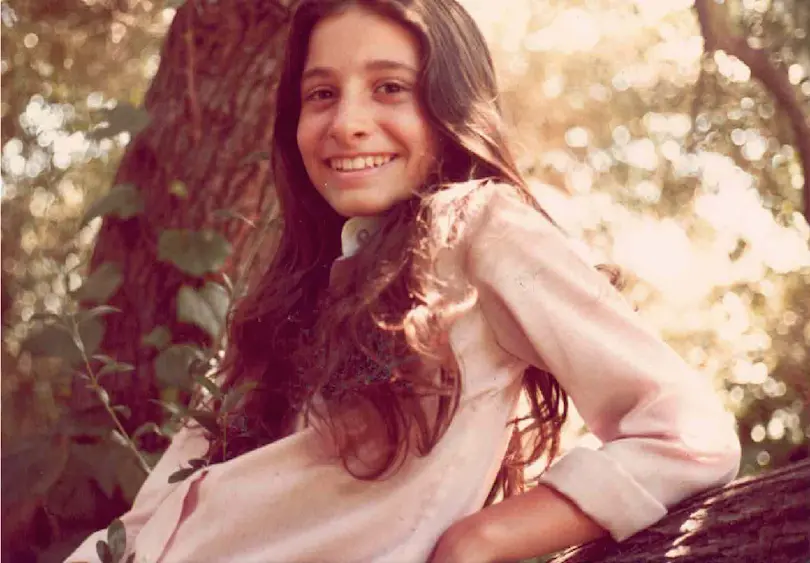
She knew she was Jewish and felt deeply connected to being Jewish, but when friends at Yale asked her what Jews actually believed, she couldn't really tell them.There was an entire "internal terrain" she had never explored.
Then, almost accidentally, after college graduation, she ended up in Israel. She wasn't searching for God or looking to become religious. She was traveling because she thought seeing the world would make her a more sophisticated, and ultimately better performer.
Her first visit to the Western Wall was unspectacular. She looked at it and thought it seemed smaller than it did in the pictures. Not every Jewish awakening begins with tears at the Kotel.
But Israel did eventually bring Julia face to face with the questions that had been quietly brimming beneath the surface throughout college, finding their way into her journal: meaning, life, death, purpose, being Jewish. At a Shabbat dinner with strangers in Jerusalem, people started discussing purpose, God, Judaism and what happens after we die. It was as if the host had read her journal.
Julia stayed in Israel and started learning, not expecting to change anything about her life. She just wanted to stop being so ignorant about her own heritage.
Julia didn't approach Judaism by shutting down the ambitious, analytical, high-achieving person she had always been. She brought that person with her. She examined what she was learning and kept asking whether it added value to her life. If it didn't, she could leave it behind. She kept finding that she was not willing to leave the wisdom behind.
Shabbat was one of the biggest challenges. How was a woman determined to make it on Broadway supposed to stop working every single week? How could the girl who never stopped going, doing, achieving and planning voluntarily give up 25 hours of productivity?
But Shabbat gave her something she didn't know how badly she needed: a chance to learn how to just be.
That distinction between doing and being runs through her entire story.
Julia eventually made the decision to sing only for women, a choice that once would have seemed completely incompatible with everything she had trained for. She built a successful career performing for tens of thousands of Jewish women around the world, and then, at the height of it, she stepped away once again.
This time, it was for her family.
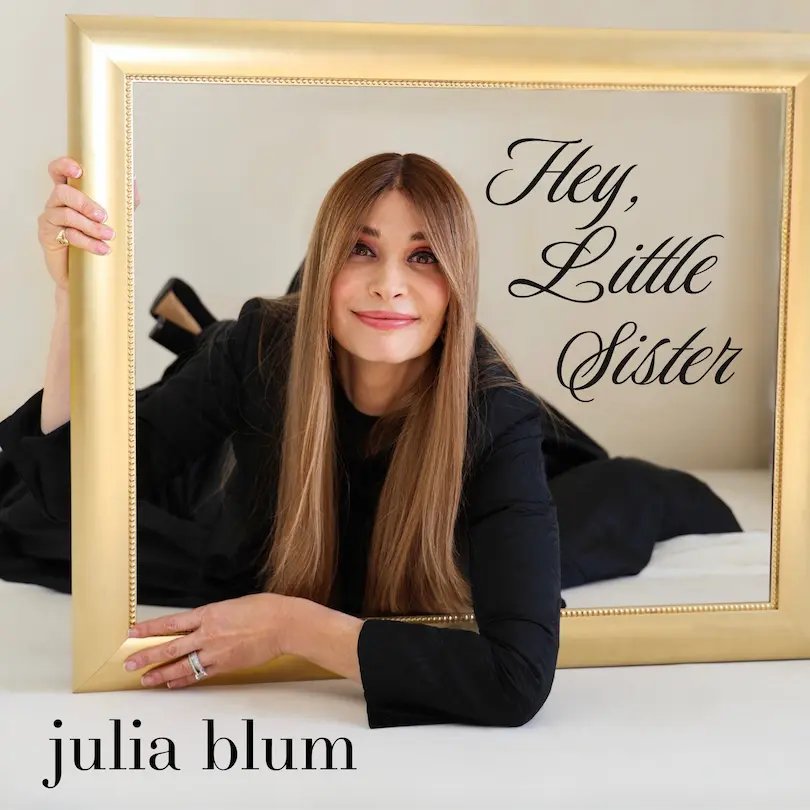
She was touring, taking red-eyes home so she could make the next carpool, trying to be everywhere and do everything. Eventually she had to confront what she actually valued. People might love her music, but her children have one mother, and Julia wanted to be there with them.
So what happens when someone who has spent her entire life doing stops doing the thing everyone knows her for?
For Julia, something surprising happened. She became more herself.
Now, after a long break, she is returning to music. She spent more than four years recording 18 songs, and she admitted to me that there have been moments of insecurity. Will anyone remember her? Will people laugh at a grandmother restarting a music career when we're taught that careers like this belong to the young?
But this version of Julia is coming back to the stage for a very different reason than the girl who dreamed of Broadway.
She told me that performing had once become, without her realizing it, a way of validating herself. When people applaud you, praise you, want to cast you, meet you, know you or follow you, it's very easy to let that attention become evidence that you matter.
Now she understands something she didn't understand then.
"It's my job to remind myself of my infinite value. It is not an audience's job. It's not people on social media's job."
Decades after that Princeton interviewer first asked the question she couldn't answer, I asked her again: Who are you now?
This time she knew. A grateful wife. A mother. A daughter. A powerful Jewish woman who dreams of making an impact in this world for the better.
Judaism didn't ask her to stop being ambitious, creative, musical or driven. It gave all of those things greater meaning and purpose.
The girl who once needed the stage to help tell her who she was is stepping back onto it knowing the answer before anyone applauds.
Follow Julia and hear her music:
Website: juliablummusic.com
Instagram: @juliablummusic
YouTube: @juliablummusic
TikTok:@juliablummusic
Join The Inner Circle and hear new music first: juliablummusic.com/subscribe