








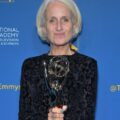
 The BBC Broke Her Because She’s a Jew

11 min read
7 min read
6 min read
11 min read





Award-winning producer Lucie Kon says the BBC sidelined her for being Jewish after October 7, then fired her. She sued, won £400,000, and is now telling her story.
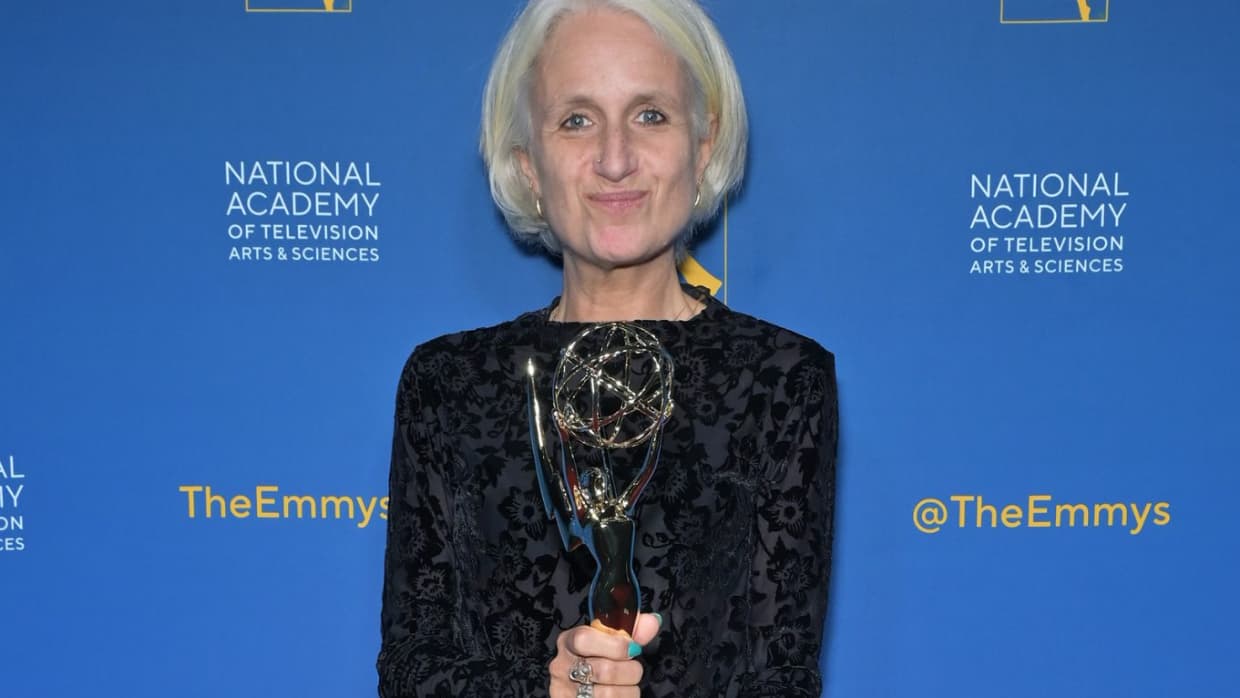
When Lucie Kon walked onstage in New York to accept an Emmy for We Will Dance Again, her harrowing documentary about Hamas’ October 7, 2023 attacks, she was terrified. Her employer, the BBC, had told her not to mention that it was a BBC film. The BBC hadn’t paid for her flight or her hotel. And while she had been in the hospital months earlier, the BBC had eliminated her job.
It wasn’t the first time the BBC had distanced itself from the film. When its in-house publicity team washed their hands of We Will Dance Again “due to its subject matter,” which showed Hamas in a negative light, Lucie hired a freelance publicist herself.
“It was so painful,” Lucie explained in a recent Aish.com interview, describing years of antisemitic harassment at the BBC after the October 7 attacks and her attempts to fight back. After losing her job, she sued the BBC over what she describes as “racial and religious discrimination, victimisation, harassment and unfair dismissal.” In September 2026, the BBC agreed to pay her £400,000 (about $537,000) without admitting liability. After years of trying to fight bias from inside the BBC, she is now determined to tell the story of the outrageous anti-Jewish and anti-Israel bias she witnessed there.
“I always wanted to be a journalist,” Lucie recalls. She grew up in London in a close-knit family with a strong Jewish identity and spent a gap year studying at Hebrew University in Jerusalem. That year “cemented how I felt about Israel and gave me a window into a world of knowledge I hadn’t had before,” she says. Lucie made lifelong friends in Israel and has family living in the Jewish state.
Her mother, also a journalist, warned Lucie about potential antisemitism in the job market. But when Lucie joined the BBC, starting as a radio reporter in Leeds and then moving to London, she found that her colleagues “embraced” her Jewish identity and her knowledge of Israel. “When there were Israeli elections, I would always be one of the people who worked on them.” Colleagues asked her questions about Judaism and Israel. When her own kids were young, she spent a stint working on the popular BBC children’s show Blue Peter. “I made latkes on Blue Peter,” she recalls with a chuckle. She stopped working Friday afternoons so she could get home in time for Shabbat.
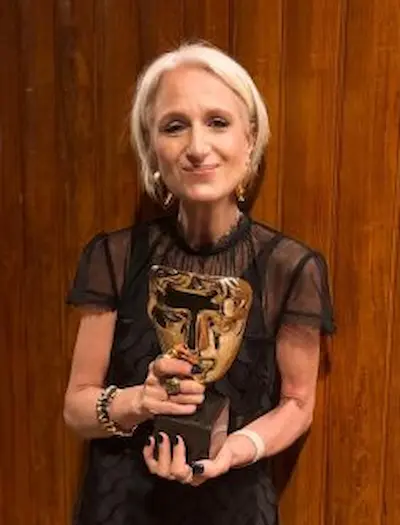 Winning a BAFTA for Mr. Nobody Against Putin
Despite the warmth and support she received from most of her BBC colleagues, there were occasional flashes of prejudice. “I would have to explain what kind of Zionist I was,” she found. “I’m a Zionist who wants peace,” she’d tell skeptical colleagues, which seemed to satisfy them. Afterwards, “I’d think, ‘that was a weird question.’”
About a year before October 7, 2023, Lucie received an even more pointed comment. She was working as a commissioning editor, finding film projects around the world for the BBC to partner with, and told a colleague she was excited about a potential collaboration with a Palestinian filmmaker in Lebanon. “When I said yes, I really want to do that, my colleague said, ‘Oh, I wish my father knew I was working with that kind of Jew.’” The colleague also quizzed Lucie about her political views on Israel, “like it was up to her to judge and decide if I was okay or not.”
This kind of latent antisemitism and anti-Zionism turned into something far darker the moment Hamas launched its bloody attack on Israel. On October 7, 2023, as Hamas terrorists tortured, raped and murdered some 1,200 people and kidnapped 251 more, including elderly people, women, children and even babies, Lucie was at home, texting a BBC colleague about a project they were working on together. “Over the course of that time, I started hearing on the radio what was happening in the Gaza envelope,” Lucie recalls. “I was seeing old people being taken hostage. I saw footage of Israeli hostage Noa Argamani and her boyfriend being taken off to Gaza….”
The colleague phoned to talk more about the project, and Lucie asked if she’d seen what was going on in Israel. “Hamas are evil,” Lucie said. Her colleague shot back: “So are Zionists.” Then, bizarrely, the colleague started chanting “‘evil Hamas, evil Zionists,’ like it was a rhyme. It was really inappropriate.” (The colleague now gaslights Lucie, denying ever saying any such thing.)
A couple of days after October 7, Lucie attended a vigil for the victims outside the British Prime Minister’s official residence on Downing Street in central London. One major topic in the crowd was the BBC’s glaring refusal to call Hamas operatives terrorists. Hamas members seemed to embody the very definition of the term. As a proud BBC employee, Lucie was rattled that so many people were hurt and angry at the BBC’s refusal to call Hamas, which the British government has designated a proscribed terrorist organization, “terrorists.”
From the vigil, Lucie messaged some of her colleagues to let them know the BBC’s refusal to say “terrorist” was causing a lot of anger. “I wanted to warn them that this was odd and that the BBC was becoming the story.” A colleague dismissed her concerns: “The message I got back was that we didn’t call the IRA terrorists; we didn’t call Hitler a terrorist.” The BBC seemed to be digging in its heels. (For the record, the BBC has in fact referred to IRA members as terrorists.)
Refusing to take no for an answer, Lucie set up a group where Jewish BBC employees could air their concerns about the network’s coverage of Hamas, Israel and the October 7 attack. “I didn’t think the BBC is institutionally antisemitic. I thought the best way (to effect change) isn’t to attack the BBC, but to build connections within the organization and influence them to change their coverage.” Lucie gathered the views of Jewish staff and brought them to senior BBC leaders. Chief among their requests: that the BBC call Hamas operatives “terrorists” and describe the October 7 assault as a terror attack. The response was shocking. One BBC colleague told her, “If you want to call Hamas terrorists, then you have to call the Israeli state a terrorist state.”
Lucie “went from a BBC journalist who happened to be Jewish to a Jewish journalist at the BBC…. It was like having Jew stamped on my forehead.”
“The BBC broke me because I am a Jew.”
After October 7, she and her colleagues watched as then Prime Minister Rishi Sunak visited the very Jewish school Lucie’s own children had attended. Instead of appreciating the gesture, one colleague called it “disgusting” that he was “taking sides.” Lucie saw the same thing over and over again, as colleagues called to “contextualize” Hamas’ violence and embraced extreme figures who excused the attack.
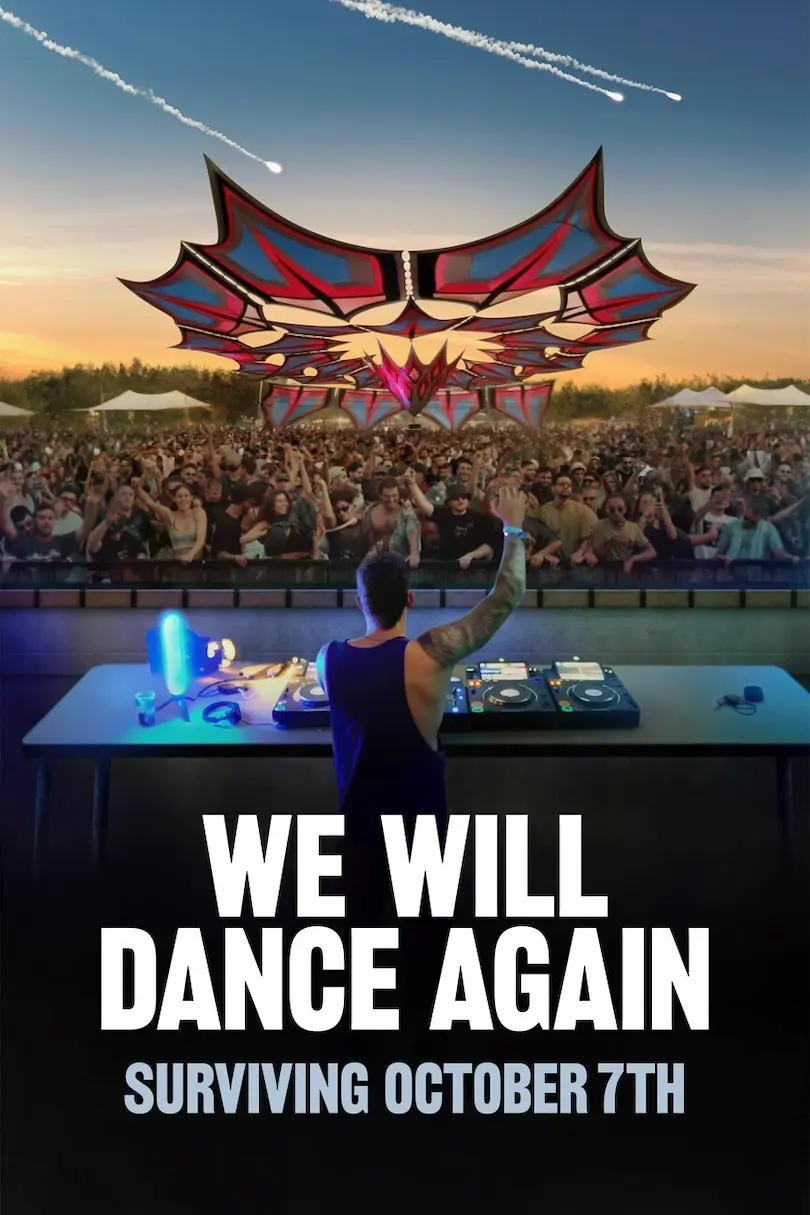
Despite the growing antisemitism and anti-Zionism at work, Lucie’s professional judgment kept helping the BBC find stellar new documentaries. She was executive producer of Mr. Nobody Against Putin, an important film that went on to scoop up a host of awards, including the 2026 Academy Award for Best Documentary Feature. She also produced We Will Dance Again, a riveting documentary that tells the story of October 7 using footage filmed by victims on their phones and by the Hamas terrorists themselves.
We Will Dance Again felt especially important. “The BBC is a public broadcaster, and broadcasting a film like this is a public service. It was so incredible that this footage was recorded during the attack. Some of these kids were lying on rubbish dumps hearing their friends being raped, and still filming… It was extraordinary what they were able to do.” She pitched it to the BBC: “I said this is the first telling of history, and we have footage” of the attack to tell it with.
Lucie’s supervisor called her into the middle of their open-plan office and said, in front of everyone, that “we might do the film but we have to contextualize why Hamas did it.” The supervisor also called Lucie “partial” because she was Jewish, and said she therefore couldn’t supervise the project.
Standing in front of all her colleagues, Lucie recalled a scene in the raw footage she’d just watched: a Hamas terrorist beheading an Israeli man. How could anyone try to minimize Hamas’ culpability in the face of such barbarity? It was also the first time anyone had told her she couldn’t do her job because she was Jewish.
Lucie persevered and eventually worked on We Will Dance Again, but she was constantly watched and belittled. “The lectures kept continuing… I had to have an ‘independent’ person on the team.” The subtext was clear: “I couldn’t be trusted because I’m a Jew” to produce the documentary professionally. Her years of stellar work seemed forgotten.
The bullying got worse. One colleague refused to go to a film screening with Lucie because she didn’t want to be seen in public with her. Lucie documented religiously based bullying by a colleague and filed a complaint with senior management. “It was my word against theirs,” she recalls. The colleague was eventually found to have breached the BBC’s impartiality rules, but was cleared of antisemitism and bullying. The BBC then told Lucie to stay out of the office whenever that colleague was there, which was every day.
Working from home, Lucie noticed pieces of her job being handed to other colleagues. “It was just constant…. I felt like I was being pushed against a wall” and “punched in the head,” over and over again. Her grievance was dismissed, and dismissed again when she appealed.
The stress took a toll on her health. Lucie had struggled with anorexia in the past, and now it returned. In 2025 she was hospitalized for several months. When she told her supervisors she was taking medical leave, they replied that her job was being eliminated. From her hospital bed, Lucie watched as her job was given a new name and advertised. She applied for it and was told she wasn’t a good fit. The BBC, she says, had “broken” her.
The BBC allowed members of its in-house publicity team to decline to promote We Will Dance Again, citing its harrowing subject matter, so Lucie hired a freelance publicity firm for its premiere. After other venues turned it down, ostensibly over security concerns, the film premiered at a Jewish cultural center in London in September 2024. BBC journalist Emma Barnett hosted a panel afterwards with writer and director Yariv Mozer, Nova Festival survivors, and the father of Aner Shapiro, a hero who was killed protecting fellow festivalgoers on October 7. The film received rave reviews and was nominated for an Emmy and other major awards.
Though Lucie was still a BBC employee, the BBC refused to send her to New York for the 2025 Emmy Awards. “I bought my own ticket.” With the BBC also refusing to pay for a hotel, she slept on a guest mattress on the floor at the home of friends of a relative of her ex-husband. When We Will Dance Again won the Emmy for Outstanding Current Affairs Documentary, Lucie was terrified walking up to the stage because the BBC had told her not to mention her connection to it.
Winners have to pay for their Emmy statuettes, which cost $675. Lucie’s mother paid for hers so she could bring it home.
In early 2026, as Mr. Nobody Against Putin, which Lucie also produced, was nominated for a clutch of awards, the BBC removed her name from the credits. “It was a childish, petty thing to do,” she says. The BBC later denied ever removing her name, though she has screenshots of the new wording. (As part of her settlement, the BBC agreed to restore her name to the credits.)
After losing her job, Lucie sued the BBC for unfair dismissal. The BBC recently agreed to pay her £400,000 (about $537,000) without admitting liability. Since the settlement became public, Lucie says many journalists, including some who still work at the BBC, have reached out to her for advice and practical help.
“By speaking out, I feel like a weight has been lifted.” For years, while her case was working its way through the BBC’s internal complaints system, she felt she couldn’t speak freely. She has met others who feel they are “being persecuted by the BBC.” Journalists tell her they too feel like they’re “going mad” when the BBC denies wrongdoing and makes Jewish employees feel their complaints are baseless. Lucie describes the “shame” she and other Jewish journalists have felt for not handling the bias better, and for being unable to do their jobs without feeling bullied.
After everything, Lucie still believes the BBC is not “institutionally antisemitic.” She knows many wonderful, professional journalists who continue to do stellar work there. But she cautions, “groupthink is a real problem in the BBC and around the world.”
Years ago she made a BBC documentary lamenting the rise of Islamophobia in the West after ISIS terror attacks. This time, she sees no such self-reflection. “The world’s response was within 24 hours of the October 7 attack there was antisemitism on our streets and online…. Hamas has managed to swing public opinion: every single Jew has been blamed for Israel’s response” to Hamas’ terror.
Her advice to anyone facing antisemitism at work is to speak up. “Tell the truth. Don’t sit with it. Don’t be scared of it.” She knows people need to keep working to support their families, which is exactly why it’s crucial that we back one another in calling out anti-Jewish bias wherever it occurs.
“The more of us say it’s not ok, who don’t feel ashamed, the better.”








When a break is repaired, it is stronger than before. You are even stronger Luci. Congrats on the Emmy and BAFTA. You are a woman of valor.
BBC should take responsibility. What a terrible experience and colleagues.
Am Yisroel Chi 🇮🇱
I was born in the 'Blitz' ...will the BBC say that the Jews were responsible for Hitler bombing London? My father and mother raised three kids during the constant bombing by the Luftwaffe in '44. They stood on the food lines and traded their bacon for eggs and butter. My father, who was First Cantor of the United Synagogue in London found himself in schul - now matter what - while passing smoldering burning buildings from air raids just the night before. I found a post card written in Yiddish from Oostende saying, "Don't come here they're waiting for you - the Gestapo! My papa couldn't cross 40 kilometers of English Channel to see if his family was still alive.
They all perished on the streets of Antwerp and Brussels and in the camps.
Solomon: "There is nothing new under the sun"
Wow, thank you for sharing this! Lucie Kon is a heroine!
Well done Lucie - we all proud of you