




 The BBC Broke Her Because She’s a Jew

8 min read
5 min read
9 min read




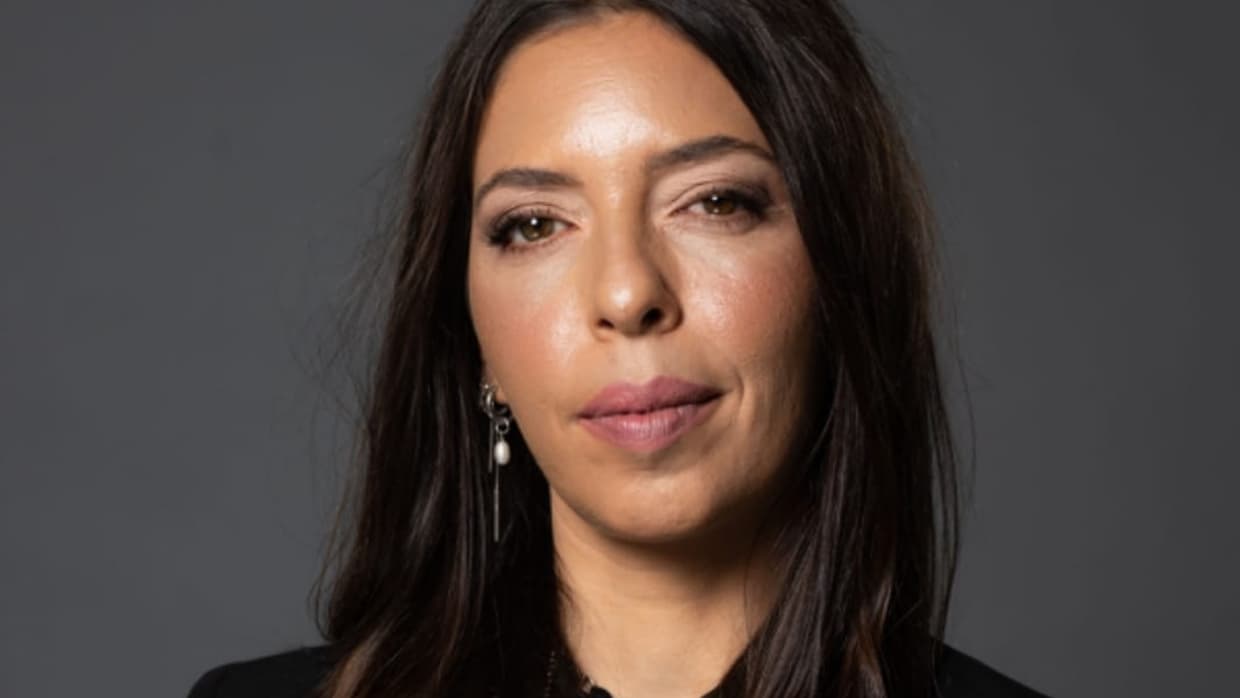
For weeks before October 7th, Moran Stela Yanai kept getting warnings she couldn’t explain. Then came Nova, a kidnapping, and 54 days of holding on to faith in Gaza.
On October 6th, 2023, Moran Stela Yanai cried all day. She wasn’t sad; she just couldn’t stop. “I thought something was wrong with me,” she says.
The next morning she was kidnapped from the Nova music festival and taken to Gaza, where she was held for 54 days. Looking back, she sees a sequence she missed. “The world is constantly showing us the way. We just need to open our eyes.”
Moran spent years living for approval. At 11, classmates rejected her as too tall, too skinny, too sensitive. As an adult, she chased jobs to make her parents proud.
She chose to find out who she really was. She read Brené Brown on shame (“For the first time I realized I wasn’t alone”), then Mel Robbins and Dr. Joe Dispenza, which led her to meditation.
For four years she repeated three sentences daily:
Thank you for the ability to see signs and messages.
Thank you that my heart and mind are open enough to see beyond them.
I commit to seeing them, whatever form they take.
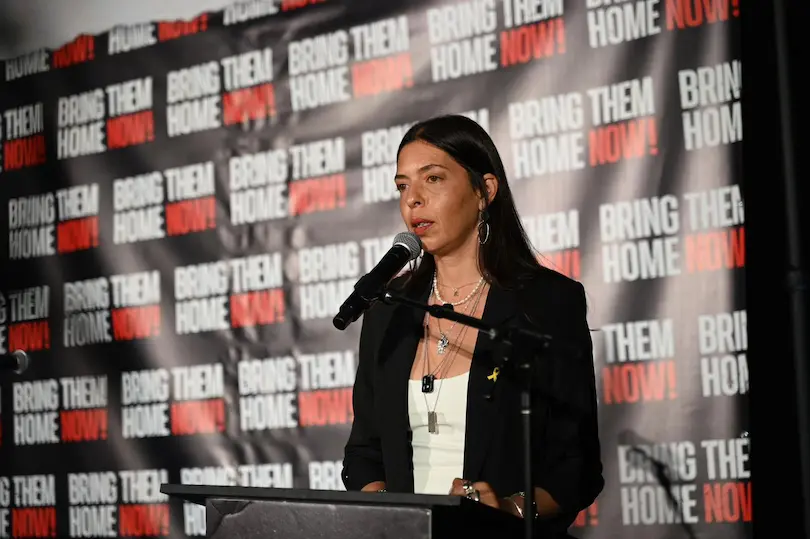
A month before October 7th, Moran gave herself two challenges. First, say yes to everything. Wrong dish at a restaurant? She ate it. Second, let go of what she couldn’t control and follow her intuition, which she calls her bat kol (Hebrew for “heavenly voice”).
“Intuition speaks first. Half a second later a thought drowns it out. You have to listen first.”
She flew to Thailand with no itinerary and no hotel. Each stranger led to another, teaching her to accept all kinds of people. On her last night, at 1 a.m., she got two tattoos.
Someone there suggested she sell her jewelry at the Nova festival that was happening over Shabbat near the Gaza border. Moran was traditional. She didn’t keep Shabbat but she had never worked on it. Still, four thousand people? “A voice said, just this once.” She signed on as a vendor.
Back in Israel, the crying began. “For two weeks I thought I was losing my mind.”
On October 6th, on a Zoom call with her emotional coach, Kim, she asked out of nowhere: “Could we be walking down the street and someone just starts shooting? Boom, boom, boom?”
Moran had no idea why she asked.
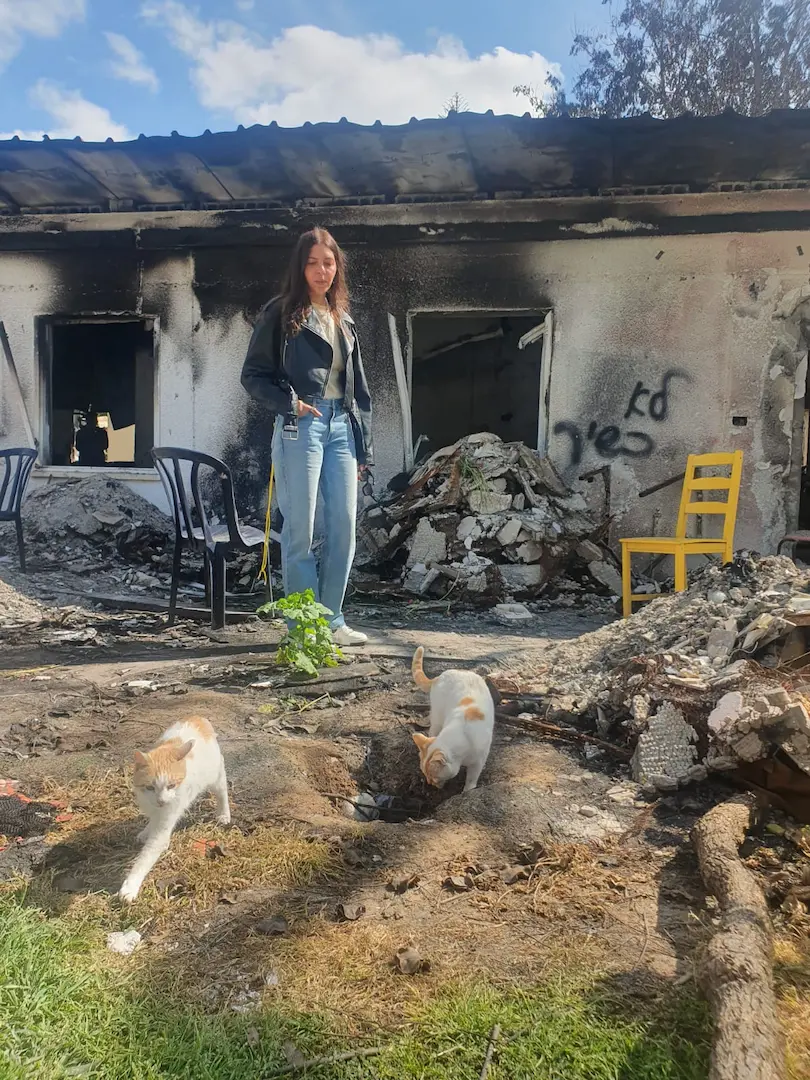
The afternoon of October 6th she and her friend Sima were supposed to leave at 1pm for the Nova festival. Moran kept delaying.
When Sima said, “It’s time to leave!” Moran held the door handle and couldn’t bring herself to open it. She was frozen. She begged her friend Sima to stay home. Sima tried to comfort her, calling it nerves and excitement. They arrived just before Shabbat.
“From my first step in Nova my body was going crazy. I kept looking behind my back and an inner voice kept saying, ‘Not here!’”
She didn’t sell a single piece all night. Around her neck was a gift from her supplier in Egypt: a necklace with her name in Arabic. He had given it to her and she had put it on to be polite. When her mother saw her wearing it on Sukkot, she became very upset and demanded Moran take it off. For some reason, Moran didn’t listen.
Just as Moran was giving up on sales and turning to God asking him for clarity, an elderly woman named Mona, known for handing out cryptic notes at festivals, slipped her one: “There is logic in the craziness. There is no life.”
“Is this supposed to make me feel better?” Moran asked. Mona smiled and walked away.
At sunrise she thanked God for the people she’d met. As she packed up, another vendor bought a heart ring. The moment the money changed hands, the rockets started.
Everyone panicked but Moran didn’t realize the severity of what was happening. She thought people were being overly dramatic.
“I was packing my necklaces one at a time. Then my intuition woke me up and said, ‘Collect everything now!’ By 7:55 a.m., we were surrounded. We couldn’t leave or hide. All the people with me survived but I was the only one kidnapped.”
While collecting her jewelry her friend whispered, “When I give you the cue, run to your car, get in, and drive as fast as you can.”
Two minutes later she screamed, “Get in the car!” But Moran froze.
She watched her friend drive. Moran felt abandoned but started running. “I heard whistles above my head and saw something punching the ground creating splashes of dirt.”
A pickup truck was behind her shooting, but Moran didn’t realize it at the time.
A woman shouted from behind a car, “Come with us! We’ll save you!” Police sent them to hide in an open potato field full of fire ants and thornbushes.
Moran didn’t realize that by hiding in the bushes she was actually exposed.
She heard “koo koo”, the Israeli term for “knock knock”. She lifted her eyes and saw
a terrorist with an iron pipe raised over her. He screamed “Allahu Akbar!”
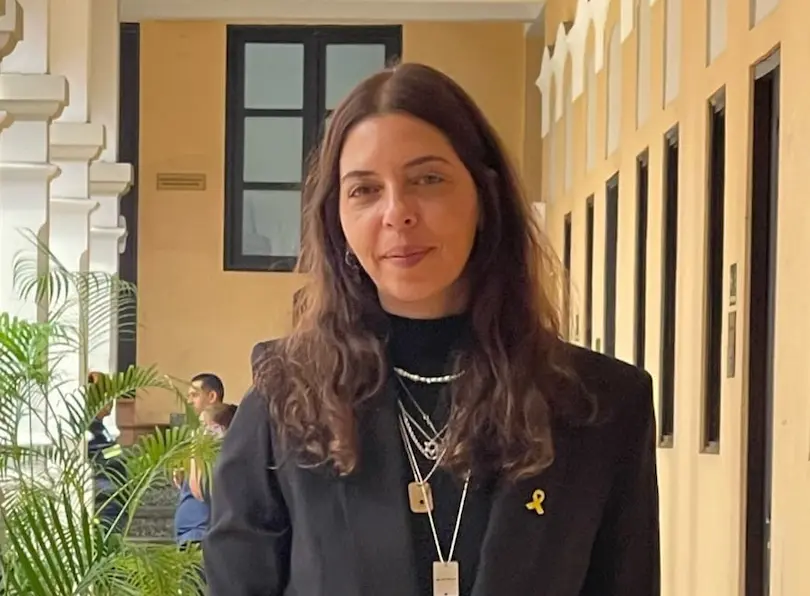
She screamed back, “Ana arabia” (Arabic for “I’m an Arab”) and showed him her Arabic necklace. “Khalas,” he said: enough. He even began helping her up but then he saw the Hebrew tattoo on her arm and realized she was a Jew. She somehow talked her way free and even convinced a second group of ten terrorists a few minutes later.
The third group, 13 men, didn’t let her speak. They dragged her to a tree, filmed a selfie video and ripped off her jewelry, cutting her arms. “I was badly beaten, but I felt no pain.” Her intuition said: Don’t resist. Everything will be okay.
They shoved her inside a car and began driving into Gaza. Moran closed her eyes. Gaza was a short dirt road away. “That’s all it takes to go from your comfort zone to hell.”
As they arrived, one of the terrorists pulled her by the hair, forcing her to look out the window. “Welcome to Gaza!” he jeered. Moran was shocked at his huge smile.
Moran grew up in Be’er Sheva, a mixed city with Arab neighbors, classmates and colleagues. Now she watched Arab civilians celebrate her arrival, “like a bull led into an arena.”
The crowd started dragging her legs out of the car, ready for a lynching. Beaten with pipes and boards, she stopped prayed for one final blow to the head to end it all. She dug her nails into a skinny man beside her in the car and held on. He shouted, “Stop! She’s an Arab girl!” The potential lynching ended and Hamas took her.
At a hospital, men crowded around and looking to see what they had “caught.” They took her shoes and earrings. Someone put a half-cast on her leg. “I was sure I would die in agony. But my intuition said: No one is going to kill you. Remember everything. Sharpen your mind.”
At the first house, a man laughed and said God loved her. What he did there she won’t describe. Seeing her cargo pants and boots, he asked where she served. “It’s fashion,” she insisted. “I came from a party.” He laughed.
She shared a room with four captors and an 18-year-old girl, still in pajamas. For three days they weren’t allowed to speak. “I lived for her. I had to protect her.”
One captor fell for Moran. After ten days he appeared with his mother, brought to arrange a marriage and Moran’s conversion to Islam. Later, a second captor asked her to be his third wife.
She was moved 11 times. Once, in a pitch-black room, she listened to men argue over whether or not to kill her. When they handed her a ski mask, she refused. “If you’re going to kill me, I want to see.”
Every day she repeated a prayer: “Thank you that I’m full and healthy.” This prayer kept her feeling positive, but a month in, she took one look in the mirror and saw her emaciated bruised body and realized both legs were still broken. She could barely see or hear. Part of her called the prayer nonsense. Another voice answered: “I’ll give you your body back. Focus on your faith and I’ll take care of the rest.”
When her captors learned she had once served in the army a fellow hostage warned her to expect a long stay. Moran planned a one-year escape plan: once they married her off, she would find her “husband’s” phone and call her parents. “You have to maintain hope and keep believing you still have a mission.”
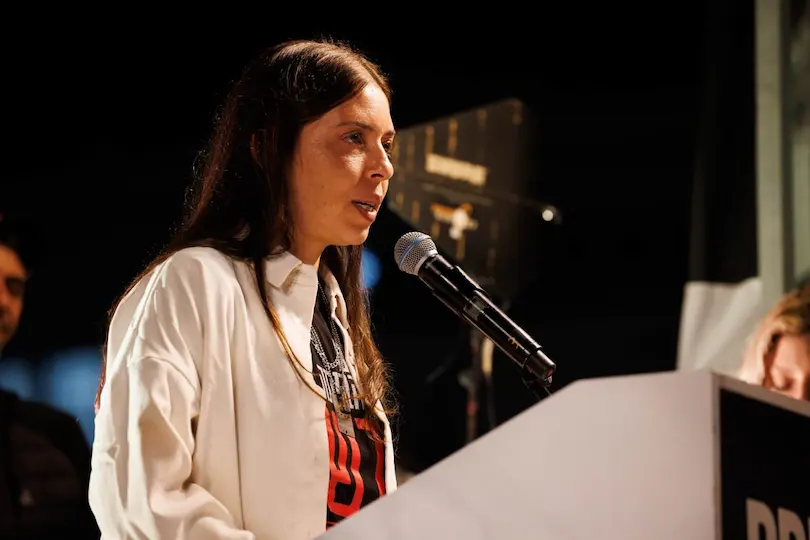
The day before the ceasefire releases ended, only she and one other hostage remained. A guard chose her. She felt guilty being chosen and offered the release of the other hostage instead. They laughed. “I’ll just stay here until you release us both.” He nearly slapped her, then covered her face and led her out.
In a dark room, someone handed her a folded paper. Inside were three bracelets and three earrings, taken from her on October 7th. The man who had kept them for 54 days lit his face with a flashlight. “I promised you that you would go home.”
At the last house there were eight other skeletal hostages, children among them. They waited for 27 hours too scared to fall asleep, hoping they would be freed. At last they were taken to the red cross Jeep, forced to smile and thank her captors.
The red cross driver handed her a phone. “Hi, my name is Tomer. Welcome home.”
She told the others to hold their tears until the border. “I looked back at Gaza and smiled. I left without anger or vengeance. I had won. I did not allow them to break me. I am victorious.”
Back in Israel, Moran met Mona again. The new note read: “Faith is increasing.”
Perhaps that’s the greatest lesson Moran brought home with her: true wealth isn’t measured by what we accumulate, but by the faith and peace within us.
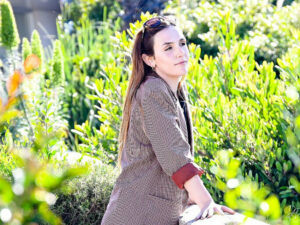
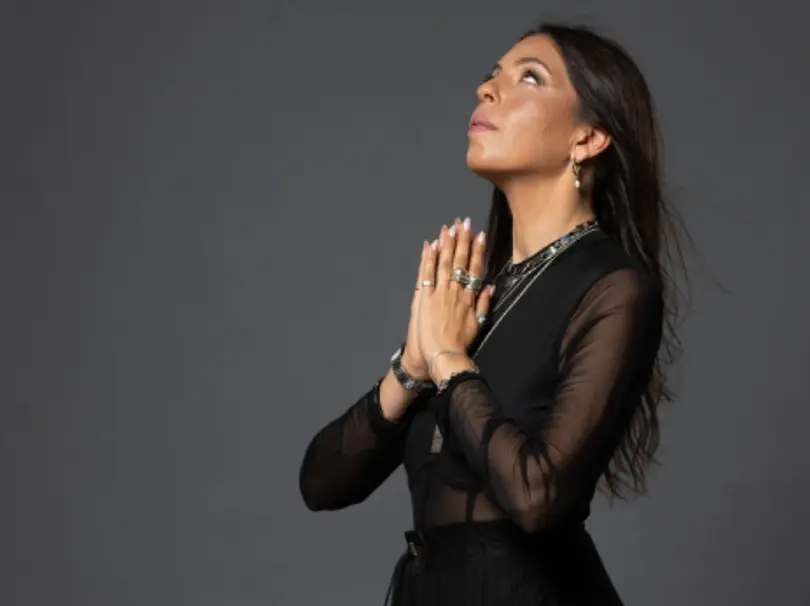 Photo by Ella Bar
“I had nothing physical: no food, no clothing, even my body didn’t ‘belong’ to me. But I clung tightly to my garment of faith.”
Moran believes she never felt closer to God than in her days of captivity. After arriving home, as the material parts of life began to resurface, she subtly felt her faith begin to slip away into the background. She is determined to hold onto it.
Failure has also taken on a new meaning. It used to be something she dreaded. Today, she sees it differently. “I have a really good relationship with failure now because it gives me a second chance.”
After experiencing the depths of captivity, Moran hopes never to lose sight of what she discovered there: that when everything else is stripped away, faith is what remains—a faith that carried her through everything.
Featured image by Ella Bar