







 What Repentance Really Means in Judaism



12 min read
3 min read
11 min read
9 min read




Doctors said Genna might never have children. Standing in Auschwitz, her body proved them wrong, in a way she never saw coming.
In July 2018, my husband and I joined a Heritage Retreats journey to Poland. Over several days we traveled to Auschwitz-Birkenau and to mass graves hidden deep in the forests. We cried, prayed, and recited Kaddish for Jews whose lives had been cut short.
Standing in Auschwitz, I was overwhelmed to find the names of my great-grandparents, Nochum and Chaya Rabovetsky, preserved in the archives among those murdered in the Holocaust. After mourning them, I made a promise: if they could no longer tell their story, I would live in a way that honored it. I recommitted myself to a life of Jewish observance and Jewish continuity.
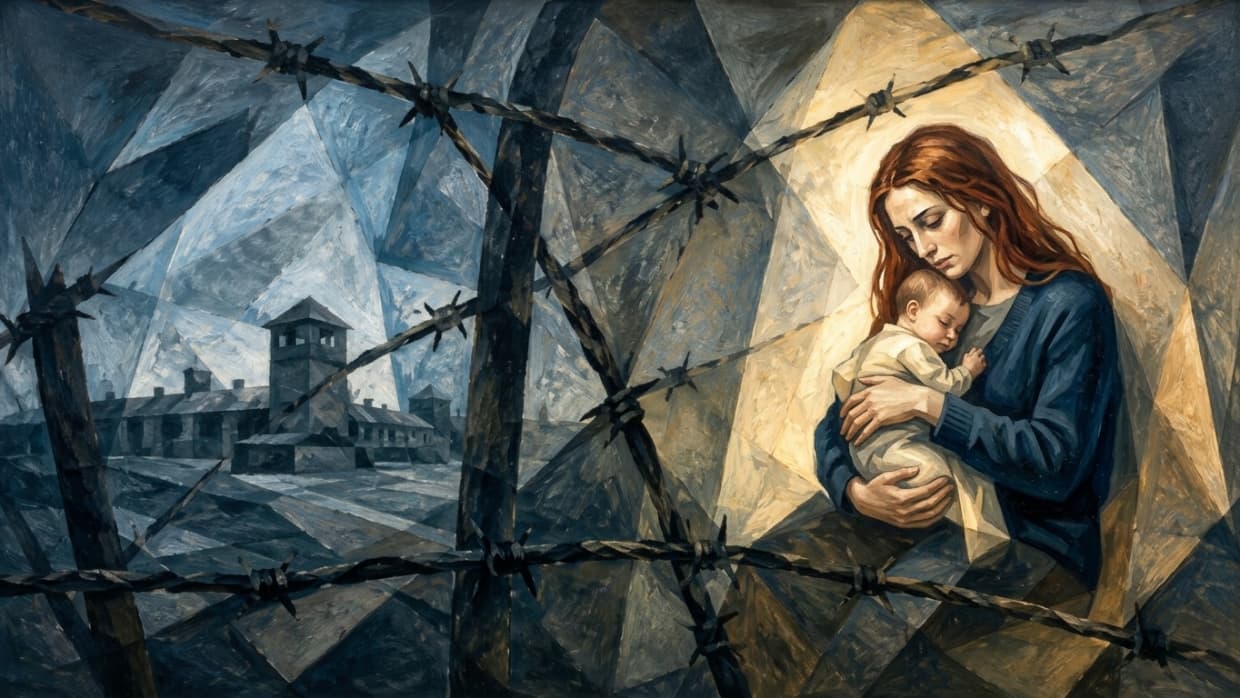
Auschwitz-Birkenau, where more than a million people were murdered, the majority of them Jews, is impossible to process. The barracks, barbed wire, railroad tracks, and remains of the gas chambers confront you with a scale of destruction the mind can hardly hold. I'll never forget standing there with a group of Jewish young adults, many unable to hold back tears. We spread out, giving each other space to grieve.
As I looked around, I thought about everything stolen from them: weddings that never took place, children never born, grandparents who never lived to hold a grandchild, wisdom never passed down. Entire family trees cut down before they had the chance to grow.
One moment remains especially vivid. We entered a barrack with the prisoners' communal washing and toilet facilities. Our guide explained how inmates were stripped not only of their freedom, but of nearly every trace of privacy and dignity – and that prolonged starvation and brutal conditions caused many women to stop menstruating altogether, their bodies too depleted to function.
Prolonged starvation and brutal conditions caused many women to stop menstruating altogether, their bodies too depleted to function.
I couldn't shake one thought: how many women stood in that very place praying that if they survived, they'd one day become mothers – that they'd rebuild the families the Nazis were trying to erase? For countless women, that future never came. What happened to those prayers?
Standing near me was a young woman named Genna, with long red hair and striking eyes. What I didn't know yet was how personally this moment would hit her.
Since her teenage years, Genna had lived with a hormonal condition. She depended on medication to induce her cycle and had never experienced one naturally. Doctors had told her that having children might not be possible. Still, for as long as she could remember, she'd dreamed of becoming a mother and raising Jewish children.
Earlier in the trip, Genna had broken down crying, and I'd held her hand and spoken to her about Asher Yatzar, the blessing thanking God for creating the human body with the wisdom to function properly. Now, standing in the barrack listening to how starvation had stopped these women's bodies from functioning, she wasn't just hearing another horrific fact. She was thinking about women who'd dreamed of marriage and children, only to have it torn away -- and about her own fear that her body might deny her the same dream.
She began to feel faint. I watched her go pale and lose her balance; a friend helped her outside. Since so many of us had been physically overwhelmed that day, I assumed the moment had simply become too much for her.

A short time later, Genna felt an unfamiliar heaviness in her body and went to the restroom. There, for the first time in her life, without medication, her menstrual cycle had begun entirely on its own.
The timing was impossible to ignore. Minutes earlier, she'd been standing in Auschwitz hearing how starvation once silenced Jewish women's bodies, wondering if she'd ever become a mother. Then, in that very place, her body began working naturally for the first time.
It felt like a clear answer to the prayers of Jewish women who once stood in that same place pleading for survival, children, a future. Those prayers were not forgotten; Genna was their answer.
Jewish tradition teaches that no prayer is ever lost; God keeps count, even when we can't see the answer or know when it will come. A prayer can sit before God for decades before it finally becomes a blessing.
From that moment on Genna began saying Asher Yatzar blessing every day. She later described it as "the day of sadness that turned into a day of hope and belief."
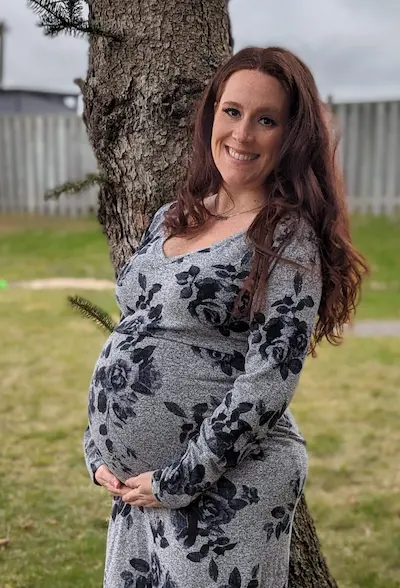
Since that day in Poland, Genna has married and built the Jewish family she once feared she'd never have. In 2024, she and her husband Shachar welcomed her first daughter. "Even now, when I look at my two-year-old, there are moments I just stare at her in amazement," she told me. "I still can't believe I'm someone's mother."
A few weeks ago, she delivered her second child, another healthy girl.
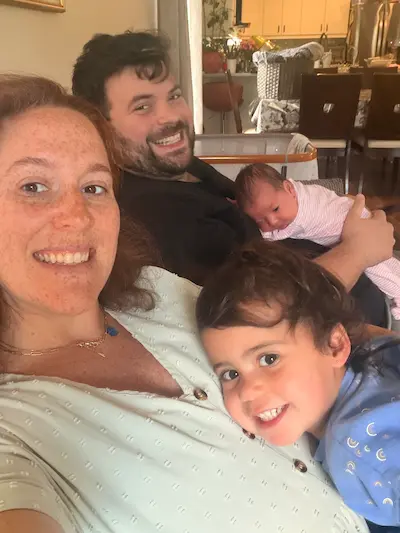
"I think of the women whose dreams of motherhood were stolen from them. I think of the generations that never got the chance to exist," Genna told me. "I wanted is a family of my own. My motherhood is in honor of all those women who prayed for motherhood. I am the answer to their prayers. Having Jewish children is the biggest blessing and I can’t be more grateful for what I have been given."
Our journey through Poland was meant to honor the murdered by choosing life. Every Jewish child born, every family built, every generation that carries our heritage forward is proof they did not succeed. Genna's answered prayer is a reminder of an enduring truth: we don't know when an answer will come, or how. Sometimes it takes years. Sometimes generations. But we keep praying, and keep building, knowing that no prayer is wasted.
Join Aish for a powerful, once-in-a-lifetime experience in Poland with a Holocaust Survivor.
This subsidized trip is open to all adults ages 20+ throughout North America.
For details and registration, visit:
livinglegacy.aish.com









Thank you so much for sharing Genna’s testimony. Our Heavenly Father is faithful and often times we try to force His hand regarding the bearing of children. Even child birth itself has become unnatural (with gender known and sometimes even the date of birth). Only the Creator knows what amazing beautiful children/adults He has called into being (as He did with Hannah’s son Shmuel HaNavi).
Thank you for inviting us into Genna's beautiful story. Baruch HaShem.
I love this story. We should never give up hope.
A beautiful story. Everything that happen in this world God knows. And God will always response in time.
My mother, an Auschwitz survivor, went to Sweden for rehabilitation after the war (where she lost her husband and one year old son, her parents and in-laws, and three sisters and their families in one night). Among the many things she spoke and wrote about, she told that in Sweden, when one of the survivors, all young women, began menstruating again, they all rejoiced. Baruch Hashem, she went on to remarry and rebuild a life, a family, and her people. Am Yisrael Chai.
I love Genna's story. I have been blessed with 4 children who gave me 22 grandchildren and we now have more than 100 great grandchildren, baruch Hashem. Every one is cherished and a testiment to our enemies that am Yisroel chai.