




 How Farming is Healing Israeli’s Wounded Soldiers

13 min read
12 min read
11 min read





He saw two corpses on Everest and nearly lost his fingers to frostbite. At 56, this is what Eitan Aizenshtein learned about faith and survival at the top of the world.
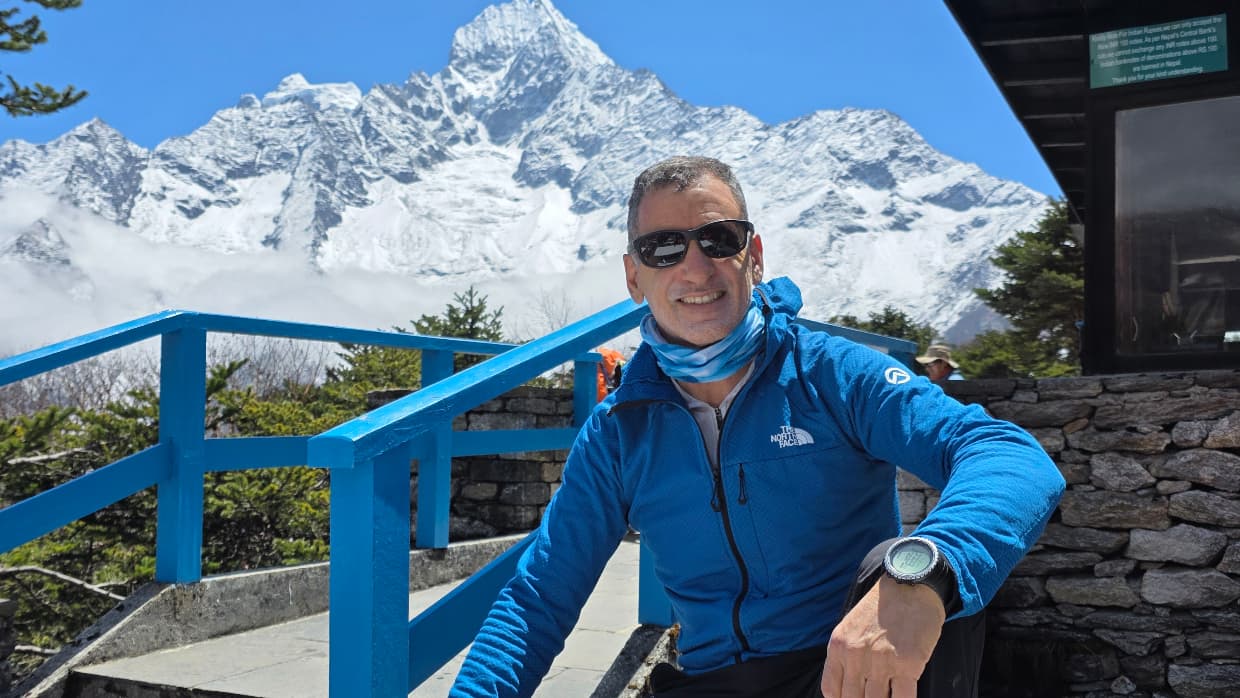
Growing up in Israel surrounded by adventure books, from a young age Eitan dreamed of climbing Mount Everest.
He became a long-distance runner, mountain climber, and extreme sports enthusiast and served in a special IDF unit that required special techniques as repelling, navigating and rescue skills.
In 1999, he climbed Alaska’s Mount Denali, North America’s highest mountain. “It’s one of the Seven Summits. Each continent has its highest mountain. I thought, You know what? I’ll do all of them.”
But life got in the way.
Eitan married Irit, opened a business, and had several children born one after the other.
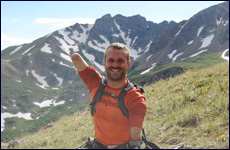
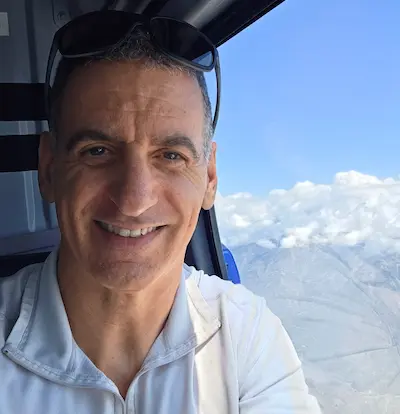 Eitan Aizenshtein
“When Irit was seven months pregnant in 2015, I told her, ‘I have an open account with this mountain, Aconcagua.’”
Years before while attempting the climb, he contracted cerebral edema, a dangerous condition associated with high altitude mountain sickness.
That was in 2000. Fifteen years later, Eitan felt it was time to return. But his wife was pregnant. “When I met my wife, I told her I had some unfinished business with that mountain and wanted to go back one day. I convinced her that my mother would come help while I was gone.”
Aconcagua is the highest mountain in South America and the Western hemisphere. The terrain was long and dangerous, but he made it to the summit.
Few years ago, he offered his young son to join him, as a Bar Mitzvah gift, to climb Mt. Kilimanjaro. He trained his son and both climbed it together.
After a few years he succeeded in climbing Mt. Vinson Massif, the highest mountain in Antarctica, considered to be the coldest mountain in the world, he set his sights on Mt. Everest.
His wife had plenty of reasons to object. The climb would cost approximately $100,000, require tremendous preparation, and take him away from work and family for two months.
Somehow, he convinced her. But just before the trip, Eitan almost cancelled.
Years earlier, he had been seriously injured in a bicycle accident. For weeks he couldn’t walk or move his leg and toes. Despite regaining feeling and movement, 10 years later he still experienced pain.
Just before Everest, the pain worsened.
“I almost cancelled,” he recalls, “I hadn’t trained in the mountains for a month.”
His wife told him, “You better go. The mountain air will cure you.”
He wasn’t convinced.
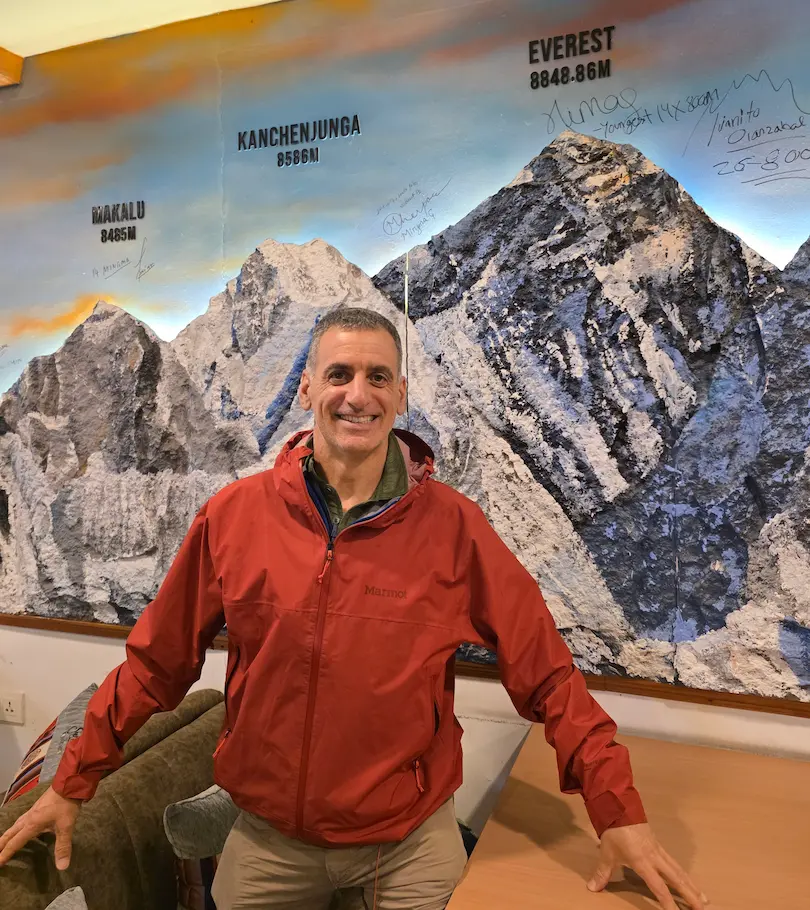
His sherpa, the mountain guide who accompanied him, gave him another option: Come to Everest, hike for 7-10 days to base camp, and if the pain was too much they would turn around.
So Eitan took the gamble.
Even the airport in Lukla is fraught with danger. It’s one of the most dangerous in the world because the runway, located between two cliffs, is very short.
After nine days, and trek acclimatization on two mountains, they reached base camp at 17,598’.
For many people, reaching base camp is the accomplishment. For Eitan, it was only the beginning.
From base camp to the summit, there are four additional camps. One of the most dangerous sections is Base Camp to Camp 1. Huge towers of ice collapse without warning. Deep crevasses cut through the glacier, sometimes requiring ladders to cross.
Eitan and his sherpa waited two weeks for fixed ropes to be established after an icefall collapsed. One afternoon, while returning from training during the wait, Eitan saw something black in a stream of melting ice.
It was a human corpse.
“As the ice melted, you could see the face, the harness, the carabiner. Everything. It was horrific and unbelievable.”
Eitan had never seen a dead body in the mountains before. And this was only the beginning.
As they climbed, Eitan encountered crevasses so deep several ladders had to be tied together to cross them. Crampons, spikes attached to his boots meant for ice, made crossing the ladders even more difficult.
“Every time I cross something like that, I pray Shema Yisrael a couple of times. It’s so scary.”
Eitan and his sherpa slept at Camp 2, at around 22,000 feet.
“You come with your gear and mental fortitude and the hosting company takes care of the food, tents, and oxygen supply.”
Getting from Camp 2 to Camp 3 requires climbing Lhotse Face, the steep face is leading toward the fourth-highest mountain in the world, Mt. Lhotse, at 45-90 degrees at all points.
Two days before Eitan reached Camp 3, an experienced sherpa fell to his death.
Eitan didn’t know and his sherpa didn’t tell him. “When I talked to my wife via WhatsApp, she asked about it. Everyone knew before I did. All it takes is one second of a lapse in attention and you’ll fall. One little thing you don’t clip correctly and that’s it. No second chance.”
For Eitan, the hardest was the mental aspect.
He had dreamed of climbing Everest for over 35 years. “I watched the videos and movies. I read the books. In the back of your mind, you know death can happen; you try not to think about it.”
Now, he couldn’t avoid thinking about it.
This was the third time Eitan was reminded of the possibility of death. And the climb had barely begun.
“You also are reminded of death when you hear avalanches during the night. They sound like they’re right next to you because there’s nothing to absorb the sound. When snow and ice aren’t stable, a huge chunk detaches from the mountain and—like a tsunami—wipes out anything in its path.
He had already seen death. Now he was hearing it.
As they continued past Camp 3 Eitan told his sherpa: “If at any point I’m mumbling, if I don’t know what I’m doing, if I look like I can’t make it, turn me around. I don’t care about the summit. I can always come back.”
Then he added what would become his mantra: “The mountain will be there.”
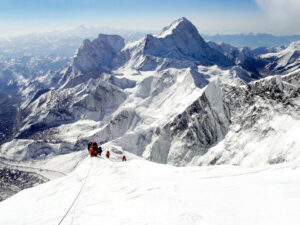
At nearly 26,000 feet Camp 4 is known as the Death Zone.
There is so little oxygen even experienced climbers cannot stay long. If something goes wrong, there is little room for error and no easy rescue.
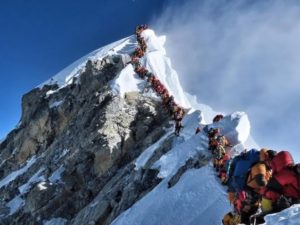
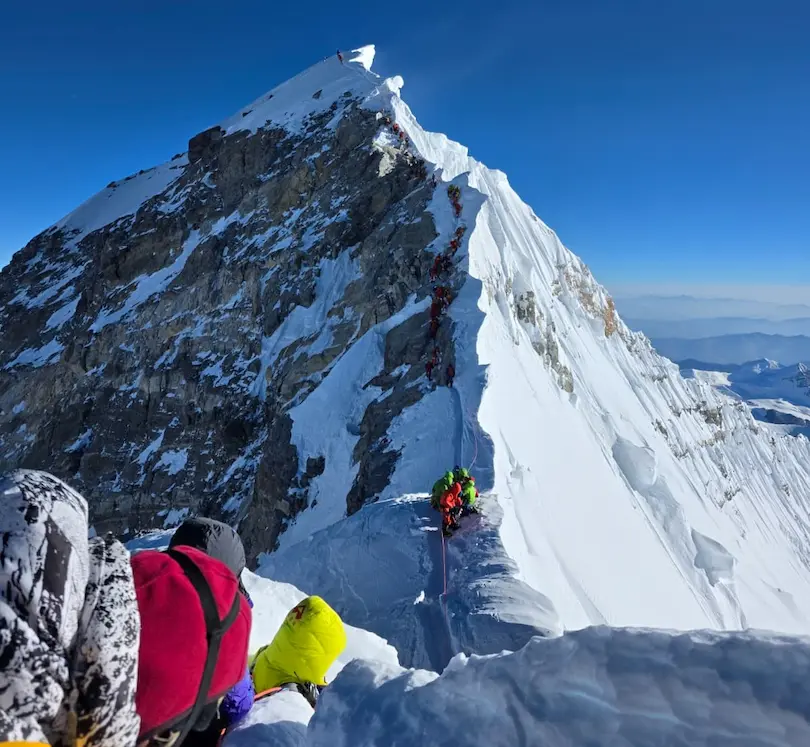
Eitan began his summit attempt at 9:30 p.m. Ahead of him a line of climbers stretched up the mountain. From a distance, their headlamps looked like a trail of lights.
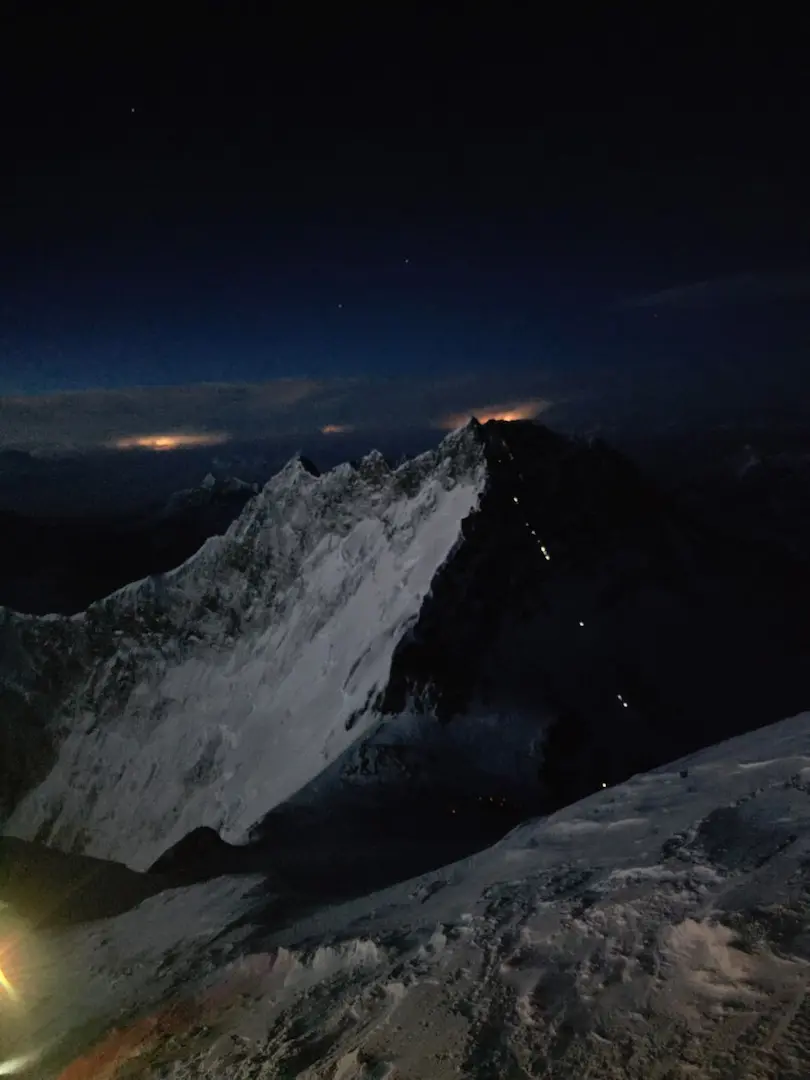
He saw a man leaning at almost a 90-degree angle against the rope.
His hand was exposed, his glove barely covering it. Eitan stopped and pushed the man’s hand back into his glove.
His sherpa noticed the man’s oxygen mask wasn’t properly positioned. He fixed it and told him, “Breathe, breathe.”
But Eitan knew the man was in trouble.
On Everest, timing matters. There is an unwritten rule that climbers must turn around by early afternoon if they haven’t reached the summit. Pedestrian traffic, inclement weather, or a depleted oxygen supply can quickly turn fatal.
Eitan and his sherpa began passing climbers.
“There were so many people because too many permits were given out, even to those without climbing experience.”
Some were marathon runners but high-altitude climbing is different and to climb Everest you must have experience with trekking and climbing.
At one point Eitan began losing feeling in his toes—the same leg damaged in his bicycle accident—and in his fingers. His sherpa told him to kick his leg.
Eitan kicked and clapped his hands, trying desperately to restore circulation. After 45 minutes, the feeling returned.
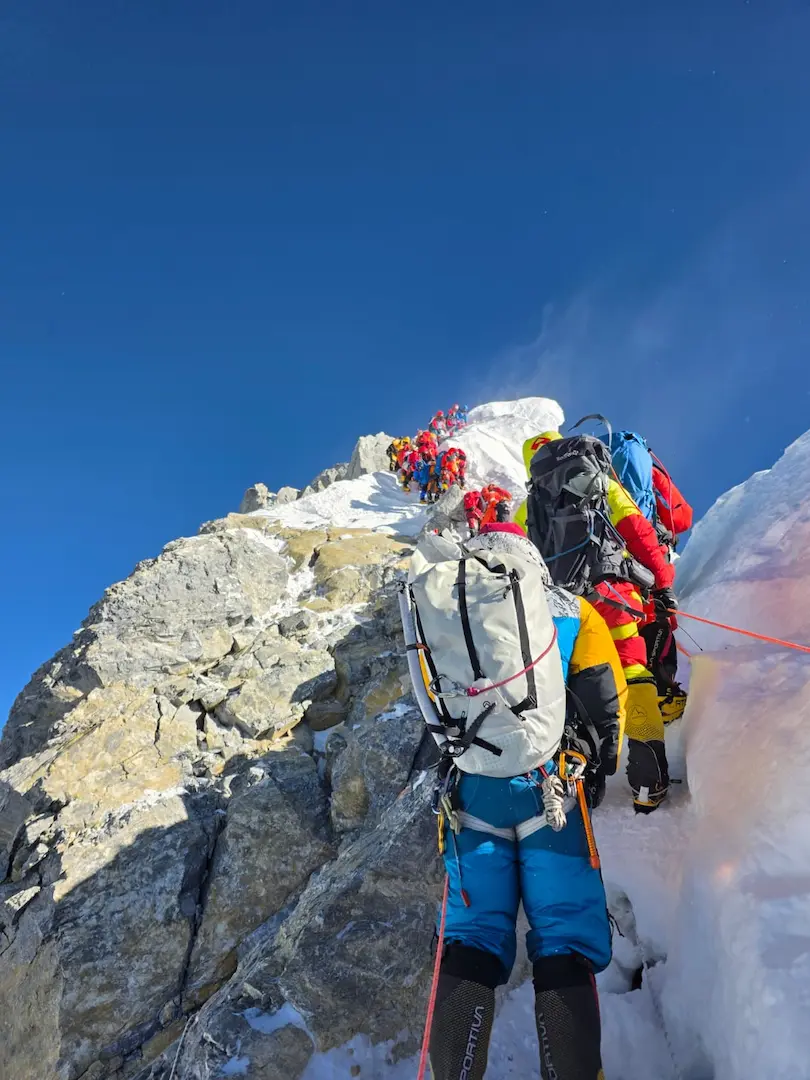
Then came the Hillary Step, one of the final major obstacles before the summit. There, Eitan encountered another body.
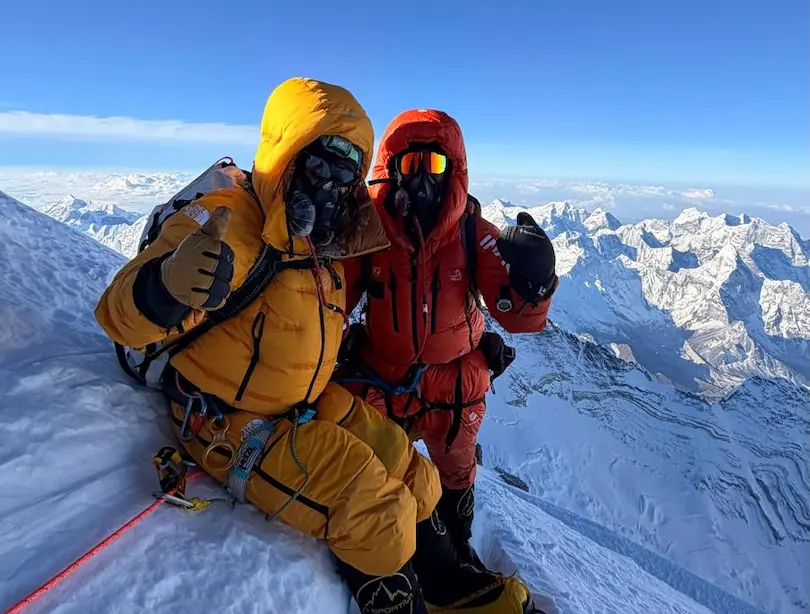
Finally, Eitan reached the summit (29,031’/8,849 mt.). After dreaming about it for 35 years, he expected to cry.
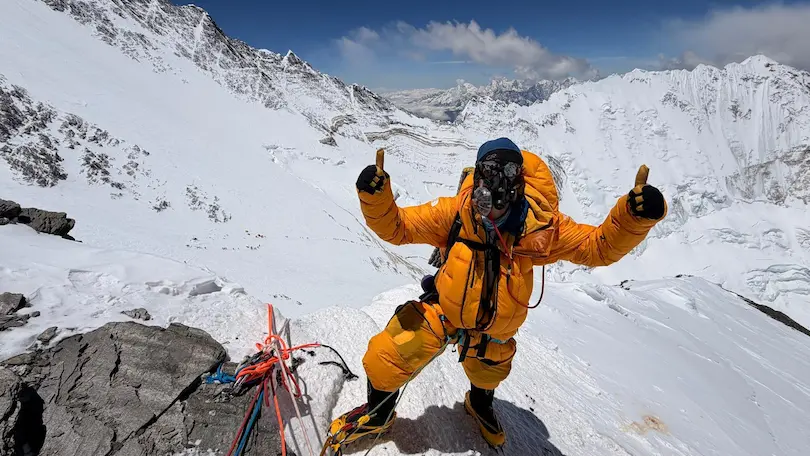
He didn’t. “I think I was in shock that I succeeded.”
He made a video dedicated to his wife, his company, his work, and God.
But reaching the summit didn’t mean he was safe.
In fact, Eitan says the descent is even more important than the ascent. “You should use 40% of your energy going up and 60% going down. Otherwise, you’re risking your life.”
On the way down, Eitan again got stuck at the Hillary Step. People weren’t moving.
He was forced to pass the same body he had seen earlier.
“People nearly stepping on his head. It was too hard for me to even look.”
At one point, Eitan felt he didn’t have enough oxygen yet the tank had enough.
Ice created by condensation from his breath had accumulated over his mask and blocked the flow of oxygen. His sherpa removed the ice and Eitan was able to breathe again.
But the most powerful moment of the descent was still to come.
Eitan saw a woman dying. She had no oxygen and her sherpa wasn’t helping her.
Eitan’s sherpa guide gave her oxygen. Later, he encountered another climber sitting on the mountain who also appeared to be running out of oxygen.
Eitan urged him to descend and together with another sherpa they found oxygen for him. The man’s life was saved.
That’s when he realized the mountain wasn’t testing his strength. It was testing what kind of person he would be when he was afraid, exhausted, and unsure whether he himself would survive.
On the descent, Eitan saw something black in the snow. As they neared, he recognized the down suit and the boots. It was the man whose glove he had fixed. He was dead.
“I started crying. ‘Look. He’s dead!’”
The sherpa told him they had to keep moving. Stopping for a long time could put their own lives at risk.
Eitan couldn’t understand it. This man was alive only hours earlier. “We don’t know what happened to him.”
For Eitan, the mountain became a confrontation with mortality. Even after reaching Base Camp, he didn’t feel safe.
He relaxed only once he reached his hotel room in Kathmandu. He looked in the mirror and barely recognized himself.
“I looked like a survivor, skin and bones.”
He had almost no appetite throughout the climb and lost an enormous amount of weight. It took five weeks to regain the lost weight and muscle.
But he brought something much more valuable home with him: A new perspective on life.
This mountain was spiritually and mentally challenging. Eitan explains there is no way he could have made it without God. Although he’s not religious, he prayed to God more than ever before on that mountain. “Because you’re under so much mental stress, you need to believe there is something watching over you and keeping you safe. I don’t think I could have made it without that belief.
“Before we left to the summit, I recorded a video. In Hebrew, I said, ‘We are going to live. Shema Yisrael.’ I hoped it would save me. I don’t go to synagogue much or put on tefillin. But I felt that someone was watching me up there, looking after me. I will come back to my family.”
On the mountain Eitan went to sleep early. “At night, you go into your tent. You have so many hours of thinking alone. He asked himself, Do I deserve to stay alive? What did I do wrong this year that I can fix when I descend?” He reflected and took a hard look at his choices, where he made mistakes. “I had a lot of lonely moments. Without God, I don’t think I would have made it. I prayed all the time that He would save me and help me get home safely—not just alive, but with all my toes and fingers.”
Eitan had a lot of hard moments. When he stared at Lhotse Face he thought, There is no chance in the world.
“Sometimes you look at a situation and think it’s hopeless. You don’t believe you can make it.
But there is a chance. Take it step by step, one hour at a time. When you think a situation is hopeless, don’t give up! Man’s Search for Meaning by Viktor Frankl (which I brought with and read on the mountain) taught me even when you think a situation is hopeless, there can still be light at the end of the tunnel.”
Eitan did his best to keep a positive outlook.
“I know it’s dangerous but I’ll take one more step, and then another. Don’t give up. Keep dreaming, doing, hoping, praying. And you’ll make it. If not this year, next year.”
While he was thousands of miles away, Eitan’s wife was home with their children communicating with him via satellite and encouraging him every step of the way.
She would say, “You’re so strong. You’ll make it.”
“If you don’t have someone encouraging you, you can have a lot of bad moments,” Eitan says.
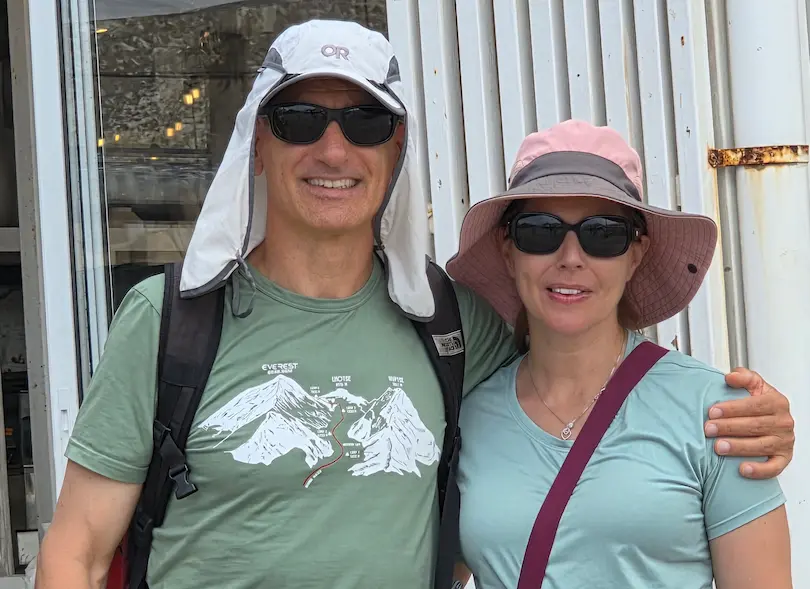 Eitan and his wife, Irit
Sometimes we need another’s belief when our own runs out. For Eitan, that was his wife.
He credits three forces with helping him survive Everest: God, his wife, and his sherpa.
We all have mountains to climb. And the greatest strength is in knowing whom to turn to when we’re afraid, holding on to hope when the path seems impossible, and taking just one more step.
The mountain will be there. And there is always another step to take.