



 The Blood Libel Machine
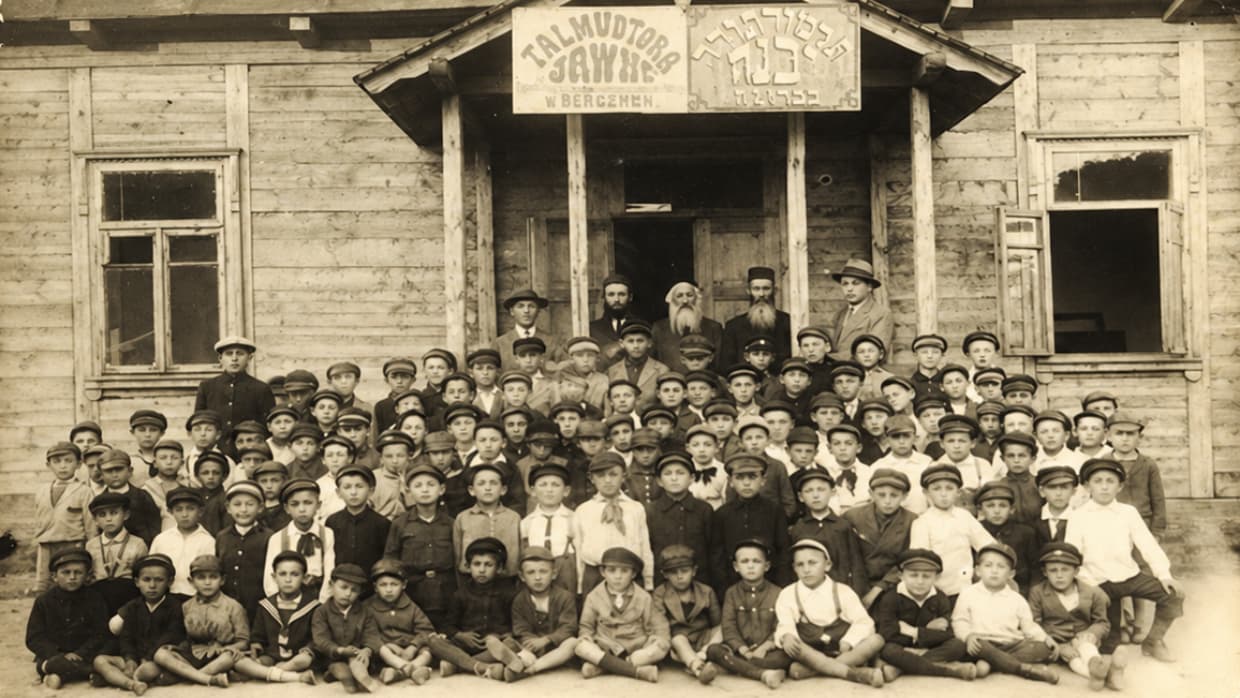





Historians say religious life in prewar Poland was dying out. A new book argues the opposite: traditional Judaism was booming, and its schools survived even inside the Warsaw Ghetto.
On the eve of World War II, Poland was home to about 3.3 million Jews, the largest Jewish community in Europe. We usually picture its final years as a story of religious decline. Young Jews, the story goes, were leaving the synagogue in droves, trading prayer books for socialist pamphlets and Zionist dreams. By the time the Nazis arrived, the old religious world was already fading.
Historian Glenn Dynner says that picture is wrong.
Dynner, a historian of Polish Jewry who is currently the Jay Berkowitz Chair in Jewish History at the University of Virginia, has spent his career studying Hasidism, the mystical, joy-filled movement founded in the 1700s that went on to win over much of Eastern European Jewry. His earlier book on how Hasidism spread across Poland won the Koret Publication Prize, and he received a Guggenheim Fellowship to research the movement’s role in 20th-century Poland. That research became his new book, The Light of Learning: Hasidism in Poland on the Eve of the Holocaust.
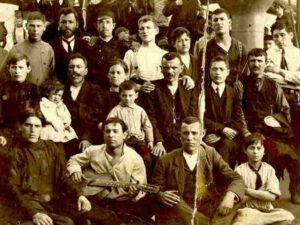
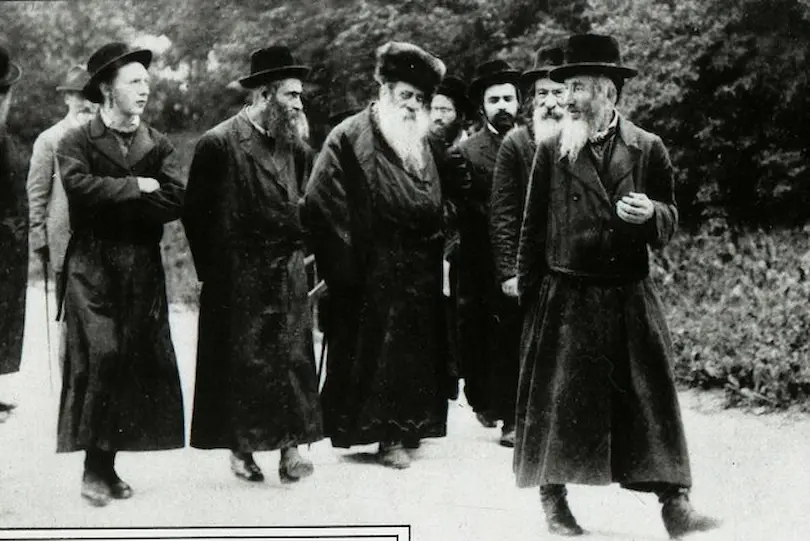 Hasidic Jews in pre-war Poland
Large secular movements did emerge in those years, Dynner acknowledges. But Hasidism and traditional Judaism were not shrinking. They were experiencing a revival. His book tells the story of that revival, from its beginning to its tragic end.
It began just after World War I. Polish and Eastern European Jewry lay in ruins. The new Polish republic, born from the war, made school mandatory as a way to unite the country’s many minority groups.
Until then, religious Jewish boys studied in heders (literally “rooms”), small informal schools held in the synagogue or the teacher’s home. Girls were taught at home by their mothers. Now, for the first time, Jewish parents had real choices. They could send their children to Polish public schools, or to secular Jewish schools run by the Zionists or by the Bund, the Jewish socialist movement.
Orthodox Jews were still the largest group in Polish Jewry, and none of these options satisfied them. A pamphlet from Agudath Israel, Poland’s leading Orthodox organization and political party, put it bluntly: “The Tarbut (Zionist) schools push assimilation in Hebrew, the Tsysho (Bundist Jewish socialist) schools in Yiddish, and the public schools in Polish.”
“The only antidote,” Hasidic leaders agreed, writes Dynner, “was formal Torah study.”
Almost overnight, rabbis, Hasidic Rebbes and even women activists, many with no training as educators, began opening schools. Nothing like this had happened before.
The biggest breakthrough came for girls. Sarah Schenirer, a Krakow seamstress with no formal teaching background, believed Jewish girls deserved a serious religious education. Her passion and personal magnetism drew a devoted following, and the school she founded grew into the Bais Yaakov network, which spread like wildfire across Poland and the rest of Eastern Europe.
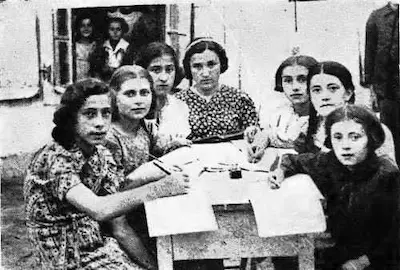 A Bais Yaakov class in Turobin before WWII
Another first was the Hasidic yeshiva, a full-time academy of Torah study. Hasidic life had always revolved around the Rebbe’s court. Now it had a new center of gravity.
The best known was Yeshivat Chachmei Lublin, founded in 1930 by Rabbi Meir Shapiro. At a time when many young Jews were heading to university, Rabbi Shapiro wanted his students to see themselves as an elite.
“Yeshiva students will no longer spend their nights as watchmen at warehouses or eat like beggars every day in a different house,” he wrote. “I’ll build them a royal palace.” He did. The yeshiva had a state-of-the-art building and a garden where students could exercise.
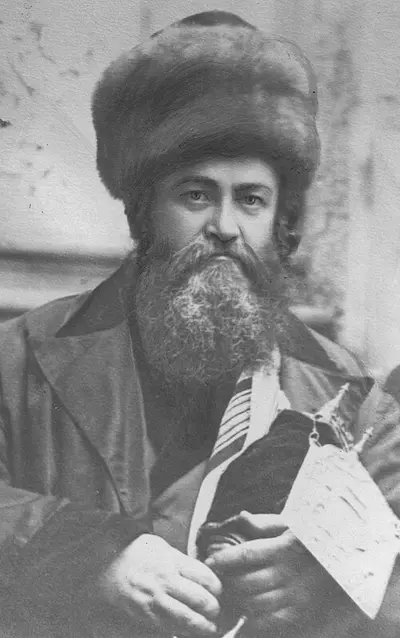 Rabbi Meir Shapiro
Dynner describes an incident said to have taken place in November 1939 at Yeshivat Chachmei Lublin. When German forces arrived, the 45 students who remained there apparently refused to go quietly. According to a Nazi officer’s official report, the soldiers met “unexpected and stubborn resistance by a large group of Jewish youths with beards and sidelocks clad in long clothing [who] fortified themselves in the large building of the yeshiva where they studied and shot at German soldiers from the windows and holes in the walls.”
Ultimately the students were overwhelmed and the Germans later requisitioned the building and its renowned library
Another educational pioneer was Rabbi Ben Zion Halberstam, the Rebbe of Bobov. His Etz Chaim yeshiva network had 33 branches across the Polish province of Galicia, teaching students Torah alongside practical job skills.
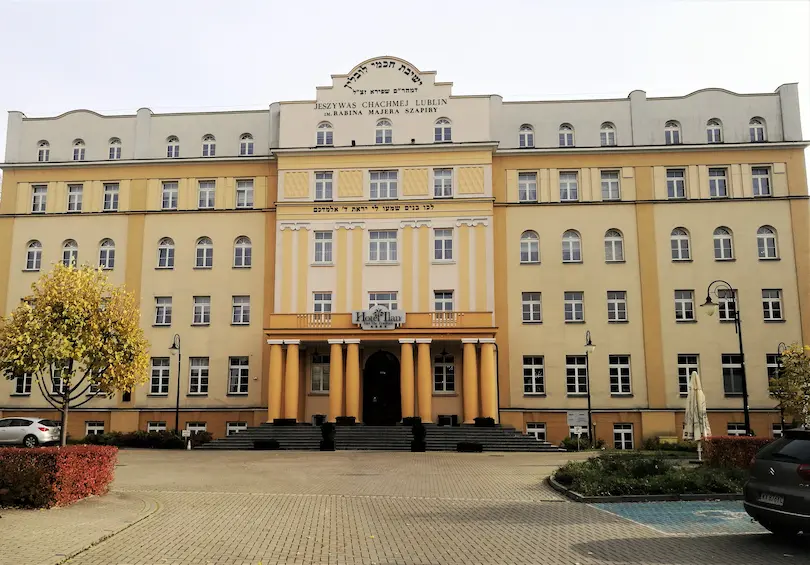 Yeshivat Chachmei Lublin
Poland was sunk in recession, so American Jews paid the bills. The money came through the Central Relief Committee, the Orthodox arm of the nonpartisan American Jewish Joint Distribution Committee. From 1921 to 1935, traditional schools received more than half of the Joint’s education funding.
Polish Jewry had entered its final chapter, but the people leading this revival didn’t know it. They saw themselves as building a future, and Dynner says the movement was driven by optimism. It carried on even into the Holocaust. His research shows that in the brutal conditions of the Warsaw Ghetto, 700 men studied in secret underground yeshivas.
Dynner also points to Rabbi Kalonymus Kalman Shapira, the Rebbe of Piaseczno, remembered by the title of his ghetto writings, Aish Kodesh (Holy Fire). He taught Torah in the ghetto to keep the Germans from destroying the Jewish spirit along with the Jewish body.
Knowing that he and his followers would probably not survive, Rabbi Shapira prepared them for the end. “He consoled his Ghetto audiences that martyrdom accompanied by proper mystical intention is not only painless but even pleasurable,” Dynner writes.
With help from Oyneg Shabbos, the secret ghetto archive run by historian Emanuel Ringelblum, Rabbi Shapira’s writings were sealed in metal milk cans and buried beneath Warsaw, where they were discovered after the war. Rabbi Shapira himself was murdered by the Nazis.
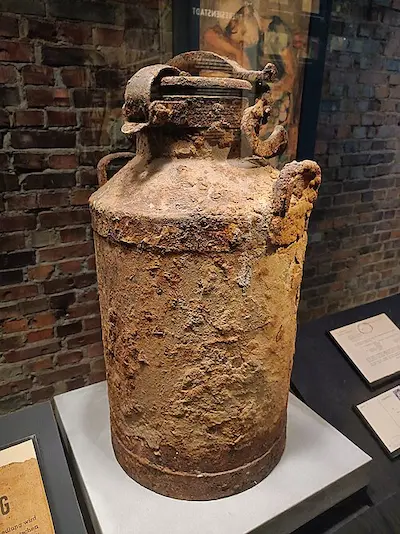 Ringelblum archive milk churn (USHMM)
Other Hasidic leaders, including Rabbi Menachem Ziemba, Warsaw’s leading rabbi, urged the community to fight back. Dynner relates that at Yeshivat Chachmei Lublin, Poland’s most prestigious Hasidic yeshiva, students split their time between study and combat, firing at the Nazis from inside the barricaded yeshiva building.
Hitler wiped out most of Polish Jewry. But the revival of those interwar years planted the seeds of something he could not destroy: the postwar rebirth of traditional and Hasidic Judaism in Israel, Europe and the United States.