 The Red Cross’s Jewish Problem






A king's enemies boast about "the House of David." A pharaoh bragged about defeating Israel. Here are ten of the most compelling archaeological finds tied to the Bible.
These aren't legends or interpretations. They are excavated objects, including inscriptions, tablets, monuments and scrolls, that name biblical figures, places and events.
Here are the ten finds ranked as most compelling, weighing directness of evidence, diversity and impact.
To get a professional's eye on the list, we spoke with Rabbi Barnea Levi Selavan, co-director of the Foundation Stone educational organization, a licensed educator and tour guide, and a PhD candidate in archaeology at Tel Aviv University.
Israel Museum, Jerusalem
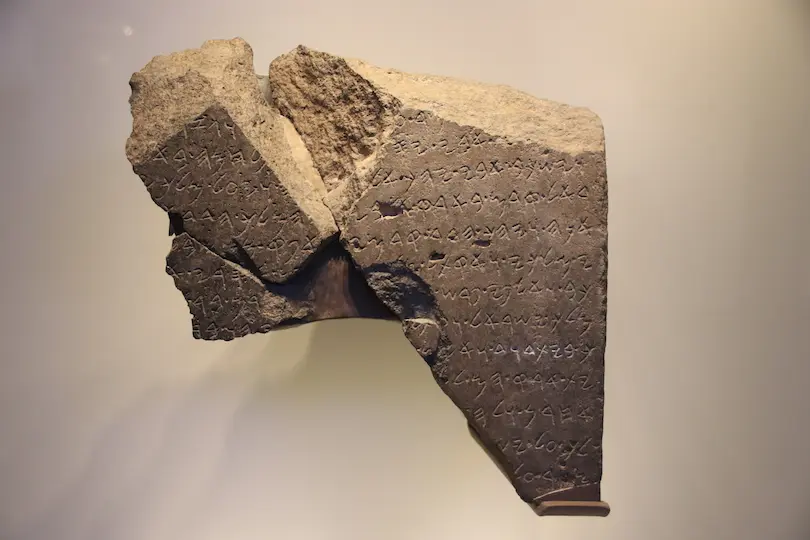 Photo: Gary Todd / Wikimedia Commons
Before this stele surfaced in 1993, some scholars dismissed David as a legend, no more historical than King Arthur. Then an Aramean king's own victory boast turned up, naming the king of Israel and the king of the "House of David." It's the first extrabiblical mention of David, written by a hostile neighbor with every reason to downplay Israel, not invent a dynasty for it.
For the Jewish people, David's historicity was never in question. We recite his Psalms, pray daily for the restoration of his dynasty and await Mashiach, a descendant of David. He is woven into Jewish life and our hopes for the future.
What the stele adds is outside confirmation. As Rabbi Selavan puts it: "I heard from Professor Israel Finkelstein that in Ancient Near Eastern texts the eponymous ancestor of a house is always named, so there's no question that the Tel Dan Stele shows the founder of the monarchy in Jerusalem was a man named David. To the biblical critic, it doesn't prove the stories the Bible tells about him; it only shows that there was a David. But that makes it a remarkable and unparalleled find in the world of biblical archaeology."
Israel Museum, Jerusalem
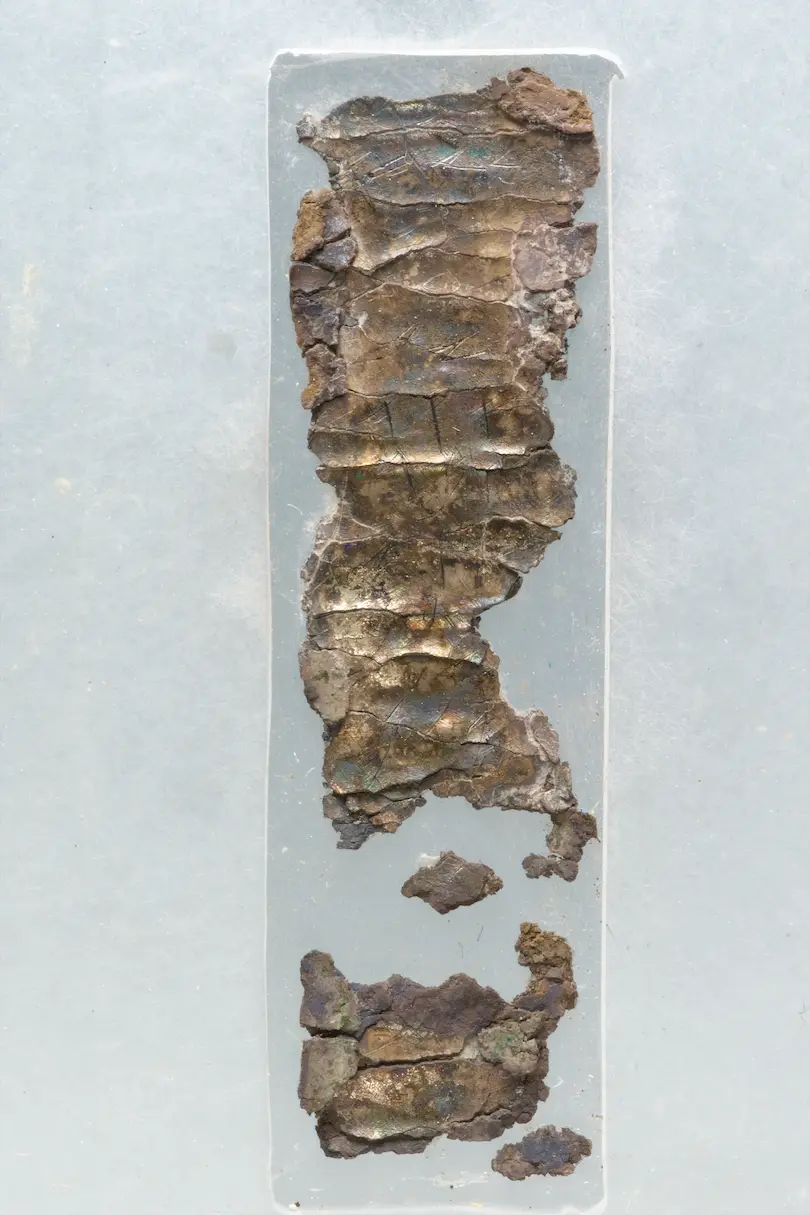
Found by Gabriel Barkay in 1979 in a burial chamber in the outskirts of ancient Jerusalem, these two tiny silver scrolls were rolled so tightly that conservators spent years working out how to open them. Inside is the Priestly Blessing, "The Lord bless you and keep you..." (Numbers 6:24-26), in wording nearly identical to the later Masoretic text. At over 400 years older than the Dead Sea Scrolls, it's the oldest surviving biblical text ever found.
For Rabbi Selavan, the find is another expression of something Jewish tradition never doubted. "Scholars have long assumed that literacy came late to ancient Israel. To Jews, that's laughable. Of course people wrote: we have a Torah scroll that's read regularly, a mezuzah, a commandment to teach, and yeshivas with tens of thousands of students. There's even a verse about a young man who wrote down a list of names (Judges 8:14). That assumes you trust the Bible, and we do."
He adds a personal connection: "In Israel, the Kohanim recite this blessing every day at Shacharit; in many communities outside Israel, on Yom Tov. And every parent uses it to bless their children on Shabbat. So each of us, when we bless our children on Friday night, should realize that we are saying words that were already being written down 2,600 years ago."
Egyptian Museum, Cairo
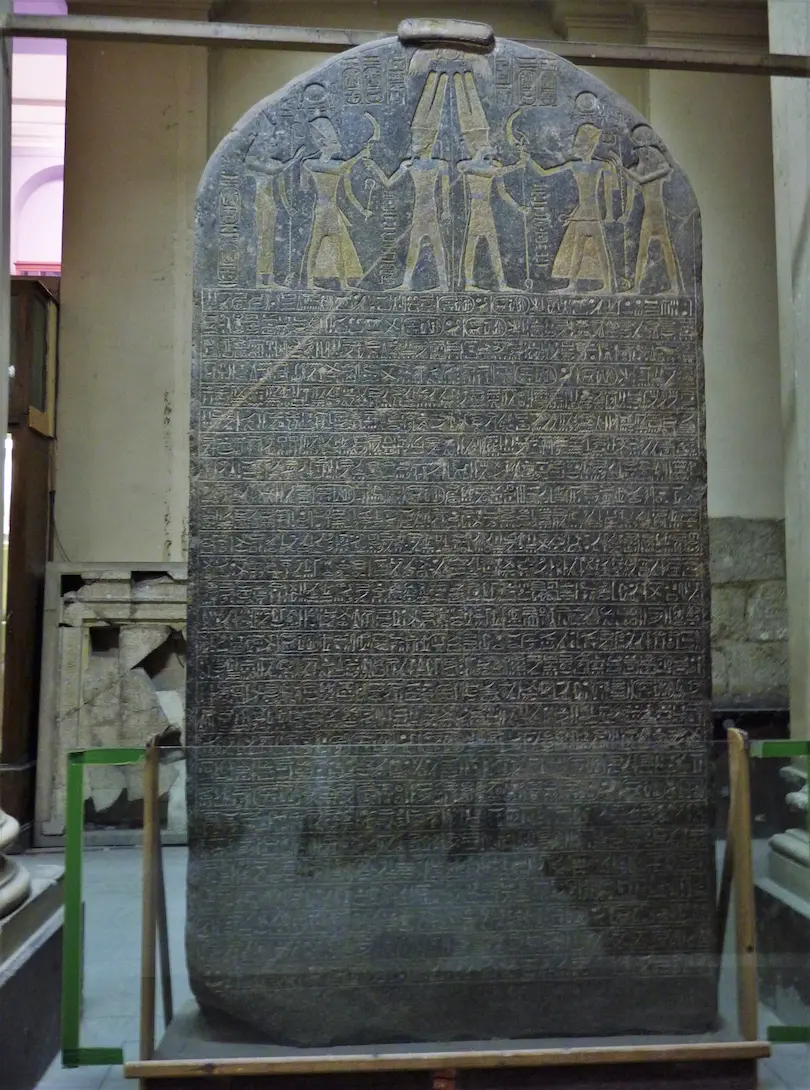 Alyssa Bivins / Wikimedia Commons (CC BY-SA 4.0)
Pharaoh Merneptah boasts of devastating Canaan: "Ashkelon is conquered; Gezer is seized; Yano'am is made non-existent; Israel is laid waste, its seed is no more." It's the earliest certain mention of Israel outside the Bible. Ashkelon, Gezer and Yano'am are marked as city-states, but Israel alone is marked as a people, a group with no fixed city and no king, which is how Egypt's scribes saw it.
The Torah traces the nation's name to our forefather Jacob, renamed Israel (Genesis 32:29). Merneptah's stele shows that name already attached to a people in Canaan by 1208 BCE, just over a century after the traditional dating of the Exodus.
"It means that our identity, as recorded in Genesis, was already in place 3,200 years ago," says Rabbi Selavan. "Here is the Egyptian king calling us 'Israel,' a distinct people, carrying the name of our ancestor. And the nation that, according to our tradition, once hosted us is now celebrating a victory over us, which means that on some level our people and theirs were adversaries."
London, Chicago and Jerusalem
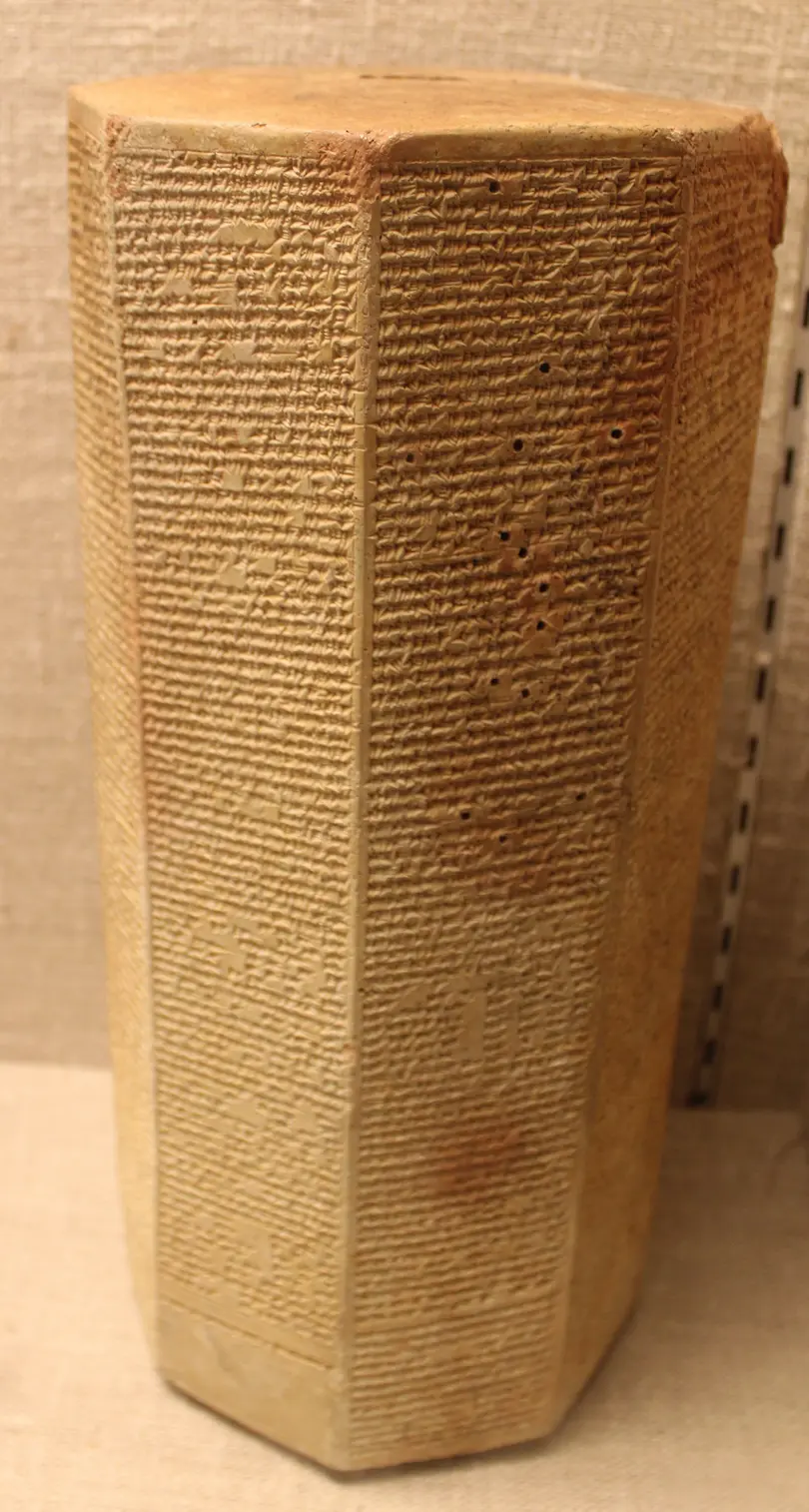 Photo: Zunkir / Wikimedia Commons (CC BY-SA 4.0)
Sennacherib's annals survive on three clay prisms bearing the same text. All three name "Hezekiah the Judahite," list 46 Judean cities captured and boast of trapping him "like a bird in a cage," but never claim to have taken Jerusalem. That matches 2 Kings 19 precisely, where the Assyrian army withdraws without taking the city.
The Tanach tells this story in both Kings and Isaiah (Isaiah 36-37), and our tradition places the downfall of Sennacherib's army on the night of Passover (Shemos Rabbah 18).
The king's own priorities, says Rabbi Selavan, tell the story: "You have a whole wall in your palace dedicated to the destruction of Lachish. That's not the capital of Hezekiah! Why boast about capturing Lachish? Because he clearly didn't capture Jerusalem. Lachish was all he could talk about." The ground agrees: Lachish has a clear destruction layer from this period, while Jerusalem does not.
British Museum, London
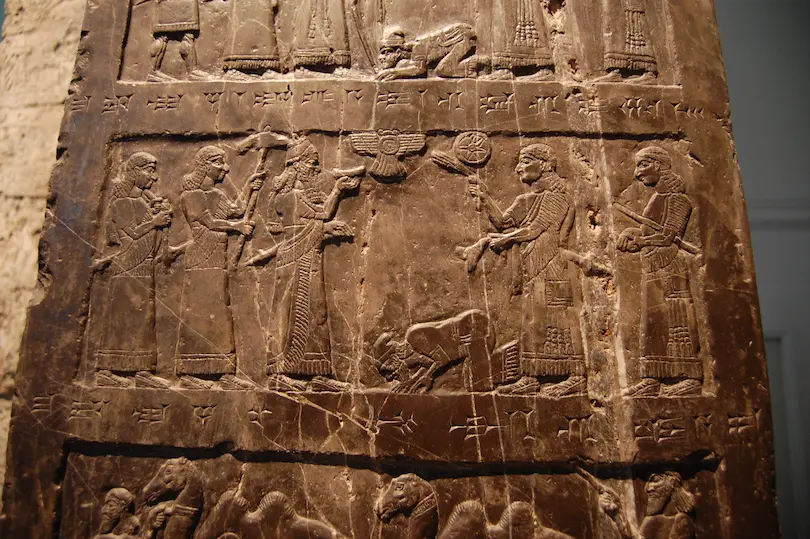 Photo: Steven G. Johnson / Wikimedia Commons (CC BY-SA 3.0)
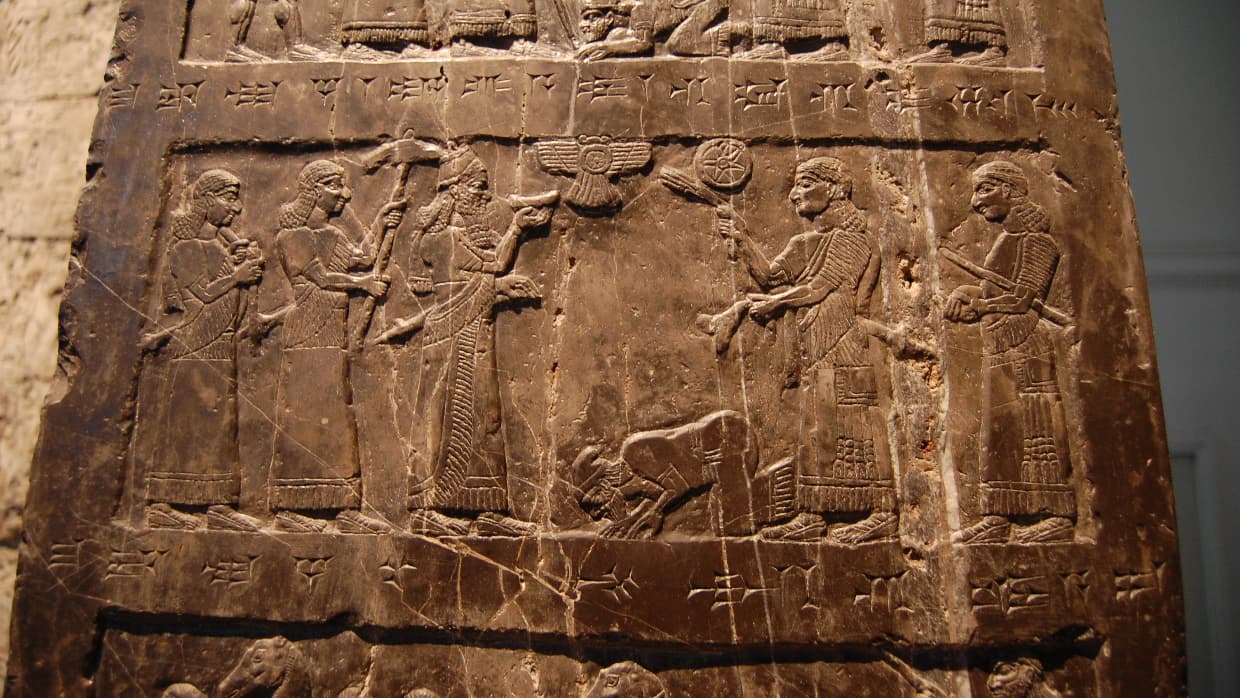
One panel shows a man face-down before the Assyrian king, presenting silver, gold and a golden vessel. The label reads "Iaua son of Omri," King Jehu of Israel. It's the only surviving image of any king of Israel or Judah ever found.
Rabbi Selavan describes the effect on someone meeting it for the first time: "Imagine standing in front of this artifact in the British Museum with a Bible in your hand and realizing this is a character from Kings, so real that an Assyrian emperor had his court artist carve him bowing in tribute. It doesn't prove everything the Bible says, but suddenly you realize these are real people, as real as anyone in the news. And with the obelisk, you're not just reading an inscription in a language you can't read; you're seeing the king himself. It's like seeing a photo of Abraham Lincoln standing in a crowd, and you can make out his hat. You already knew he was real. But now you see him."
Louvre Museum, Paris
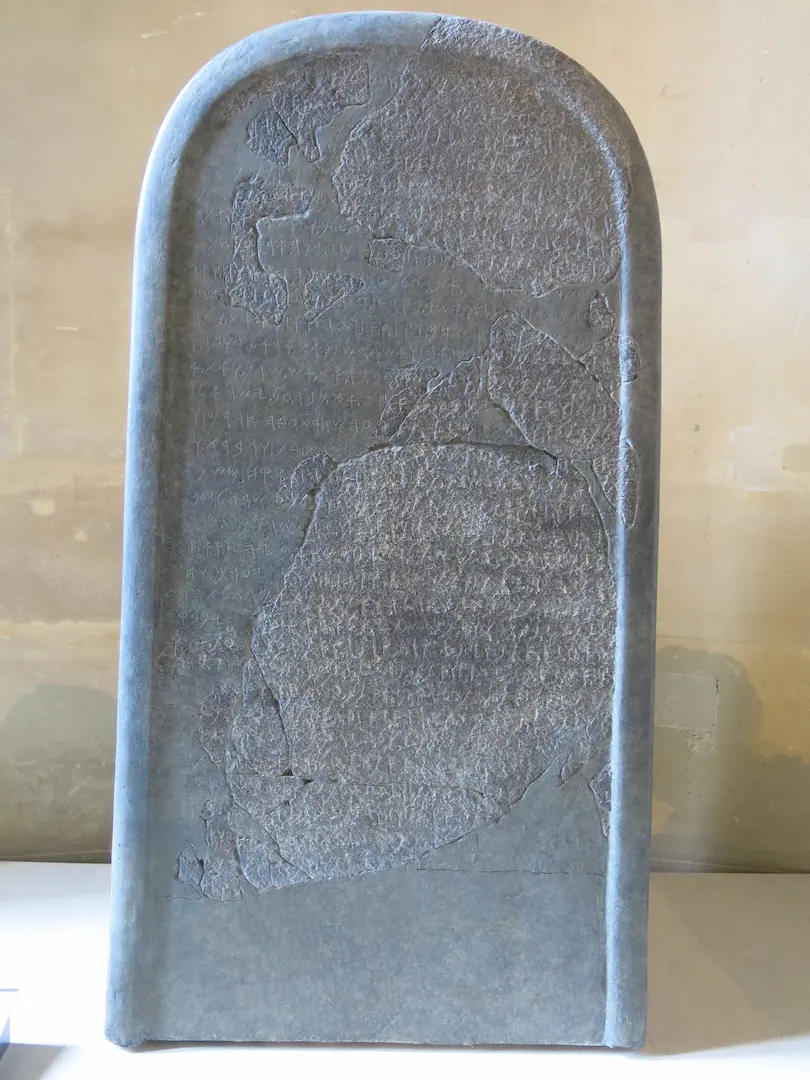 Photo: Tangopaso / Wikimedia Commons (public domain)
Chapter 3 of Kings II describes Israel and Judah crushing a Moabite revolt, and Moab's king left behind his own version. Mesha boasts that he broke free from "Omri, king of Israel," and the stone reads like a map of biblical Transjordan, naming Dibon, Medeba, Nebo and Ataroth, where "the men of Gad" had lived from ancient times, just as Numbers 32:34 places them. A damaged line remains disputed: André Lemaire reads "House of David"; others read "Balak," the Moabite king of Numbers 22.
The stone's geography, Rabbi Selavan says, is what stands out: "Mesha introduces himself as the Dibonite, and Dibon is a city we know from the Tanach. He takes Medeba, Baal-Meon, Kiriathaim, all places named in the Bible. Then he says the men of Gad lived in Ataroth from ancient times, and you think, the tribe of Gad!"
Pergamon Museum, Berlin
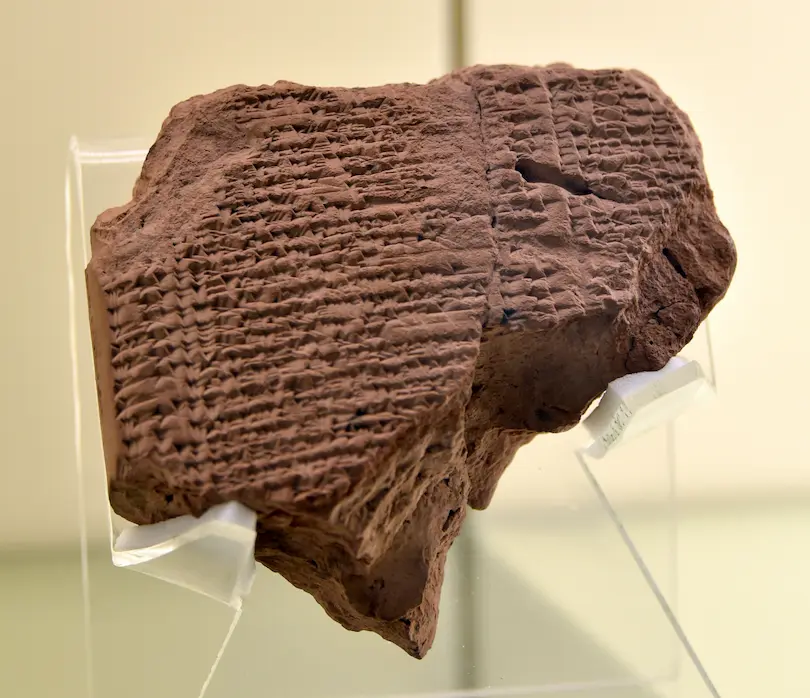 Photo: Osama Shukir Muhammed Amin / Wikimedia Commons (CC BY-SA 4.0)
Excavating Babylon, Robert Koldewey uncovered a palace storeroom's administrative tablets. Among the lists of oil issued to captives and craftsmen are entries for "Yaukin, king of the land of Judah" and his five sons. It's bookkeeping, not a victory monument, and it places the exiled king of Judah in Babylon, alive, fed by the crown and still called king by his captors.
Jehoiachin, known in Tanach as Yechonya, was a king of David's line, and his exile in 597 BCE became a landmark in its own right: Ezekiel counts years from it (Ezekiel 1:2), and so does the last paragraph of Kings (2 Kings 25:27).
That final paragraph is what struck Rabbi Selavan. "After everything has been lost," he says, "the new king of Babylon lifts our king out of prison and seats him above the other kings. Thematically, it's a light turning on."
Then, in the ruins of Babylon, a clerk's own ledger turns up with the same king's name on it, confirming in the ground one of the most pivotal moments in Tanach.
British Museum, London
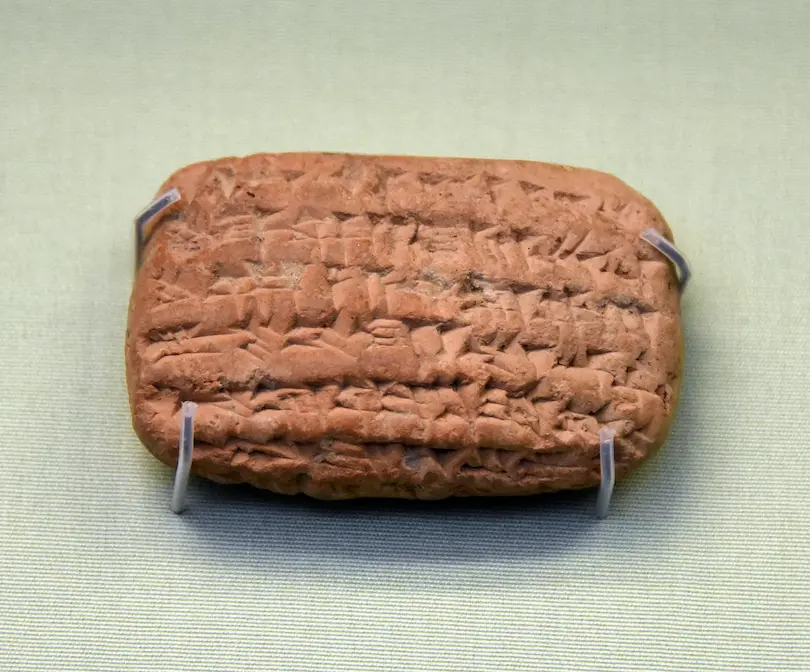 Photo: Osama Shukir Muhammed Amin / Wikimedia Commons (CC BY-SA 4.0)
Jeremiah 39:3 lists Babylonian officials present at Jerusalem's fall, the kind of incidental detail no writer expects anyone to check. In 2007, Assyriologist Michael Jursa was deciphering a routine temple donation receipt from 595 BCE when he recognized "Nabu-sharrussu-ukin, the chief eunuch," Nebo-Sarsekim, word for word.
"If you're making up a story, you want to make up as few facts as possible, because you don't want to be tripped up," says Rabbi Selavan. "But if you're being accurate to this level, it gives more credibility to the other things for which we don't have evidence."
Jordan Archaeological Museum, Amman
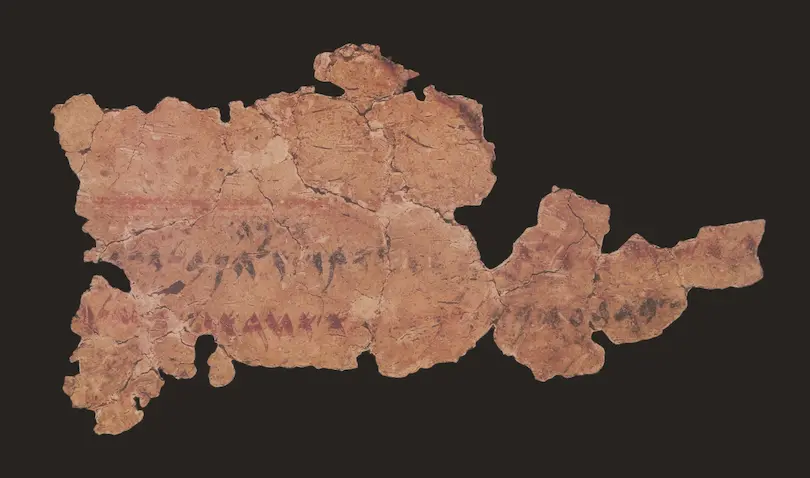 Photo: Henk de Bruin / Rijksmuseum van Oudheden, via Erfgoed Leiden (CC0)
Numbers 22-24 casts Balaam as a famous foreign prophet, but outside the Bible there was no trace of him. Then in 1967, archaeologists at Tell Deir Alla in Jordan uncovered plaster wall fragments describing visions received by "Balaam son of Beor, a seer of the gods," in a script unconnected to Israelite scripture. A community that never read the Torah remembered him as a real seer.
Balaam's words have a daily place in Jewish life. Each morning, as we begin our prayers, we say "Mah tovu ohalecha Yaakov," the words Balaam, hired to curse us, blessed us with instead (Numbers 24:5).
Rabbi Selavan notes that the site itself is a link back to our texts: Deir Alla preserves the ancient name Tar'ala, which the Jerusalem Talmud uses for biblical Sukkot.
Israel Museum, Jerusalem
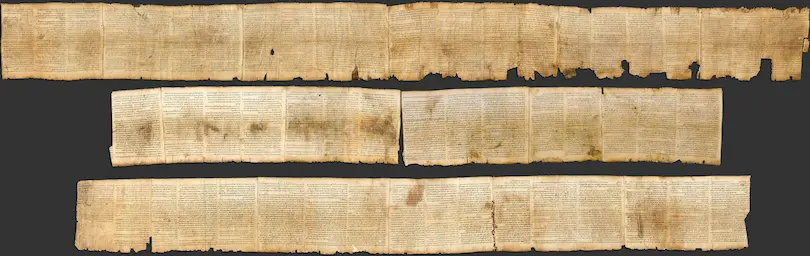 Photo: Ardon Bar Hama / Wikimedia Commons (public domain, tagged PD-Art)
According to the popular account, a Bedouin shepherd searching for a stray goat in 1947 threw a rock into a cave near the Dead Sea and heard pottery shatter. Inside were the first of over 900 ancient manuscripts, the greatest manuscript discovery of the 20th century. The Great Isaiah Scroll holds the whole book, all 66 chapters, dated to around 125 BCE. It's remarkably close to the text used today, with most differences being spelling and grammar, and it's about a thousand years older than the oldest previously known complete Hebrew copies.
Isaiah is read in synagogue throughout the year, including the seven haftarot of consolation after Tisha B'Av.
Rabbi Selavan notes the laws our tradition set for scribes: "It is well known and recognized in the Talmud and in Jewish law, in the laws of how a scribe has to write, how difficult it is to transmit texts accurately to the letter and to the word." In his own assessment, the Great Isaiah Scroll was a study copy, not a synagogue scroll, made by a community outside the mainstream that didn't keep those safeguards, so spelling variants and slips are no surprise. "And yet," he says, "the degree to which it still conforms to the Masoretic text is striking."
For those who have received the Torah from generation to generation, faith has never depended on archaeology. But for a generation that feels far from that tradition, the ground has something to say. Asked for one takeaway for the casual reader, Rabbi Selavan says: "For any physical material to survive thousands of years is remarkable, and the further back you go, the less survives. That these finds are surfacing in our generation is a gift. For people who feel distant from a conversation that has been going on for thousands of years, they are a way in, a chance to see that the conversation is real and that the evidence for it is in the ground."
ModernTribe.org is a new site cataloging more than 100 verified archaeological finds that corroborate the historicity of the people, places and events of Tanach. The finds span roughly 1,800 years, from the patriarchal era to the closing of Tanach, and can be sorted by century, location or biblical figure. The site also includes an interactive timeline, a map of where each artifact was unearthed and where it's held today, the full text of Tanach with the archaeological finds built in, and a Skeptic's Guide that takes on the common counterarguments head-on.
Explore all 100+ verified finds, browse by biblical figure or event, or dive into the books and videos on the resource page at ModernTribe.org.