



 The Jewish Woman Who Founded Canada’s National Ballet
Jewish Geography
Jewish Geography






When nearly every country shut its doors to Jewish refugees, Shanghai stayed open. The surprising story of China’s Jews, from merchant dynasties to scholars who outlasted Hitler.
Jews have lived in China since the days of the emperors. Some historians believe Jewish communities existed there as early as the seventh and eighth centuries. Jews there experienced some persecution under Kublai Khan, grandson of Genghis Khan, who banned circumcision and kosher slaughter in 1280. (Some historians say Genghis Khan himself banned circumcision and kosher slaughter for everyone under his rule.)
The best-documented Jewish community grew up in Kaifeng, one of the Far East’s wealthiest cities. Jewish merchants bought Chinese spices, exotic textiles, pottery, and carpets and shipped them to customers abroad.
Kaifeng’s financial opportunities turned it into a center of Jewish life and trade, and the community lasted for centuries, until the mid-1800s. One of the “Seven Ancient Capitals of China,” Kaifeng had nearly a million residents. China’s ruling Song emperors welcomed the Jews and let them live without fear of persecution. The Kaifeng Jews were given seven family names: Ai, Shi, Gao, Jin, Li, Zhang, and Zhao. Gao was reserved for Kohanim (descendants of the ancient priests) and Li for Levi’im (Levites, the priests’ assistants). Some of their descendants, no longer Jewish, still carry these names in Kaifeng today.
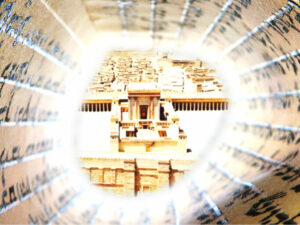
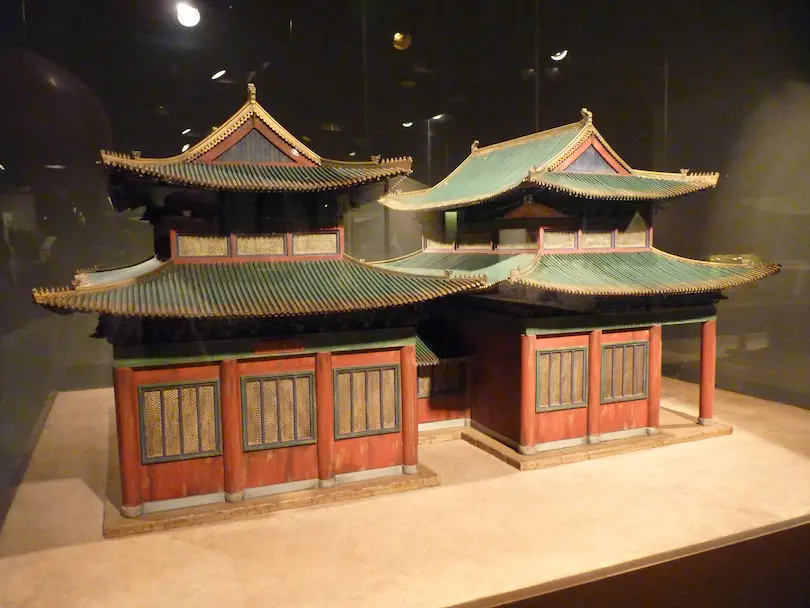 A model of the Kaifeng synagogue at the Diaspora Museum, Tel Aviv (Ricardo Tulio Gandelman, Wikipedia)
The community thrived. It built a synagogue in 1163 and eventually grew to several thousand members, some of whom rose to prominence in business and government. But without strong Jewish education, most Kaifeng Jews gradually assimilated.
In 1841, floods swept through Kaifeng and destroyed the last remaining synagogue.
Shanghai, a port city in eastern China, opened to foreign trade in 1843. It began as an international port with separate districts for foreigners. After China lost the First Opium War in 1842, the city was carved into zones: a Chinese Zone (Greater Shanghai), a French Zone, an International Zone run jointly by the British and Americans, and a Japanese Zone.
Shanghai grew into a hub of commerce and banking, drawing foreigners from around the world in search of opportunity. Among them were Jews from many countries, including the Sassoon family.
Known as the “Rothschilds of the East,” the Sassoons were led by David Sassoon, a hugely successful Bombay businessman. Even before the treaty ports opened, he was already trading in Canton, in southern China. Once they opened, he sent his sons to establish branches there.
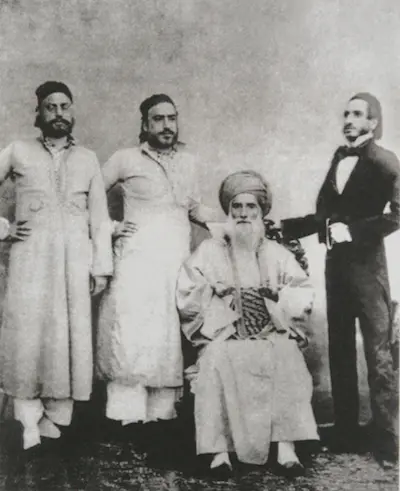 David Sassoon (seated) and his sons Elias David, Albert Abdallah and Sassoon David.
In 1844, his son Elias David Sassoon arrived and opened branches of David Sassoon & Co. in Shanghai, Canton, and Hong Kong. A gifted businessman, he prospered. In 1867, he broke off from his father’s firm and launched his own company, E.D. Sassoon & Co., with branches in Shanghai and Hong Kong. It grew quickly and became a byword for success in business and banking.
The Sassoons were strictly observant and deeply involved in Jewish communal life. They recruited young Jewish men into the business, trained them in Bombay, and sent the most promising to China as clerks or managers. Many of the employees were Sassoon relatives and their spouses.
So Shanghai’s first Jewish community was made up mostly of Sassoon family members, their employees, and the children of former employees. Records from as early as 1850 list three Jews in Shanghai, all described as “assistants of the firm David Sassoon, Sons and Co.”
By 1862, a small Jewish community had taken root. That year, David Sassoon donated a cemetery on Mohawk Road to the congregation. It remained in use until 1919 and is the only surviving record of the early community. In 1920, the Sassoons built Ohel Rachel, the largest synagogue in the Far East.
The community prospered. Some former Sassoon employees, like S.A. Hardoon (more on him later), went on to build successful companies of their own.
The Sephardi Jews, whose roots lay in the Middle East and Spain, came to Shanghai for business. The Ashkenazi Jews of Eastern and Central Europe came to escape persecution. Many fled Russia during and after the 1917 Revolution. Before World War I, Shanghai had about 700 Jews. At the height of World War II, it had around 25,000.
In 1938, delegates from 32 countries met at the Evian Conference to discuss the Jewish refugee crisis. The outcome emboldened Hitler in his war against the Jews. The world’s message was clear: Jews were not wanted. Asked how many Jews Canada would accept, one Canadian official reportedly answered, “None is too many.”
Only two places opened their doors to Jewish refugees: the Dominican Republic and Shanghai.
Between 1933 and 1941, about 18,000 Jewish refugees reached Shanghai. Some 14,000 of them lived in the “Designated Area for Stateless Refugees” in the city’s Hongkou District.
Chiune (Sempo) Sugihara, a Japanese diplomat serving as acting vice consul in Lithuania, famously issued transit visas to Jews fleeing the Nazis. The visas let them pass through Japan on the way to somewhere else. But most had no visa for an actual final destination. They dreamed of America or the Land of Israel, and in the meantime their precious transit visas allowed them only ten days in Japan.
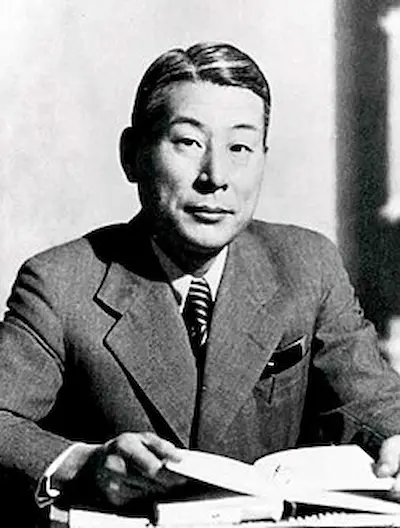 Chiune (Sempo) Sugihara
Among the refugees was the Mir Yeshiva, one of Europe’s most renowned Torah academies, with about 300 teachers and students. Its two leaders, the great scholars Rabbi Yechezkel Levenstein and Rabbi Chaim Shmulevitz, guided the group with wisdom and courage. Even while running for their lives, they kept studying Torah, and it remained their priority throughout the war.
The yeshiva settled temporarily in Kobe, Japan, where the ten-day visa limit loomed over everything. To avoid being sent back to Europe, the students had to renew their visas week after week. Professor Setsuzo Kotsuji, a member of an aristocratic Shinto family and a professor of Semitic languages at Tokyo University, stepped in to help. Less famous than Sugihara, Kotsuji helped the refugees remain in safety in Japan. Years later, he converted to Judaism and wrote a memoir, From Tokyo to Jerusalem.
When Kotsuji later visited Jerusalem, Rabbi Chaim Shmulevitz received him with great honor and warmth in gratitude for saving the Mir Yeshiva.
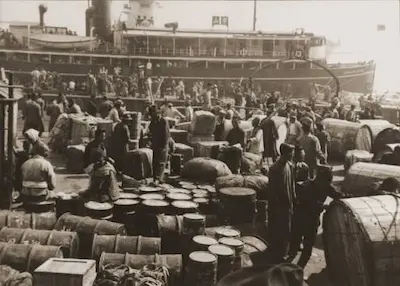 Polish Jewish refugees in the Shanghai Ghetto
In August 1941, seeing that the refugees weren’t leaving any time soon, Japan ordered the 2,000 Jewish refugees in Kobe, including the Mir Yeshiva, to move to Shanghai, then an international city. After Pearl Harbor that December, Japan seized control of Shanghai from the other ruling nations and closed the city to further immigration.
Around this time, Germany began pressing Japan to murder the Jews under its control. The Nazis sent SS Colonel Josef Meisinger, the “Butcher of Warsaw,” to Shanghai to demand the killings and advise on how to carry them out.
Unsure how to respond, the Japanese summoned two rabbis from among the refugees to a meeting in Tokyo. One was the famed Chassidic leader Rabbi Shimon Kalisch, the Amshinover Rebbe. The Japanese generals asked them a question: why do the Nazis hate the Jews so much?
Without missing a beat, the Amshinover Rebbe calmly answered, “Because we are Asian, like you.”
The generals fell silent. After a brief discussion, the senior officer told the rabbis they could return to their people and had nothing to fear while in Japanese territory. The decision was made: the Jews would not be killed.
Still, Japan imposed harsh restrictions. The refugees were confined to the cramped, filthy Area for Stateless Refugees in Hongkou, where typhus and leprosy spread freely. The yeshiva was barred from receiving money from the United States, now an enemy nation. With jobs scarce and property often confiscated, that American money was the only way to buy food.
So the yeshiva found workarounds, including routing funds through the Sternbuch family in neutral Switzerland. This was illegal, and the authorities kept Rabbi Chaim Shmulevitz under constant watch to find out how the money was getting in. The notorious Kempeitai, Japan’s military police, interrogated him several times. Before each session, he prayed intensely for the right words and recited Viduy, the confession said before death. Once, he was questioned by the ruthless Colonel Sungu, whose interrogations few survived. Rabbi Shmulevitz did. And the Mir Yeshiva kept going, still studying Torah.
Hongkou was badly overcrowded. Every family, no matter how large, got a single room. How could a yeshiva of 300 people possibly find a place to study? It seemed impossible. Yet they would have a building, one prepared for them twenty years earlier. A building that began with a dream.
In 1920, Silas Aaron Hardoon, one of David Sassoon’s protégés, was a hugely successful businessman and at one point the richest man in Asia. He had little connection to his Jewish roots, though he gave generously to Chinese charities. One night, his late father appeared to him in a dream, praised him for his charity, and scolded him for neglecting his own people. He begged his son to do something for the Jews too.
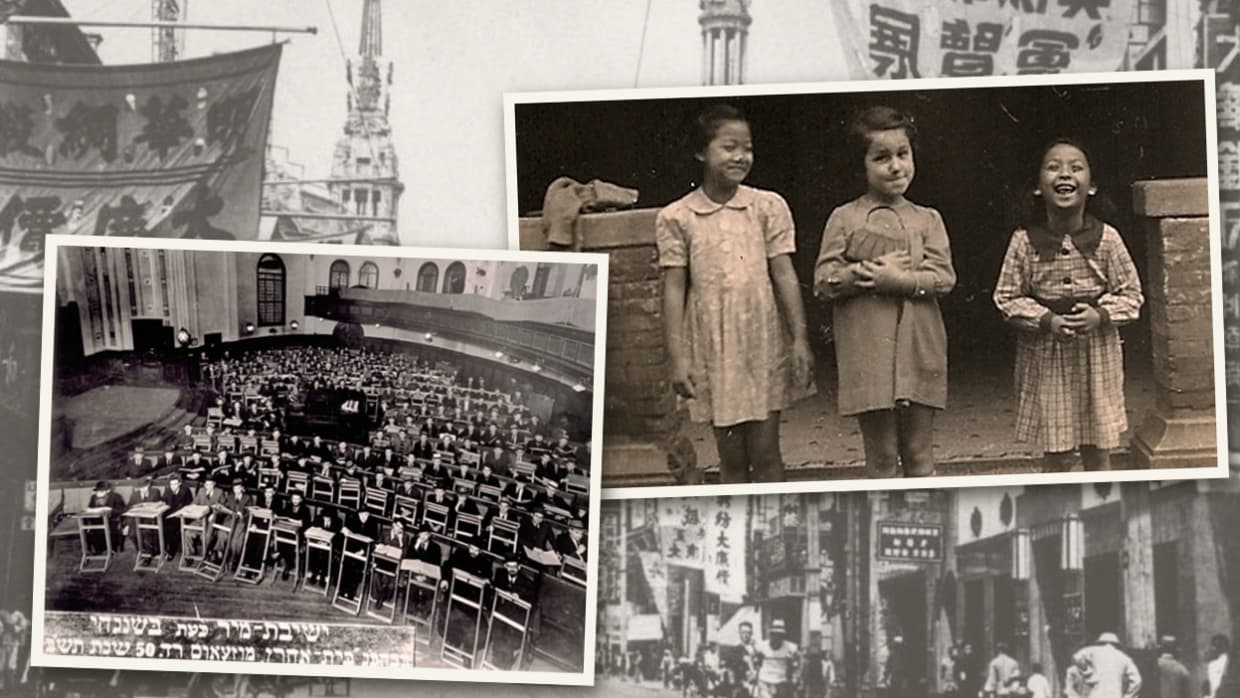
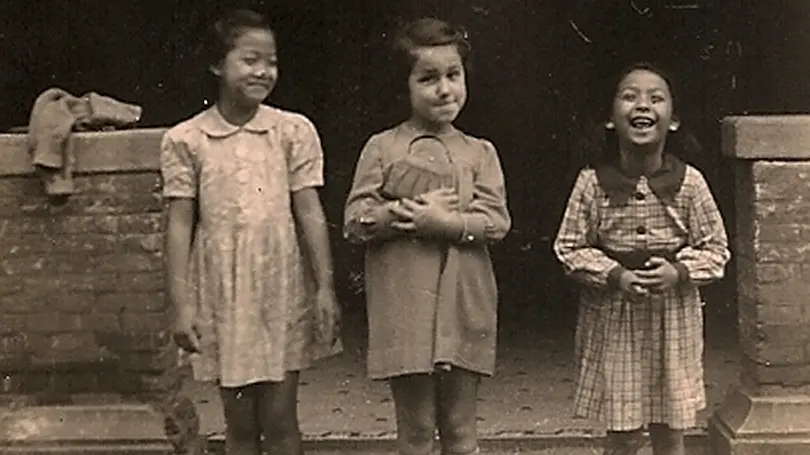 A Jewish girl and her Chinese friends in the Shanghai Ghetto, from the collection of the Shanghai Jewish Refugees Museum
Shaken, Hardoon went to Chacham (Sage) Ibrahim, the Sephardi rabbi who led the tiny Jewish community in China, and asked what he should do. The rabbi suggested he build a large synagogue. The community already had a beautiful one, but this one would be more centrally located, and the rabbi hoped it might draw more Jews to China.
Hardoon spared no expense. He built a magnificent structure with a modern kitchen, two dining rooms, a large sanctuary, a library, a mikveh (ritual bath), and even a complete Vilna Shas, the classic edition of the Talmud. He named it Beis Aharon, “House of Aaron,” after his father, and felt relieved to have honored his father’s wish. The building was ready. But because of its awkward location, it sat mostly empty for years.
When the Mir Yeshiva arrived in Shanghai, it needed a place to learn. Rabbi Meir Ashkenazi, Chief Rabbi of Shanghai from 1926 to 1949, led the Jewish community in the International Zone outside Hongkou. He arranged for the yeshiva to use Hardoon’s synagogue, Beis Aharon, every day for classes, lectures, and nonstop study.
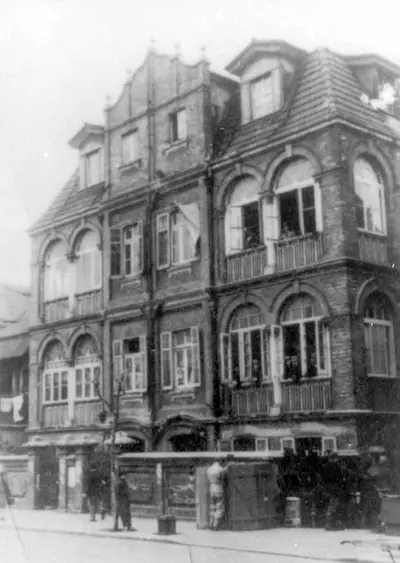 The Mir Yeshiva building in the Shanghai Ghetto, 1945
Even in bitter exile, the yeshiva had a home, in a building that seemed to have been built by Divine Providence just for them. The large dining room, the study hall, the Talmud volumes: all of it was already waiting. And the beautifully designed sanctuary had exactly 252 seats. The Mir Yeshiva had exactly 252 students.
In one of his letters, Rabbi Chaim Shmulevitz wrote, “There was no other period so blessed in success in Torah study, as our days in Shanghai.” The teachers and students understood what was at stake. They were keeping Torah study alive at a time when almost no one else could, and they did it with focus and determination.
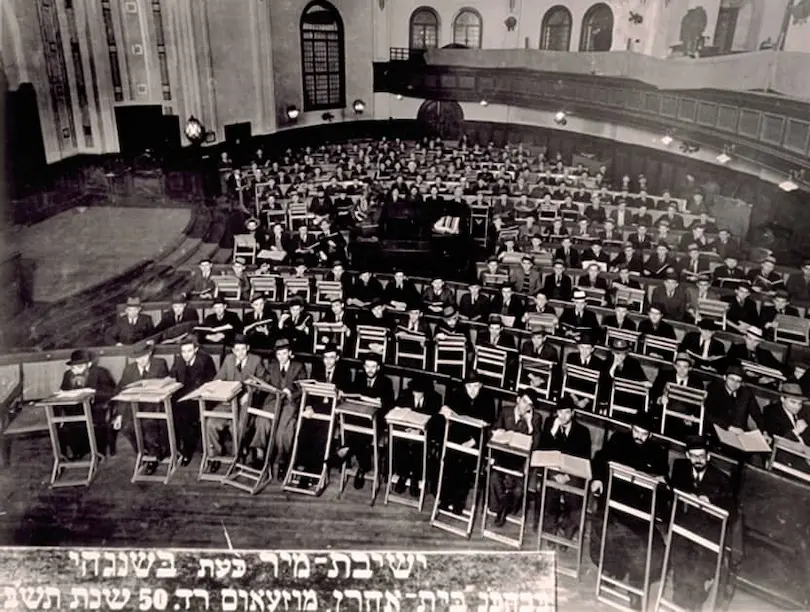 Students and teachers of the Mir Yeshiva in exile studying at Beit Aharon Synagogue in Shanghai
After the war, nearly all of Shanghai’s Jews left for Israel, the United States, and elsewhere. A handful of elderly Jews stayed on under the Communist regime.
In recent decades, as China’s economy has opened up, many Jews travel to Shanghai on business. Today the city has a small Jewish community, served by three Chabad centers that cater mostly to tourists and visiting businesspeople.
In the introduction to his commentary on the Mishna, the Rambam (Maimonides) describes a king who orders his servants to build a magnificent palace and plant a vineyard beside it. The Rambam observes: “It is possible that the whole reason that this palace was built was so that one day a righteous Jew will come and find shelter from the sun in the shade of one of the walls of this palace . . .”
The Mir Yeshiva’s time in Shanghai echoes the Rambam’s words.
Jewish life in China was mostly fleeting, yet it played a major role in Jewish history. Shanghai became a safe haven that helped keep Torah study and scholarship alive through the Holocaust. The Mir Yeshiva scholars who found refuge there went on to lead the revival of Torah learning in the United States and Israel after the war. The branches the yeshiva founded in New York and Jerusalem remain among the world’s leading centers of Jewish learning.
Shanghai’s Jewish community is largely gone, but its legacy endures in the tens of thousands of descendants of those who survived the war there, and in the Torah studied in yeshivas around the world, built by people who found refuge in Shanghai when they needed it most.