
 For 44 years, Yehuda Katz’s Family Refused to Give Up Hope

5 min read
5 min read




4 min read


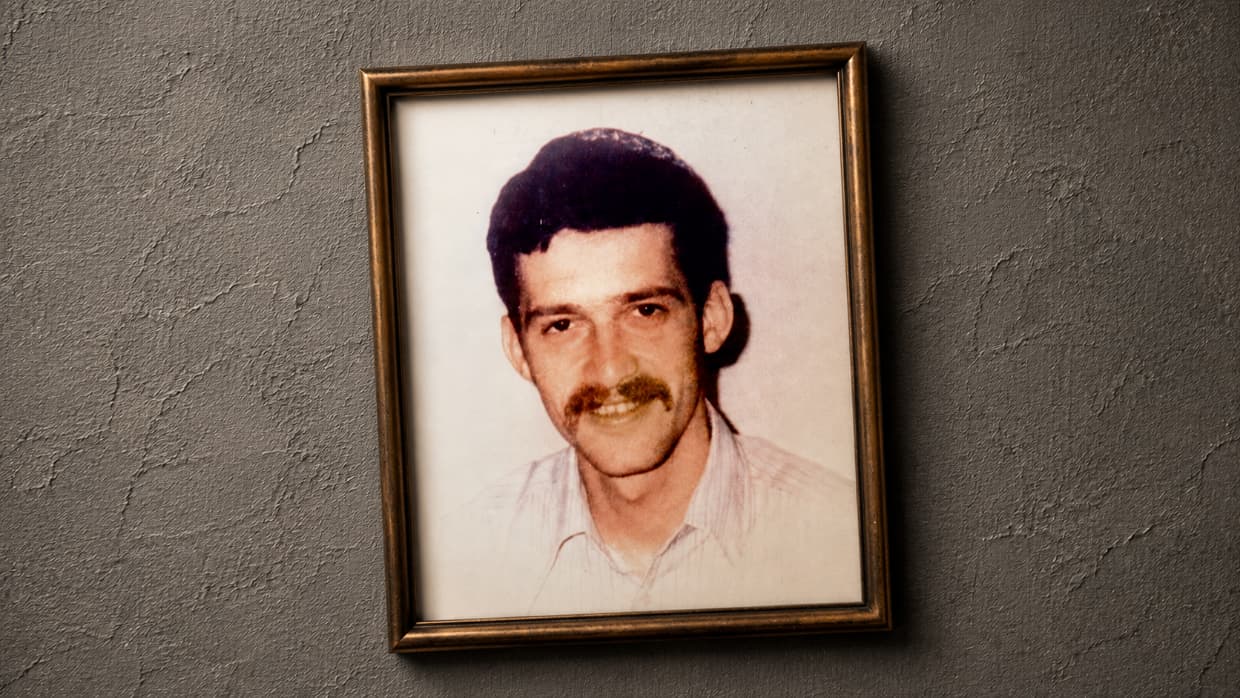
Yehuda Katz disappeared in battle in 1982. His family never stopped believing he would walk through the door.
In 1982, 22-year-old tank soldier Yehuda Katz disappeared during the Battle of Sultan Yacoub in Lebanon’s Bekaa Valley. His armored battalion had driven into a Syrian ambush and fought desperately through the night. The battle claimed the lives of 21 Israeli soldiers. Yehuda was among those declared missing.
For 44 years, his fate remained unknown. At what point do you allow yourself to give up hope?
In August 2026, the IDF and Mossad announced they’d recovered Yehuda’s remains in a covert operation. He was brought home and buried on Jerusalem’s Mount of Olives.
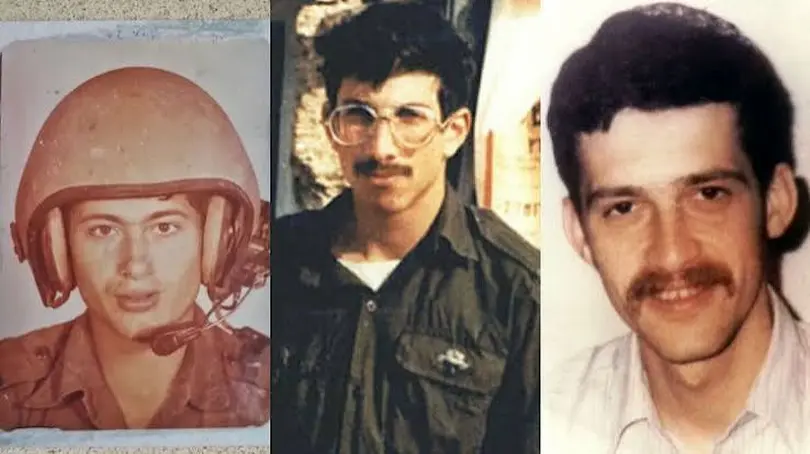 From left to left: Zechariah Baumel, Zvi Feldman, Yehuda Katz
At the shiva, I spoke with his brother Avi and his sister Perachia.
“This is an unusual shiva,” I said. “This this comes after 44 years of waiting. Surely you mourned Yehuda’s death long ago.”
“We never mourned him,” they said. “We never gave up hope that at any moment Yehuda might walk through the door.”
Every Friday night before Kiddush, the family recited a special prayer that Yehuda will return this week. When going away, they’d leave a note: “Yehuda, if you come while we’re away, welcome home! Here’s where we’re staying. There’s plenty of food in the refrigerator...”
For 44 years, the Katz family held on with stubborn, audacious hope.
The family had reasons to keep the question open.
In 1985, three years after the fateful battle, Hezi Shai, one of the soldiers captured with Yehuda and presumed dead, was freed from captivity. His story strengthened the possibility that Yehuda could also return alive.
Their hope was further kindled when Shai reported hearing the terrorists speak about Yehuda in a way that suggested he was alive.
As long as the question of Yehuda’s fate remained open, the Katz family refused to close the door.
On another occasion, the IDF received four coffins purportedly containing the remains of captive Israeli soldiers. Upon examination, only one coffin contained the remains of a Jewish soldier; the other three bodies were Arab.
As long as the question of Yehuda’s fate remained open, the Katz family refused to close the door.
The Katz family felt that surrendering hope would mean abandoning Yehuda – who might still be waiting for them.
Imagine someone returning after decades in captivity, only to discover that everyone had moved on. “Why did you give up on me?”
The Katz family did not suspend their lives or pretend that everything was fine. Yet they would not declare the story over before the last chapter is written.
Yehuda himself embodied that same loyalty. A brilliant yet humble Torah scholar, he assisted Rabbi Chaim Yaakov Goldvicht, head of Yeshivat Kerem B’Yavneh, in preparing his central weekly lecture.
Yehuda’s sharp mind was matched by an extraordinary heart. At age nine, upon learning that a younger child in school had lost a parent, he appointed himself the boy’s “big brother,” watching over him and ensuring that he was never excluded.
Already at a young age, Yehuda understood: No one should be left alone.
When Hezi Shai, the captive later freed, was imprisoned in Syria, he sustained himself with the conviction that his country would do everything to bring him home. Every day he imagined an Entebbe-style rescue with Israeli soldiers suddenly break through the floor of his cell.
This commitment demoralizes Israel’s enemies. They see how tenaciously Israel fights for every soldier and hostage, how much they are willing to sacrifice, and how deeply that commitment unites the nation.
For 44 years, Yehuda’s family refused to mourn him while any possibility remained that he was alive. Yehuda’s parents, Sarah and Yosef, unfortunately did not live to see him brought home.
But now, the circle of Sultan Yacoub has finally closed, with Yehuda returned to the soil of the land he loved.
“There is hope for your future,” God tells Rachel. “Your children shall return to their own border” (Jeremiah 31:16).
Hope has no expiration date. No one is forgotten.
Yehuda’s sister told me: “God gave us with the strength until now. And God will give us the strength going forward.”
The eternal people do not fear the long road.