



 What Jensen Huang’s Downfall Teaches Us About Human Nature


3 min read
7 min read





How could one of the smartest men alive make such a reckless mistake? The answer has less to do with intelligence and more to do with human nature.
Jensen Huang helped build the artificial intelligence revolution. As cofounder and CEO of Nvidia, he turned a small chip company into the engine of modern AI, powering technology that processes staggering amounts of information, spots patterns, predicts outcomes, and solves problems once thought impossible.
Then last week, it all came apart. Reports surfaced that Huang had carried on extramarital affairs, including one with a woman accused of being a Chinese spy and another with an executive who reported to him. He admitted to being unfaithful to his wife and apologized. Days later, with Nvidia’s board reportedly preparing to remove him, he resigned, ending 33 years at the helm of the company he cofounded. One of the most brilliant minds of our generation was brought down by something no algorithm could fix.
Huang’s downfall raises a deeper question about the difference between intelligence and wisdom. No matter how brilliant we become, can intelligence alone protect us from our own weaknesses?
How does a man who understood artificial intelligence better than almost anyone alive misjudge something as basic as human nature? Huang’s downfall raises a deeper question about the difference between intelligence and wisdom. No matter how brilliant we become, can intelligence alone protect us from our own weaknesses?
We’ve seen this story before. Titans of industry, star athletes, entertainers, politicians, and hugely successful people have watched their careers, reputations, marriages, and families unravel because of affairs, inappropriate relationships, and failures of self-control. Painfully, our own community is no exception. Prominent rabbis and respected Jewish leaders have fallen to the very temptations they warned others about.
Every time, we’re stunned. How could someone so accomplished, so admired, so smart or so learned, make such a terrible mistake? How could someone with so much to lose risk it all?
Perhaps the answer is that intelligence and wisdom are two different things. Intelligence lets us understand complex problems, recognize patterns, and find solutions. Wisdom is the humility to recognize our own limits and weak spots. In fact, the smarter a person is, the better he can get at rationalizing behavior he knows is wrong.
But the right response to these stories isn’t to sit in judgment, wonder how anyone could be so foolish, or feel superior because we’re sure we’d have done better. It’s to admit that we’re all human, all vulnerable, and none of us is immune to bad judgment. Rather than dwelling on someone else’s failure, we should look honestly at our own weaknesses, and appreciate how lucky we are to have a Torah that understands human nature so deeply and gives us the wisdom and boundaries to protect us from ourselves.
Long before artificial intelligence, the Sages of the Talmud showed a remarkable grasp of human psychology. The Talmud (Kiddushin 81a) teaches, Ein apotropos l’arayos, “There is no guardian in matters of forbidden intimacy.” In other words, no one is immune to sexual temptation. No amount of intelligence, success, power, or even righteousness puts a person beyond its reach. We all have drives and desires strong enough to overpower our best judgment.
No one is immune to sexual temptation. No amount of intelligence, success, power, or even righteousness puts a person beyond its reach.
The Sages go even further. The Talmud (Sukkah 52a) teaches, “Whoever is greater than his fellow has a greater evil inclination,” meaning a stronger inner pull toward wrongdoing. We’d assume that the more accomplished, disciplined, or spiritual someone becomes, the less vulnerable he is. The Sages teach that the opposite can be true. Greatness doesn’t necessarily ease the struggle. Sometimes it intensifies it.
The qualities that drive extraordinary achievement can also create extraordinary challenges: passion, ambition, confidence, intensity. Someone used to overcoming obstacles and succeeding where others failed can start to believe the ordinary rules don’t apply to him. Success in one area of life can create the dangerous illusion of being invincible in all of them.
The Bible is strikingly candid about the struggles, and even apparent shortcomings, of its greatest figures. But we have to be very careful not to confuse their humanity with ordinary human weakness. Abraham, Isaac, Jacob, Moses, King David, and the other giants of the Bible weren’t simply people like us who did extraordinary things. They were spiritual giants whose greatness, righteousness, and closeness to God are beyond anything we can imagine. We can’t casually judge their actions by our standards or assume we understand their struggles through the lens of our own lives. The Sages teach us to approach these stories with great care and reverence.
Yet precisely because they were so great, it’s remarkable that the Torah shares their challenges instead of portraying them as flawless. Acknowledging their struggles doesn’t diminish them. It teaches that even extraordinary spiritual greatness comes with real challenges. And if the Torah’s greatest figures faced struggles, how much more do we, who can’t begin to compare to them, need to recognize our vulnerabilities and the boundaries that protect us?
That is exactly why the Torah insists on boundaries.
Today, many people see the Torah’s rules governing relationships between men and women as outdated and excessive. The laws of yichud, which prohibit a man and a woman who aren’t married to each other from being secluded alone together, and negiah, which restrict physical touch between them, can seem pointless to people who believe mature, intelligent adults should simply be trusted to use good judgment. Why put restrictions on people who have no intention of doing anything wrong?
Good intentions aren’t always enough to withstand powerful temptation.
Because the Torah understands something about human nature we’d rather not admit: good intentions aren’t always enough to withstand powerful temptation. The Torah doesn’t assume everyone will behave badly. It recognizes that anyone can. It doesn’t teach us to distrust others. It teaches us to be appropriately cautious about ourselves.
The laws of yichud and negiah reflect a sophisticated, realistic view of the human mind. Attraction is powerful. Emotional intimacy can grow without warning. Physical closeness can stir feelings no one planned or wanted. Almost nobody wakes up one morning and decides to destroy a marriage, betray a family, or throw away a reputation built over decades. It usually happens gradually. A conversation turns personal. A friendship turns intimate. One line is crossed, then another and another, until a person no longer feels he’s doing anything wrong. Each step seems small and each excuse sounds reasonable, until he finds himself somewhere he never meant to be.
The Torah’s wisdom is to set boundaries before the moment we need them most, because by then our judgment may already be compromised.
Judaism treats attraction, passion, and intimacy as sacred. The Torah celebrates human connection and sanctifies intimacy between husband and wife. These drives are among God’s greatest gifts, allowing us to love, bond, build families, and experience deep closeness.
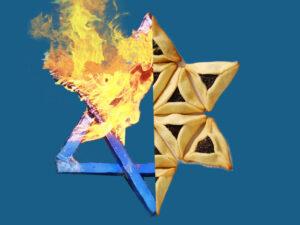
But because they’re so powerful, they demand care. Fire can warm a home or burn it down. Water can sustain life or sweep everything away. The goal is to channel these forces wisely, not eliminate them. The Torah doesn’t try to extinguish passion. It protects and directs it so that it builds instead of destroys.
Ethics of the Fathers (2:4) warns, “Do not trust yourself until the day you die.” Never assume you’re past temptation, failure, or the need to stay alert. Having an evil inclination isn’t the real danger. Everyone has one. The real danger is believing ours is no longer a threat.
We don’t know what another person is struggling with, and we should be very careful about judging. But we should be just as careful not to grow so confident in our own strength that we drop the safeguards meant to protect us.
We tend to think of boundaries as restrictions that limit our freedom, hold back our relationships, or deny us experiences. Maybe we have it backward.
Boundaries aren’t punishment. They’re protection.
We lock our front doors because we cherish what’s inside, not because we dislike our homes. We keep valuables in safes, guard sensitive information with passwords, and handle family heirlooms with special care. No one calls these precautions irrational or extreme. We understand instinctively that the more something matters, the more carefully we protect it.
Shouldn’t the same go for our marriages, our families, our integrity, and our souls? If we take such precautions with our money, shouldn’t we take at least as much care protecting the trust, loyalty, and love at the heart of our homes?
The Torah’s boundaries show that it understands human nature better than we often understand ourselves.
We live in an age of astonishing technology. Artificial intelligence can solve problems once considered impossible and remake entire industries. Yet all that progress hasn’t changed the human heart. Our weaknesses, our desires, and our talent for fooling ourselves look a lot like those of every generation before us.
Progress doesn’t make the Torah’s guidance obsolete. In many ways, progress makes it more relevant than ever.
Artificial intelligence will keep getting smarter and more sophisticated. But human intelligence will always need something more: the humility to admit our vulnerabilities and the wisdom to protect ourselves from them.
We’ll keep hearing stories of brilliant executives, star athletes, powerful politicians, and even respected religious leaders whose failures leave us shocked and let down. We can ask how people so smart could be so foolish. Or we can take in the deeper lesson the Sages have been teaching all along.
No one is too great to need boundaries, too accomplished to need humility, or too strong to need protection. We shouldn’t wait for the next scandal to appreciate the wisdom of safeguards, or to realize that what we care about most deserves our greatest vigilance.
Artificial intelligence will keep getting smarter, faster, and more sophisticated. But human intelligence will always need something more: the humility to admit our vulnerabilities and the wisdom to protect ourselves from them.
Intelligence tells us what we’re capable of. Wisdom reminds us what we’re vulnerable to. And the Torah teaches us how to protect what matters most.