




 What Jensen Huang’s Downfall Teaches Us About Human Nature

7 min read





Voyager 1’s remarkable record-breaking journey is a lesson in what it really takes to go the distance.
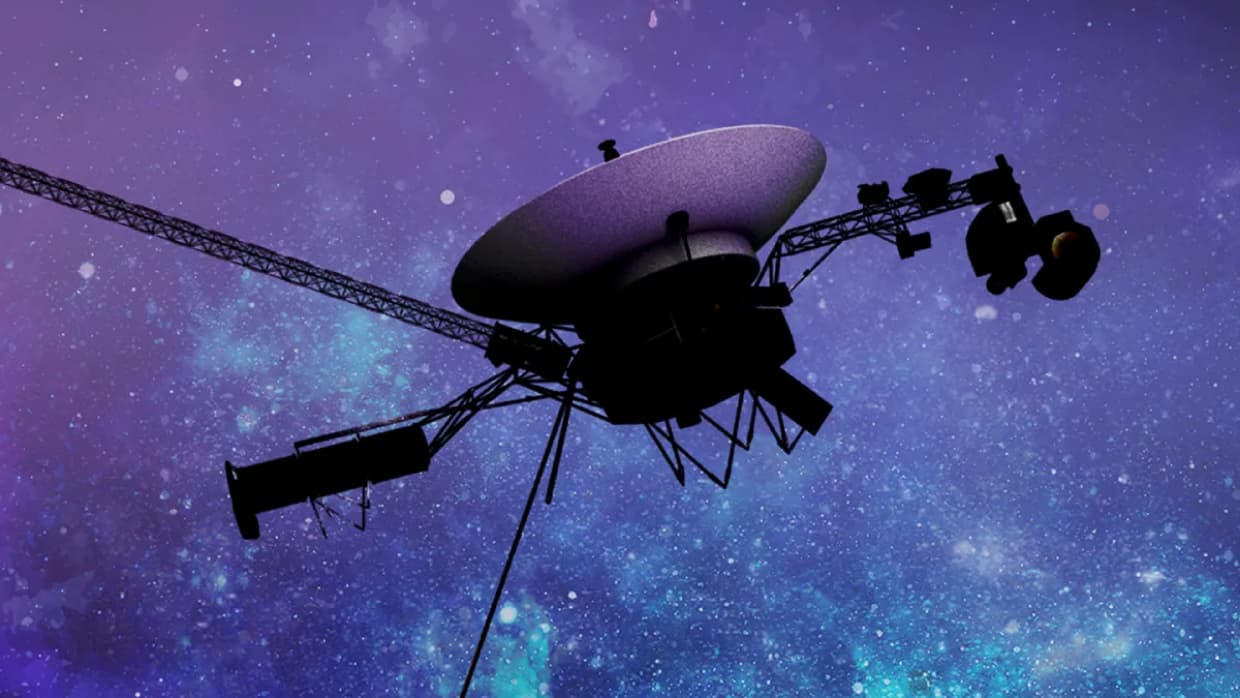
This coming Wednesday, November 18, something extraordinary is going to happen. The spacecraft Voyager 1 will become the first human-made object to reach a distance of one light-day from Earth. One light-day is how far light travels in 24 hours. More than 16 billion miles (26 billion kilometers). Voyager 1 is so far away that a radio signal sent from Earth takes an entire day to reach it.
Voyager 1 was launched in 1977, nearly 50 years ago! Jimmy Carter was president. The first Star Wars movie had just come out. There was no internet, no smartphones, and most of the people working on the spacecraft today hadn't even been born.
And, somehow, this little machine is still going.
Voyager was designed to explore Jupiter and Saturn, sending back photographs and scientific information taken from a much closer distance than ever before. It accomplished its mission spectacularly, discovering new moons, revealing extraordinary details about both planets, and revolutionizing our understanding of the solar system.
But Voyager didn't stop there. It just kept going.
Not having been designed for a 49-year journey, it isn’t surprising that over the years it has experienced all sorts of problems. Its power supply has weakened. Fuel lines have become clogged. Equipment has worn out. There were times when the mission itself almost came to an end. In 1981, NASA considered cancelling the Voyager program's further exploration of the outer planets. In 2005, facing budget cuts, NASA seriously considered shutting down the program altogether.
In November 2023, things became especially serious. Voyager suddenly stopped sending understandable information back to Earth. All NASA received was gibberish.
For five months, engineers worked on the problem. Eventually, they discovered that a memory chip had failed. They couldn't repair it, so they figured out how to move the affected computer code into other parts of the spacecraft's limited memory.
In April 2024, Voyager began sending understandable engineering data again. Problem solved? Not quite. In April 2026, NASA had to shut down another scientific instrument to conserve dwindling power. And just last month, Voyager unexpectedly lost communication with Earth for approximately 48 hours before the signal suddenly returned.
Even now, after all these years, NASA's engineers are still dealing with problems, making adjustments, and trying to keep the mission alive. NASA's persistence has managed to keep Voyager operational, communicating, and scientifically useful for nearly five decades.
We like to think great accomplishments come from a brilliant idea followed by steady progress. Voyager tells a different story. This week’s milestone doesn’t belong to a flawless machine. It belongs to a failing one that people refused to give up on.
Voyager was never supposed to get this far. Every mile past Saturn came after a breakdown, a budget fight, or a signal that went silent.
King Solomon put it this way: “A righteous person falls seven times and rises” (Proverbs 24:16). The verse assumes good people will fall, again and again. What defines them is that they get up.
The marriage, the business, the dream that lasts isn’t the one that never broke. It’s the one someone kept finding a way around the damage.
On Wednesday, Voyager will be one light-day from home. The distance is the headline. The getting up is the story.