







 The Shofar Is Silent, Remember to Breathe

13 min read
12 min read
4 min read
9 min read




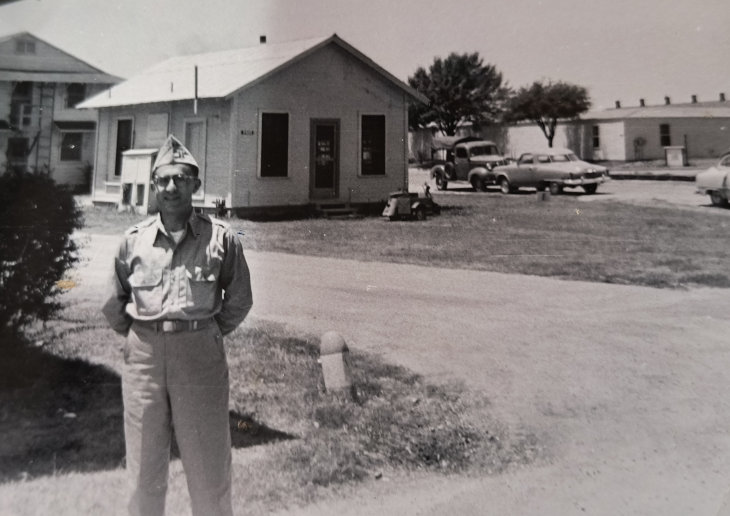
Dr. Norm Horwitz faced a lot of prejudice in the army. All that changed one stormy night.
The storm was relentless, a torrent of rain as thunder cracked overhead. On a desolate road leading to the military base housing complex, a lone figure trudged through the downpour. It was Captain Norman Horwitz, his raincoat and uniform soaked through, his steps steady but slow. In the distance, headlights cut through the gloom as a car approached. Behind the wheel sat Colonel Archie Matheson, a man who had often mocked Horwitz for his unwavering adherence to his Jewish faith.
What Matheson didn’t realize was that this stormy walk would be a moment of reckoning, one that would forever change his view of the quiet, resolute man he had once ridiculed.
Five years earlier, Norman Horwitz had immigrated to the United States from Toronto, Canada. As one of the few Jews admitted to the University of Toronto Medical School under its restrictive quota system, he overcame institutional barriers and graduated near the top of his class. His brilliance, coupled with his tenacity, set the stage for an extraordinary life of service and dedication.
Shortly after completing medical school, Norm married Hadassah, a remarkable woman with a story of her own. Hadassah and her family had fled Germany in 1939, escaping the rising tide of Nazi persecution. They initially sought refuge in Palestine, where they lived for less than a year before securing passage to the United States. In November 1939, they arrived in New York, where their immigration paperwork listed them as Palestinians, reflecting their temporary residence under the British Mandate.
Norm and Hadassah were introduced by his mentor and spiritual advisor, Rabbi Yaakov Kaminetzky, one of the towering figures of the American rabbinate in the 20th century. In June 1952, Rabbi Kaminetzky officiated their wedding. Their bond grew quickly, rooted in shared values and a profound respect for tradition.
Soon after, Norm’s skills as an anesthesiologist brought him into service during the Korean War. Drafted into the U.S. Army Medical Corps, he was made a captain and quickly distinguished himself with his innovations in operating room safety. At the time, anesthetic materials were highly flammable, posing significant risks during surgeries. Norm developed techniques to mitigate these dangers, saving countless lives in the process. His contributions earned him a special commendation from Colonel Skinner, who praised his ingenuity and the professionalism that reflected great credit on both Norm and the Army.
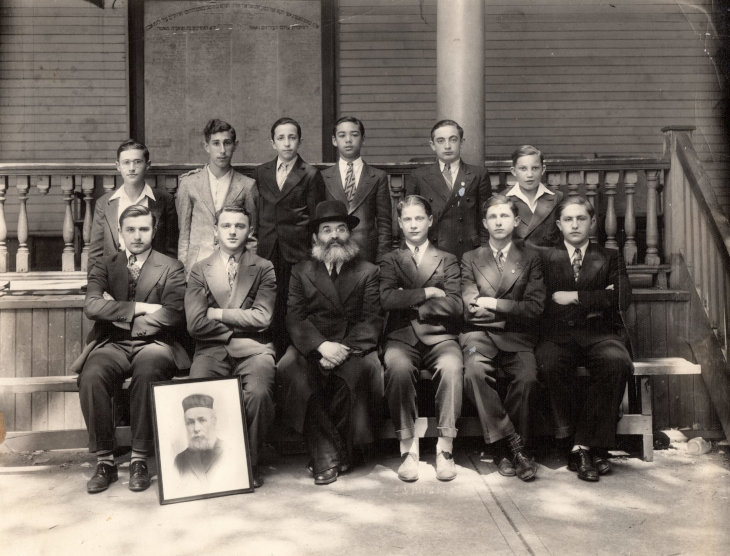 My father Norm Horwitz is bottom right, with Rabbi Yaakov Kaminetzky
To maintain his religious practices while stationed at remote bases like Fort Sam Houston in San Antonio, Texas, Norm frequently sought guidance from Rabbi Kaminetzky. With help from colleagues in Israel, the rabbi identified resources to help Norm access kosher food and connect with Jewish families in the area. Norm also consulted Rabbi Moshe Feinstein, the eminent authority in Jewish law, to navigate the delicate balance between his Sabbath observance and his duty to save lives.
Norm’s time in the military was not without challenges. As an observant Jew, he faced prejudice and misunderstanding, particularly from Colonel Matheson, a fellow physician. Matheson, skeptical of Jewish traditions, frequently teased Norm about his faith, perceiving it as a collection of arbitrary rules. Norm had told him that while he is able to save lives in the operating room on Saturdays, he would come and go on foot so as not to drive on the Sabbath. The kosher laws came up as well when Norm politely declined to partake of various foods being offered. Matheson thought all this this was utterly ridiculous and told him so. Every single week. He thought Judaism was all about rules that suited Jews when convenient and didn't really demonstrate any particular principles or value system.
Norm never wavered. He responded with grace but didn’t compromise his beliefs or engage in conflict.
A powerful thunderstorm broke out one Friday night while Norm was on duty at the hospital. Through crashes of thunder and torrential rain, Norm remained focused on his work, providing care to patients with his characteristic precision and professionalism. When his shift ended, Norm began walking back to the housing complex in the midst of the raging storm, adhering to his faith.
As Norm trudged through the rain, Colonel Matheson was driving home. Spotting a lone figure on the road, he pulled over and was shocked to see his “punching bag,” Captain Norm Horwitz.
“Horwitz!” Matheson exclaimed. “What on earth are you doing out in this weather?”
Norm greeted him politely. “Good evening, sir. My faith allows me to save lives on the Sabbath, but I am not permitted to drive unless it’s for that purpose. So, I’m walking.”
Matheson stared at him in disbelief. “Are you out of your mind? It’s raining cats and dogs. Get in the car!”
Norm shook his head gently. “While I appreciate your kindness, sir, I must stay loyal to my traditions. I will walk.”
Matheson was stunned. In that moment, he saw something he hadn’t before: Norman’s faith wasn’t about convenience or trivialities — it was about devotion and principle, even in the face of discomfort. For the first time, Matheson felt a pang of respect for the man he had mocked.
After a moment, Matheson said, “Fine, Horwitz. If it means that much to you, I’ll drive alongside you.”
And so, Colonel Matheson drove at a crawl, accompanying Norm for the 15-minute walk back to the base. The two men didn’t speak much but the silence was charged with meaning. By the time they arrived, something had shifted.
From that night on, Matheson treated Norm with a newfound respect. The man he had once mocked became a figure he admired. A person of deep commitments to a value system that was bigger than he was. Over time, their relationship evolved into one of genuine friendship. Matheson even became an advocate for Norm, supporting him in his efforts to balance his faith with his duties as a doctor.
Norm was my dad. His story of quiet strength and unwavering principles left an indelible mark not just on Matheson, but on everyone who encountered him. His life is a testament to the transformative power of integrity, faith, and the courage to stand by one’s beliefs, no matter the cost.







Shalom! Having served in the US Army Medical Service Corps I trained extensively at “Fort Sam” and connected well with this story. I came to love and respect Jews due to the authentic faith of a Jewish Chaplain I was privileged to serve with Rabbi Nosson Sachs. Following his retirement he made aliyah to Israel and I have made 4 trips to Israel during my retirement. Three of which were Humanitarian in support of Jewish settlers in Samaria and Judea. I have been greatly blessed! Am Israel Chai!
I suppose I wrote too much and lost it all…
Although I’m a Christian, I came there through the long history of Judaism, from Abraham and Moses, and through the prophets and the great books of the Psalms. I wish Christians I know had the same devotion to conviction and sacrifice. Just sayin’…
such a nice story! thank you!
That was a very inspiring story. I was in the US Army in 1973 stationed at Fort Jackson South Carolina for Basic Training and then at Fort Gordon Georgia for advanced infantry training at the South Eastern Signal School.
Your dad was a very special person. Your lucky to have had him as your father.
Beautiful! Left me teary eyed <3
Thank you so much R' Shlomo. Meaningful, well written and telling of how your parents have a son like you.
This article was written so beautifully. Clearly your father inspired by the way he lived, and you are a wonderful reflection of your parents values. Thank you!
Beautiful. Thank you very much for sharing this.
Loved his story
yes he is bound by our faith
It made me think of my uncles who served in WWII. My aunt told me that if my Uncle Al had leave during Passover, he would bring a gentile buddy home to the seder. Uncle Al served for two years, if I remember, and my Aunt Anna said there were guys at two seders. Their visits were the high points of those war time gatherings. And they did make a difference with the other guys in my Uncle's outfit
This story makes me hysterical with laughter. My husband is career military, served from 1983-2003, and when I think of all the hassles that he got for being a Jew, please don't get me started. I got my fair share too and was told by a JEWISH colonel that it was Jews like me who gave the rest a bad name when I refused to light Chanuka candles at a company Christmas party--he accused me of not being inclusive and against interfaith cooperation.
A REAL MENTSH
Right
Wow, this is beautiful and deeply inspiring!
It is
Your story touched my heart - Makes me proud....
Me too
Dear Shlomo, You and your siblings are your father's living legacy. Beautifully written! Proud to be your unofficial "Big Brother."
Beautiful story of commitment and Judaic principles!
Right, I agree
It’s a great feeling when your Dad is a Mensch you can be proud of and emulate. My father was raised in an Orthodox orphanage. We weren’t Orthodox, but my Dad taught me right from wrong, and I thank God for that everyday.
Rabbi Shlomo Horwitz is a chip off the old block to his father Doctor Norm Horwitz. We are blessed to have Rabbi Shlomo and his family in Baltimore Maryland USA.
Beautifully written, thank you