








 Those Shameful Thoughts and What They Really Say about You

17 min read
8 min read





Growing up Jewish in Soviet Moscow meant hiding who you were. Enessa Arielah stopped hiding and paid the price.
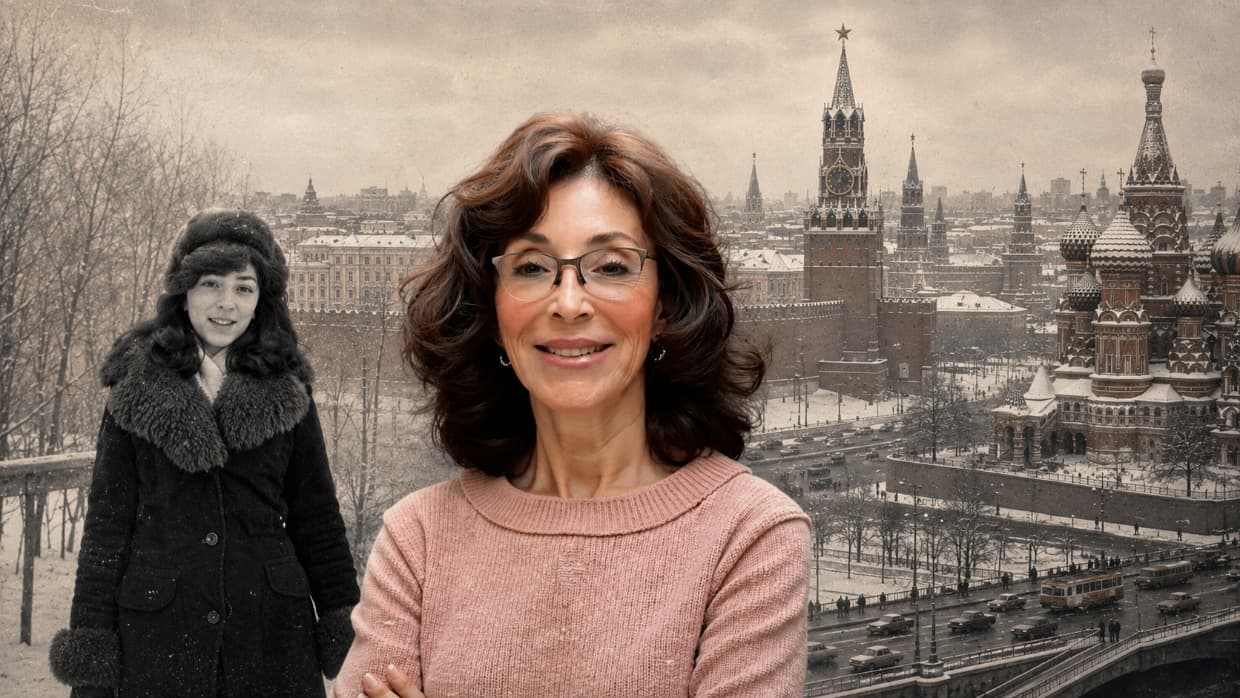
Enessa Arielah was born in Moscow during a time when being Jewish was something that could limit your freedom and place an invisible mark upon your life.
She grew up knowing exactly who she was, and knowing that her identity was not always safe to reveal.
Her father, Eliyahu, was a Sephardic Jew from a small village of Kutaisi, Georgia. At 13, he saved enough money to buy a train ticket and leave for Moscow, an unusual feat for a young boy at that time. He ventured from his home just after the Communist revolution, searching for opportunity in the big city, not knowing a soul there.
He didn’t speak Russian and sold newspapers on the street, picking up garbage for food to survive and sleeping on public benches. Eventually he started to thrive and established a home and family.
Eliyahu met Enessa’s mother, Rosa, at the Moscow Synagogue. Their eyes met from afar and they began to date, eventually marrying.
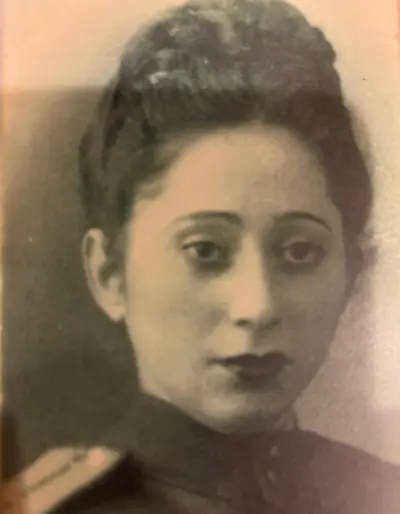 Rosa wearing a KGB uniform during WWII
Eliyahu was a go-getter. Under Communist rule, he owned the largest liquor store in the center of Moscow. At the time, liquor was more valuable than gold. It opened doors and created connections. Government officials, including powerful people in Moscow, often gathered in the basement of his store. Through this work, Enessa’s father became deeply connected.
“No one in my family were Communists,” Enessa says. “But we knew how to serve Communists.”
If officials needed liquor, Eliyahu could exchange it for food, clothing, furniture, medicine, or connections.
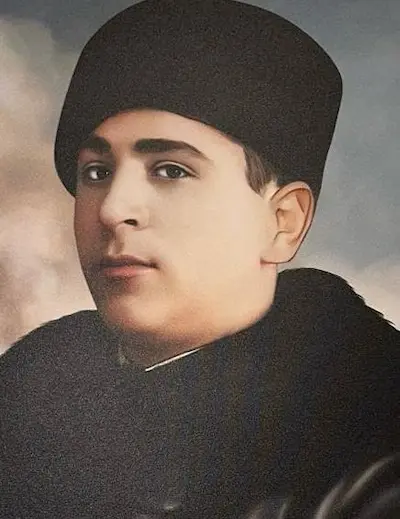 Eliyahu, around age 30
In Communist Russia, being Jewish was considered taboo. It was something one could never fully hide, even when one tried.
As a teenager, Enessa wore a Magen David necklace but kept it tucked under her shirt. She knew better than to display it openly.
“One day, when I was 15, something rose up inside of me,” she remembers. “I thought, I am tired of hiding who I am.”
Riding a public bus filled with people, she pulled out the Magen David from under her clothing for the first time.
Almost immediately, the atmosphere changed.
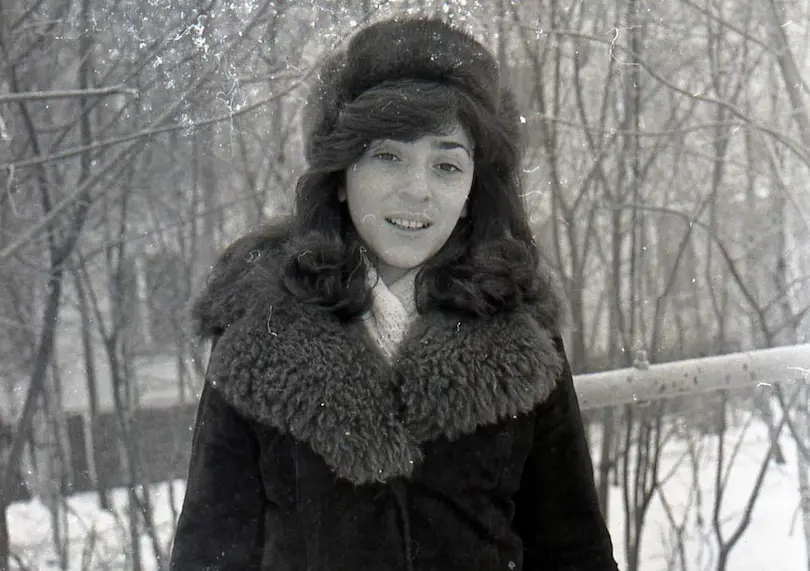 Enessa in Moscow, 1980
People began to stare and whisper. Then some passengers spit on her and others punched her.
“When I came to my bus stop, I jumped off,” Enessa recalls. “I had to wipe the spit from my clothes.”
That moment left a question inside of her that would shape the rest of her life: Why would they hate me? What did I do to them?
For Enessa, that question became the beginning of a lifelong search into trauma, identity, hatred, survival, and healing.
Even in the midst of religious oppression, Jewish life still existed. Simchat Torah was one of the few holidays when Jewish teenagers would gather at the synagogue. But even moments of joy carried danger. Police would try to break up the gatherings, driving through the streets and intimidating the crowd. Secret police — the KGB — were always present, easily recognized by their dark trench coats, hats, and glasses.
Fear was part of the atmosphere.
Once, Enessa was in a Georgian-style restaurant with her family — a place that was difficult to enter unless one had connections. Suddenly, three men entered, surrounded the table beside them, demanded that two people get up, and took them away.
Those people were never seen again.
“People just disappeared,” Enessa says. “Sometimes they were taken at random.”
Despite the fear around her, Enessa lived a relatively comfortable life compared to many others. She graduated high school at 16 and dreamed of becoming a cardiologist. But in the Soviet system, ambition was not enough. Her father could not pay the under-the-table money required to get her into medical school.
Instead, she entered nursing school where she became the top student, graduated at 18, and began working right away. Though her path had shifted, the calling toward healing was already present.
As a young adult, Enessa knew she could not remain in the Soviet Union. “I realized this was not the kind of life I wanted to live as a Jew,” she says. “I knew I did not want to bring children into the Soviet regime.”
But leaving was not simple. It was risky and painful.
Her father was retired and settled. He had status, connections, and a life he had worked hard to build. He felt too old to begin again in a new country. Her parents did not want to leave — and they did not want her to leave either.
Like her father before her, Enessa longed for freedom, opportunity, and a new beginning.
But Enessa had a different vision. Like her father before her, she longed for freedom, opportunity, and a new beginning.
At 18, she applied to leave the Soviet Union. Then she waited two years for permission.
During that time, she moved out of her parents’ home and rented an apartment with a girlfriend. She was in limbo, unable to fully build a future, yet already disconnected from the life she was leaving behind.
To support herself, she hustled on the Moscow black market. Once, she needed to sell a pair of boots to pay rent and buy food. She was caught by the police.
“I was terrified,” she remembers. “They had the power to do anything they wanted.”
Thinking quickly, she told them she was taking the boots to be repaired. Somehow, they believed her and let her go.
When permission finally came, Enessa was shocked.
A letter informed her that she had two weeks to vacate her apartment, pay 2,000 rubles, and say goodbye to everyone she knew.
Two weeks to close one life and step into the unknown.
At the airport, her parents came to say goodbye. Enessa was flying from Moscow to Vienna with $200 in her pocket and two suitcases. She didn’t know who she’d meet, where she would sleep, or where her next meal would come from.
Then, just before departure, the unthinkable happened.
Because she was dressed in expensive clothing she had purchased through a modeling agency connection, she stood out. Soviet officials separated her from the group.
“Come with us,” they said.
They searched her entire body. They undressed her, looking for diamonds.
“I felt completely violated,” she says. “Even after I got on the plane, I was still shaking. I didn’t exhale until the plane took off.”
That first breath in the air was more than relief. It was the breath of a woman leaving oppression behind.
Enessa arrived in Vienna with other Jewish travelers under the care of the Jewish Agency. They were brought to a building filled with cots.
“I was horrified,” she says. “There was no separation between men, women, and children. If you needed to get to your cot, you stepped over everyone else. I had never lived like that.”
Each day, they were given a small amount of money to buy food at the market.
After several months in Vienna, Enessa traveled to Rome with two other single women. They lived there for six months.
For the first time, after years of pressure and uncertainty, Rome offered something precious: beauty, art, friendship, normalcy, and hope. It felt like the beginning of a new chapter.
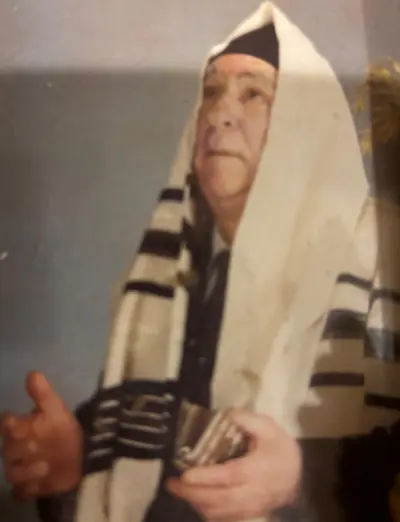 Eliyahu, age 80
Eventually, Enessa arrived in New York. She found a small studio apartment in Brooklyn with one of her roommates from Rome. Money was scarce. They furnished the apartment with mattresses, chairs, and tables found on the street.
The Jewish Agency gave them support for six months. After that, they had to find work and survive on their own.
“We found menial jobs and put our money together to pay rent and buy a little food,” Enessa says. “Dinner was rice with ketchup. Dessert was rice with sugar.”
Looking back, she realizes there were synagogues and community resources they could have turned to for help. But at the time, they didn’t know how to access them so they worked with what they had.
Someone suggested that Enessa look for work at a skincare salon. She went to one of the largest salons in Brooklyn and met a woman named Rima.
“I like you,” Rima told her after the interview. “Let me get the boss. I want him to hire you.”
Then a handsome, dark-haired man walked in. “My knees started to shake,” Enessa recalls.
He asked her to give him a facial. She had never given a facial to a man before but the treatment went well and he gave her the job.
The boss eventually became her husband. They were married for 20 years until he lost his life to leukemia.
Once again, Enessa would be called to survive, to grieve, and to rebuild. But this time, the healing she would discover would become the foundation of her life’s work.
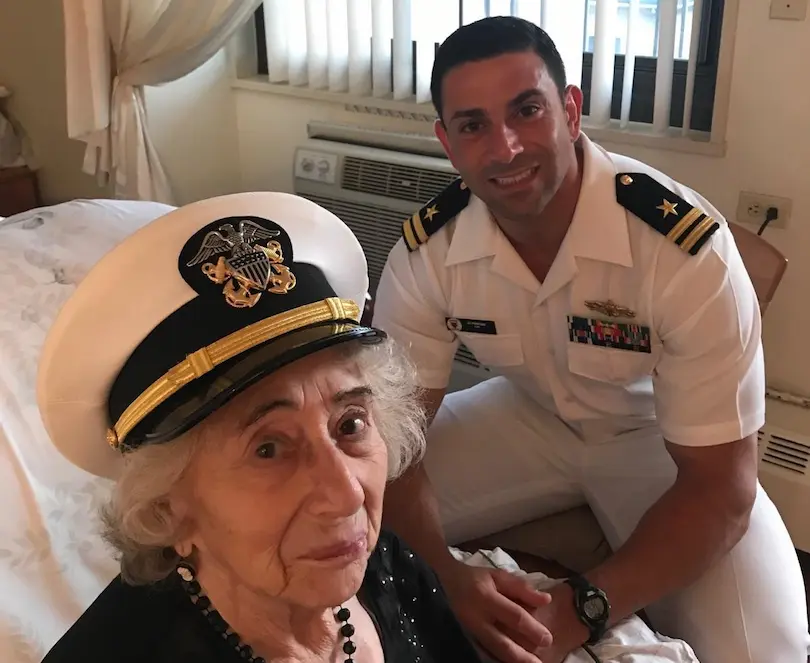 Enessa’s son Yossef, a Naval Officer with his Grandma Rosa
Enessa became a cardiovascular nurse where she spent more than 30 years caring for thousands of patients. She saw the human heart not only as an organ but as a messenger.
She witnessed how fear, grief, stress, and unresolved trauma affect the body. She saw how emotional pain can become physical symptoms.
Over time, she began to recognize something deeper. Many people were not only carrying their own pain; they were carrying inherited survival patterns, emotional wounds, and generational conditioning passed silently through families for decades.
“I understood that healing is not only physical,” Enessa says. “It is emotional, subconscious, generational, and spiritual. And when one person heals, they can interrupt the cycle for future generations.”
That understanding became the foundation of her work.
Today, Enessa is the founder of a “Mind Canvas” private coaching practice focused on mindset transformation, emotional release, and healing childhood and generational trauma.
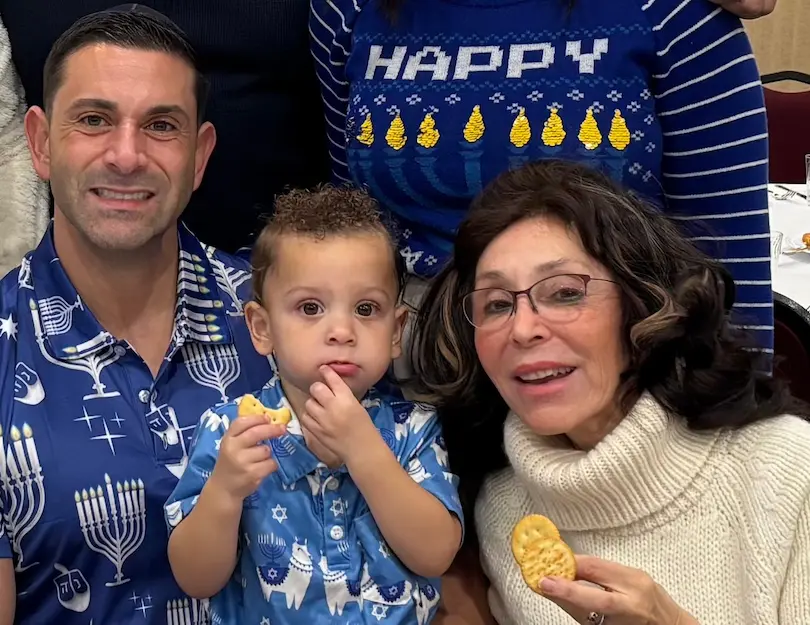 Enessa celebrating Hanukkah with her son and grandson
Her work helps people recognize the hidden patterns that live beneath stress, anxiety, illness, perfectionism, control, emotional walls, and overachievement.
“For many years, I watched people survive externally while suffering internally,” she says. “I saw how emotional pain slowly disconnects people from themselves — physically, emotionally, and spiritually.”
Enessa believes that many people cover survival wounds with achievement, performance, control, or strength. But eventually, the body begins speaking louder than the mask.
“What medicine often calls genetic predisposition,” she explains, “I began to see as generational survival patterns deeply stored within the subconscious mind and nervous system.
“I know what survival feels like. I understand fear, uncertainty, emotional pressure, and carrying responsibility while continuing to function.”
Although her formal coaching practice is relatively new, Enessa’s experience working with people is extensive. Her personal journey has shaped her into a guide for others who are ready to transform their own pain.
“I became a coach because my life has been a journey through pain, healing, and transformation,” she says. “I know what it feels like to struggle — to live in a body that is suffering, to lose the love of my life, and to face financial collapse. But I also discovered the strength that comes from within.”
Visit Enessa's website at www.mindcanvascoaching.com










As interesting as this story is and as unique as it may sound to the ears of other (not taking anything away from it) this story is common in south Brooklyn. This story is also the story of my parents and I, who escaped the USSR in 1979. Its the story of so many people that I grew up with. Admittedly its a minor story in the wider story of the Jewish diaspora but it hits close to home.
Inspiring. Thank you.
Wow! I couldn't stop reading. I didn’t want it to end. I even read it aloud to my husband and children. I’d love Enessa Arielah’s story to be made into a series. There’s so much to unpack here. From an inquisitive girl, to a bold teenager, to a resourceful young woman, to a refined wife and mother, back to being resourceful and then comes back even more elevated… but through it all, always brave. This story is what keeps our people going from strength to strength. Very powerful and inspiring. Thank you for sharing.