







 What Two Hebrew Words Reveal About Israeli Democracy

5 min read





A mother killed her three children. Following her trial made me rethink what I thought I knew about judgment, guilt, and being truly understood.
The unfolding Clancy trial has sparked intense conversations about culpability, mental illness and maternal support systems. As the High Holidays approach, unexpected questions about judgment, responsibility, and forgiveness have arisen. The more I learn, the more complicated it becomes, challenging me to sit with questions that have no easy answers.
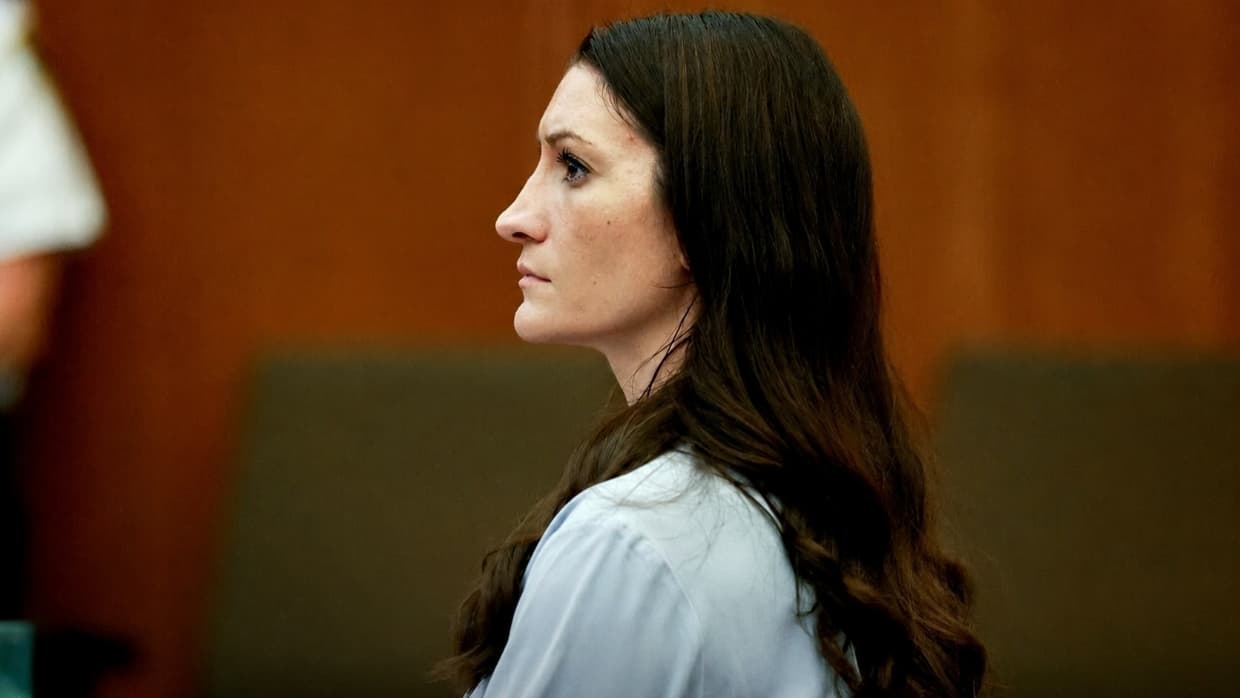
A little background: In January of 2023 Lindsay Clancy's three children (5, 3 and 8 months old) tragically died at her hands, she then tried to take her own life. She survived traumatic injuries which have left her paralyzed.
At first glance the trial seems clear-cut. Faced with the deaths of three innocent children, it is logical to think: of course, she should be held responsible. But as the case has unfolded, a more complicated picture has emerged. Clancy has pleaded not guilty and does not dispute causing her children’s deaths. The difficult question at the heart of the trial is: was she criminally responsible for her actions?
Following the birth of her third child, Clancy experienced a severe deterioration in her mental health, marked by profound insomnia, suicidal thoughts, paranoia, and other disturbing symptoms. The defense argues she was suffering from postpartum psychosis, exacerbated by medication; the prosecution contends that she was not psychotic and acted intentionally.
Countless women have shared their own postpartum experiences, from depression to the less common and more frightening postpartum psychosis.
That difficult question of responsibility has generated a lot of debate. Some believe Lindsay should be held culpable; others argue that her care was severely lacking; some believe she was manipulated into accepting blame; and still others continue to dissect the evidence and question the timeline.
While the verdict will undoubtedly be significant and emotionally wrenching, the trial has captured attention because of the conversations happening beyond the courtroom. Countless women have shared their own postpartum experiences, from depression to the less common and more frightening postpartum psychosis. In doing so, they have shed an empathetic light on the enormous challenges faced by mothers struggling with mental illness.
The case has also raised difficult questions about the systems responsible for caring for mothers in crisis. As a mental health professional, I can attest that it has sent ripples through the field. Regardless of where one lands on Lindsay’s culpability, it is deeply unsettling that a woman who repeatedly sought help and knew something was terribly wrong could deteriorate to such a catastrophic place. Before she became the woman at the center of this trial, Lindsay was a mother in profound crisis, desperately trying to find help.
One of the things that has moved me most throughout the trial is the humanity shown toward her. Her lawyer has fought fiercely for her while never losing sight of the women behind the actions or the unimaginable suffering she carries. Watching this has highlighted how difficult it is to hold accountability and compassion at the same time.
The complexity and emotion surrounding the case raise a deeper question about what it really means to judge another person. As we enter the High Holiday season, judgment is not an abstract concept; it is at the very center of our religious experience. And perhaps this is where the limits of human judgment become most apparent: How different might God’s judgment be from our own?
The Hebrew months of Elul and Tishrei take us through a powerful journey of closeness, reflection, judgment, repentance, and ultimately joy. Elul reminds us that God comes toward us as we prepare for Rosh Hashanah, when we crown Him as King. The Ten Days of Teshuva and Yom Kippur then call us to examine our actions, seek
forgiveness, and stand before God in judgment. Finally, Sukkot brings us out of that intensity and into a time of joy, trust, and renewed connection with God.
A beautiful parable from Rabbi Pincus offers a different perspective on judgment—and why it begins with closeness to God.
Imagine a man who has committed a serious crime and is summoned before the highest court in the land. As the trial approaches, he is consumed by fear. He cannot sleep, loses his appetite, and trembles at the thought of standing before the judge. He knows the law is strict, the evidence is compelling, and the consequences could be devastating.
Finally, the day arrives. He enters the imposing courtroom and stands before the bench, shaking with dread.
Then the doors open. The judge walks in. The man looks up—and everything changes. The judge is his beloved lifelong friend.
Rabbi Pincus uses this parable to illuminate the words we say on Rosh Hashanah: Avinu Malkeinu—Our Father, Our King. We stand before a King and a Judge, and the judgment is real, even terrifying. But the Judge is also our Father—one who knows us completely.
The Clancy case has made me think about the enormous limitations of human judgment.
Perhaps this is why Rosh Hashanah precedes Yom Kippur. Before we stand in judgment, we are first reminded who the Judge is. When we proclaim God as Melech, King, we recognize His absolute dominion over all creation and His uniquely complete understanding of every person He has created. He sees what no human judge can: the intentions, struggles, circumstances, and limitations behind our actions. And then, on Yom Kippur, we stand before that same Father-King in judgment.
The Clancy case has made me think about the enormous limitations of human judgment. A courtroom can examine evidence, hear testimony, reconstruct a timeline, and consult experts, but there will always be things we cannot access. We can never completely know another person’s inner world.
That is the comfort embedded in Avinu Malkeinu—Our Father, Our King. God is not a distant judge weighing evidence against us; He knows the whole person and the whole story. He sees the act and what led to it, the moment and everything that came before. His judgment does not eliminate accountability; rather, His complete understanding allows Him to hold justice and compassion together in a way no human court can.
Perhaps that is most meaningful when circumstances are hardest to understand—when the facts seem irreconcilable, and we cannot determine where responsibility ends and illness begins. We may have to live with uncertainty; God does not. He sees every piece of the picture. And there is something profoundly comforting in knowing that the One who judges us also knows us completely.
The High Holidays take us on a beautiful journey through time, ultimately into the sukkah, a place of vulnerability, trust, closeness, and joy. We enter the sukkah knowing that we have been judged by a King who knows us completely and whose judgment holds both justice and compassion. We emerge with another year, another chance at life and hope, and, most importantly, another opportunity for closeness to Him. No longer standing before a distant Judge, we are dwelling beneath His shelter, held in His protection.
We come before God hoping to be judged with compassion, trusting that He sees every part of us. We can strive to extend that same compassion to others.
And this may be the final lesson the Clancy case offers us as we enter the High Holidays. We come before God hoping to be judged with compassion, trusting that He sees every part of us. We can strive to extend that same compassion to the people whose stories we cannot fully see—not by abandoning accountability, but by remembering that our view is always incomplete. We see a moment; God sees the whole.
If we acknowledge how little we can ever truly know about another person's internal world, perhaps we would be more cautious in the judgments we make every day. We judge the person who reacts too strongly, the one who seems distant, the parent who loses patience, the person whose choices we simply cannot understand. We see the behavior; we rarely see the pain, history, or circumstances beneath it.
We ask God to judge us with compassion because He sees what we cannot—the whole story. May that knowledge change the way we judge others: with greater humility, greater compassion, and a recognition that what we see is never the whole.
If you or someone you love is struggling with suicidal thoughts, depression or psychosis, know that you do not need to struggle alone, please reach out for help. In Israel, ERAN provides confidential emotional support at 1201, or by text at 052-999-3544. In the U.S., you can call or text the 988 Suicide & Crisis Lifeline.














It is always someone else’s fault
No murderer is ever "well". Every one of them is extremely mentally ill. As the Rabbis teach:
Ayn adam choteh elah im kayn nichnas bo ruach shtus; No one sins unless a spirit of insanity enters him or her.
This is not news.
The twisting of Rav Pincus's beautiful words to mean this woman should not receive capital punishment is horrific to read.
Was she well?
Obviously not.
She should receive capital punishment or be locked up in extreme confinement for life.
This is the Torah view.
Feminists and women calling for compassion towards her while ignoring the death of three children is horrifying to me. It's sounds like those "loving, kind-hearted, delightful" women who are pro "choice". Pro murder choice is what they are.
I can't imagine anyone whose own 3 children were murdered by this woman believing in the "compassionate" route.
Although you never know.
Our society has become very, very, very confused.
Which might be why murder has become so common.
The murderers themselves are confused.
Yes, exactly. This trial has pivoted around the feelings and thoughts of the murderous mother figure involved. The precious life of three innocent little people appears to have taken second place, if that. To plead "Not Guilty" when guilt abounds is a flagrant lie, a deception, though do I expect truth and justice from a court of law any longer? No, I do not
An excellent commentary on this horrific tragedy.
It is always sad to hear of children harmed by anyone. But there is more to these Clancy types of incidents that impact all women. And the support that Clancy is receiving is a sign that women will not be silenced, they will unite to express how they feel. I have taught feminism for many years and can see how this trial event will have a huge impact on American women. When they see another woman in trouble, you will hear with one voice how much compassion and support women can give, and I think it is about time. How could anyone find a woman guilty of anything when she has been so over medicated.
Women are uniting and they are telling the world that they alone have the power over life and death, and society, especially men in society, must recognize how awesome women are. It is a traged
The article talks about justice tempered with mercy / accountability together with compassion, but you appear to overemphasize the latter without at all considering the former!
One wonders what you've left unsaid but from your overall tone it seems what you see as a tragedy is primarily that this mentally ill woman failed to get the help she needed. Granted, that's extremely unfortunate but the tragedy is, of course, that she killed her 3 innocent children.
Would you say, then, that all psychotic killers should be found not guilty if they commit murder because they are mentally sick?!
Defense attorneys have a field day with that line of thinking and too many gullible, liberally inclined juries may fall for it. But, literally speaking, this does not resolve the deadly serious problem.
It is a tragedy that children suffer as women continue to take more power from men, but women must continue to escape oppression where ever they find it, and as anyone can see, women are finding it in the trial.
I am tenured professor and I have taught classes on feminism and related issues, so when I have an opinion on things, they carry some weight. If you don’t comprehend what I am saying, I don’t know what to tell you. Maybe you should read more and know when to listen to someone who knows what they are talking about.
Thomas J. Rickert
Purdue University
Women who believe that they alone have the power over life and death should have their children taken away from them. Just sayin.
Hopefully, you don't mean what you say.
Or you have no idea what you're saying.
Like those who say they love Hamas. Give them 5 minutes to hang out with a member of Hamas and they'd go running the other way as fast as their feet could carry them (if they're still alive...).
Absolutely true
As a woman I can assure you that women are not awesome, but ordinary, sometimes noble sometimes ignoble, human beings. The viscious slaughter and murder of her own children ought not to be made into a virtue due to feminism, a doctrine which has robbed the world, in large part, of real womanliness, of a healthy softness and sweetness, of femininity, of attentive care to one's own children in favour of one's career, and though this is at the extreme end, it fits in well with femininism and has led to this disregard for the butchered and violently murdered little people, three of them, who lost their lives and future at the hands of this "woman." Their blood will cry out from the ground, and more so if she is found "not guilty" so-called
I am not a medical professional. I also have not been following her case as closely as the author this article because it just hurts me too much. Is it possible that Lindsay Clancy received the wrong medical care? I am also not pointing fingers, just asking a question. I would love to hear an answer from someone in the medical field.
The task at hand is not to support Lindsey.
The task at hand is to support the truth, righteousness, and justice.
Thank you, Truthful One, from another truthful one. That is indeed true
Lindsey knew she was having homocidal thoughts towards her three children.
Lindsey was a trained and experienced labor and delivery nurse.
Why did Lindsey not call and surrender herself to the police as a danger to her children?
Could she have said: No one is understanding how seriously I am feeling.
Why might Lindsey not do this?
Why did she not go to the hospital?
What I think about this case, and what I feel about it, are two separate things.
I think what Lindsey did was premeditated, and pure evil.
What I feel about it is the events directly leading up to the murders will forever cloud our ability to know with 100 % certainty Lindsey was in full possession of herself to control the choices she made.
I am glad I am not the judge and jury.
I expect Lindsey will be stuck in a high-security mental lock up facility, probably for the rest of her life.
I don’t get the argument that she didn’t receive support. By every account, her husband shouldered a lot of the burden of the family logistics. And she was frequently seeing doctors for the mental health issues. I can maybe concede she was getting TOO MUCH medical support… I read she was taking 12 mental health meds by the end. G-d knows how that affects a brain.
Still… I don’t buy the notion that she’s not responsible for what she did. Women are not “grown-up children” in the sense that ultimately someone else is always responsible for their actions… an unsupportive husband, a medical system that didn’t intervene enough. Much commentary around this case (by women!) seems to assume that if a woman commits a grievous crime, then clearly someone or something else caused her to do it.
Read my question about the type of care she was getting.
That is so true, David. It is evil, pure and simple, no matter what quirk of thought she had on the day. Every human has a conscience, and that conscience condemns her despite all the malevolent compassion surrounding her from beguiled feminists of both sexes. Let the court consider the seriousness of violent murder of three little lives, deprived of everything which was their due
You have made two very relevant points:
"The complexity and emotion surrounding the case raise a deeper question about what it really means to judge another person."
And: 'How might HaShem judge?'
Having an emotional response is not the same thing as actually rendering a judgement.
This is especially important to be mindful of online where user media commenting can be extremely caustic, and misleading.
When I was in Yeshiva high school I had a class about subjects that were, controversial like for example what you think of mercy killings, and cloning of human being, so according to this class how would judge this case for example you can say she was temporary insane after giving birth to her children, and only the women that went through this can understand, otherwise you would say the crime was in cold blood, so actually if there is jury will they say in verdict, it is a tragedy that women should never happened, it looks like women should get help before such tragedies strike again, because a woman never knows how after a pregnancy , how it will effect/ affect her mental state and women should not be ashamed if they need help about depression after giving birth,
One thing I don’t see in her is repentance. A repentant person says I am sorrowful over what I have done. I deserve to be punished. That’s whats God is looking for . She would confess before the world I’ve sinned against God and my children . I remember a woman years ago named Carla . Was involved in a murder. She became a born again Christian in prison. She confessed to all what she had done
and was accepting the consequences . She was executed but she is forgiven by God . God saw her new heart and true repentance. She made it to heaven. That is the difference between these 2 women
She has been sobbing through out, she had not blamed anyone else. And there are things that a defendant should not say. The Torah does not allow self incrimination! A defendant may not lie, but nor should she reject legitimate defense
Not only that, but she is legally represented; and, undoubtedly advised to remain silent about many things.
I understand how this upsets you, and that is very normal.
But, I think Lindsey will never be ok ever again, because of what has happened; and, I think she is still profoundly depressed, and very sick.
Yes
Clancy deserves the death penalty, and anything less would be at the very least a disservice to the public at large and grieving family members. Unless she can prove otherwise, she voluntarily chose to have those children and what does she do? Murders them for whatever reason her and her defense team can think of. She had options if she didn't or couldn't hack it anymore with parenthood: relinquish custody to the father, other family members, to the state or put them up for adoption. She chose murder and now we're supposed to be merciful when she showed no mercy towards tiny little ones. Has our society dropped this low?
MA doesn’t have the death penalty.
Well, she can serve the rest of her life in the worst prison in the state with no chances of parole.
I understand how you are very upset, and this is completely normal.
I myself wondered how if she was not in control with child 1, was she not with child 2, and child 3?
But, I have carefully considered all factors, and conclude, Lindsey will never be ok because of what has happened, and appears very much to still be extremely depressed, and very sick, even now; and, likely with be in a high-security mental lock up for maybe the rest of her life for criminal insanity.
Also, it really needs to be examined that everyone that should have know; husband, family, doctors, did know Lindsey was in serious trouble, therefore the children were at risk, and they did not act.This fact is very, very important too, and deserves equal attention to culpability.
Lindsey's doctors had prescribed 9 different high potency, psychotrophic drugs to her in a short timeframe:
Does this sound like:
1) Her situation was not serious?
2) Responsible doctoring?
Lindsey told her husband point blank she was having homocidal thoughts towards their children.
Does this sound like:
1) Something unserious?
2) Something not requiring immediate preventative action on the part of her husband?
Abdolutely
We were talking not that long ago that the word Tzedak is repeated twice. It was posited that this is because we should seek both justice and compassion. I really was moved by this article. The very complexities of this case is a perfect example of why we should use both justice and compassion. It was mentioned in the article that she is now paralyzed? And that she tried to take her own life? This woman has been punished both by her own hand and by HaShem. What more can you do to her? Put her to death? Is she not living in perpetual punishment now? Seeking to inflict more upon her? That is vengeance. Not justice or compassion.
The danger in your seemingly compassionate plea for mercy rather than "vengeance" in this case is that it lends itself to being loosely applied to just about any homicide. After all, when you think about it, we can easily decide that every killer is at least temporarily insane and therefore suffering enough for his/her crime, but where does that leave innocent victims?
According to your reasoning, any punishment for murder is vengeance rather than justice. And while it's true that punishing the assassin will not revive the deceased, it should serve as a warning to like-minded individuals that their heinous deeds, premeditated or not, will not be forgiven.
Note that we talk about justice tempered with mercy, meaning that justice has to come first!
People have to be responsible for their actions with the exception of someone who cannot distinguish between what is real and what is not. That was not the case with this women. Yes society is to blame for allowing people to not take responsibility for committing murder of innocents which is exactly what she did. If she gets away with this, it will encourage others to do the same because there is no consequences to them.
She will either be sentenced for murder to life in prison. If acquitted because she is insane, she will likely spend the rest of her life in a mental institution.
How is she getting away with this? Didn't she try to kill herself? Isn't she paralyzed? There are consequences for her actions and she certainly seems to be suffering them. To suggest as someone commented that she could have done this, that or the other, is to ignore the paralysis her mental state was in. G-d forbid that anyone should have to deal with such mental illness and not receive the aid she needed. For instance, I suppose some would condemn a woman locked in an abusive relationship for not 'getting out of it'. Both the 'Old' and the 'New' testament show that ultimate "punishment" is to be considered with compasion.
Rabbi Soloveitchik ZT"L has pointed out how "limited" we can be in judging others. YEs, we need a system of the Police and the Courts. But, we have to understand our own limits.
For this reason (I believe) we believe that a Jewish Beit Din has G-d "present" as it administers justice. It is only BECAUSE the Divine is "present" that the Justices merit to have the clarity in their judgements
And, even then, there is a statement that a Judge should feel as if there is a sword "balanced" over him.
I do not know what the "proper" ruling is in this case. I cannot evaluate the "State of mind" of the woman who did this.
What I *do* know is that it is a "tough call" and all those who casually proclaim "murderer" at the woman have [likely] NEVER had to face such a situation
Despite it all, she murdered her 3 children. You skip that part. She strangled them to death. It took time to look into their faces and strangle out the breath Hashem put into them. If she has psychosis she can do the same again. Do you suggest she walk free? Compassion or not. She needs to be confined and, yes, be punished for her actions. Today people don't want to talk about punishment. They don't want to talk about consequences. And this is why our current generation is al hapanim.
She could end up in jail for the criminally insane
This article is so inspiring and helpful at many levels. Heller writes, "Watching this has highlighted how difficult it is to hold accountability and compassion at the same time"--a difficulty we may experience in our own lives, or in looking at persons in the news. Her "bringing it home" to our experience, during the High Holidays, of G-d as judge and father is much needed and uplifting.
Thank you for your essay. It made me see this heart-wrenching case from a different perspective. No matter what ends up happening in this case, this woman’s ultimate judgement is with HaShem. May the precious souls of those children rest in peace.
the woman murdered her three children, one in front of the other. to state that they "tragically died at her hands" is a woeful understatement. these were three innocent babies. they are the victims who deserve compassion and attention in this case.
May you NEVER face the horror and trauma of any sort of psychosis. Do you want G-d to judge you as "factually" as you have judged that woman? Or, do you expect G-d to show compassion for your failings?
The Baal Shem Tov wrote that when we see "something" and "judge" that "something", G-d then judges us the SAME WAY that we judged that "something".
Yes, of course the "innocent babies" deserve compassion. At the same time, a suffering woman ALSO deserves compassion.
You are 1000% right. We cannot judge until we are in their shoes.
I agree. I'm a very din/tzedek oriented person, yet post partum psychosis is a hugely difficult issue to proclaim she did it and deserves punishment and be done with her. Psychosis is a whole other element. I truly don't know the answer, yet, she absolutely needs medical and psychological help.
There is another magic wand to wave here.
why even discuss punishment? she has suffered more than any of us can even imagine. Imagine you lost your kids, and are paralyzed...... Has modern society and our ability to truly understand what mental illness is failed us? it's the same as someone having a heart attack and crashing a car and killing everyone.... would you hold them in the same regard?
Had I taken 3-4 (long) minutes to use an exercise band to strangle not one, not 2, but three of my children to death, in such an up close and personal way, during an episode of psychosis, I would never stop screaming once I recovered my sanity and realized what I had done. This woman is fully engaged in the courtroom, she shakes her head when she disagrees with what a witness is saying, she animatedly confers with her attorney, she energetically scribbles notes when she wants to point out something to him, etc. So...I am looking intently for signs of suffering and repentance but I don't see them. I mean, put yourself in her shoes. You do something like this, you come out of the psychosis...don't you just want to slink away into a deep hole somewhere as the remembrance eats away at you?
That's an invalid comparison, the latter being the tragic consequence of a sudden physical ailment; however, when the heart attack victim becomes aware of what he involuntarily caused, he'd likely experience mental anguish, possibly for the rest of his life.
In the pitiful case being discussed, no one has mentioned indication of remorse on the part of the defendant; that's quite telling.
I guess you need King Solomon to judge this case, because on one hand she had depression after having her children , and on the other hand she murdered her 3 children in cold blood, and strangled them I guess that pregnant women should get meds in case they suffer from depression after having children, have the remedy before the sickness comes then the tragedy would of been avoided altogether
Great article. I was expecting another judgmental or hateful article but this one was even , level headed and beautiful. Anyone who has known people with mental illness or have experienced depression or ptsd, or psychosis knows that it isn't the person doing the actions. She tried to get care, and everyone knows the system is broken. She is a victim of a terrible medical system and truly deserves compassion and love. She is crippled , lost her kids.They were her kids and the system took them away. Not her. She is truly a victim beyond belief and deserves our love, respect, compassion for her loss. Postpartum can affect any woman we don't live in the middle ages so let us act like adults and accept the prevalence of mental illness and people truly aren't themselves.
it's all very sad, but it's also a sad commentary on society when we completely absolve individuals who commit crimes (intentionally or not)of all culpability, and instead blame the worst kinds of tragedies on "the system."
Even if this woman was a victim of mistreatment, that wrong is not being righted by letting her off the hook completely.
Let's not forget that she didn't only verbally/physically abuse her children; she actually killed them with her own hands. And she didn't choose strangulation in her attempt to commit suicide nor, apparently, is she expressing regret.
It's tragically too late for her kids, but she should finally get the help she desperately needs in a secure mental facility. Letting her go free would be a grave mistake for herself and for society.
And anyone who has never given birth has no idea what the hormone surges postpartum can do to a new mother’s thinking.
I appreciate Naama's focus on the Jewish perspective on guilt and judgment. Believing in a compassionate & loving Creator is very comforting especially when you hear of such absolute tragedy (an understatement). I can relate to the experience of PPD and it was truly horrible. I was able to manage it with Hashem's help but I know of so many women who treated it with medications when they were never tested to see if they can even metabolize these drugs. I have also read that there are no long term studies on these drugs and people stay on them for years. I believe everything (the whole spectrum) happens for a reason and as awful, horrible, evil, the murder of 3 children is, maybe their murders will awaken a conversation on supporting moms through community & faith.
Call me crazy, but this woman KILLED HER CHILDREN?! Why are we having so much compassion? I don’t care if she technically had psychosis. I’m going to wholeheartedly utilize my limited capacity in judgment and wish that this woman burns in hell.
May G-d judge you as "factually" as you have judged this woman.
Every time you point at those whose emotional response is contrary to yours and “bless” them with a harsh divine judgement, there are three fingers pointed back at you.
I have no problem stating that the murder of innocent children is wrong and no one should get away with doing that. You can call it judging if you want, I do not care what you call it.
clearly not Jewish and clearly a hateful ignoramus...... your wish your welcome to have but im sure you wish alot of them thankfully none of them come fruition
Why are you so vindictive?! Go ahead and disagree but don't be nasty and assume you know it all!!
Excellent article. Watching the case unfold. What a range of emotions. I go from thinking she planned to do it while her husband rand errands, to looking at her and imagining that she now has nothing. No children, no husband, and she never really received the help she needed. Even from a Women's and Children's hospital. Her attorney is definitely fighting for her. And then I realized how glad I was that I did not have to sit on that jury. This is another reason I love being Jewish. I do not feel the need to judge anyone else, nor do I want the power.
What a profound piece,an essential read both for anyone about to enter Rosh HaShana and for all of us to appreciate the complexities of the human psyche
What a beautiful article by Naama Heller.Helping us to better understand Rosh Hashana and Yom Kippur.Thankyou
This was an amazing read!!! Very inspiring and compelling . I have followed this heartbreaking case and have definitely felt both compassion and horror hearing the horrific details. This piece spoke of culpability and humanity and reminds us of who really sits in judgment.
I sincerely hope we will keep our eyes and ears open when we see/hear a mother struggling. Mothers are judged much more harshly than fathers. Instead of criticizing a mother in crisis, do something constructive to lighten her load. I'm not saying these non medical interventions will solve A:: post partum issues, but being caring and supportive is a darn good start!
Love this!
This case is heart wrenching --certainly high lights not to judge others. This woman seems to have suffered alot and has to live w her actions
She does not appear to pose a threat on anyone. Her husband went on w his life and remarried. The husband needs to learn what post party depression is.
The whole situation is very tragic.
And we have this going on in divorces where children are taught , yes taught, to hate a good enough parent. Lets not believe every "story". Lets not judge others. Kids not talking to Parents is an epidemic and in cases of Divorce it should be very suspect that kids are poisoned against a parent, to "divorce" the parent.
Yes. Without knowing much about him, I too was left with the conclusion that her mental illness was not convenient for him. Maybe he lacked the capacity to understand. Not all feeling and emotions can be tied up with a pretty little bow. Very sad case.
Please explain how your statement above "I do not feel the need to judge anyone else, nor do I want the power." makes sense in the context of your judgement of the husband in this comment (unless there's more than one Jenny here?)
Or is the lesson we're supposed to learn that we only can't judge women, even those that brutally murder their own children?
I agree with much of your response, however it is just as important to not judge those who fit into a current narrative- adult children who cut off relationships with their parents- because, as the article emphasizes, we cannot ever know all the factors in any individual situation. In my case, a tyrannical mother controlled everyone around her through fear and intimidation. This was acknowledged in whispered discussions when she wasn’t around, but everyone was too weak and fearful to face it. There is not enough room here to explain it all, but when I set a minor boundary with her in order to focus on our damaged marriage, she reacted explosively and over the next few years escalated to filing false child abuse charges against us and tried to have our daughter (her granddaughter) removed.