
 Peace Prize Winner Navi Pillay’s Long Record of Anti-Israel Hatred
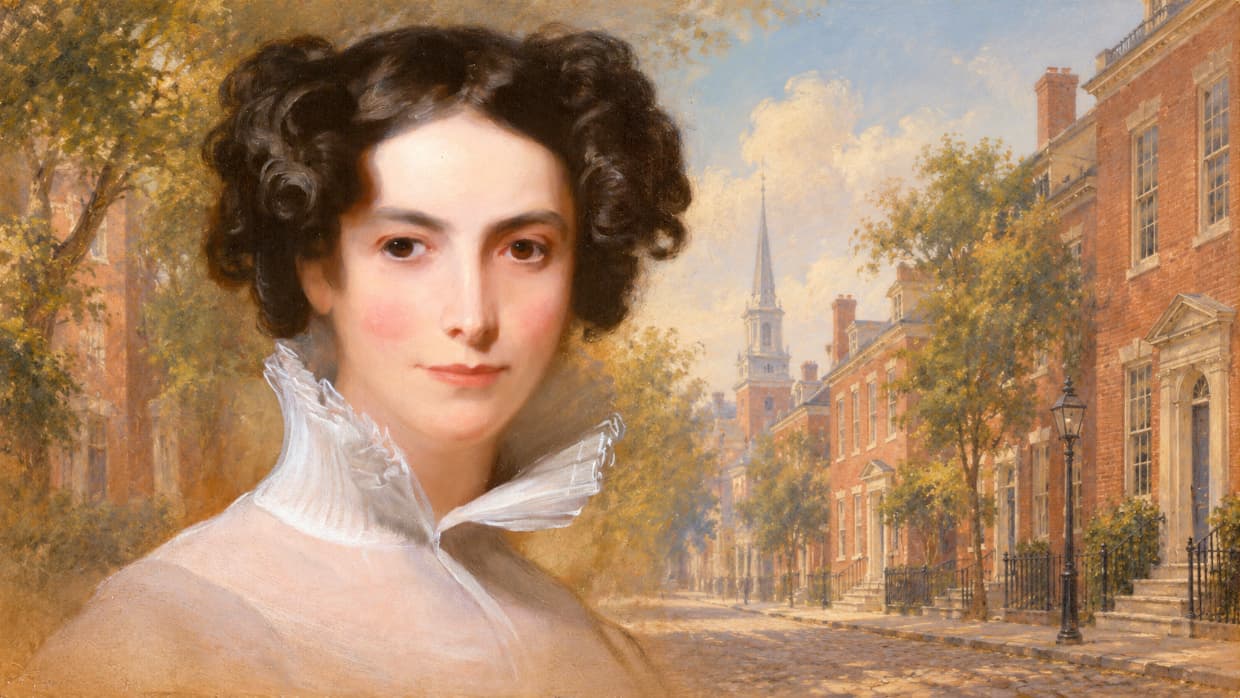






In 1838, missionaries were active and Jewish schooling was scarce. A Philadelphia woman with little Hebrew built a school that soon reached nearly 90 percent of the city's Jewish children.
In the early 1800s, America offered Jews something they had rarely known anywhere: the freedom to live as equals. That freedom carried a quiet danger. In a country where nearly everyone was Christian, how would Jewish children grow up knowing who they were?
Rebecca Gratz (1781–1869) saw the problem early and spent nearly 70 years doing something about it. The charities and schools she built became models for Jewish communities across the country, and some are still running today.
Rebecca Gratz was born in Philadelphia in 1781, one of 12 children of Michael and Miriam (Simon) Gratz. The family was prominent, prosperous, and deeply involved in charity in Philadelphia and beyond. Her parents were leading members of Congregation Mikveh Israel, which followed Sephardic customs, even though most of its members, the Gratzes included, were Ashkenazic.
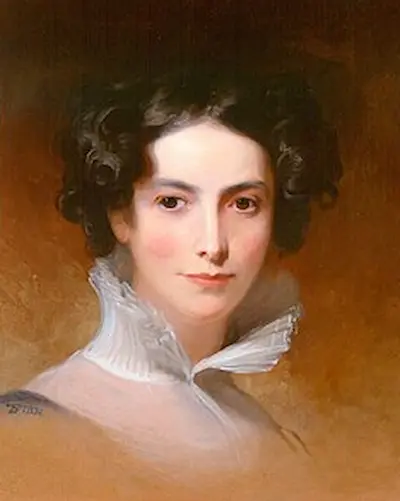 Portrait of Rebecca Gratz by Thomas Sully, 1831
Rebecca was well educated for a woman of her time. She attended women's academies and read widely in her father's large library. She knew little Hebrew, but she grew fascinated by Jewish books and built her own collection of Judaica. Prayer books with English translations let her take a real part in synagogue life, and she attended Mikveh Israel faithfully her whole life. When religion came up with her Christian friends, she firmly defended Judaism and the right of Jews to be treated as equals in American society.
At 19, Rebecca began helping her mother care for her father after he suffered a stroke. It was the start of a lifetime of caring for others, inside and outside her family. In 1801, she helped found the Female Association for the Relief of Women and Children in Reduced Circumstances, which ran a soup kitchen and a home for widows and orphans.
In 1815, she took a leading role in founding the Philadelphia Orphan Asylum, which cared for and educated poor children. It was the area's first nonsectarian orphanage, open to children of all faiths, though it had a Presbyterian influence.
Through this work, Gratz noticed something troubling. Charity often came packaged with efforts to promote Christianity, at a time when missionaries were actively trying to convert Jews. A Jew in need could get help, but often only by putting their faith under pressure. Gratz concluded that the Jewish community needed institutions of its own.
She went on to help found the Female Hebrew Benevolent Society. In one of its reports, she described her vision: "Is it not too much to hope, too much to expect from the daughters of a noble race that they will be foremost in the work of charity, provided their young hearts are impressed with its sacred duties." More than 200 years later, the society is still active, and according to its website, it "remains the oldest Jewish charity in continuous existence in the United States."
As her Jewish knowledge grew, Gratz worked closely with Isaac Leeser, the chazzan of Mikveh Israel. Leeser was a leading voice for traditional Judaism who worked tirelessly to strengthen Jewish life through education and publishing, including his influential journal, The Occident. He called for a stronger system of Jewish education to fight religious ignorance and apathy.
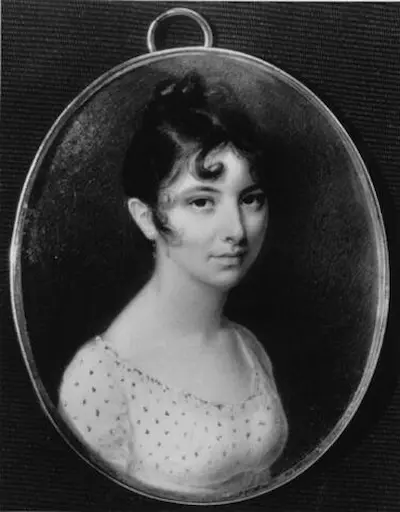 Portrait by Edward Greene Malbone. Courtesy of American Jewish Archives
In 1838, partly in response, Gratz and several other Jewish women founded the Hebrew Sunday School Society (HSSS) in Philadelphia. Leeser mentored the school until his death in 1868, when Rabbi Sabato Morais took his place.
The school offered free basic Jewish education to boys and girls, whatever their family's finances or synagogue membership. Synagogue-based schools later became the norm, but the HSSS stood independent of any single congregation, which opened Jewish education to a far wider slice of the community.
About 50 children enrolled at first. Soon there were 80, nearly 90 percent of Philadelphia's Jewish children at the time. For these children, it was the only Jewish education available.
Gratz believed that Jews who knew their faith, practiced it, and were devoted to it would earn the respect of their Christian neighbors and be better equipped to resist pressure to convert. She served as president of the society until she was 80.
The HSSS also gave Jewish women a new role in Jewish education, as teachers and as the people shaping the curriculum. Gratz admired the British Jewish educator Grace Aguilar, who emphasized women's connection to Judaism, and used Aguilar's books in the school.
Just as important, the school's influence spread far beyond Philadelphia. Gratz guided Jewish women in Charleston, Savannah, and Baltimore as they opened similar schools, while Leeser developed and translated teaching materials and urged women elsewhere to follow Philadelphia's lead. The school kept growing, opening several branches, and by 1900 it had educated more than 4,000 students.
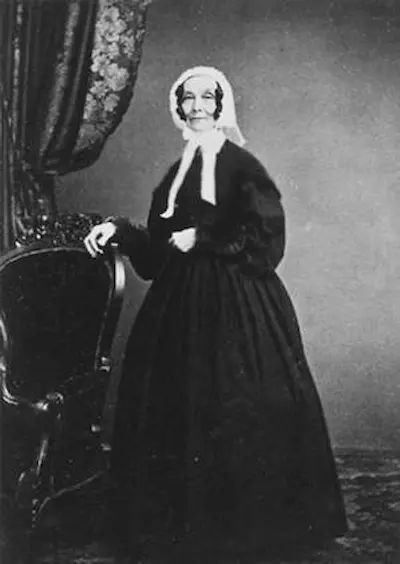 Photograph of Rebecca Gratz, from the Hebrew Sunday School Society papers. Courtesy of American Jewish Archives
Gratz held unpaid leadership roles in nearly all these institutions, shaping their policies, overseeing their finances, and running their activities. In an 1862 message to the HSSS teachers and students, she wrote: "The crowning happiness of my days has been my association with my beloved companions in the duties we have shared together."
By the 1850s, a wave of Jewish immigration brought a new threat to Jewish continuity. Poverty and hardship left many Jewish children without proper care. The institutions that took in such children were Christian, and placing them there would almost certainly cost them their Jewish future. Gratz, who had served forty years as secretary of the Philadelphia Orphan Asylum, was a driving force behind the Jewish Foster Home Society, founded in 1855 and later renamed the Jewish Foster Home and Orphan Asylum of Philadelphia. It gave needy Jewish children care in a Jewish environment.
Rebecca Gratz spent decades serving the Jewish community, and her work shaped not only her own generation but many that followed. Many of the institutions she helped build carried on long after her death, some under new names or merged with other organizations.
Her legacy also inspired new ventures, including Gratz College, a center of Jewish studies in her native Philadelphia. And the concerns that drove her, above all the need to strengthen Jewish education and identity, are as pressing today as they were in her time. Her example still moves people to see what their community needs and, like her, to act on it.