








 What Two Hebrew Words Reveal About Israeli Democracy
Jewish Geography
Jewish Geography






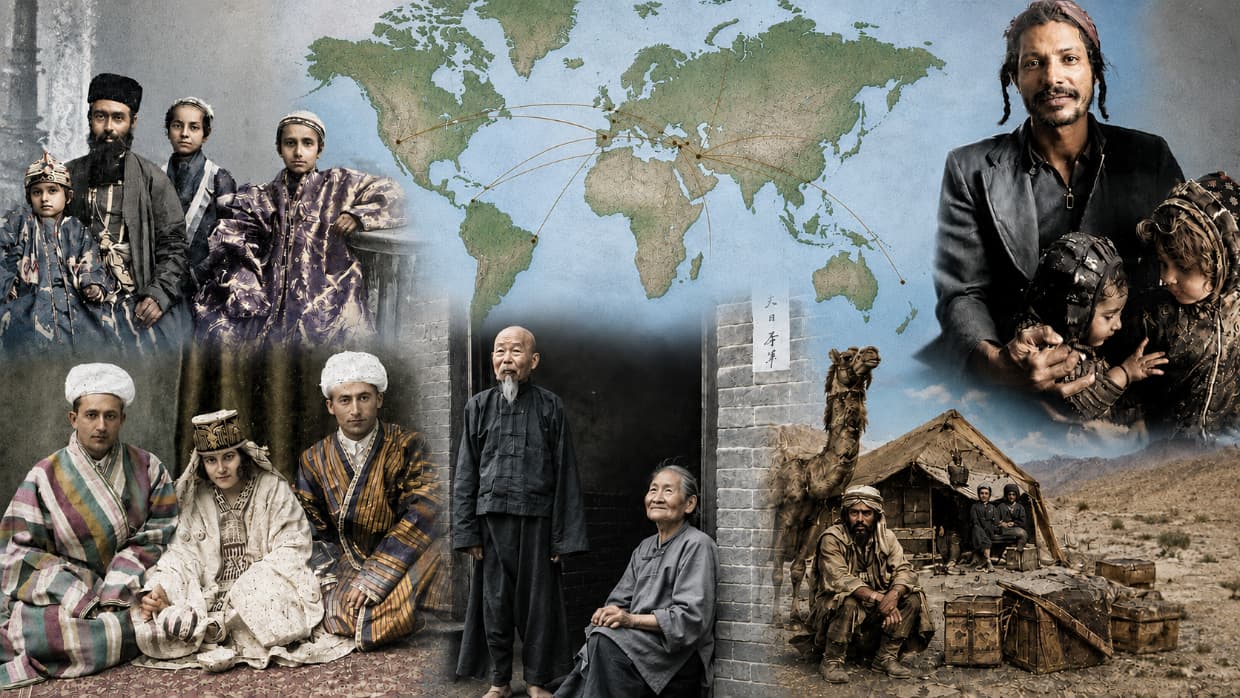
From Arctic Russia to the Amazon jungle, Jewish communities have taken root in the most unlikely corners of the globe.
Jewish communities took root in places no one would expect. Amazonian villages, isolated mountain ranges, even polar outposts. They held onto their own customs for centuries, often under difficult or hostile conditions.
Here is a look at some of those strange corners of the earth where Jewish communities grew. Some still thrive today, others have disappeared.
Jews first reached the Indonesian archipelago in the 1600s as traders in port cities where the Dutch East India Company visited. In the 19th century, more arrivals from the Netherlands and Germany joined them as merchants, officials, and soldiers. In the 1850s, there were at least 20 Jewish families of Dutch and German origin living in Jakarta and other parts of the country.
The early 20th century brought Baghdadi and Adeni Jews along old maritime routes, followed by several hundred European refugees escaping Nazi persecution. By 1941, Indonesia’s Jewish population peaked at roughly 3,000.
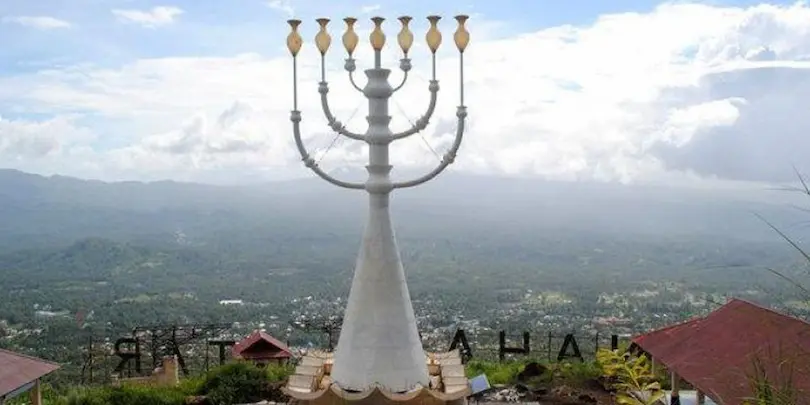 The Giant Menorah Monument, located on the slopes of Mount Klabat in North Minahasa, North Sulawesi, Indonesia.
Everything changed during World War II. The Japanese occupation led to mass internment of European Jews, and the turmoil of Indonesia’s independence left many feeling unsafe or stripped of property. In the 1950s and 60s, rising nationalism and political tension around Israel pushed most of the remaining Jews to emigrate or quietly assimilate into Muslim or Christian communities.
Today, only about 500 Jews are still practicing in Indonesia and the government doesn’t even officially recognize Judaism as a religion. They remain scattered, low‑profile, and often blended into the broader population with the Manado synagogue standing as the last visible landmark of a once‑wide Indonesian Jewish story.
A few chapters of Jewish history unfold in places so cold and remote they barely seem habitable. In Arctic Russia, within villages known as Murmansk, Arkhangelsk, and Norilsk you will find three tiny Jewish communities.
These northern settlements emerged during the Tsarist era, when exile policies pushed people into Russia’s far reaches. Later, the Soviet Gulag system brought Jewish prisoners and workers even deeper into the Arctic Circle. Industrial expansion in the 20th century added another wave, drawing families to mining towns and port cities where labor was needed, no matter the climate.
Murmansk, the largest city north of the Arctic Circle, became home to a modest but steady Jewish presence. Arkhangelsk, a historic port on the White Sea, recorded Jewish residents throughout the 19th and 20th centuries. Norilsk, infamous for its mines and brutal winters, sustained a small community that persisted despite isolation, harsh conditions, and political upheaval.
These places are often described as “polar diaspora outposts,” not because of their size, but because of their sheer improbability. They sit at the edge of human habitation, reminders that Jewish life has found a way to exist and endure, even in the world’s most unforgiving latitudes.
To the Western world, the Central Asian states between Russia and Afghanistan are largely unknown. What is known is that they were part of the USSR, and that the Silk Route to China traveled through the area. It is thus unlikely that many people have heard of the story of the Bukharan Jews, a community that is nearly 2,500 years old.
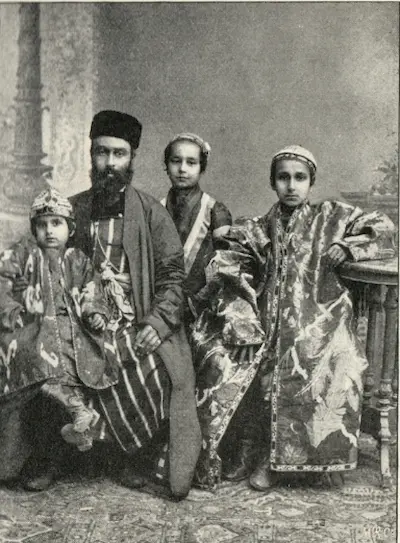 Jewish family in Bukhara, 1880
The Bukharan Jews are an ancient Mizrahi Jewish community from Central Asia, primarily Uzbekistan and Tajikistan. Named after the historic Emirate of Bukhara, they traditionally spoke Bukhori, a Judeo-Tajik dialect of Persian, and thrived along the Silk Road as dyers, weavers, and merchants.
Legend has it that Jews first settled in what is now Uzbekistan following the destruction of the First Temple. The first documented Jewish presence in the region dates back to the fourth century C.E.
When the Babylonians destroyed Jerusalem in the seventh century B.C., the conquerors relocated many of the Judeans to Babylon. Not all stayed in that city; some of the Jews wandered first to Persia, but then they traveled along the Silk Road, settling where it was convenient. Bukharans living in present-day Uzbekistan trace their lineage back to these Jews.
The Bukharans faced severe religious suppression under Stalinism and the Soviet regime. Following the 1991 collapse of the Soviet Union, many emigrated to Israel and the United States (notably Queens, New York) for better economic opportunities.
At its height, the Bukharan Jewish population totaled under 1,000. Today, it’s estimated that roughly 100 to 200 individuals are still living in their historic hub of Bukhara.
The Jewish community of Cochin developed in waves. The first were the Malabari Jews, an old community whose roots stretch back centuries. Their exact origin is still debated: some trace their story to the Assyrian exile, others to Jews fleeing after the Roman destruction of the Second Temple, and still others to early Yemeni traders. Whatever the path, they were in Kerala, India long before any later arrivals.
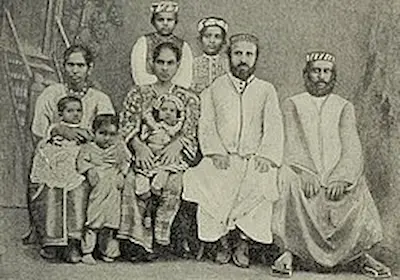 A Malabar Jewish family (1900)
A second group, the Paradesi Jews, came much later. They were Sephardic families escaping the Portuguese and Spanish inquisitions in the 1500s. They brought their own customs and languages.
Both communities built synagogues along the Malabar Coast, kept their traditions, and lived among Hindu, Muslim, and Christian neighbors with little fear of antisemitism. But inside the community, a color and class divide lingered for centuries: the lighter‑skinned Paradesi held higher status, while the darker-skinned Malabari were pushed to the margins. That divide finally faded in the mid‑20th century.
After Israel’s founding in 1948, most Cochin Jews left for a new life there, and economic stagnation in India sped up the migration. Today only a handful remain, but their synagogues, cemeteries, and stories still anchor one of the most unusual and enduring Jewish communities in the world.
Today the Cochin Jewish community numbers only a few dozen individuals, most of them elderly.
One of the most debated claims about the lost tribes of Israel comes from the Igbo of Nigeria. The idea raises an obvious question: if the Assyrians exiled Israel’s ten northern tribes in the 8th century B.C., how could their descendants end up in West Africa long before large‑scale ocean travel existed? There’s still no conclusive genetic proof, but the Igbo have long preserved stories that try to explain the journey.
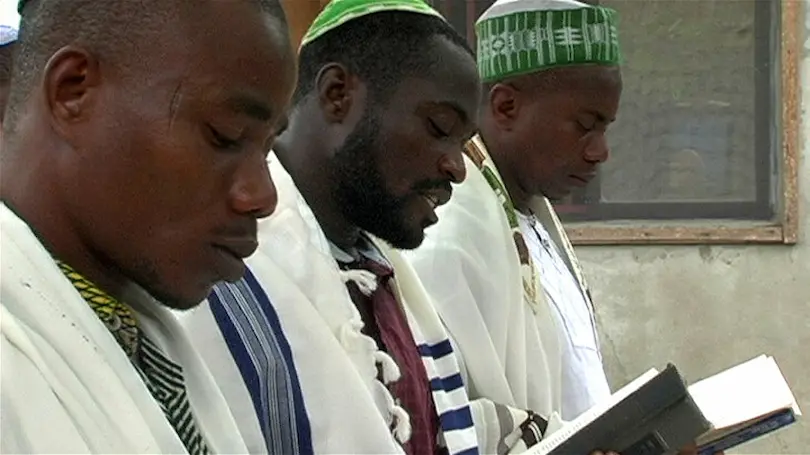
Many Igbo who embrace this heritage say their ancestors moved gradually from the Middle East and North Africa into sub‑Saharan West Africa around the time of the Assyrian conquest. They point to a ninth‑century Jewish traveler, Eldad the Danite, who claimed to have met African communities with Hebrew scriptures, missing only Lamentations and Esther, which were written later.
Those who identify as Igbo Jews believe they are descended from the ancient Israelites. They trace their lineage to the lost tribe of Gad and maintain rituals that echo ancient Israelite practice: kosher‑like dietary rules, menstrual separation, circumcision on the eighth day, and Passover celebrations.
After a bloody civil war in the 1960s left more than one million Igbos dead, their identification with the Jews, who faced their own genocide, took on a new depth.
Today, estimates of the Igbo Jewish population vary widely and number between 2,000 and 15,000, because there are no formal records. A 2008 estimate placed the number closer to 30,000, spread across Nigeria and worshipping in at least 26 synagogues. These congregations serve as centers of prayer, study, and identity, standing resilient in a country where Christianity and Islam dominate and where extremist groups like Boko Haram and Al-Qaeda have caused severe harm and instability in the region.
Despite the pressures—religious, political, and sometimes violent, the Igbo Jews continue to hold onto their traditions.
Azerbaijan is one of the few Muslim‑majority countries with a warm relationship with Israel; in striking contrast to Iran’s hostility since 1979. When Tehran protested Azerbaijan’s 2012 visit to Israel, President Ilham Aliyev brushed it off, saying he knew exactly “who my friends are and who my enemies are.” That friendship didn’t appear out of nowhere; it’s rooted in centuries of coexistence with one of the world’s oldest Jewish communities: the Mountain Jews.
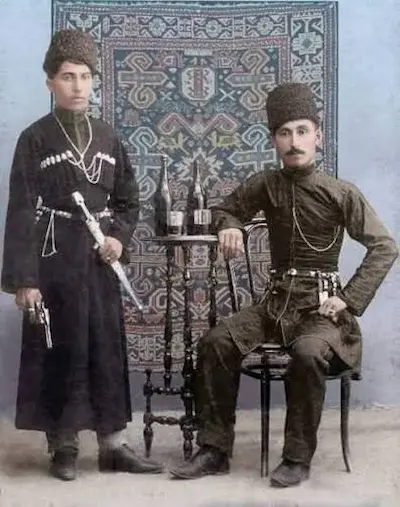
Their story begins roughly 2,500 years ago, when exiled Jews moved east into Persia and adopted Juhuri, a Farsi‑based Jewish language with traces of Hebrew. Over time, some of these families pushed north into the Caucasus Mountains, where locals came to call them Mountain Jews. They built tight, self‑contained communities that kept their traditions alive through invasions, forced conversions, and later the pressures of Soviet atheism.
Modern Azerbaijan is more than 90 percent Muslim, but the Mountain Jews culture has survived. They still cook the foods their ancestors brought from Persia, keep core Jewish customs, and blend them with Central Asian influences, creating a distinct mountain‑Jewish culture found nowhere else.
Their heartland is Krasnaya Sloboda, often described as the world’s only all‑Jewish town outside Israel and the U.S. It has synagogues, a yeshiva, and the beautifully restored Six‑Domed Synagogue. The town also hosts the Museum of Mountain Jews, the first of its kind, preserving centuries of artifacts and stories of survival.
Despite wars, Soviet repression, and the challenges of living as a small minority, the Mountain Jews maintained an unbroken Jewish presence in the Caucasus. Today, Azerbaijan’s community numbers around 11,000, with far larger diaspora populations in Israel and the U.S.
The Museum of Mountain Jews opened in Krasnaya Sloboda in 2020 to shine a light on this one-of-a-kind community, their traditions and culture, keeping them safe for generations to come.
For more than 500 years, Jamaica has had a Jewish heartbeat. It began quietly in the 1530s, when Sephardic refugees slipped into the Spanish colony as crypto‑Jews, practicing in secret but spared the reach of the Inquisition. After the British takeover in 1665, Jewish life finally stepped into the open—synagogues, schools, and markets appeared, and Kingston, Port Royal, and Spanish Town all built thriving communities. By the early 1700s, Jamaica was the center of English‑speaking Jewish life in the Americas, not New York City.
Port Royal’s wild era added its own lore: merchants, traders, and a few legendary Jewish privateers operated around the edges of the pirate economy, though modern historians agree the swashbuckling tales are mostly exaggerated.
Even with periodic discrimination—special taxes, second‑class legal status, and limits on public roles—Jamaican Jews pushed forward. They shaped the island’s sugar and shipping industries, produced artists like Isaac Mendes Belisario, and founded The Daily Gleaner, still Jamaica’s flagship newspaper.
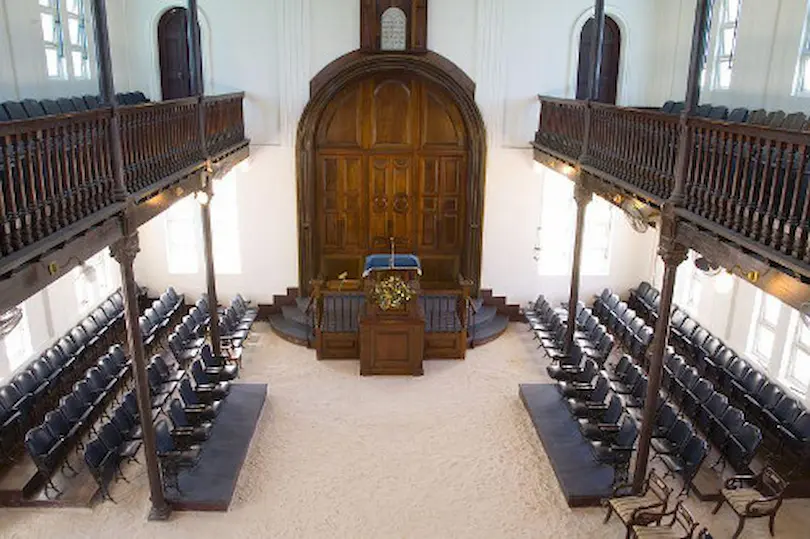 Shaare Shalom Synagogue built in 1912. It’s one of only five functioning synagogues in the world today with sand floors.
By 1849, Jamaica had a notable Jewish political presence, with eight Jewish members of the House of the Assembly, including the Speaker of the House. Because of the large proportion of Jewish representatives, the House adjourned for Yom Kippur that year.
Immigration waves from Curaçao, Germany, Syria, and Egypt refreshed the community into the early 20th century, but assimilation and emigration gradually shrank the population.
Now there is only one functioning synagogue remaining in Jamaica. The Shaare Shalom Synagogue at 92 Duke Street in Kingston follows a fusion of Sephardi-Ashkenazi rites.
Today, Jamaica’s practicing Jewish population is small (roughly 200–450 people), but the island holds an enormous legacy: hundreds of thousands of Jamaicans trace some ancestry to those early Sephardic arrivals who helped shape the island’s story.
The history of Jews in Libya has an ancient beginning and a heartbreaking ending.
An old synagogue in Sirte is said to reach back nearly 3,000 years, placing it in the era of King Solomon. If that timeline holds, it suggests that Jewish traders and settlers may have reached Libya through Solomon’s wide network of alliances and commercial routes.
Jewish life in Libya began when the Egyptians hauled captives from Judah to Cyrenaica. History repeated itself centuries later when Rome crushed a revolt in Judea and shipped thousands more across the Mediterranean to Libya. By then, a thriving Jewish community of roughly half a million had taken root along Libya’s eastern coast.
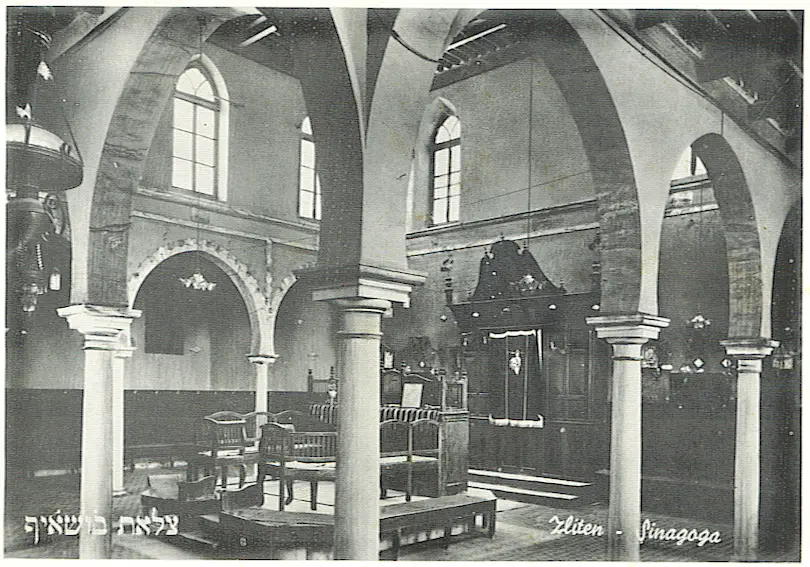 The Slat Abn Shaif Synagogue, Zliten, Libya, before World War II.
Over the next two millennia, that community endured everything from persecution to plagues to grinding poverty. By the early 1900s, only about 16,000 Jews remained. Libya’s modern era began in 1911 under Italian rule, and because it wasn’t governed by Vichy France, Libyan Jews avoided the worst of the North African Holocaust-era policies. Early Italian administration was even relatively tolerant: in 1911, roughly 21,000 Jews lived mostly in Tripoli and Benghazi, scattered across cities, farms, villages and caves. On the eve of World War II, the population had grown to just over 30,000.
Everything changed in 1938. Italy’s Fascist Race Protection Laws reached Libya, banning Jews from schools, professions, and government work, and stamping passports with “Jewish race.” After Israel’s declaration in 1948, anti‑Jewish riots killed 12 people and destroyed hundreds of homes. But the message was clear and nearly 31,000 Libyan Jews left for Israel.
A 1961 citizenship law effectively stripped Jews of legal status, and by 1967 only 7,000 remained. After the Six‑Day War, violence erupted again. Libya’s king and Jewish leaders urged the remaining families to leave, and an Italian airlift carried 6,000 Jews to Rome after they were forced to abandon homes, businesses, and everything they owned.
When Muammar Qaddafi seized power in 1969, barely 100 Jews were left. His regime confiscated all Jewish property, erased debts, and barred emigration. A few managed to escape, but by 2004 the 2,000‑year‑old Jewish presence in Libya had vanished entirely.
Historians agree that 2002 marked the end of the Libyan Jewish population with the death of the last Jew of Libya, Esmerelda Meghnagi.
Though Libya had been home to a Jewish community for thousands of years, and though the Jews had lived under Greek, Roman, Ottoman, Italian, British, and Arab rule, no trace of this once-thriving community exists anymore. Not a single Jew remains in Libya today.
A Tel Aviv Museum opened in 2005 and was named after Or Salom, a Libyan rabbi, and dedicated to the memory of an extinct community.
In Iquitos, deep in the Peruvian Amazon, a Jewish community of hundreds trace their story back to the late‑19th‑century rubber boom, when Moroccan Jewish traders headed into the jungle chasing new business. They settled in remote river towns like Iquitos and Yurimaguas, married local Indigenous women, and built families that blended Amazonian life with fragments of Sephardic heritage. Their surnames included Cohen, Pinto, and Benzaquen.
Iquitos itself sits in Loreto, Peru’s northernmost region, famous for being the largest city on Earth you can’t reach by road. You fly in or arrive by boat, just as those early traders did. When the rubber boom collapsed around 1912, many of the original immigrants left, but their children stayed. By 1909, there were enough families to form the Sociedad Beneficiencia Israelita de Iquitos, a formal Jewish community in the middle of the rainforest.
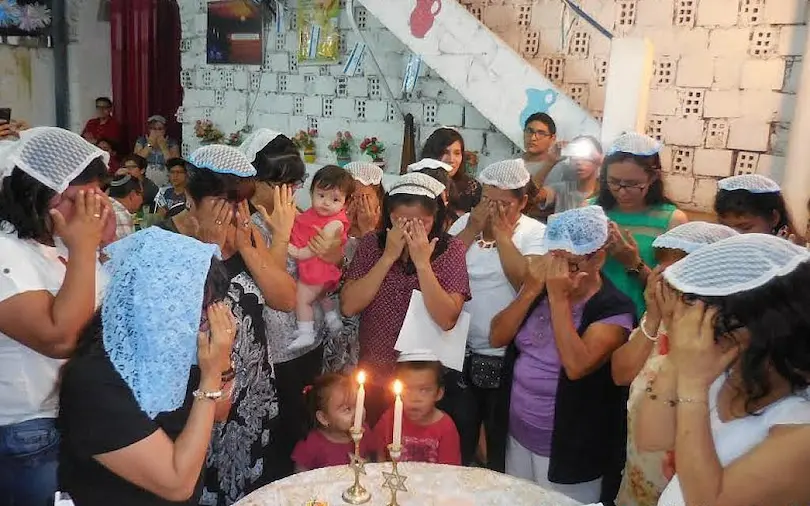 The Jewish community of Iquitos lights candles on Rosh Hashanah eve, 2016. (Facebook)
Over the decades, religious practice faded, but identity didn’t disappear. Rabbis from Peru, Argentina, the U.S., and Israel later helped revive Jewish life, guiding descendants through reconnection, conversion, and in many cases aliyah. Today, the community is small. They meet for prayer in the home of community leader Rebeca Abramovitz but are part of a remarkable Amazonian story: a group born from global migration, shaped by intermarriage, and sustained by people determined to reclaim a heritage once nearly lost.
Argentina’s Jewish story begins far from the Patagonian villages at the bottom of the world. In the late 19th century, the country opened its doors to European immigration, and thousands of Eastern European Jews fleeing pogroms in Russia and Poland boarded ships and crossed the Atlantic in search of safety. By the early 20th century, Buenos Aires had become a major hub for Ashkenazi immigrants escaping rising antisemitism across Europe.
But the migration didn’t stop in the capital. As Argentina pushed deeper into Patagonia, building ports, ranching towns, and military outposts, Jewish families followed the same logic as everyone else: go where the work is. Some arrived through Baron Hirsch’s agricultural projects. Others simply kept moving south until the land ran out.
They settled in places like Trelew, Puerto Madryn, Río Gallegos, and eventually Ushuaia, the southernmost city on Earth. Alongside Sephardic families from the Ottoman world, they formed tiny but determined communities scattered across the steppe.
In Patagonia, Jewish life looked nothing like the shtetls their ancestors left behind. These were ranch hands, merchants, tailors, shopkeepers, and teachers. They built small synagogues, Hebrew schools, and cultural clubs that kept identity alive across vast distances. Their story is shaped by agricultural colonies learning sheep ranching from scratch, port city merchants supplying the booming wool trade, and the fierce connectedness that comes from living far from everything.
Some of those communities still exist. Trelew and Comodoro Rivadavia maintain active Jewish cultural centers that reflect more than a century of southern Jewish life.
Farther south lies Ushuaia, perched on the Beagle Channel and closer to Antarctica than Buenos Aires. Jewish families arrived here as military personnel, merchants serving the port and prison colony, and adventurous immigrants who kept drifting south until there was no more “south” left. Today, the community is small. Holiday gatherings, cultural events, and visiting rabbis keep it going, and the tradition endures.
Together, Patagonia and Ushuaia form one of the world’s most remote Jewish outposts at the Southern tip of the diaspora.
The Lemba of Zimbabwe and South Africa are one of the most intriguing African communities with a long tradition of Israelite ancestry. What makes their story unusual is that their oral history, cultural practices, and modern genetics all point in the same direction.
They are a Bantu‑speaking people whose identity blends African heritage with customs that look strikingly similar to ancient Judaism. Their oral history says their ancestors came from a Middle Eastern city called Senna and traveled down the east coast of Africa as traders before settling inland. Genetic research supports this tradition.
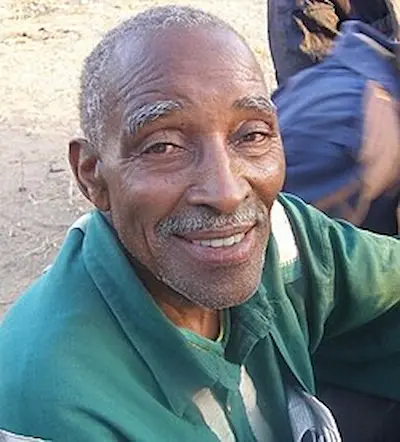 A Lemba man from the Gutu District (by Sanali.SD, Wikipedia)
In the late 1990s and early 2000s, genetic studies emerged suggesting that a significant proportion of Lemba men, particularly those of the priestly Buba clan, carry West Asian and Semitic Y‑chromosome markers, including the Cohen Modal Haplotype found in many Jewish priestly families
Professor Tudor Parfitt, a leading authority on Judaizing movements, remarked: “Their DNA clearly indicates that their oral tradition is absolutely bang-on and that they did at one point come from the Middle East… the priestly clan, the Buba, has got a rare genetic signature, characteristic of the priesthood of the Jewish people.”
As John Hadji, a respected Lemba elder from Limpopo, recounts: “Our forefathers left Israel during a time when Jews were persecuted by Nebuchadnezzar, in 650 BC. They came down through Yemen, Eritrea, Kenya, Uganda and Mozambique, before finding this place.”
Culturally, the Lemba maintain practices that set them apart from neighboring groups. They avoid pork, perform circumcision in a ritual setting, follow strict food laws, use a lunar calendar, and practice ritual slaughter similar to kosher shechita. They also emphasize endogamy and discourage marriage outside the community. Many Lemba identify today as Christian or Muslim, but they describe Judaism as their culture rather than their religion, and they have worked to preserve that heritage across centuries.
One of their most distinctive traditions is the ngoma lungundu, known as “the drum that thunders.” Some researchers see echoes of the Ark of the Covenant in the way the Lemba carried it into battle. A 600‑year‑old artifact linked to this tradition is kept in a Zimbabwean museum, and the Lemba say the original object was lost in Yemen long before their ancestors reached southern Africa.
Today, the Lemba number around 50,000 people, mostly in Zimbabwe’s Gutu, Mberengwa, and Bikita districts and in South Africa’s Limpopo Province. They remain one of the rare communities whose oral tradition, anthropology, and genetics all reinforce one another, suggesting a real connection between a modern African people and ancient Semitic traders from the world of biblical Judea.
Despite genetic findings and long-standing practices, the Lemba remain on the periphery of both African and Jewish recognition. They are often deemed “too African” to be Jewish and “too Jewish” to be African.”
The Chinese Jews of Kaifeng are one of the most fascinating, historically rich, and unusual Jewish communities in the world. They flourished for nearly a thousand years deep inside imperial China, blending Jewish tradition with Chinese culture while remaining unmistakably Jewish.
Their story of begins along the Silk Road, where merchants from Persia and India gradually made their way into China. Traders may have passed through as early as the Han and Tang dynasties, but the first true community took shape in the Northern Song, when Kaifeng was one of the world’s busiest commercial capitals.
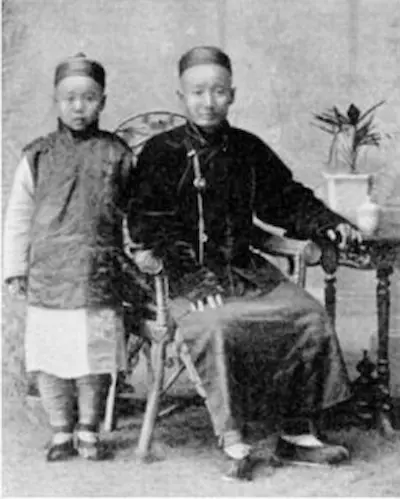 Jews of Kaifeng, late 19th or early 20th century
Around the 11th century, a group of Jewish merchants arrived via the Maritime Silk Road and petitioned Emperor Zhenzong for permission to settle. He welcomed them warmly, granting the right to live in Kaifeng and keep their traditions. More than seventy clans eventually formed a thriving community, known locally as the “tendon‑picking religion” because they followed the Jewish rule of removing certain sinews from meat. They called their faith Ciye Le Jiao, the Religion of Obedience and Peace.
By 1163, they had built a full synagogue complex with a mikvah, Hebrew manuscripts, and a sanctum reserved for the rabbi. They observed Shabbat, circumcision, Torah reading, and avoided pork, blending Chinese daily life with Jewish ritual. One emperor even gave them Chinese surnames when he struggled to pronounce their Hebrew ones.
Their fortunes changed in the 1600s. A devastating flood in 1642 destroyed the synagogue and precious scrolls. War and upheaval followed, Hebrew literacy faded, and by 1800 the last rabbi had died. Without teachers or texts, the community slowly assimilated. By the 19th century, missionaries purchasing old Torah scrolls found that no Kaifeng Jew could read them. Still, fragments of identity lingered in small habits like avoiding pork and baking unleavened bread.
Today, an estimated 600 to 1,000 descendants remain in Kaifeng. A handful of younger members have traveled abroad to study Hebrew or formally convert, while others learn through visiting Jewish travelers or online resources. China does not officially recognize Judaism, but the descendants continue to explore their heritage, keeping alive one of the most unusual and enduring chapters of Jewish history.
Yemenite Jews are one of the oldest, most distinctive Jewish communities in the world with a 2,000‑year story shaped by isolation, scholarship, hardship, and an unforgettable 20th century mass rescue.
For two thousand years, Jews lived in Yemen, a community so old that local tradition traces its origins to merchants sent by King Solomon to trade for materials for the Temple. Whether legend or memory, Jews were already well‑established by late antiquity, and Yemen’s isolation helped them preserve ancient Hebrew pronunciations, melodies, and religious customs long lost elsewhere.
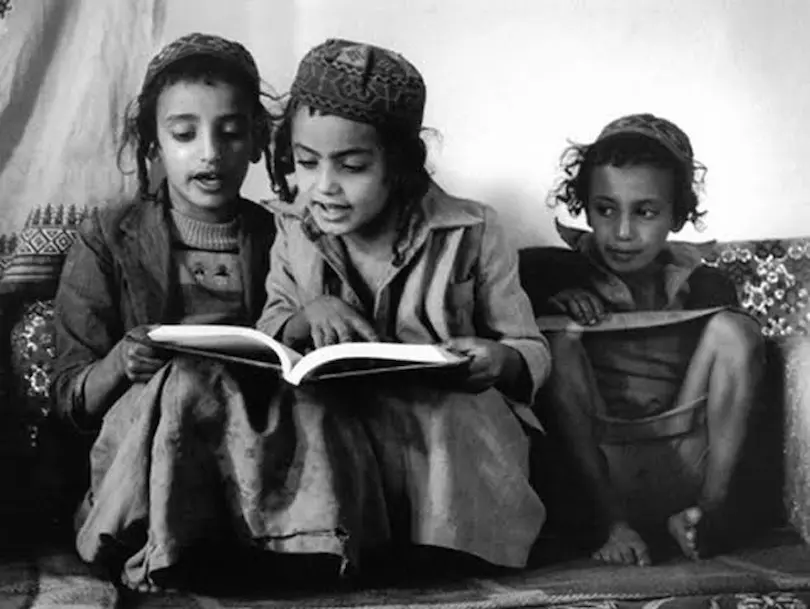 Al Ajar, Haïdan, 1984, Photo: Myriam Tangi
Yemen wasn’t just home to Jews; for a time, it was home to a Jewish kingdom. Beginning around 380 CE, the Himyarite rulers adopted Judaism and used it to unify the region’s famously fractious tribes. Their reign lasted roughly 150 years, until the Axumite Christians of Ethiopia invaded, toppled the dynasty, and set the stage for Islam’s rise across Arabia a century later.
Under Islamic rule, Jews lived as a protected but restricted minority. They endured periodic persecution, forced conversions, and tight economic limits, yet built remarkably resilient communities in towns and mountain villages. Most worked as silversmiths, carpenters, and craftsmen. Their culture developed its own flavor: Judeo‑Yemeni Arabic, ancient‑sounding Hebrew, ornate wedding garments, the musical poetry of the diwan, and a strict, old‑world religious observance.
By the early 1900s, about 55,000 Jews lived in Yemen. Conditions worsened in the 1920s when old conversion laws were revived, including the rule that Jewish orphans under twelve had to be taken and raised as Muslims. After the UN partition vote in 1947, violence exploded in Aden, leaving 82 Jews dead and hundreds of homes destroyed.
That tragedy set off one of the most dramatic rescues in Jewish history. Between 1949 and 1951, the United States and the United Kingdom carried out Operation Magic Carpet, airlifting nearly 50,000 Yemeni Jews to the new State of Israel. Families walked for days across deserts and mountains just to reach the departure camps. It was a mass exodus that emptied almost every Jewish village in the country.
A few hundred stayed behind, often to care for elderly relatives. Over the decades, civil wars, extremist pressure, and rising hostility pushed the community to the brink. In recent years, the U.S. State Department quietly relocated the last families to safety in Israel or the United States.
Today, fewer than one hundred Jews remain in Yemen, and most estimates suggest the number is now closer to a handful. After two millennia of life in the highlands and cities of Arabia, one of the world’s oldest Jewish communities is nearly gone.
For more than two thousand years, the Beta Israel Falashas of Ethiopia carved out a Jewish life far from the centers of the diaspora. Their origins are tangled in legend and history. Some trace their roots to Menelik I, the son of King Solomon and the Queen of Sheba. Others point to Jews who fled south after the First Temple fell, or to members of the tribe of Dan escaping ancient wars. Scholars add another thread: Agau communities in Ethiopia who adopted Judaism in antiquity.
Whatever the mix, by the first millennium they were practicing a scriptural, priest‑led Judaism centered on the Orit, a Geʽez version of the Torah untouched by later rabbinic writings. They kept Sabbath, circumcision, dietary laws, purity rules, biblical festivals, and synagogue life led by kohanim. Their Judaism was ancient, direct, and remarkably resilient.
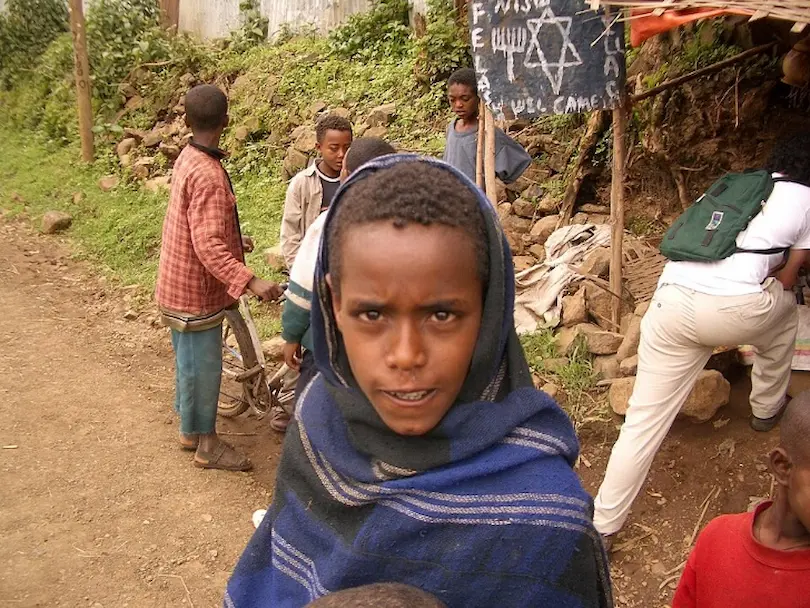 Falash Mura child - Ethiopia 2005
Their isolation hardened after the kingdom of Aksum embraced Christianity in the fourth century. Over the next thousand years, pressure mounted. In the fifteenth and sixteenth centuries, Christian rulers tried to break them; the community retreated toward Lake Tana. In the seventeenth century, Emperor Susenyos seized their lands and crushed their autonomy.
By the time Scottish explorer James Bruce encountered them in 1769, their numbers had fallen sharply. Still, tens of thousands held on in northern Ethiopia through the nineteenth and twentieth centuries, maintaining a distinct identity despite poverty and discrimination.
Everything changed in the 1970s. Ethiopia’s communist revolution, famine, and war with Somalia pushed thousands of Beta Israel into Sudanese refugee camps. Israel began covert rescue missions and between 1980 and 1992, roughly forty-five thousand Ethiopian Jews reached Israel.
They represented virtually the whole of their ancient black Jewish community. This drastic step was necessary because the domestic situation in Ethiopia had become desperate.
Today, about one hundred sixty thousand Israelis trace their roots to this ancient community, while only a small remnant remains in Ethiopia and Sudan.
Somalia has endured almost every disaster a country can face. Famine, dictatorship, civil war, warlords, and the collapse of basic services turned daily life into survival. Yet even in a place defined by hardship, the Yibir stand out as one of the most marginalized communities in the Horn of Africa.
Their story begins with legend. In Somali, “Yibir” means Hebrew, and the community has long claimed distant roots in ancient Israel. Whatever the truth, that identity placed them at the bottom of Somalia’s caste system once Islam became dominant. For centuries, they lived as nomads on the edges of towns. As an outcast clan, they were denied education, healthcare, and most social services. Poverty shaped everything. They survived through menial trades such as blacksmithing and leather work, and folk healing. Neighbors who feared them as cursed still brought small gifts, believing the Yibir carried an old mystical power to bless because “it is lucky to give the Yibir a small amount of money when a son is born or at a marriage”.
By the medieval period, any Jewish practice had faded. The Yibir became Muslims like everyone around them, but the stigma of their Jewish origin never lifted. Even in recent decades, young Yibir often hide their identity to avoid ridicule or exclusion.
Modern Somalia offered little relief. When civil war tore the country apart, they suffered like everyone else, only with fewer protections and fewer allies.
In 2012, as Somalia began piecing together a central government and the Yibir received a small sign of recognition. During the drafting of a new political system, lawmakers reserved one seat in the lower house for the community. It was a modest gesture, but for a forgotten people pushed to the margins for centuries, it marked the first hint of a place in the national story.










You used wrong credit on the photo about A lemba man. I took that photo in 2012 August. The credit for the photo should come to me
Expected to find at least few sentences about Jews in Republic of Georgia (former USSR). Very rich history.
I feel like I have been in a bubble
Hi there are no more jews in Cochin
The last jew was Hallegua unfortunately dgevus now dead
Some places I knew had Jews there, but others I didn't know there were any Jews there, so I guess you can almost find Jews anywhere, sometimes they have to hid that they are Jewish
According to the great English Encyclopedia, there were millions of Jews in Central Asia before Islam. Apparently, they were descendants of the tribe of Naftali. Their Imam's still look like Rabbis. Maybe some of them know it.
Kaddafi's grandmother was Jewish. She converted to Islam at some point. So did one of Muhammad's 13 wives.
We would like permission to feature this story in our newspaper - the Flatbush Jewish Journal, of course with credit to you and Aish.com
Dara Horn wrote a book a few years ago about a city in China built by Jews in the 19th or 20th century. The Jews came from Russia. They excelled in making ice structures. I was disappointed that their story was absent from this article.
There were Jews in Harbin. It used to be in Manchuria, now China. There were 20,000 Jews, from Russia. They escaped the Tzar and the pogroms and thrived until 1932 when Japan conquered it. The last Jews left in 1962. A Jewish museum remains.
Hello Gary,
Thanks so much for bringing this up. Dara Horn wrote about the Jewish backstory of Harbin China in her 2021 non-fiction essay collection, People Love Dead Jews: Reports from a Haunted Present
She titled the Harbin piece “Frozen Jews” and it described how in the 1890’s RussianJews were given the chance to escape deadly pogroms if they relocated to China and help build the Chinese Eastern Railway. That resulted in a Jewish settlement of over 20,000 Jews in Harbin.
Over the ensuing decades of Japanese and then Russian control, most of the Jews fled from Harbin for personal safety
.
Aish has written about Dara Horn and Harbin https://aish.com/people-love-dead-jews/
I think the article needs an edit on the historical size of the community of Bukhara... hopefully this is just a rough draft, but always an interesting subject! This rabbit hole led me to a fascinating group of Ethiopians -- presumably not Jewish -- called the Waaqeffattoota who I think must be bnei Noach at the very least.
Also Hey Dubuque! Greetings from Eau Claire! 🙂
Thanks for the feedback, Tomer. Can you please reply with a source for a Bukhara update? Much appreciated.
Wow, so much WRONG information especially about Jews in Ethiopia & in Yemen— Not well researched article.
Hi Suzanne, I'd be glad to check out whatever information you have on those two locations. Thanks
Very very interesting.
What an amazing article being one of the countries highlighted (Jamaica) I found out on my mother's side I'm a descendant of a Jamaican jew and it was my great grandmother and grandmother who we're Jewish Jamaicans ✡️ 🙏🏽🇯🇲
Fascinating article. Thank you Dan. And greetings from the 17 Jews in far flung (it not too exotic) Dubuque, Iowa on the Mississippi River. 180 years ago we were 150 German-speaking Jews (pre-URJ). In the area? Come join us for our High Holy Day services.
Alan, thanks for the kind words. Rest assured, if I'm ever near Dubuque during Shofar season.......