








 The Red Cross’s Jewish Problem
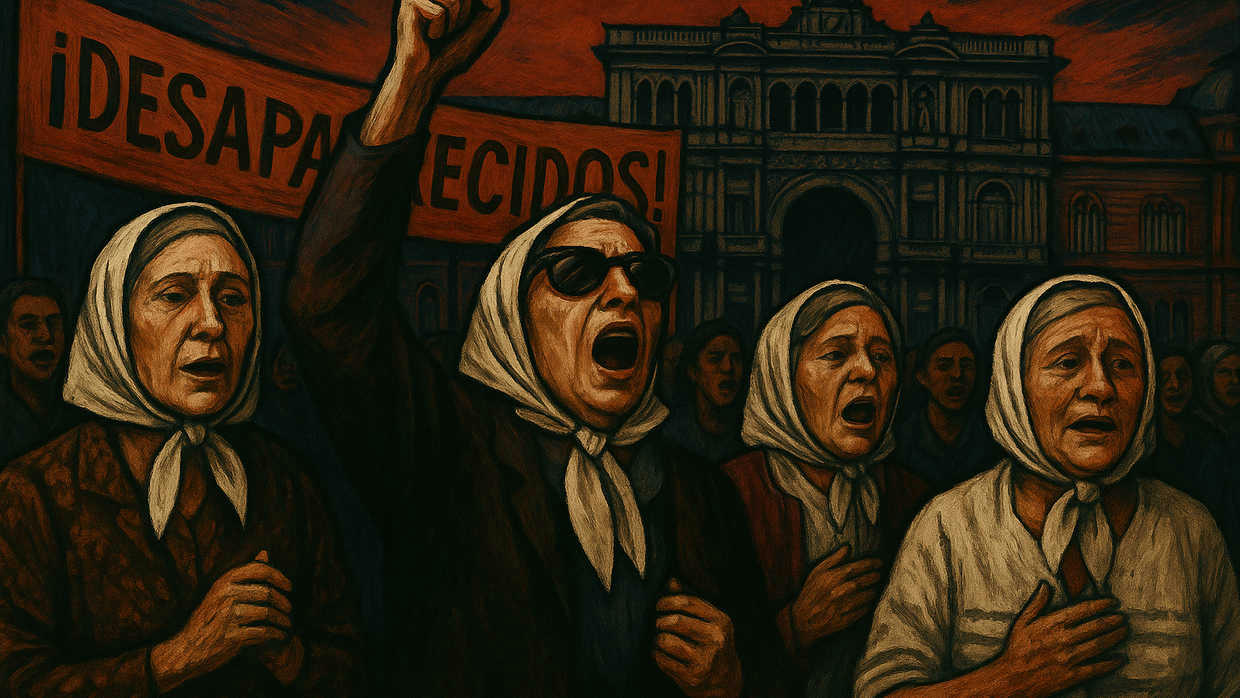






Amid terror, one Jewish woman’s unbreakable search for her vanished daughter and grandson helped spark a global movement for justice.
Imagine being forced to listen to Hitler’s speeches while swastikas glare at you from police-station walls—all while you are tortured for the “crime” of dissent. Now imagine this not in Nazi Germany, but in Argentina in the 1970s.
This was life during Argentina’s “Dirty War” (1974–1983), when tens of thousands were kidnapped, tortured, and murdered by the ruling military junta. Dissidents were plucked off the streets in broad daylight, families disappeared overnight, and even a rumor of disloyalty could seal one’s fate.
One woman, a Jewish grandmother named Rosa Roisenblit, refused to stop searching for her missing daughter and unborn grandson. Her relentless quest—and that of dozens of other grandmothers—stands at the center of Haley Cohen Gilliland’s new book, A Flower Traveled in My Blood: The Incredible True Story of the Grandmothers Who Fought to Find a Stolen Generation of Children (2025).
Rosa’s family, like so many Argentine Jews, came from Russia. Her parents and her husband Benjamin’s parents fled pogroms in the early 20th century, joining thousands who saw Argentina as a safe haven.
Argentina seemed welcoming. Its 1853 constitution guaranteed freedom of religion, and by 1862 Buenos Aires Jews had founded the Congregación Israelita Argentina (CIRA) to oversee kosher food, weddings, funerals, and synagogue life. A Jewish school opened in 1894. By the 1960s, Argentina had over 300,000 Jews—80% from Russia, the rest Sephardic families from the Balkans and North Africa.
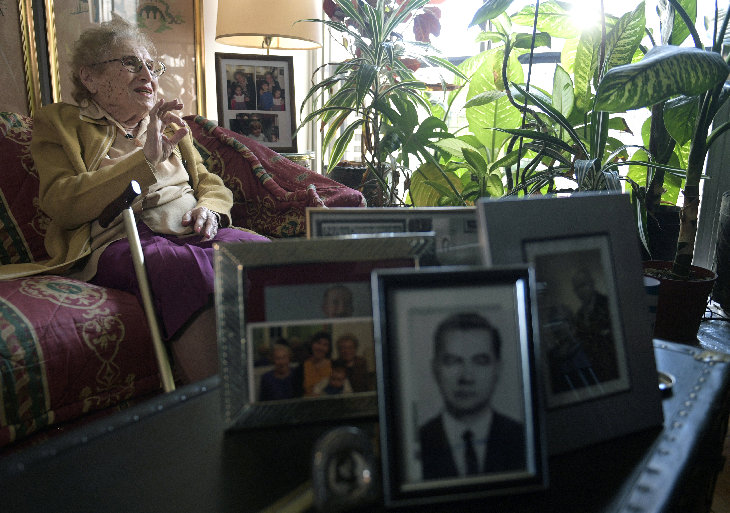 Rosa Roisinblit photographed in her living room with photos of her loved ones visible on her coffee table.
The Roisenblits embodied this integration. Rosa was a physician—rare for women of her time—while Benjamin worked in business. They raised their only child, Patricia, in a comfortable home filled with art and furniture. Patricia excelled academically, took swimming and drawing classes, and studied at Hebrew School on weekends. Her school walls proclaimed proudly: “The new Argentina provides us with happy schools and happy children.”
Life seemed secure. But antisemitism was never far away.
Argentina’s Jewish community had endured violence before. In 1919, during the “Semana Trágica” (“Tragic Week”), soldiers fired on striking workers in Buenos Aires. When unions called a general strike, right-wing militias unleashed fury on the Jewish quarter: smashing shops, burning homes, and attacking residents. By week’s end, 700 lay dead and thousands were injured.
#Jews, though less than 1% of the population, made up 12% of those who vanished. Many victims were drugged, loaded onto planes, and thrown alive into the Atlantic.
This hostility never vanished. By the 1970s, Argentina again descended into dictatorship. In 1976, General Jorge Rafael Videla seized power. Cloaking repression in Catholic rhetoric, his junta targeted unionists, students, journalists, leftists—and Jews.
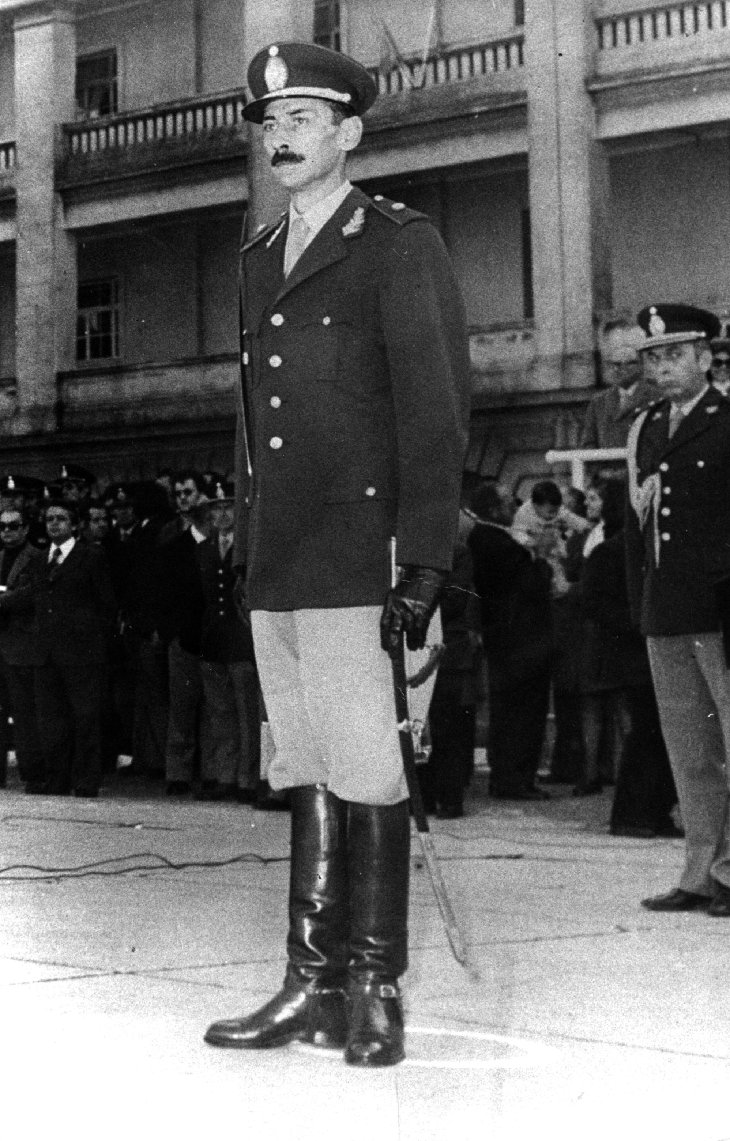 General Jorge Rafael Videla photographed on March 25, 1976, the day after the coup.
As many as 30,000 Argentines were “disappeared.” Soldiers in masks dragged people off buses and sidewalks in broad daylight. Listening to the wrong music or reading the wrong newspaper could mark one as “subversive.” Jews, though less than 1% of the population, made up 12% of those who vanished. Many victims were drugged, loaded onto planes, and thrown alive into the Atlantic.
When Benjamin died in 1971, 19-year-old Patricia was “unmoored.” She broke off her teenage romance, shelved plans for marriage, and entered medical school at the University of Buenos Aires.
The poverty she encountered in nearby slums devastated her. A friend recalled her weeping at the sight of barefoot children playing in fetid ditches. Soon she joined the Montoneros, a leftist group resisting the junta, and worked in their underground medical clinics.
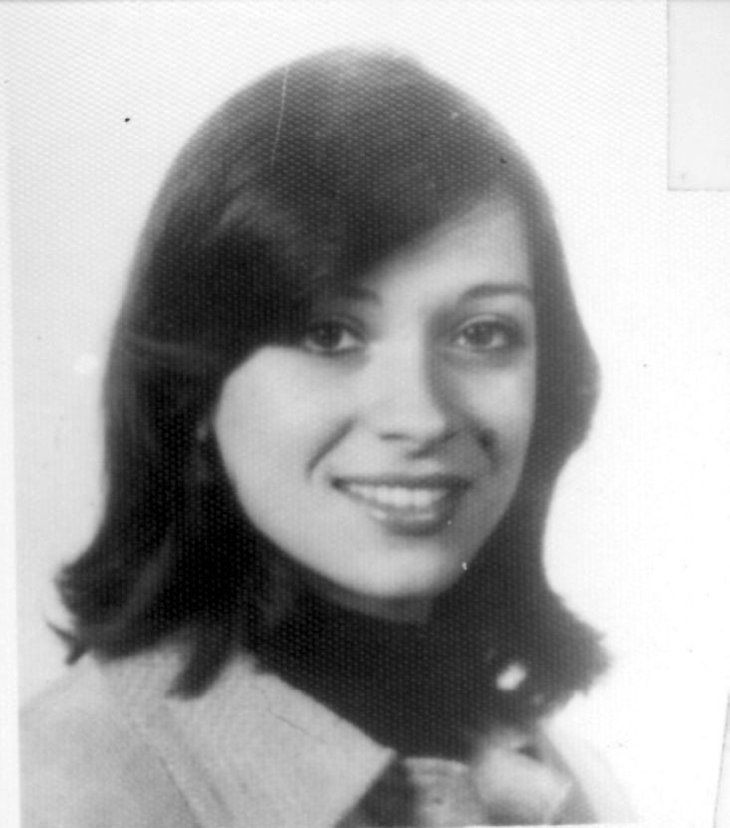 Patricia
Patricia married fellow activist Manuel Pérez Rojo, living under false names in safehouses. In 1977, they had a daughter, Mariana. Rosa begged them to flee, offering to fund a new life abroad. Patricia refused: “Those who leave the country are cowards.”
By 1978, Patricia and Manuel hoped to lay down arms. They rented a small apartment with Rosa’s help—she co-signed the lease—and Manuel opened a toy business. Patricia, pregnant again, promised her mother they were “no longer wanted” by police.
But safety was a cruel illusion. On October 7, 1978, Rosa was jolted awake by a phone call: “Se llevaron a los chicos—They’ve taken the kids.” Patricia and Manuel had been seized. Mariana was spared. Patricia, heavily pregnant, vanished into the junta’s prisons.
Rosa soon joined a band of grieving mothers. One of them, Azucena Villaflor, had lost her 24-year-old son. At the Interior Ministry, Azucena suddenly stood and declared: “All that we’re doing is useless. What we must do is go to the Plaza de Mayo.”
On April 30, 1977, the women gathered at Buenos Aires’ Plaza de Mayo. At first ignored, they returned every Thursday. When gatherings of more than two people were banned, they walked two by two around the square. Even when one of their number was seized and disappeared, they kept coming.
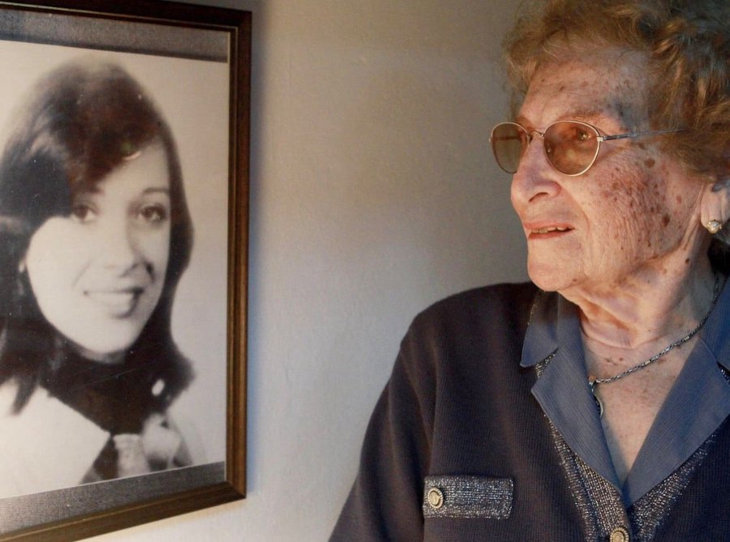 Rosa Roisenblit with photo of her daughter Patricia
In time, they were joined by other women, the Abuelas (Grandmothers) de Plaza de Mayo, who were searching not only for their vanished children but also for their missing grandchildren—infants taken with their parents, or babies born in captivity. Their mission: “To look for our grandchildren without forgetting our children.” The Abuelas wore white handkerchiefs - to evoke the white of baby diapers - on their heads.
Rosa rose to vice president. “I wanted to fight, I wanted to do something, I was in a rush to do something,” she said.
In 1982, by chance, two Abuelas met Dr. Victor Penchaszadeh, a young pediatrician who had narrowly escaped the junta. Agents once blindfolded him, bound his hands, and tried to force him into a car. He resisted so fiercely—kicking in view of passersby—that they abandoned the attempt. He fled Argentina two days later.
 The Abuelas de Plaza de Mayo
Now in the U.S., Penchaszadeh introduced the Abuelas to geneticists, including Dr. Mary-Claire King, who devised an “Index of Paternity” to establish kinship between grandparents and grandchildren. This revolutionary science gave the Abuelas a tool to prove stolen children’s identities.
The Abuelas’ first major breakthrough came with the story of Paula Logares. Paula’s parents, Monica Grinspon and Claudio Logares, fled to Uruguay in 1976 after the military coup in Argentina. They hoped Uruguay would be safer, but the dictatorship there was part of Operation Condor, the shadowy alliance of South American military regimes that coordinated surveillance, kidnappings, and assassinations of leftist dissidents across borders.
On May 18, 1978, the young family was seized in broad daylight on a busy Montevideo street. Witnesses recalled seeing hooded men drag them into cars: Claudio forced into one, Monica and her two-year-old daughter Paula bundled into another. None of the three were ever seen in public again.
For years, Monica’s mother, Elsa Grinspon, searched desperately, joining the Abuelas in their marches and secret meetings. Her hopes seemed slim—until a strange letter arrived in 1980 at a Brazilian human rights office. Inside was a photograph of a little girl with “Paula” written on the back.
The sender reported overhearing a heated argument between the couple raising her. The woman shouted at her husband: “You killed this girl’s parents, and now you’ve dumped her on me to ruin my life!” The chilling words suggested what the Abuelas had long feared: that children of the disappeared were being given away or sold to military families.
Elsa immediately recognized her granddaughter in the picture. Other Abuelas were cautious—it was hard to be sure from a single photo and hopes had been dashed before—but Elsa’s conviction never wavered. She pressed the group to demand further investigation.
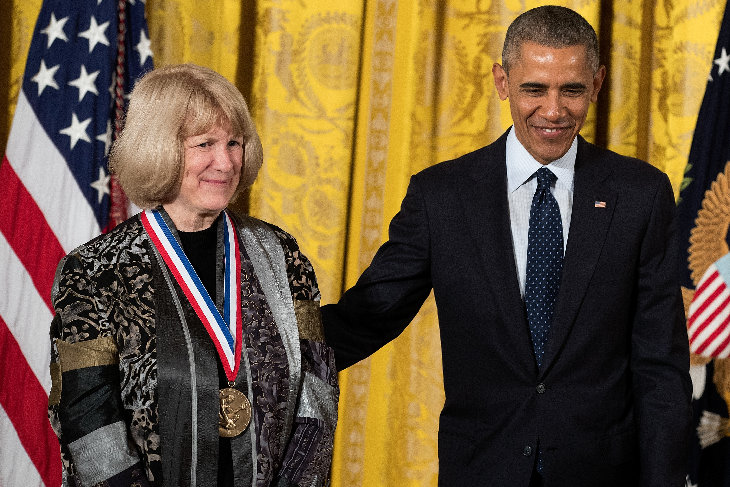 President Barack Obama awards Mary-Claire Knight the National Medal of Science for “pioneering contributions to genetics, including discovery of the BRCA1 susceptibility gene for breast cancer; and for development of genetic methods to match ‘disappeared’ victims of human rights abuses with their families’ in May 2016.
The Abuelas petitioned Argentina’s courts to compel a blood test under the new genetic techniques pioneered by Dr. Mary-Claire King. After months of legal wrangling, Paula’s blood was finally compared to Elsa’s. When the results came in, Dr. King triple-checked her calculations: the probability that Paula was Elsa’s granddaughter was 99.82%.
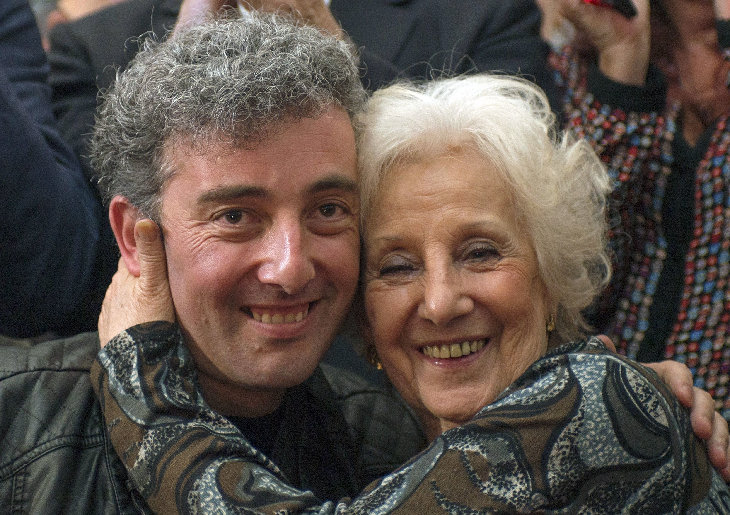 Estela de Carlotto, president of The Abuelas de Plaza de Mayo, reunited with her missing grandson.
The reunion was extraordinary. Paula, then eight, was escorted back to Elsa’s home in Buenos Aires—a place she had not seen since she was a toddler. To everyone’s astonishment, she walked through the doorway without hesitation, turned left down the hall, and strode directly into what had been her bedroom. She looked at the empty bedspread and asked, with the certainty of remembered childhood:
“Where is my teddy bear?”
That simple question captured the depth of the crime and the miracle of recovery: a child stolen by terror, who still carried within her the faint memory of a vanished life—and a grandmother who had refused to forget her.
For Rosa, the search stretched on for more than two decades. Unlike Paula’s case, where a photograph had surfaced, there were no clues about the fate of her pregnant daughter Patricia or the child she carried when she was taken in 1978. All Rosa knew was that somewhere out there, if the baby had survived, her grandson was living under another name.
That child was Guillermo Gómez. He grew up in a home shadowed by violence. His adoptive father, Francisco Gómez, was a low-ranking Air Force employee—part of the very institution responsible for the terror of the Dirty War. Guillermo’s earliest memories were of his father beating his mother. As a frightened little boy, he would pass pots and pans to her from under the kitchen sink so she could defend herself against the blows.
Francisco sometimes directed his cruelty at Guillermo himself, calling him “Jew.” The insult baffled the boy; his adoptive family were Catholics with no Jewish ties. But the word lodged in his mind, a riddle that would only make sense years later.
His adoptive mother, Teodora, also gave strange hints that his life was not what it seemed. One day, when Guillermo was about eight, she asked him an unsettling question: “What would happen if a woman came to the door saying she was your mother?” The words filled him with dread, though at the time he did not understand why she had asked.
By the late 1990s, Guillermo was a young man working in a fast-food restaurant. It was there that fate intervened. Mariana Pérez, Patricia’s daughter and Guillermo’s sister, had grown up knowing she was the child of the disappeared. As an adult, she joined her grandmother Rosa in the Abuelas’ relentless search. A tip reached the organization: a young man named Guillermo Gómez might be Patricia’s lost child.
Mariana approached the restaurant, trembling with anticipation. She ordered a coffee, then asked for paper and pen. At a table, she wrote a short letter, folded it carefully, and placed it inside a book about the Dirty War. When Guillermo came to clear her tray, she handed him the bag. Inside, he found her message:
“I am Mariana Pérez. My parents are desaparecidos (disappeared). I’m looking for my brother who was born in captivity. Someone called the headquarters of the Abuelas de Plaza de Mayo suggesting you might be him. If you have doubts about your identity and want to come, I’ll wait for you.”
Guillermo was stunned. For years, a quiet suspicion had haunted him, fed by the fragments of truth and cruelty in his childhood. Now, in black and white, was the possibility that his life had been built on a lie.
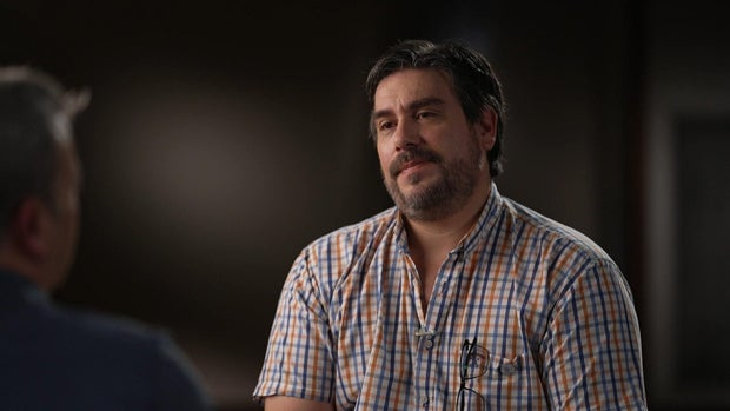 Guillermo on 60 Minutes. He is now a human rights lawyer and working with the Grandmothers of the Plaza de Mayo,
He went to the Abuelas headquarters, where volunteers welcomed him gently but firmly. A blood test was arranged, using the genetic database painstakingly built by Dr. Mary-Claire King and her colleagues. When the results came back, they were undeniable: Guillermo and Mariana were siblings, the children of Patricia Roisenblit and Manuel Pérez Rojo.
When Rosa received the news, she was in the United States. Overwhelmed, she rushed to the airport to fly home. At a shop before boarding, she tried to buy Guillermo a gift, but suddenly froze. He was 21 years old. She had no idea what music he liked, what books he read, or what clothes he wore. For two decades she had dreamed of this reunion, yet now she realized she did not even know who her grandson was. She hastily purchased a sweatshirt and headed to her plane.
 Rosa with her grandson Guillermo
Their embrace at last in Buenos Aires was both joyous and heartbreaking. Rosa clung to him, whispering the prayers of thanks she had carried in her heart for 21 years. For Guillermo, it was the revelation of his true identity—an answer to the taunts, the whispers, and the unease that had followed him all his life.
But the truth came with unbearable weight. Confronting his adoptive father, Guillermo demanded to know what had happened. Francisco admitted he had been stationed at the clandestine prison where Patricia and Manuel were held. He confessed that Manuel had been brutally tortured then killed, while Patricia was kept alive until she gave birth—“spared” until Guillermo was delivered. Afterward, she too was tortured and murdered.
“I saved your life,” Francisco told him, as though this excused the theft and the lies.
Guillermo’s response was searing: “You kidnapped the grandson of the vice president of the Abuelas de Plaza de Mayo.”
For Rosa, Guillermo’s recovery marked the end of one chapter and the beginning of another. She had found her grandson, but she could never recover the lost years with him—or bring back her beloved daughter Patricia. Her joy was forever intertwined with sorrow, as it was for every grandmother in the Plaza de Mayo.
The Abuelas estimate that about 500 children were stolen during Argentina’s Dirty War. To date, they have managed to locate and restore the true identities of 140 grandchildren. Each of those reunions represents years of tireless detective work, countless legal battles, and oceans of grief transformed into action. Each is celebrated as a triumph—not only for the families reunited, but for Argentina’s fragile democracy itself.
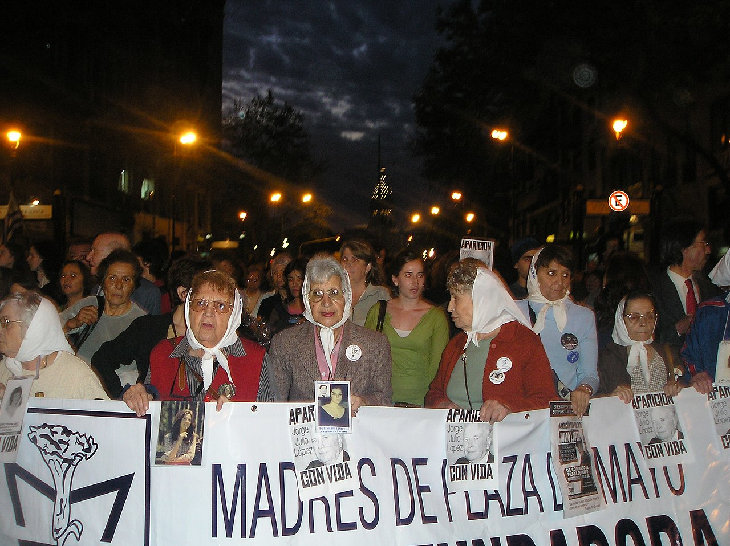 The Abuelas de Plaza de Mayo in 2006 (Roblespepe, Wikipedia)
Yet the work remains painfully incomplete. Hundreds of children, now adults in their forties, still live under false names, unaware—or unwilling to admit—that they were born of the disappeared. Each case is a ticking clock: as the grandmothers age, the urgency grows to connect before it is too late. Many of the Abuelas have already passed away, their hopes resting in the persistence of future generations.
Author Haley Cohen Gilliland underscores that Argentina’s wounds are far from healed. The country remains deeply divided over its past. She recounts meeting one found grandchild at a quiet café in Buenos Aires. The woman leaned forward, speaking in a near whisper, terrified that someone at a nearby table might overhear. The fear of surveillance, of reprisal, still lingered decades after the dictatorship ended. Even now, 40 years later, many Argentines insist the junta’s violence was a “necessary response to leftist subversion.”
This ongoing polarization makes the Abuelas’ work even more remarkable. Against denial, silence, and hostility, they continue. Every Thursday, white kerchiefs still circle the Plaza de Mayo. Beyond the square, they organize lectures, speak in schools, and bring their message to international forums. They have also pioneered a genetic database, storing their DNA so that—even after they are gone—future generations may confirm identities and continue the search. In this way, their struggle has become immortal, carried not only in memory but also in blood.
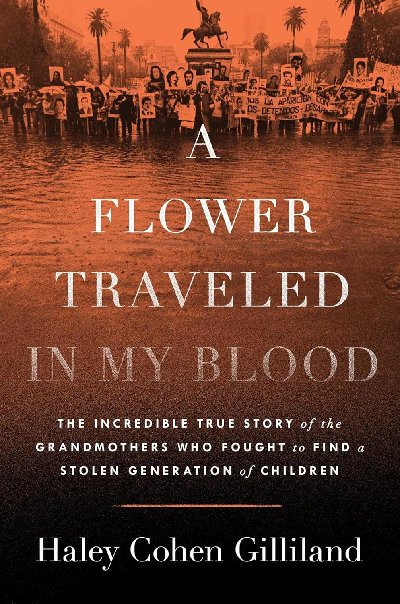
The Abuelas often call their missing grandchildren “flowers,” fragile lives uprooted by terror but still growing unseen. The phrase comes from Jewish-Argentinian poet Juan Gelman, himself scarred by the dictatorship: his son Marcelo and daughter-in-law María Claudia were disappeared, María Claudia while pregnant. Gelman dedicated his work to the movement, writing words that became a rallying cry:
“A bird lived in me,
A flower traveled in my blood.”
It is from this haunting image that Gilliland draws the title of her book. For Rosa, for Guillermo, for Paula, and for the hundreds still missing, the metaphor is more than poetry. It is the reminder that even in silence, life and truth endure—waiting to be reclaimed.
A Postscript: This past Shabbat, Sept. 6, 2025, Rosa passed away at the age of 106. May her memory be a blessing.









It's infinitely sad that Argentina and Uruguay never got to be normal developed and continuously democratic countries - along the lines of the US, Canada, UK, France, Australia, apartheid-era white South Africa, and indeed Israel - that could support sustained Jewish life and large frum communities outside some Sephardi enclaves. It's such a pity that Buenos Aires has never had a really large Orthodox community, dozens and dozens of kosher restaurants and with multiple hundreds of thousands of Jews (or at least feels like it), the way that Los Angeles and South Florida and Paris and Chicago and London and Toronto have all been. (Buenos Aires does have a modest Orthodox community and kosher restaurant scene, but it's as nothing for a general Jewish community of 200,000.)
I forgot to say also "hundreds of shuls" with regard to Buenos Aires. Buenos Aires does have a good couple of dozen shuls, but there too, it's nothing compared to most other really large Jewish communities.
Is Milei helping the Abuelas now that he is President?
The Nazi regime of Argentina received arms and training from Israel during that time. Begin supported arginine against Britain in the Falkland’s war.
I never knew this history but I remember a neighbor in the apt bldg where we lived in Los Angeles 1960's was from Argentina. Her husband was Jewish. Maybe she was too. My brother had a friend in high school 1960's whose family escaped Cuba. He said his mother hid her diamond ring in a jar of face creme.
Thank you for this article. It is painful how little people know about that dark history of Argentina.
Argentina was the place that former Nazis( may their name be erased) escaped to not get justice for their was crimes, and in my view that makes Argentina a very dirty and corrupt place, and Jews must had problems living in such a country and maybe even their live was in danger too