




 The Red Cross’s Jewish Problem






Behind the trapdoors and false walls of a house outside Amsterdam, two Jewish sisters hid dozens of people from the Nazis and kept Jewish music alive while the world burned.
The first trapdoor was hidden in the floor.
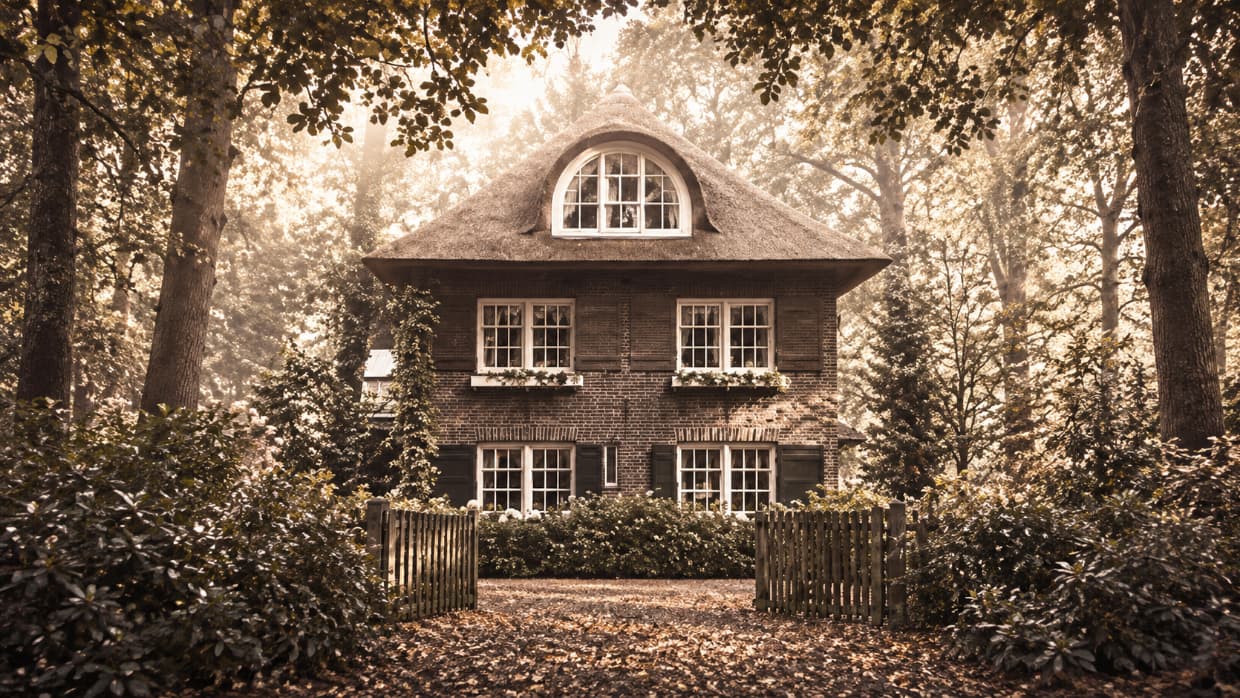
In 2012, Dutch corporate attorney Roxane van Iperen bought a secluded nine-room house on a quiet forest path and began to renovate it. The house started giving up its secrets almost at once. There were more trapdoors, secret rooms, and double walls. Then came stranger finds: old resistance artifacts, sheet music, candle stubs, and faded photographs. These were the remains of lives lived in hiding.
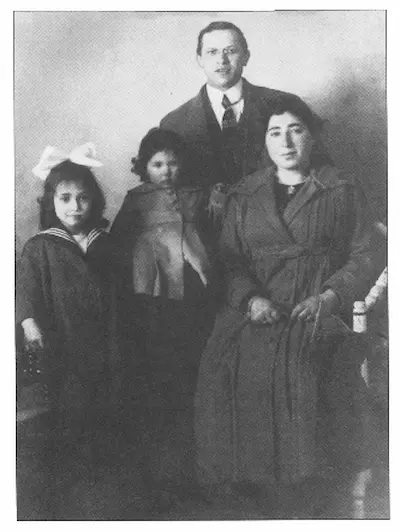 The family Brilleslijper, 1920
The house, she would learn, had once been called the High Nest. During the darkest years of the war, two sisters turned it into a haven for up to 25–30 Jewish artists, resistance fighters, and their families. Under its thatched roof they printed resistance papers, staged operas, and taught Yiddish, while three-quarters of Dutch Jewry was being sent to its death.
And one of those sisters would become one of the last people to see Anne Frank alive.
The house was located at #2 Driftweg in Naarden, in the region of ’t Gooi, about 20 km (12.4 miles) east of Amsterdam in the Dutch countryside. The three-story building, with its high, steep thatched roof, stood hidden among tall trees.
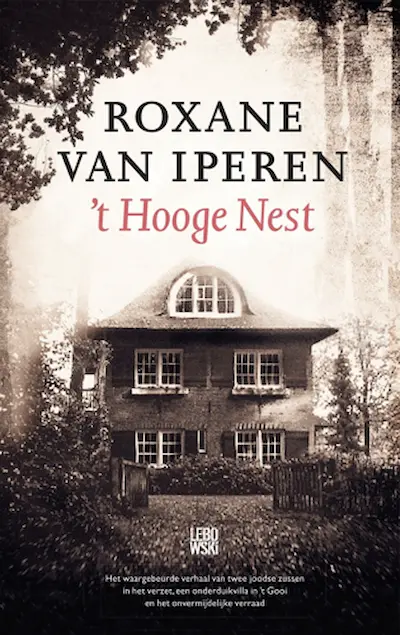
Van Iperen, a part-time writer, began to investigate the history of her house. She uncovered its remarkable past and the story of the Brilleslijper sisters. Her book about the house, known in Dutch as ’t Hooge Nest (the High Nest), told of its history of resistance and bravery and of the sisters at its heart. It became an international bestseller.
The sisters were intellectuals from a Liberal Jewish family. Both were born in Amsterdam: Lien on December 13, 1912, and Janny on October 24, 1916.
On their father’s side they descended from “a circus family of traveling, Yiddish-speaking musicians,” and on their mother’s from “devout Frisian Jews; tall, sullen people.” The two girls were raised in Amsterdam’s Jewish Quarter in a close-knit, music-loving family.
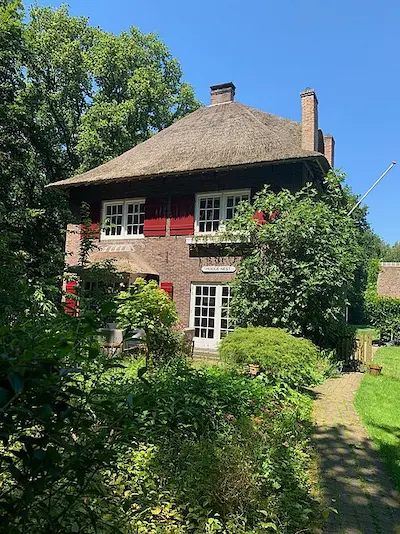 The High Nest
Their temperaments were very different. Lien was spontaneous, outgoing, and light-hearted like her father, and a dreamer. Janny was down-to-earth, at times reserved, and strong-willed like her mother.
Long before the High Nest became a refuge, Janny and Lien were already active in the Dutch resistance. They refused to wear the mandatory Jewish star and slipped into the underground network that forged papers, passed illegal messages, and sheltered people on the run.
A few years earlier, during the Spanish Civil War, Janny Brilleslijper organized political and humanitarian aid from the Netherlands to support anti-fascist combatants.
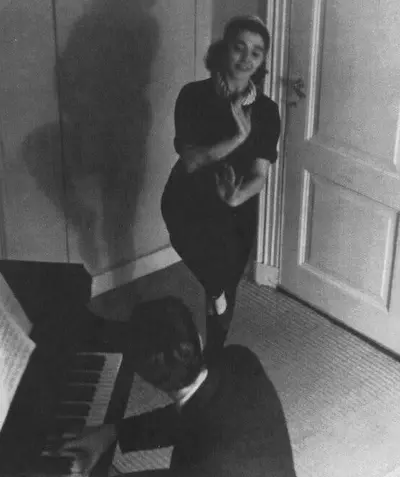 Lien, a dancer, with her husband, Eberhard, a pianist, in 1939. Rebling family archive
As the Nazis tightened their grip on Amsterdam, she fought back. She refused to get a Jewish ID card and went to work for the resistance. She stenciled messages on pillars and posts and moved illegal parcels and documents, often hidden under the mattress of the pram that carried one of her children.
Both sisters carried a fierce political conviction into the Nazi occupation. Together they helped anyone they could and became trusted figures inside the resistance.
In February 1943, seven months after the Nazis began mass deportations from Dutch cities, the Brilleslijper sisters rented the house from two Amsterdam women who had used it as a summer retreat. They and their families secured the property using fake names and falsified papers.
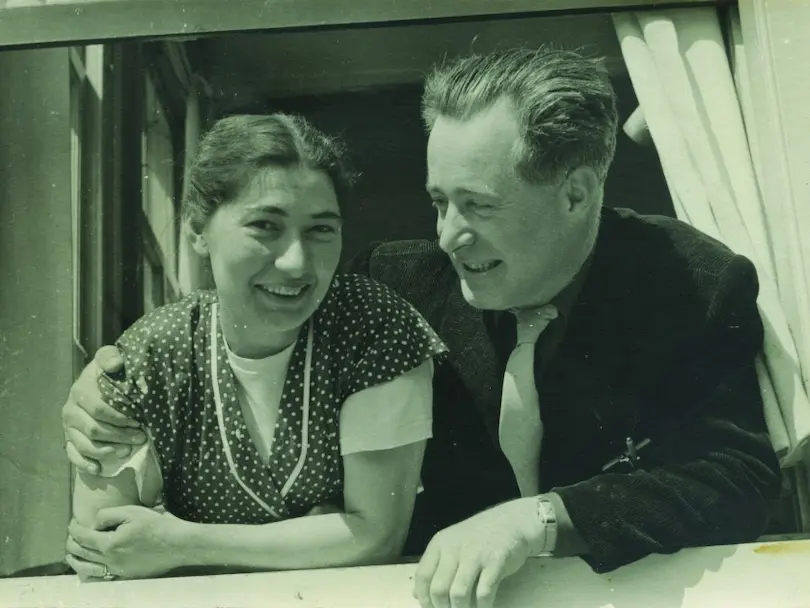 Janny Brilleslijper
“And so the extraordinary Brilleslijper enterprise at the High Nest begins – host family of ten, hiding place, underground center. Since July 1942, trains to the area have been running without a pause and, everywhere in the country, Jews are looking for places to hide. In this third year of German occupation, aggression stops at nothing and Nazi ideology is practiced even without German pressure. As a young Dutch police officer says, ‘it’s no proper Sunday unless we beat a couple of Jews to a pulp.’”
For roughly 18 months, the High Nest was one of the most important Jewish hiding places in the Netherlands. It served two purposes: it sheltered partisans and members of the arts community, and it functioned as an underground resistance center.
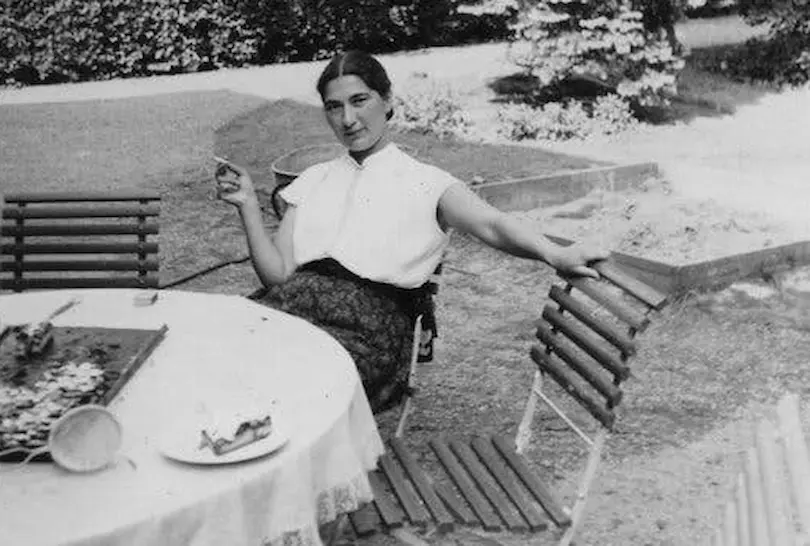 Janny Brilleslijper in 1956. Rob Brandes, private archive
As three-quarters of the Netherlands’ Jewish population was being systematically murdered, resistance papers were printed, opera nights were staged, Yiddish classes met, and a vibrant cultural world flourished.
Keeping Jewish music and art alive was a central goal. “They continued to make music and art, producing their own performances of major operas as well as the Yiddish songs which are Lien’s profession. It’s a place where all kinds of endangered people [were] welcome… a place where toddlers and young children can play outside from dawn to dusk if they wish[ed].”
The Sicherheitsdienst (SD), the Nazi security service, relied on a network of Dutch informants who specialized in exposing Jewish hiding places for payment. These informants were known as Jodenjagers (Jew hunters), and they were paid a bounty of seven guilders and fifty cents per head.
By mid-1944 the SD had intensified its sweeps in the region, and the High Nest operated under constant threat of discovery. On July 10, 1944, the worst happened. An infamous Dutch collaborator and Jew hunter learned through local surveillance and informant networks that the property was sheltering Jews, and the High Nest was betrayed.
The tip was passed to the SD office in Amsterdam, which sent a team to Naarden. They approached the house quietly along the forest path. The raid was sudden and complete: the SD entered the house and arrested everyone inside, including the Brilleslijper sisters.
Janny and Lien were sent to Westerbork, then Auschwitz, and finally Bergen-Belsen.
In Westerbork, the sisters met Anne Frank and her family, who had just been discovered in their secret annex in Amsterdam. Anne and Margot Frank were more than a decade younger than Janny and Lien. As the Allies advanced and liberation drew near, the Frank and Brilleslijper families were deported together on the very last train from Westerbork to Auschwitz, on September 3, 1944. Janny and Lien signed up as nurses and managed to survive Dr. Mengele’s dreaded selections.
The Frank and Brilleslijper sisters were next deported to Bergen-Belsen in November 1944. The camp had collapsed into a cesspool of chaos, disease, and starvation, with dead bodies piled up all over the grounds. Janny and Lien cared for the Frank girls until Margot and Anne succumbed to typhus. Janny is believed to be one of the last people to have seen Anne Frank alive.
A few weeks later, on April 15, 1945, British forces liberated Bergen-Belsen. To their horror, they found 13,000 corpses and 60,000 emaciated prisoners in the camp. Janny and Lien were among the survivors.
“When you have to fight, you have to fight. You cannot become untrue to yourself. You cannot fool yourself either. This is what we believed in. We did what we had to do, what we could do. No more and no less.” — Janny Brilleslijper
After the war, the sisters returned to the Netherlands. Janny went straight back into public life. She was active in activism and political organizing, she spoke about what had happened, and she pushed for recognition of those who resisted. She remained sharp and outspoken until her death in 2003. Lien took a different path. She returned to the arts, taught, built community programs, and kept close ties with survivor networks. She never sought the spotlight, but she never stopped working to preserve memory. She died in 1988. Both sisters spent the rest of their lives making sure that the story of the High Nest, and of the people who passed through it, would not vanish.
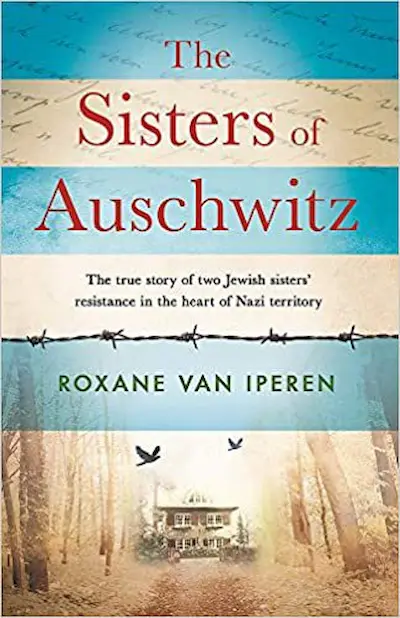
Roxane van Iperen’s book, published in the Netherlands as ’t Hooge Nest in 2018 and in English as The Sisters of Auschwitz in 2019, brought renewed attention to the house in the woods and its courageous occupants. The book was a commercial hit and was well received by critics and won major awards.
Today the High Nest is recognized as a symbol of Jewish resistance and solidarity. Its story shows that the Jews of the Netherlands were not only passive victims of the Holocaust. Some fought back and saved lives.
Sources
How 2 Jewish Sisters Built a Cultural Oasis During World War II, The New York Times
The High Nest: A Story of Jewish Resistance, Jewish Book Council
Off the Shelf: Resistance, betrayal and survival, The Reporter Group
Frozen in time: clock that tells tale of Jewish resistance in wartime Amsterdam, The Guardian
A Dutch couple find forgotten Holocaust history in their countryside home, The Times of Israel