




 75 Date Night Ideas






9 min read


Eighty years ago, Jews and other prisoners rose up against Auschwitz’s Nazi guards.
In 1944, the Nazi’s “Final Solution to the Jewish Problem” was at its height. At Auschwitz, the largest of the Nazi concentration camps, Jews were killed on an industrial scale: murdered in groups in gas chambers and shot, hanged, and tortured to death by Nazi guards. For those prisoners who were kept alive as slave laborers, death came incessantly though disease and malnutrition.
Four crematoria burned the bodies of Jews who’d been murdered at Auschwitz. They ran day and night, converting the bodies of men, women, and children into thick black ash. Between four and eight thousand people were incinerated each day. Overall, approximately 1.1 million people - over 90% of them Jews - were murdered at Auschwitz alone.
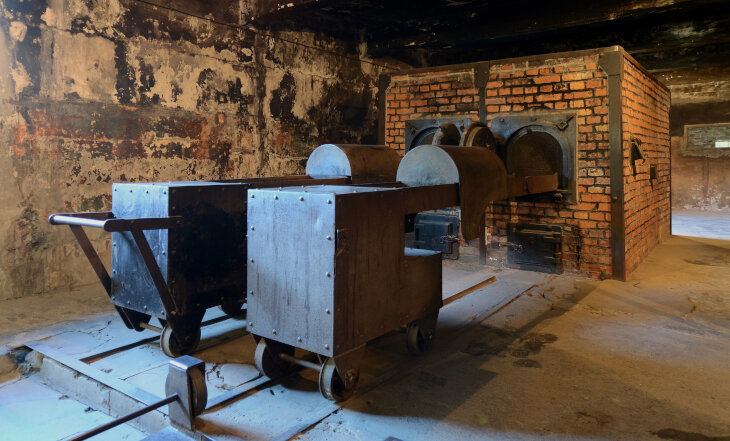 Crematoria in Auschwitz
Sadistically, the Nazis forced Jewish prisoners to do this repugnant work. The United States Holocaust Memorial Museum’s Holocaust Encyclopedia describes the ghastly lives of the Sonderkommando, the Jews forced to perform the mass cremation of their friends and relatives:
After the gassing was carried out by camp personnel, men of the Sonderkommando entered the gas chamber, untangled bodies, and cleaned the by then ventilated room. An elevator then raised the bodies to the crematorium level. There, another group would shave the hair of the victims and search the bodies for hidden valuables, including gold teeth, which were removed and handed over to the SS. Finally, the Sonderkommando Jews would carry out the burning of bodies in the ovens and the disposal of the ashes.
In late September, 1944, a group of Sonderkommando planned a daring uprising in Auschwitz, determined to stall the Nazis’ death machine as best they could. But they couldn’t do it alone. For help, they turned to a group of incredibly brave Jewish women who risked torture and death to fight back against the Nazi guards.
Auschwitz prisoners organized resistance movements inside Auschwitz’s sprawling main camps and many dozens of sub-camps. Most of these were organized by Polish political prisoners; Auschwitz was initially established as a political prison for Poles, and these brave fighters reconstituted their different resistance groups behind Auschwitz’s prison walls. In 1942, most of these Polish groups consolidated into one group called the Home Army, the name of the wider Polish resistance group, known by its Polish initials AK.
Soon, Jews made up the vast majority of prisoners in Auschwitz. Segregated from the non-Jewish population, Jews faced a much more difficult life in the camp. They were brutalized, subject to mass killings, beaten, starved, and seen as less than human. Those few Jews who weren’t gassed immediately after arriving at Auschwitz were given the worst backbreaking, dangerous jobs as slave laborers and perished from malnutrition and disease. While several underground resistance groups sprung up among Polish, Austrian, German, Czech, French, Russian, and Yugoslavian prisoners, Jews faced many more barriers to organizing any sort of resistance.
Yet, somehow an underground Jewish resistance did form. Several brave Jewish women took the lead.
Roza Roberta was just 21 when she was deported to Auschwitz from her home in the town of Ciechanow in northern Poland. Roza was a passionate Zionist and a member of the Hashomer Hatzair (“Young Guardians”) Zionist youth movement back in Ciechanow. She and her fellow Hashomer Hatzair members were committed to teaching European Jews farming and other skills they’d need in the Land of Israel, and to encouraging European Jews to move there.
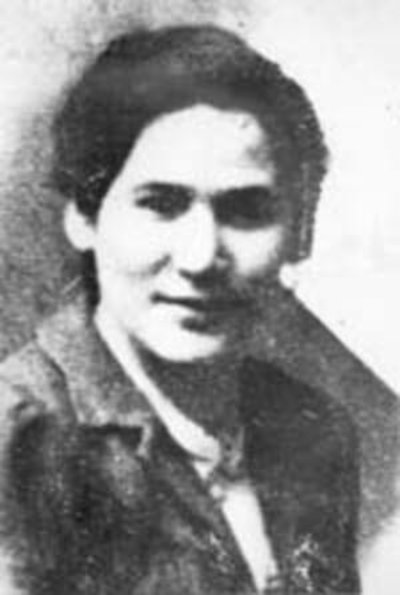 Roza Robota
When Roza and her family arrived in Auschwitz, her entire family was immediately sent to the gas chambers. Only Roza survived. She worked in a warehouse sorting the clothing of murdered Jews. Roza and some other Jewish women established an underground rebel movement inside the warehouse and vowed to do all they could to help sabotage Auschwitz. The warehouse where she toiled bordered the camp’s crematorium number 4. Roza and other Jews began to hatch an incredibly audacious and dangerous plan.
She made contact with Jewish female slave laborers in the Weichsel Union Metallwerke factory, in a sub-camp within Auschwitz’s vast complex where 2,000 young Jewish women toiled. Roza sent a top-secret request: could prisoners who worked in the section of the factory that produced gunpowder smuggle small amounts to Roza? It was a request that defied belief: any discovery would result in immediate torture and death.
Yet about 20 Jewish prisoners agreed to risk their lives. We know only some of their names: Rose Grunapfel Meth, Ala Gertner, Regina Sairsztajn, the sisters Ester and Hannaleh Wajsblum, Faige Segal, Mala Weinstein, and Hadassah Zlotnicka. Their names of their many heroic co-conspirators – all very young women – are lost to history. Over the course of a year and a half, these women hid tiny amounts of gunpowder in twists of paper or scraps of fabric and hid them inside their ragged uniforms. Under the gaze of their sadistic Nazi guards, these young women smuggled the precious grains of gunpowder to Roza. Some Jewish male slave laborers helped smuggle the gunpowder as well; we know the names of at least three of these men: Yehuda Laufer, Israel Gutman, and Noah Zabludowicz.
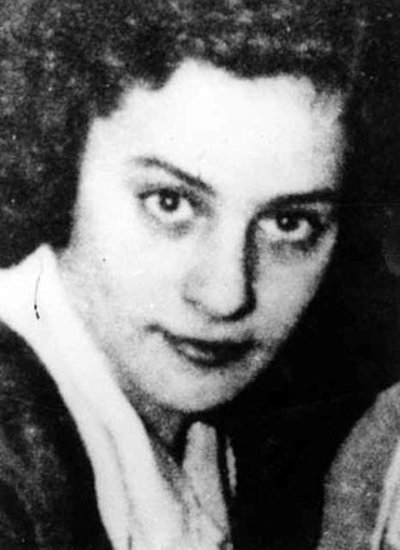 Ester Wajcblum
A prisoner who worked with the Wajcblum sisters later recalled how the smuggling operation worked: “One day Ester Wajcblum handed me a small, light parcel, asking me to keep it safe until she came for it or sent someone else… A few days later, Roza Robota, who worked in the clothing section, came to me and asked for the parcel. This happened several times… I later found out that the parcel contained gunpowder smuggled out of the Union factory. Ester never spoke about it, only once did she say to me: ‘We could free ourselves from this hell…’”
Roza and others passed the precious packages of gunpowder on to Jewish Sonderkommando slave laborers assigned to crematorium number four. These prisoners hid the packages of gunpowder under corpses and brought them to the crematorium, where they hid them. Slowly, over a year and a half, they accumulated enough gunpowder to cause an explosion. The Sonderkommando packed gunpowder into sardine tins, creating crude bombs. They also hid a few weapons that had been smuggled into Auschwitz by the Polish underground and knives and small axes that underground members had made elsewhere in the camp.
In 1944, together with the Polish resistance operating outside of Auschwitz, many of the underground prisoner groups came together to plan an uprising. They dubbed their new group the Kampfgruppe Auschwitz, or the Auschwitz Combat Group. Jewish groups participated in the planning.
On October 7, 1944, the Jewish Sonderkommando prisoners received terrible news: they were known as the 12th Sonderkommando, having replaced eleven groups of Jewish slave laborers before them. The Nazis had decided the time had come to kill all members of the group and form the 13th Sonderkommando out of Jews who were about to be brought to Auschwitz. The Jewish and non-Jewish prisoners realized that the time for revolt had arrived.
At 3 PM, prisoners rose up throughout the camp, attacking Nazis at four crematoria. At crematorium number two, Sonderkommando prisoners even managed to cut through the electrified wires that surrounded Auschwitz and escaped. Prisoners at crematorium number four caused the most damage: they detonated their gunpowder and blew up the crematorium. It never functioned again. Four Nazi guards were killed in the revolt and others were injured.
Outnumbered and outgunned, the prisoners never had a chance. Nazi guards hoisted machine guns onto the roofs of the buildings where prisoners were rioting and shot through the ceilings, indiscriminately killing everyone below. Guards entered prisoners’ barracks and killed everyone inside. Locals helped the Nazis catch Jews who’d escaped through Auschwitz’s fence. At the destroyed crematorium number four, about 200 Sonderkommando prisoners were forced to lie face down and were all shot in the back of the heads.
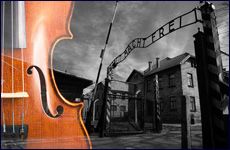
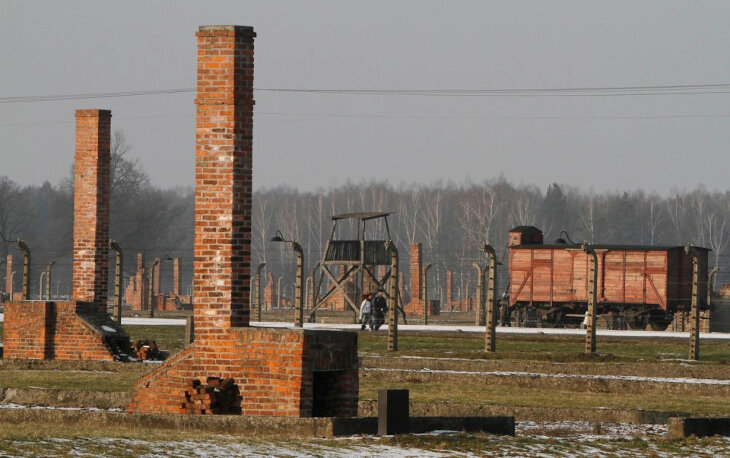 Auschwitz today
A few of the male prisoners were kept alive and tortured. Tragically, they gave up the names of many of the women who’d smuggled the gunpowder to them. When these women were arrested and tortured, they refused to divulge any names of people involved in the revolt besides the Sonderkommando prisoners who’d already been murdered.
Noah Zabludowicz, a friend of Roza’s from Ciechanow who was also in the underground movement at Auschwitz with her, visited her in her cell after months of torture.
“I entered Roza’s cell. On the cold cement lay a figure like a heap of rags. At the sound of the door opening, she turned her face to me… Then she spoke her last words. She told me that she had not betrayed (anyone). She wished to tell her comrades that they had nothing to fear. We must carry on. It was easier for her to die knowing that our actions would continue. It was a pity to lose one’s life and have to leave this world, but she did not regret her actions. She was not sorry that it was her lot to die. I received from her a note for the comrades outside. It was signed with the exhortation: Hazak ve’amatz (Be strong and of good courage)! The time came to leave, and I left the bunker. This was the last time I saw Roza face to face, but I will never forget her.”
On January 5, 1945, Roza Robota, Ella Gaertner, Esther Wajcblum, and Regina Safirsztain were hanged at Auschwitz. Before they died, their last words were singing Hatikva, now the national anthem of Israel, and encouraging their fellow prisoners to resist. Just before the trapdoor of the gallows opened up beneath her, Roza Robota called out Hazak ve’amatz.
As we mark the 80th anniversary of the liberation of Auschwitz, Roza’s call to Hazak ve’amatz is still incumbent on us all. Facing the highest levels of antisemitism since the Holocaust, Jews around the world must heed her words. The incredible bravery of Jewish prisoners at Auschwitz, who defied the world to proclaim their belief in a Jewish homeland and Jewish life, must light the way for all of us as we resist anti-Jewish hatred and stand up as proud, unbowed, proud Jews.
Join Aish for a powerful, once-in-a-lifetime experience in Poland with a Holocaust Survivor.
This subsidized trip is open to all adults ages 20+ throughout North America.
For details and registration, visit:
livinglegacy.aish.com








I think the oven was blown up in the end, or maybe the Nazis( may their name be erased) wanted to hide the evidence of what they did
POWERFUL testimony.
Good Job! The oven got blown up. Even though they lost their lives their fight was not for nothing.
Beautiful and encouraging story!!
i stand with Israel!!!
Thank you again, Dr. Miller, for an inspiring, sobering, but valiant story. In these troubling and tumultuous times we say, Hazak ve’amatz.
This shows how brave Jews are and, especially, the women. I remember hearing about them as a child, these sort of stories should be taught at cheder as well as at state schools. Am Yisrael Chai
Rosa and her comrades were heroes. Anyone who managed to survive is a hero. The only thing they could do was retaliate. Blessed souls.
The gunpowder in this article was not from a "section of the factory that produced gunpowder", rather it was in a section that assembled fuses for munitions. The powder was produced elsewhere.
Allow me to point you to a book written in 1993 "Different voices : Women and the Holocaust" by Rittner and Roth. There are at least two chapters about the women's role in the Auschwitz Sonderkommando uprising as well as others relating to women in the camp.
Three women who were tortured in an attempt to extract confessions in their role(s) providing gunpowder dedicated a memorial at Yad V'shem in memory of the women who were hung.
For the curious, you may be able to access the book at:
https://collections.ushmm.org/search/catalog/bib3432
https://search.worldcat.org/title/different-voices-women-and-the-holocaust/oclc/623020025
These ladies are our heroes. The SHEM has not forgotten them! We will see them again in our flesh! Amein!
Recently watched a documentary dealing with these events: SABOTAGE
Please in french
Fascinating. Thanks.
thank you for this heroic history. am yisroel chai!
AMAZING! Thank you for sharing their bravery!
What an inspiring article! My late uncle, Avraham Wilk הי"ד, was a member of the Sonderkommando, who was murdered on the day of the revolt. This is documented in the Memorial Book to the shtetl he was from, Sierpc (pronounced as Sheps in Yiddish). My late father (the eldest child of the family) had fought as a soldier in the Polish army against the Bolsheviks after World War 1 and subsequently was able to emigrate to the United States while a sister (the youngest of the siblings) had escaped to Siberia after the Nazi invasion of Poland and then came to Israel after the War. Most of the rest of the family was of course killed in the Holocaust, except perhaps one brother and his wife who seems to have made into Russia but then disappeared without a trace.
David Wilk, Jerusalem
Shalom David Wilk, Kol Ha Kavod to your wonderful family!
These women( obm) had faith after Auschwitz-Birneau we( the Jews) will be in our promised land the land of Israel
I think these women( obm) said before they were murdered Jews should be strong and we will be in our homeland in the near future
"We know only seven of their names: Ala Gertner, Regina Sairsztajn, the sisters Ester and Hannaleh Wajsblum, Faige Segal, Mala Weinstein, and Hadassah Zlotnicka. Their names of their many heroic co-conspirators – all very young women – are lost to history."
The other women are NOT lost to history.
My mother, Rose Grunapfel Meth A"H, was one of the few women who worked in the Union gunpowder factory, and smuggled out the gunpowder that was used in the Auschwitz uprising. I wrote a book about my mother's "experiences" there and included many documents that describe her (and the other women's) involvement in the revolt. If anyone, including and especially the author, Dr. Yvette Alt Miller, wants this information (as a PDF), please email me and I will send it to them.
I had meant to write that my mother worked in the gunpowder room of the Union munitions factory.
I was privileged to meet Mrs Rose Meth A”H when I lived in queens, and hear the story from her directly. I would love to have a copy of the pdf
chaim.mat@gmail.com
I would very much like to have a copy of the pdf.
Chaim, what is your email?
chaim.mat@gmail.com
This is also my first time hearing about this uprising! Wow! What brave souls! The evil leashed in this world is unimaginable nor comprehensive. How much can Jews suffer under the hands of Evil such as Hamas, Gazans, Palistinians, Iran, Iraq, Houthis, etc... There is so much of it
This was the first time I read of of this uprising in Auschwitz. They never gave up hope to be free. It truly touched my inner being. So heart wrenching. True heroism. Women can be very defiantly strong. I plan on sharing this story of heroism.
Never Again is Now. Am Yisrael Chai! 🕎
Right, I agree about Never Again! and Am Yisrael Chai
An amazing story of the courage and determination of these young women. May they not be forgotten.
Amen, I think my mom( obm) told me about them obm, my mom( obm) was also in Auschwitz-Birneau