
 Those Shameful Thoughts and What They Really Say about You

5 min read
6 min read
4 min read





The recent historic proclamation builds on a great American tradition of respecting and celebrating Shabbat as a source of spiritual uplift.
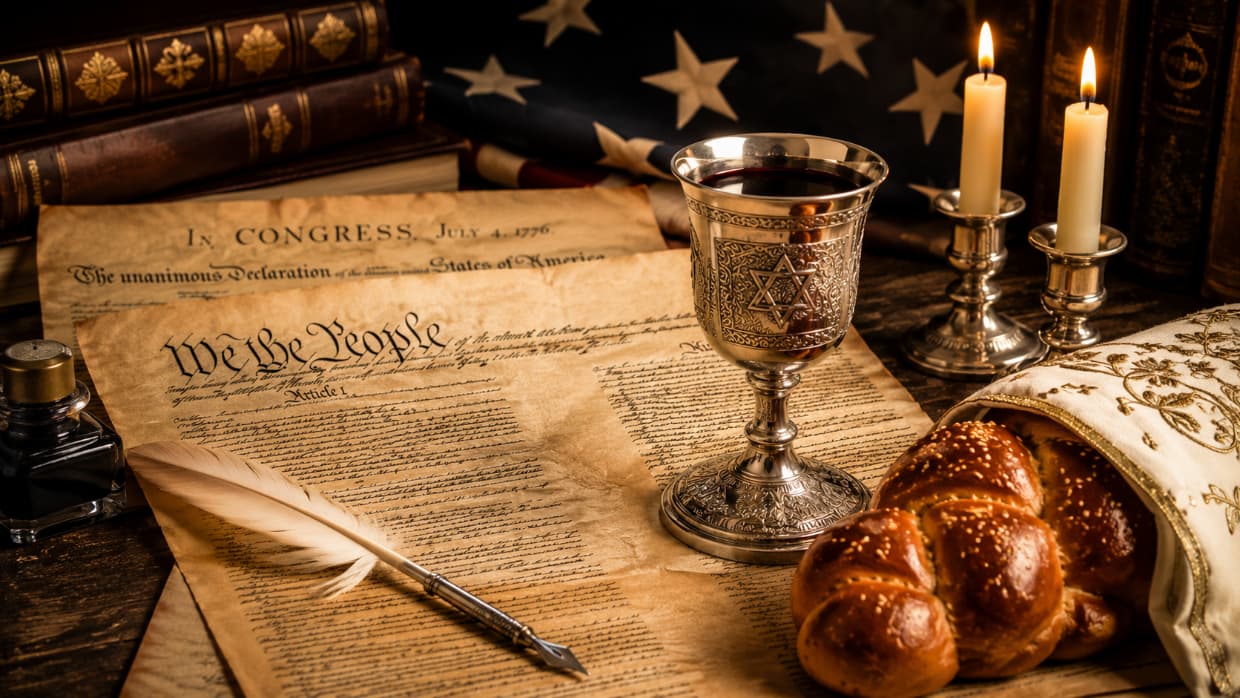
President Trump’s remarkable proclamation on May 4th in honor of Jewish Heritage Month is the first time an American president has publicly encouraged Jews to observe Shabbat.
“In special honor of 250 glorious years of American independence and on the weekend of Rededicate 250 — a national jubilee of prayer, praise, and thanksgiving — Jewish Americans are encouraged to observe a national Sabbath,” the President stated.
Even more remarkably, he suggested that all Americans be inspired by the Jewish day of rest. “From sundown on May 15 to nightfall on May 16, friends, families, and communities of all backgrounds,” the proclamation continues, “may come together in gratitude for our great Nation. This day will recognize the sacred Jewish tradition of setting aside time for rest, reflection, and gratitude to the Almighty.”
While this presidential-level public encouragement of Shabbat observance is a first, Jews have been observing the seventh day’s holiness since the birth of the American Republic, and that fealty to our faith has helped encourage all Americans to live up to our nation’s founding ideals.
Jonas Phillips (1736—1803), a proud patriot, Revolutionary War veteran, and merchant based in New York and Philadelphia, was summoned to court in April of 1793. The court records note that: “In this cause (which was tried on Saturday, the 5th of April), the defendant offered Jonas Phillips, a Jew, as a witness; but he refused to be sworn, because it was his Sabbath. The court, therefore, fined him 10 pounds; but the defendant, afterwards, waiving the benefit of his testimony, he was discharged from the fine.”
The proudly Jewish Phillips, in his refusal to violate the Shabbat, demonstrated in America’s earliest years how the country stands in respect of religious diversity and freedom.
Director of the Stanford Constitutional Law Center Judge Michael McConnell has called this case, Stansbury vs. Marks, the “first recorded case raising free exercise issues following the adoption of the first amendment.” The proudly Jewish Phillips, in his refusal to violate the Shabbat, demonstrated in America’s earliest years how the country stands in respect of religious diversity and freedom.
In another essay he reflected how keeping the Sabbath as an example of how God is worshipped “not with the shouts of fanaticism, nor the fretful penances of temporal authority - not as dealing damnation to one sect and blessings to others - not as crushing one portion of [H]is creation and elevating another: but as a just and righteous God.”
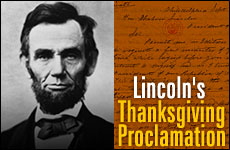
Later, during the Civil War, Bernhard Behrend, of Narrowsburg, Sullivan County N.Y. wrote to President Lincoln requesting that his son, fighting for the Union, be allowed to observe the Jewish day of rest. Behrend’s letter, dated December 4, 1862, begins by noting that “By your order of the 16th day of November, 1862, you recommend that the officers and men of the army shall observe the Sabbath and do no work on Sunday, because we are a Christian people.” “But,” Behrend continued, “according to the Declaration of Independence and according to the constitution of the United States, the people of the United States is not a Christian people, but a free, sovereign people with equal rights, and each and every citizen of the United States has the right and liberty to live according to his own consciousness in religious matters, and no one religious denomination, be it a majority or minority of the people, can have a privilege before the other under this our beloved constitution.”
As such, the father argued on behalf of his child as follows:
“I gave my consent to my son, who was yet a minor, that he should enlist in the United States army; I thought it was his duty, and I gave him my advice to fulfill his duty as a good citizen, and he has done so. At the same time I taught him also to observe the Sabbath on Saturday, when it would not hinder him from fulfilling his duty in the army. Now I do not want that he shall be dragged either to the stake or the church to observe the Sunday as a Sabbath. Your Excellency will observe in this my writing that I am not very well versed in the English language, and if there should be found a word which is not right, pardon it, and never such a word shall be construed so as if I would offend your Excellency or the people; for I love my country, the Constitution, and the Union, and I try to be always a loyal citizen.”
While there is no record of Lincoln ever responding to Bernhard Behrend’s letter, he did later issue a general order permitting Jewish soldiers to be furloughed during their Holy Days.
Of course, countless Jewish Americans struggled to provide for their families and lost jobs that demanded they work on the day of rest. But following the rise of the modern civil rights movement, most conventional American workplaces understand and respect its observance.
Title VII of the Civil Rights Act of 1964 requires employers to “make reasonable accommodations for an applicant or employee whose sincerely held religious belief, practice, or observance conflicts with a work requirement, unless providing the accommodation would create an undue hardship for the employer.”
The 20th century’s most famous Shabbat-observing political figure was Joseph Lieberman. Early in his career, as a Connecticut state senator, a budget stalemate was broken late Friday in 1971. At the direction of Majority Leader Ed Caldwell, the chamber delayed the vote, observed the day of rest, and passed the budget on Saturday night. The next day’s local paper carried the headline: “Butch Caldwell and the Sundown Kid.” Lieberman, who served a distinguished career in the Senate, would later come within 537 votes of the vice presidency in the presidential 2000 election.
In 2011, Lieberman authored The Gift of Rest: Rediscovering the Beauty of the Sabbath, noting its crucial importance in our digitally-infused age. “Every generation has its own pharaoh and its own slave masters uniquely based on the culture of the time,” he wrote. “Our pharaoh may be the electronic devices—computers, televisions, iPhones—that mesmerize us, dominating hour after hour of our lives…Too often they show us an electronic alternative reality full of negativity, trivia, or degradation. From all this, the Sabbath offers to free us for a twenty-four-hour period.”
Just a few months ago, I myself was lucky enough to speak at the White House about how Jewish ideas have inspired America. Not only did the organizers of the event accommodate my request to have the panel on which I spoke be at a time that would allow me to observe Shabbat in a local community, as I left the White House in the late afternoon, someone walking in saw my kippah and said “Have a good Shabbos!”
The recent proclamation, then, while undoubtedly historic, builds on a great American tradition of respecting, accommodating and celebrating the seventh day as a source of spiritual uplift.