




 Unsafe at MIT
4 min view
4 min read
4 min read
5 min view




4 min read


On Tisha B’Av, I embrace hunger—not as deprivation, but as a doorway to memory, grief, and a soul-stirring call to heal what’s broken between us.
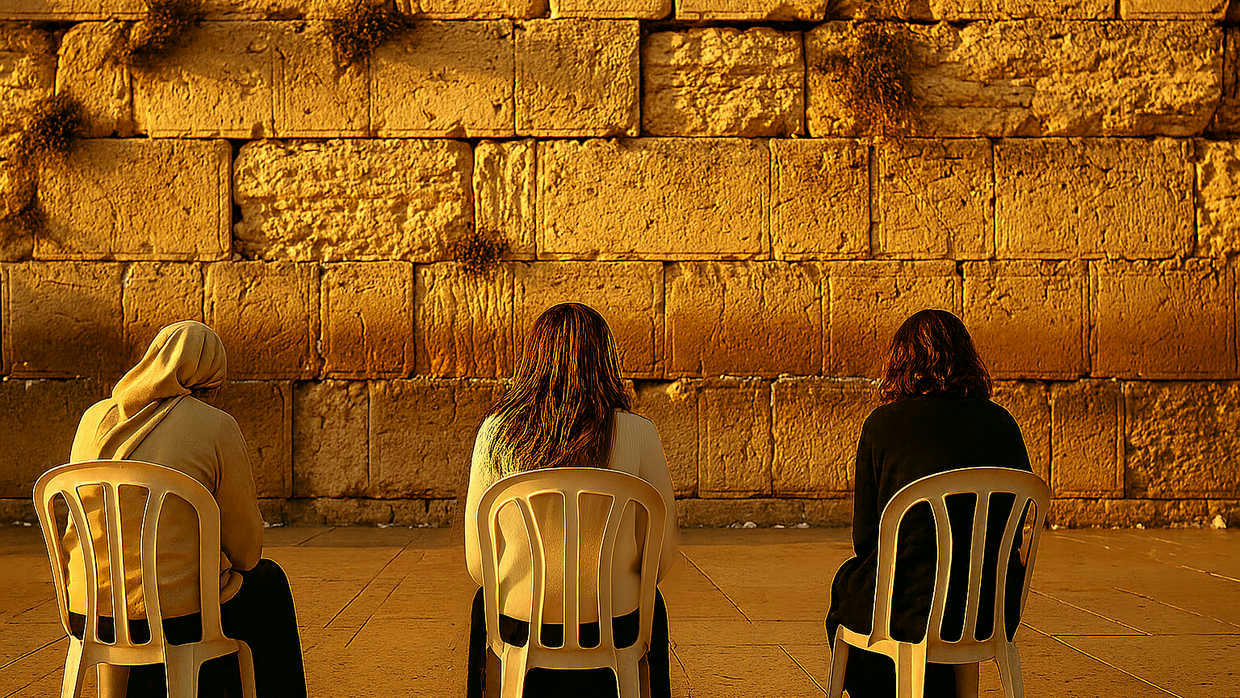
It is an act of remembrance, connection, and inward listening. On this day, I allow my body to feel hunger so that my soul can speak. I join a river of Jewish grief that flows through centuries, carrying the memory of the Holy Temples in Jerusalem, of exile, of heartbreak, and of resilience. During this fast, I stand in silent solidarity with my people - past, present, and future.
In the stillness, my soul begins to whisper.
It asks: How did we lose something so holy, so central?
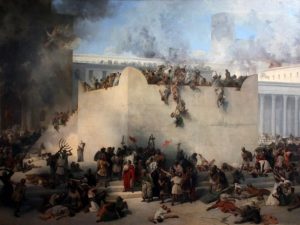
It remembers not just destruction by foreign powers, but the crumbling that came from within. It brings me face to face with sinat chinam, baseless hatred, our ancient wound and downfall. Hatred not from enemies, but from brother to brother, sister to sister. Hatred born of judgment, pride, jealousy, and fear. We turned on one another. We forgot that we are one family, one heart.
It’s the silent dismissal of those who think differently.
It’s the harsh word spoken instead of a hand extended.
It’s the failure to see the divine in each other, especially in those closest to us.
The work of rebuilding the Temple must begin not with stone, but with the soul, with repairing what has been broken between us.
When I fast, I can hear these truths more clearly. Without the noise of comfort and consumption, I am stripped down to what matters most. My mind quiets. My heart opens. I begin to see how easily we, too, can fall into patterns of division and distance.
I realize that the work of rebuilding the Temple must begin not with stone, but with the soul, with repairing what has been broken between us.
This spiritual journey is about more than physical hunger, it is a process of inner awakening. As my body slows down and feels the strain of the fast, even missing something as simple as my morning coffee, I become more attuned to both my limits and my strength. Over time, I have learned to meet that discomfort not with resistance, but with compassion.
That edge is also tied to memory. Many years ago, my husband and I took in a beloved neighbor, Esther, a widow with no children, living alone in a rented apartment. She lived with us and our four young children for a decade, from age 82 to 92. She passed away on Tisha B’Av. Each year, I pray that I will be strong enough, body and spirit, to visit her grave and light a candle. For me, her memory is woven into the fabric and meaning of the day.
Psychologically, the fast serves as a container for our collective trauma, a sacred vessel that holds centuries of Jewish pain, exile, and longing. In a world that often pushes us to move on quickly or numb ourselves, Tisha B’Av asks us to pause and feel. It creates a framework in which we are not only allowed to mourn, we are commanded to. Within the structure of the fast, we are invited to touch grief that is often buried under layers of survival, routine, and distraction.
We access older, deeper layers of sorrow, some personal, some inherited. The grief of destroyed Temples, lost communities, exiles, pogroms, and persecutions lives in our collective memory, even if we have never experienced them directly.
Tisha B’Av allows us to hold that pain together. It tells us: “You are not alone in your journey. Your pain is part of something larger. You belong to a people who knows heartbreak - but also hope.”
This is what my soul says on Tisha B’Av: “Do not mourn only what was lost. Mourn what is still broken. Then rise with compassion, empathy, and a fierce commitment to love your people as yourself.”
Not only to remember, but to return.
To return to a vision of wholeness, of unity, of kindness.
To feed my soul with truth, and from that nourishment, begin again.











pitch perfect
Food for thought! Well written!
I’m not on the author’s level. I fast because it’s a mitzvah. All I feel by the afternoon is hunger and headache.
Well said. Very true and inspirational.
Reading this excellent article, I am reminded of the Chassidic Statement (I think attributed to R. Levi Yitzchak of Berdichev ZT"L: "Om Yom Kippur -- when we are like angels -- who would want to eat; On Tish'a B'Av -- when we contemplate and try to understand -- who would be able to eat..."
Well said and very inspiring. To see past the hunger and perceive the inner message of what it is Hashem is asking us to do to repair what is broken for so many centuries.
Kol HaKavod!
As usual, Debbie's thoughts are inspiring and giving us strength!
Written with deep understanding & wisdom.