







 What Two Hebrew Words Reveal About Israeli Democracy
Jewish Geography
Jewish Geography






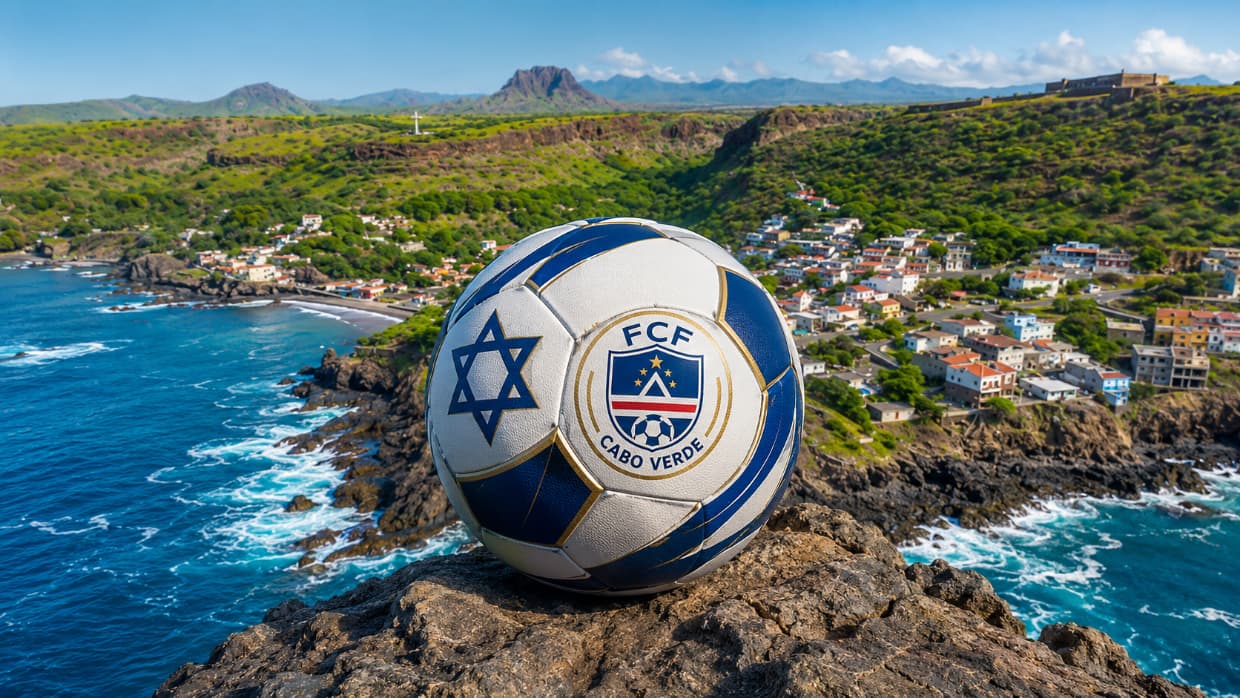
Cabo Verde stunned the world at the World Cup. Few know their small island nation was shaped by Sephardic Jewish immigrants who arrived generations ago.
New to the World Cup this year, the Cabo Verde team astounded soccer fans world over with their performance. Though they lost to the Argentinian team after three ties, the players received a hero's welcome on their return home. They have put their small country on the map.

Unexpectedly, they have also brought to light a little-known tidbit of Jewish history.
The Republic of Cabo Verde consists of an archipelago of ten islands located in the Atlantic Ocean, about 300 miles west of the coast of Senegal, West Africa. Formerly a Portuguese colony, Cabo Verde achieved its independence in 1975. Portuguese remains the country’s official language. The population, numbering about half a million, is of mixed European and African descent and mostly Catholic. However, a significant number of Cabo Verde citizens count Sephardic Jews among their ancestors.
At the beginning of the Portuguese colonial rule, Jews were not permitted to live on the archipelago, though some Jews who were forcibly converted to Christianity might have been among Cabo Verde’s early inhabitants.
In 1821, Portugal formally abolished the Inquisition. Jews could now legally relocate to all Portuguese territories. In 1842, Portugal and Great Britain signed a trade and navigation treaty. At the time, many Moroccan Jews were involved in the trade with Gibraltar, a British territory. Some of them were able to obtain British citizenship and travel to Cabo Verde with British passports.
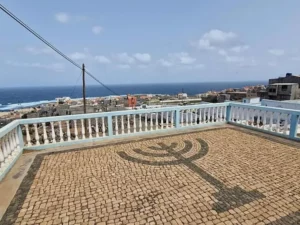
Attracted by the economic opportunities newly available to them, Jews from Morocco and Gibraltar settled on the islands of Santo Antao, Sao Vicente, Boa Vista, and Sao Tiago. On Santo Antao, there is a village called Sinagoga. Though no evidence of a synagogue exists in this village, it is believed to have been founded by Jews.
The Jews living in Cabo Verde engaged in international commerce, shipping, and administration. Some prospered and were considered pillars of the local economy. For example, David Benoliel, son of Abraham Benoliel and Esther Benathar from Rabat, Morocco, owned a fleet of about 20 boats. Based in Boa Vista, he ferried supplies between the islands and created job opportunities for the local residents.
Isaac Pinto, born in Tangier, Morocco, settled in Santo Antao and produced grogue, a type of sugar-cane rum. In 1904, he received an international award for his rum and coffee at the Paris trade fair. His grandson, Joao Monteiro, continues the family tradition, becoming the first and one of the most successful commercial grogue producers.
Isaac Benros came to Cabo Verde from Tangier with his parents, Moyses Benros and Mazaltob Cohen. In Santo Antao, the family prospered in agriculture, commerce, and administration. Cabo Verde’s former Minister of Education and Judge Vera Duarte is descended from the Benros family.
Yonah and his son Isaac Wahnon came from Gibraltar, although they had previously lived in Portugal. Their descendants contributed to Cabo Verde’s economic and social development, both in the private and public sectors. In 1991, one of their descendants, Carlos Alberto Wahnon de Carvalho Veiga, became the first democratically elected prime minister of Cabo Verde. He was instrumental in transforming the country from a single-party system to today’s pluralistic democracy.
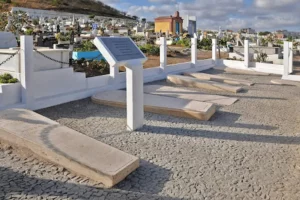
Most of the Jewish immigrants to Cabo Verde were young single men. Many of them married local Catholic women and assimilated. Today, their descendants are not Jewish, and there are currently no practicing Jews or synagogues in the country. The only visible remnants of Jewish presence are the small Jewish cemeteries throughout the islands. The tombstones contain Hebrew and Portuguese inscriptions testifying to the Jewish ancestry of a significant percentage of the population.
Another reminder of Jewish history in Cabo Verde are the last names that are commonly found among Sephardic Jews in other countries. Among them are Cohen, Levy, Auday, Benathar, Benchimol, and Seruya. In fact, one of the players on the Cabo Verde national soccer team is Gilson Benchimol, a descendant of Cabo Verde’s Jews.
The Cape Verde Jewish History Project, founded in 2007, works with descendants of Cabo Verde’s Jews to restore the Jewish cemeteries and document Jewish history in Cabo Verde. In 2017, the Cabo Verde government classified Jewish cemeteries and other historic Jewish sites as National Historic Patrimony. In 2023, Carol Castiel, the organization’s founder and president, published a book in Portuguese on the Moroccan Jews of Cabo Verde.
In an interview on the project’s website1, Carol Castiel shares that she was impressed by the descendants’ pride in their Jewish ancestry, “no matter how remote the bloodline… One businessman, Daniel Brigham who has since passed away, told me that he was not a religious man but that he strived to follow the 10 Commandments, and that he was proud of his Jewish ‘rib.’”
Another descendant, Israel Benoliel, “was not religious, but neither did he practice Christianity. He still observed Yom Kippur and ate matzah on Pesach. And he insisted on being buried according to Jewish law.” Three of the descendants undertook full conversion to Judaism.
1 An interview with Carol Castiel, President of Cape Verde Jewish Heritage Project, Inc. 2008. Available at https://capeverdejewishheritage.org/faqs/, retrieved on July 6, 2026.













A Lubavitch Chabad type of outreach organization could potentially bring many Cabo Verde Jews back to Judaism. It’s worth the effort.
I’m not familiar with Aish’s capabilities or interests in doing this type of outreach work but that could be another possibility.
Thank you.
This story is a tragedy. Jews settle in a remote location, rapidly assimilate, and disappear. Can anyone find a positive?
i think learning about what happens to jewish communities when they assimilate is itself a constructive lesson.
They did leave behind a positive legacy and some advantageous Jewish traits.
Sure, it's a cautionary tale. Avot 2:9 "Who is wise? One who foresees consequences."