







 What Two Hebrew Words Reveal About Israeli Democracy

6 min read




You’re not a prisoner of your moods or habits. Every moment, you stand at a crossroads—between impulse and integrity. Real freedom begins when you choose who you become.
We live in an age of excuses:
“I’m not a morning person.”
“That’s just how I am.”
“I can’t help feeling this way.”
But Judaism shatters that mindset. It reminds us that we are not prisoners of habit or emotion—we are endowed with one of life’s greatest gifts: the power to choose who we become.
Every moment of our lives, we stand at a crossroads. On one side lies how we feel—our immediate impulses, our emotional reactions, our natural inclinations. On the other side stands what we know to be right—the values we hold, the people we want to be, the lives we want to live.
This tension is not a bug in the human system; it's the defining feature. It's what makes us human.
The definition of a healthy adult is deceptively simple: someone who consistently chooses to do the right thing, even when they don't feel like it. Not someone who always feels great. Not someone who never struggles. But someone who acts according to their values rather than their momentary emotions.
Rabbi Moshe Chaim Luzzatto, in The Way of God (3:1), describes the profound drama unfolding within each of us. We each possess two souls—a Divine soul connected to something higher, and an animal soul tied to physical existence and immediate gratification. The Divine soul isn't meant to eliminate the animal soul, but to guide it, to channel its energy toward purpose and meaning.
We determine whether our higher self or our base impulses call the shots.
This is where free will enters. We decide which soul drives our choices. We determine whether our higher self or our base impulses call the shots.
When people don't understand their power to choose, they inevitably slide into victim mentality. "I'm just an angry person." "I come from a dysfunctional family." "This is just how I feel."
Judaism has no place for victim mentality—not because it denies that we face genuine hardships, but because it insists that we always retain the ability to choose our response. The phrase "I just feel this way" becomes a prison when we use it to justify behaviors that hurt ourselves or others. Yes, you feel that way. And yes, you can still choose differently.
Imagine you've had a brutal day at work. Everything went wrong. You're exhausted, frustrated, maybe even angry. As you pull into your driveway, you have a choice:
Option 1: You pause for a moment in the car. You take a few deep breaths. You remind yourself that your family didn't cause your bad day. You make a conscious choice to walk through that door with a smile and positive energy. Later, you find a private moment to share your struggles with your spouse.
Option 2: You don't think about it. You walk through the door as a grump, short-tempered and distant. Your mood infects the household. Your children tiptoe around you. The bad day at work has now become a bad evening for everyone in your home.
Same circumstances and feelings. Radically different choices.
Living with free will means recognizing that even when we don't feel it, we can still call the shots in our lives.
The only thing we truly choose in life is who we become. We don't choose the outcomes.
You can choose to work hard on a project, but you don't choose whether it succeeds. You can choose to be kind to someone, but you don't choose how they respond. You can choose to pursue a relationship, but you don't choose whether it works out.
What you do choose, in every single moment, is how you conduct yourself. And those choices, accumulated over time, determine who you become. The outcomes are beyond your control. But your character is entirely in your hands.
People feel happiest not when life goes their way, but when they're making conscious choices aligned with their values. Why? Because happiness isn't primarily about circumstances—it's about feeling in control of your life. It's about knowing that you're steering the ship, even when the waters are rough.
When you choose the right thing despite difficulty, you feel good about yourself because you took the reins in leading your life. You're not a leaf blown by the wind of your emotions. You're the captain of your ship.
Free will is like a muscle. Start small. Notice one moment today where you can choose your response rather than being carried along by your feelings. Maybe it's taking a breath before responding to a frustrating email. Maybe it's choosing to say something kind when you'd rather stay silent. Maybe it's getting out of bed when you'd prefer to hit snooze.
These small choices compound. Over time, they don't just change your actions—they transform who you are.
You are never trapped. You are never without options. In every moment, you possess the power to choose differently, to begin again, to become who you truly want to be.
The choice is yours. Choosing life is the power of free will.












Loved it and it is true we have the power of choice and we aim to choose right we fail many times but we begin from the the top and try again
Meh, women will always be accused of letting her feelings run her life no matter what she does.
God put a feeling and sensory map into us for a reason. we can get into big trouble by denying the life-giving information these resources provide. "the be all you can be" approach, if used to deny the real limits we all have, can be harmful. like all else, the wise human will balance head-heart-body.
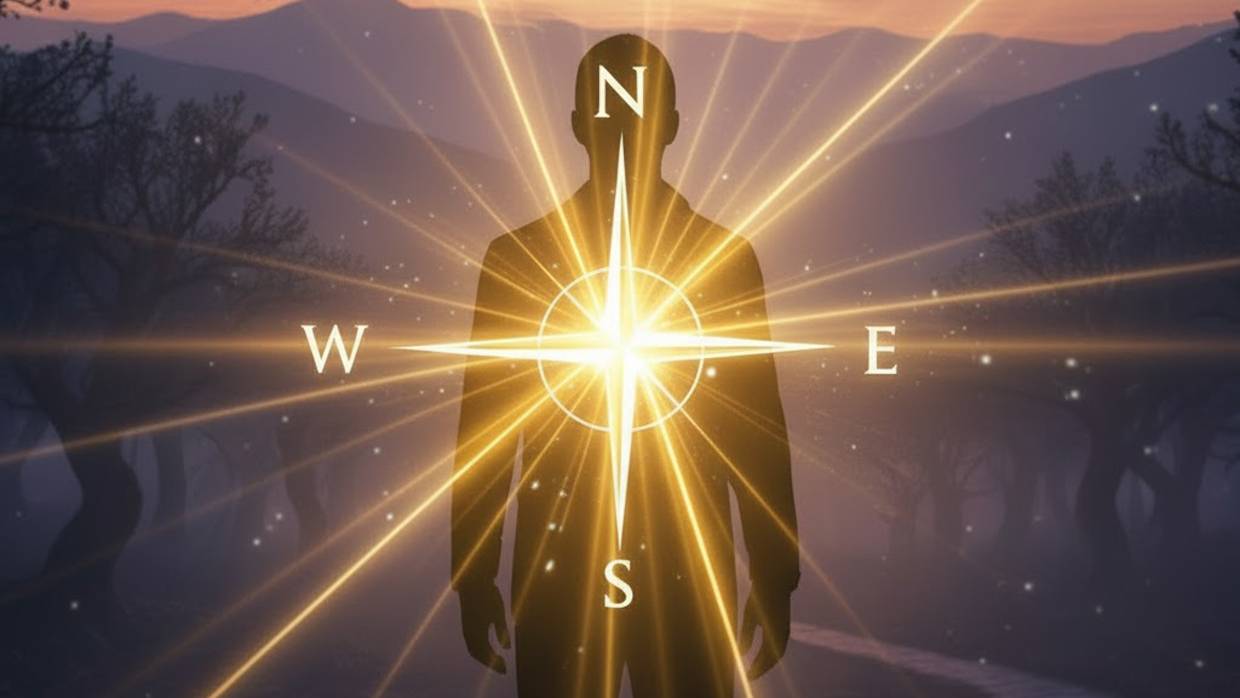
The feelings and sensations are like the compass (or today, GPS) which gives a direction - but to travel safely and efficiently, you need to be intellectually aware of your surroundings also and make intelligent decisions, not blindly move forward.
Great article. Already sent it to people. Yes, we need more people to stop, breathe, think, weigh and measure, and stop letting flyaway emotions govern our lives and who we are. When rampant emotions take control, many people are often hurt.
Rabbi, you make some valid points, however I think a less judgmental approach would be better- I've never seen anyone do better by being told they're just making excuses. This isn't a black and white kind of issue- people aren't either choosing following their impulses or their values. If the goal is to help people make better choices in how they behave, it would help to understand better and not simply judge them as simply having a victim mentality. There are so many other ways to get some of these ideas across that would be more likely to actually achieve that goal- finding compassion and teaching self-compassion being first on the list.
I appreciate the straight forward message in this article. It is up to the reader to take what is useful and act on it.