




 The Hidden Pattern of Jewish History



15 min read


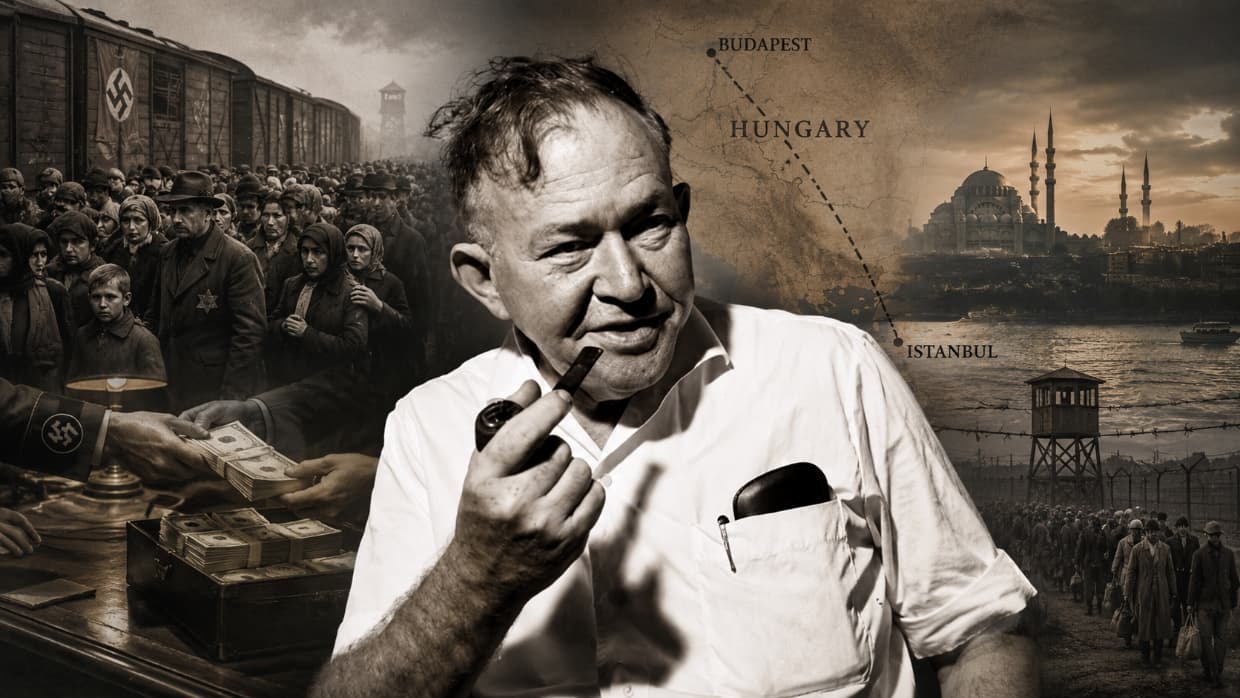
Desperate to stop the mass murder of Jews in the Holocaust, Jewish leaders tried to negotiate with the Nazis. Despite their courage, their efforts were doomed to fail, by Nazi design.
It was April 1944. Five years into the Holocaust, Hungary's large Jewish community was still intact, and Europe's last Jewish leaders were desperate to prevent its deportation and extermination. They grasped at every straw, even negotiating with the Nazis and offering money and valuables in exchange for Jewish lives.
Aware of the Jews’ desperation, Adolf Eichmann summoned Joel Brand, a member of the Relief and Rescue Committee of Budapest. Eichmann told him, “I have got you here so we can talk business… I am prepared to sell you one million Jews… Blood for money: money for blood1.”
This was the beginning of Joel Brand’s fated mission to Istanbul in an attempt, doomed from the start, to rescue a million Hungarian Jews.
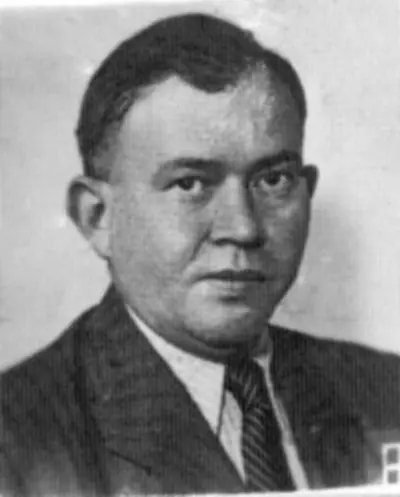 Joel Brand in 1944
Brand was born in 1906 in Hungary to a well-to-do Jewish family and moved to Germany with his parents at age 4. Educated and worldly, fluent in both Hungarian and German, he'd spent time in America and traveled the world in his youth, always chasing adventure. Politically, he leaned toward leftist socialism, hoping for a more just society.
In 1930, after his father's death, he returned to Germany to take over the family telephone business, expecting a quiet life. But that was not to be. When Hitler came to power in 1933, Brand was arrested. Two years later, he managed to escape Germany for Budapest.
His experiences in Nazi Germany “forced me to revise my political opinions,” he says2. “I became a Zionist, thus reverting to the tradition of my family and my early youth.”
Brand's grandfather and namesake, Joel Brand senior, had moved to the Land of Israel and helped build the Hungarian Houses neighborhood in Jerusalem's Old City. Joel hoped to follow in his footsteps.
In Budapest's Zionist group, Brand met his wife, Hansi, who shared his vision. They had two sons and planned to immigrate to the Land of Israel, until Joel's mother and sisters escaped Nazi Germany and joined them in Budapest. "I now had a dozen people to look after," Brand recalls3. To support the family, the Brands opened a weaving workshop that became a success.
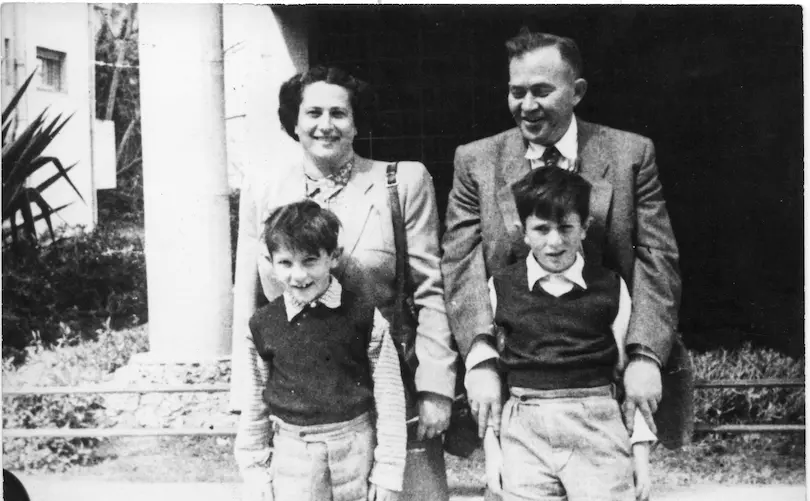 The Brand Family
In 1941, shortly after Germany invaded the Soviet Union, Hungary deported 50,000 foreign Jews to Ukraine, including Hansi's sister and brother-in-law. No one knew where they'd been sent or what awaited them there, but the Brands knew time was of essence.
Joel bribed a Hungarian Secret Service agent he'd met in a coffee house to travel to Ukraine and search for his relatives. The agent couldn't find them on his first trip, but brought back four other Jews from the same district instead.
Word spread. Other families paid the agent to find their relatives too, and he kept delivering. On his fourth trip, he finally brought back Hansi's sister and brother-in-law.
That early success brought a wave of desperate Jews to the Brands' door. Their apartment, Joel recalls, "began to resemble a regular headquarters4." Almost by accident, the Brands found themselves running an underground network smuggling Jewish refugees into Hungary, supplying forged papers to protect them from deportation, and providing food and shelter. It became known as the Relief and Rescue Committee.
Through the refugees, the Committee learned of the mass murder of Jews in Ukraine and understood the urgency of their work. They appealed to the Jewish Agency in Mandatory Palestine for funding. Another Committee leader, Rudolf Kastner5, handled negotiations with the Hungarians and foreign governments, and stayed in contact with other Jewish organizations.
The work was dangerous. Brand recalls6, “It was often necessary for me to go into the enemy camp to rescue men who were in mortal danger, and I then had to join in drinking bouts with the enemy’s agents.” As the Holocaust raged, “we watched with bated breath the extermination of our people. Our work was only a drop in the ocean, but we were at least able to save tens of thousands of Jews from Poland and Slovakia7.”
In March 1944, German troops marched into Budapest. The situation looked bleak, but the Committee spotted one ray of hope: they recognized the name of a senior SS officer who'd arrived in the city, Dieter von Wisliceny. Through contacts in the Slovakian Working Group8, they knew Wisliceny had already taken bribes from Jews in Slovakia in exchange for negotiations. They hoped to pick up where that deal had left off.
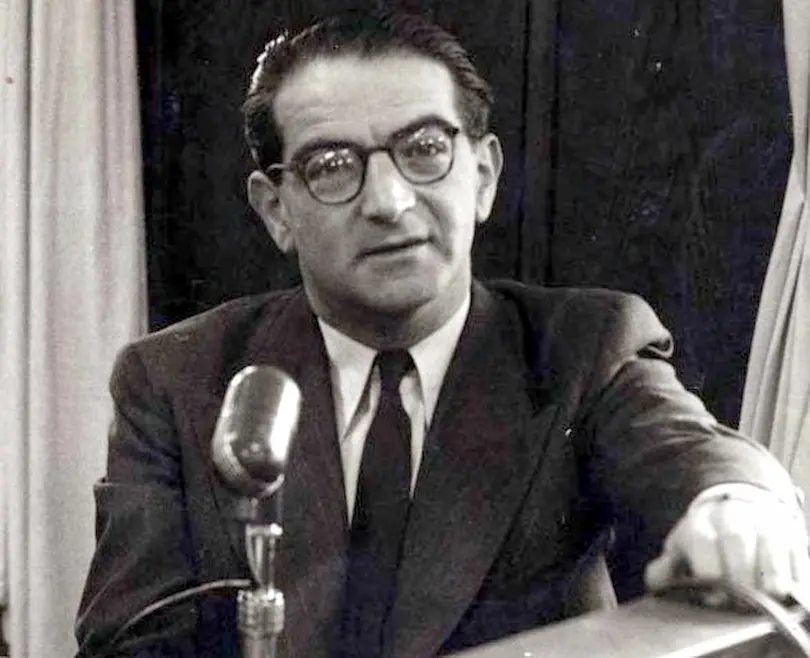 Rudolf Kastner
In Bratislava, Wisliceny had demanded $2,000,000 for the Jews of Europe, an amount the Working Group couldn't raise in time. Brand and Kastner, aware of this, offered to revive the deal themselves. Wisliceny said he'd consider it, and asked for $200,000 up front.
Brand admits the negotiations were "purely theoretical" – their small committee had no authorization from the Jewish Agency or anyone else to offer that kind of money, and didn't even represent most of Hungarian Jewry, since Zionists were a small minority. But they took the risk anyway. "We knew that we could no longer continue our struggles solely by legal means," Brand explains9, "and that only by a combination of legal and illegal methods would we be able to face the coming storm."
The Nazis, convinced Jews controlled the world's wealth, believed Brand and Kastner had access to unlimited funds. Wisliceny passed the offer up the chain.
Scraping together the first $200,000 wasn't easy. Brand and Kastner met the Nazis several times, bringing partial payments and asking for more time, until they'd raised the full sum. It was at this point that Eichmann summoned Brand directly.
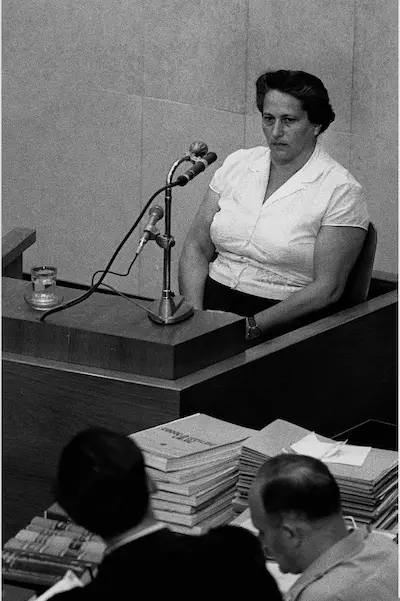 Hansi Brand testifying in the Eichmann trial in 1961.
At their meeting, Brand initially objected that the Hungarian Jews had no goods to offer the Nazis in exchange for Jewish lives. Eichmann explained that what he had in mind reached beyond Hungarian Jewry.
At their meeting, Brand first objected that Hungarian Jews had nothing left to offer the Nazis. Eichmann told him his plan reached further than Hungary. "I want you to go abroad and get in direct touch with your people and with representatives of the Allied powers," he said10, and asked Brand to name the best destination. Brand chose Istanbul, where he had Zionist contacts linked to the Jewish Agency in Mandatory Palestine.
Eichmann promised to arrange Brand's travel papers. He also made a subtle threat: Brand's family, staying behind in Budapest as hostages, meant he'd "be sure that you will come back11." The mission, Eichmann added, was to stay top secret.
When Brand reported back to the Committee, they “all felt that here at last lay a chance of saving the rest of our people in Europe12.”
Eichmann soon summoned Brand again to spell out his price: 10,000 trucks, "brand-new, complete with spare parts, and equipped for winter conditions13." He promised the trucks would never face the Western Allies, only the Soviets on the Eastern Front. In exchange, he'd shut down Auschwitz and immediately release 100,000 Jews to the border.
Brand doubted the Allies would ever agree, but he took the opening anyway. Even without the trucks, just delaying the deportations could save lives, and Germany was clearly losing the war. Maybe by the time he returned, Hungary would be free of the Nazis altogether.
Before he left, Eichmann told Brand he wouldn't be traveling alone. Bandi Grosz - known to Christians as Andre Gyorgy - would join him: a Jewish convert to Christianity, a smuggler, and generally a shady character who worked for whoever paid him. The Committee had used him before to establish contact with Istanbul. The Nazis used his services too.
The mission was a disaster from the start. When Brand landed in Istanbul, he had no valid entry visa; he'd assumed the Jewish Agency's Istanbul branch would handle it, and expected representatives from Jerusalem to meet him at the airport, given the urgency. Instead, he was nearly deported. Grosz stepped in, called in his own contacts, and secured Brand a temporary visa.
At his hotel, Brand met the local Jewish Agency representatives and realized they weren't remotely prepared for what he'd brought them. They seemed unaware of the danger facing Hungarian Jewry, and hadn't even alerted Jerusalem of his arrival.
Frustrated, Brand requested that they cable Jerusalem. A representative responded that the telegram service was unreliable. At that, “I buried my head in my hands,” recalls Brand14. “We in Budapest had greatly overestimated the influence” 15 of the Istanbul’s branch of the Jewish Agency.
Over the following days, Brand met with contact after contact, getting nowhere, until local authorities detained him again and threatened deportation. His contacts bought him more time, and he hoped to meet Moshe Sharett (then Moshe Shertok), head of the Political Department of the Jewish Agency who was en route from Jerusalem, but Sharett was denied an entry visa.
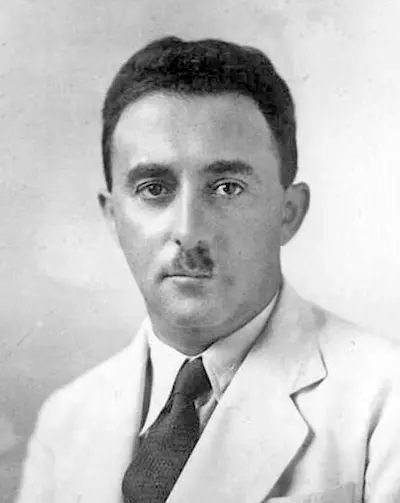 Moshe Sharett
Meanwhile, Grosz utilized all his connections until he found a way forward: a route through Aleppo, Syria, and on to Jerusalem, papers already arranged. The Istanbul office agreed it was their best shot.
The moment Brand arrived in British-controlled Aleppo, he was detained by British authorities. In detention, he finally met Sharett, with the British present, and spent hours laying out the situation in Hungary and the mission itself. Afterward, Sharett conferred with the British and returned with the verdict: they intended to take Brand further south - under arrest.
Brand pleaded with the British, but they had their orders. He understood that Sharett and Jerusalem’s Jewish Agency were just as powerless as their Istanbul representatives.
He was taken to Cairo and interrogated "for eight hours a day, for months on end16." He protested, even went on a hunger strike, to no avail. Then he learned that Eichmann's offer had leaked to a British newspaper and he knew the mission was over.
Brand was released in October and sent to Jerusalem, where he remained until his death from a heart attack at 58, in 1964. His wife and children survived the Holocaust in Budapest and later joined him in Israel.
For the rest of his life, Brand remained bitter about the opportunity lost by the Allies and the Jewish Agency to rescue Hungarian Jewry.
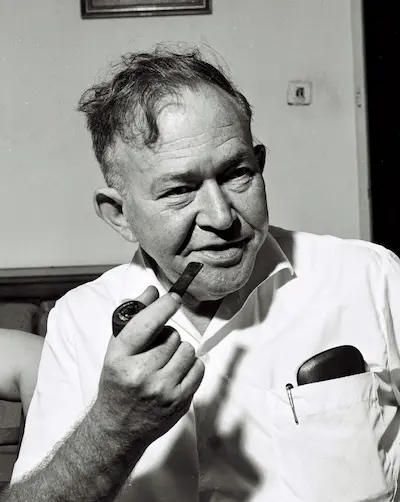 Joel Brand in Israel in 1961. (Israeli GPO photographer, Public domain, via Wikimedia Commons)
At the time, Brand was "at a loss to understand what [Eichmann's] motives might be17." It took historians decades of research to piece together what was really behind the blood-for-trucks deal.
Eichmann never intended to stop the deportations or mass murder. Unknown to Brand, deportations of Hungarian Jews to Auschwitz began on May 15, two days before he even left for Istanbul18.
Historians doubt the Nazis ever meant to honor their side of the bargain.
Historians doubt the Nazis ever meant to honor their side of the bargain. Holocaust historian Yehuda Bauer cites Nazi officer Kurt Becher, who quoted Himmler's actual instructions: "Take whatever you can from the Jews. Promise them whatever you want. What we will keep is another matter19."
Bauer suggests Brand's mission was really a cover for something else entirely - a task given to Grosz. By Grosz's own account to the British, he'd been told to "arrange a meeting in any neutral country between two or three senior German security officers and two or three American officers of equal rank, or as a last resort British officers, in order to negotiate for a separate peace between [Germany] and the Western Allies20."
By this point in the war, Germany knew it was losing, especially on the Eastern Front, with the Soviet army closing in on Hungary. Cutting their losses, the Nazis hoped to strike a peace deal with the U.S. and Britain that left out the Soviets entirely - freeing up German forces to concentrate on the east and buy themselves a fighting chance.
Historian Randolph L. Braham argues that the Nazis’ motives in sending Brand on his doomed mission were even more sinister21:
By negotiating with the Hungarian Jewish leaders and freeing a limited number of Jews, they would lull the Jewish masses into submission, distract their attention from the possibility of resistance, and implement the “final solution” without any serious difficulty.
Braham further argues that Eichmann's demand for secrecy was a deliberate tactic - keeping Hungarian Jewish leaders from ever revealing that Auschwitz was the deportation trains' true destination, and so preventing "mass escape or resistance22."
Historian Yehuda Geberer draws a parallel between Brand's mission and the Nazi strategy used just before the Great Deportation from the Warsaw ghetto in the summer of 1942, when 300,000 Jews were sent to Treblinka and gassed on arrival. Shortly before the deportation, ghetto residents were told that those holding certain documents - skilled workers, for instance - would be spared.
Geberer cites eyewitness Emanuel Ringelblum, later killed in the Holocaust, who wrote that the promise of these documents was exactly what made the deportation so effective. Instead of turning against the Nazis, Jews turned on each other, fighting over a limited supply of papers that, in the end, saved no one - the Nazis murdered the holders too.
Geberer argues Eichmann used the identical strategy in Hungary: pitting Jews against each other to head off resistance23. The negotiations drove a wedge between Jewish leaders, some of whom opposed them on principle.
Brand's mission ended up deepening that divide. When he failed to return, the rest of the Committee - unaware he was being held by the British - suspected he'd abandoned them to save himself. "His colleagues and for a time even his wife did not forgive him for his supposed treachery," Bauer writes24, "and the result was a deep rift between him and the surviving [Committee] associates."
The rift only grew with the subsequent negotiations between Kastner and the Nazis. A decade later, in Israel, Kastner was accused of collaboration and assassinated by zealots seeking revenge.
"Eichmann's plan in... Hungary worked so well," Geberer says25, "that Eichmann has successfully framed the debate... until today." Even now, families of murdered Hungarian Jews still blame their own leadership for the deaths.
Iran is using the same strategy in sowing discord among Jews on social media, deepening the rifts in Israeli society.
We've seen this same strategy recently employed by Hamas. Desperate to bring the hostages home, Israeli society turned on itself, different segments blaming each other for not doing enough. Hostages and their families reported that Hamas demanded that they fight their own government in exchange for freedom26.
Iran is using the same strategy in sowing discord among Jews on social media, deepening the rifts in Israeli society27.
It's time we stopped falling for it. Wherever we stand politically, we are not each other's enemies. We all want the same thing: safety and security for Jews, in Israel and beyond. It's time to unite against our enemies who are openly telling us they want us destroyed.












Something very, very wrong with this article. It completely contradicts Ben Hecht's "Perfidy" which blames the Jewish Agency & Mapai leaders from stopping the saving of Hungarian Jewry since they were the "wrong" type of Jews (not secular leftists). Sharett & the Jewish Agency were NOT "powerless." This article sanitizes "Perfidy."
Since when is Perfidy absolute truth? A lot more information came out after it was written, quite a long time ago. And Hecht himself writes in Perfidy that he is biased, just like any writer is. He had a certain agenda. My agenda is very different: I want Jews from all walks of life to get along and work together!
I’ve cited my sources. Please read them before jumping to conclusions.
How absolutely horrific 🥺 Brand must have lived in pure stress and panic.. It must have taken its toll on his health! As soon as I read, Eichmann promised to close Auschwitz down I knew it was a lie! But that's now after learning the history of the place! he didn't even have the authority to.. that was hitlers choice! Brand didn't have the knowledge we have today! Poor guy! So glad he survived! Stupid British crown and government ruling over Israel when it wasn't theirs 😡 How dare they 🤨 Were they in cahoots with Eichmann? Certainly seems like it!
Who has the last laugh now? There is no nazis left now, no Eichmanns etc, they never learn!
This new lot, mslms will go the same way!
Important piece!
Interesting yet sad article. Easy to say that "Jews are their own worst enemies". The Nazis duped many to get to where they needed in order to wipe out Jews, Communists, the infirm, and ultimately Christians. Much of Europe then as now bathed in antisemitism. Canada & the U.S. denied entry to Jews, yet today Muslims are flooding Europe and parading in it's streets with signs extolling Hamas and Hizbollah while denying Israel's right to exist.
Some leaders knew where the Jews were going to their death, and some of these leaders the Judp" Judenrst" had a bad end my mom( obm ) told me what happened to the " Judenrat " from Lodz ghetto when he arrived in Auschwitz-Birneau, I don't want to mention it here, but the Jews took revenge on him for what he did, on the other note about Muslims in my opinion they want to continue what the Nazis ( Y"S) started to make the world and now Israel " Judenrein " ( free of Jews), instead of the so called " Palestinan flag( that looks like the watermelon colors) that should say the truth they should have the Nazi ( Y"S) flag, the Nazis ( Y"S) spoke German the new Muslim Nazis( Y"S) speak Arabic, the Nazis( Y"S) in World War 2 and the Muslims now = the same to me and their goal is the same
The Judenrat was not just one person, they were a "committee", put in place by the Nazis. They were in a no-win situation-- being threatened with death by the Nazis, while at the same time trying to help save and protect their own people. Do not judge them so harshly! They tried desperately to protect their Jews. They also ended up in Auschwitz, the same as their neighbors, and they got no special treatment from the Nazis!