







 The Macklemore Mess: What Pink Got Right and Everyone Else Got Wrong
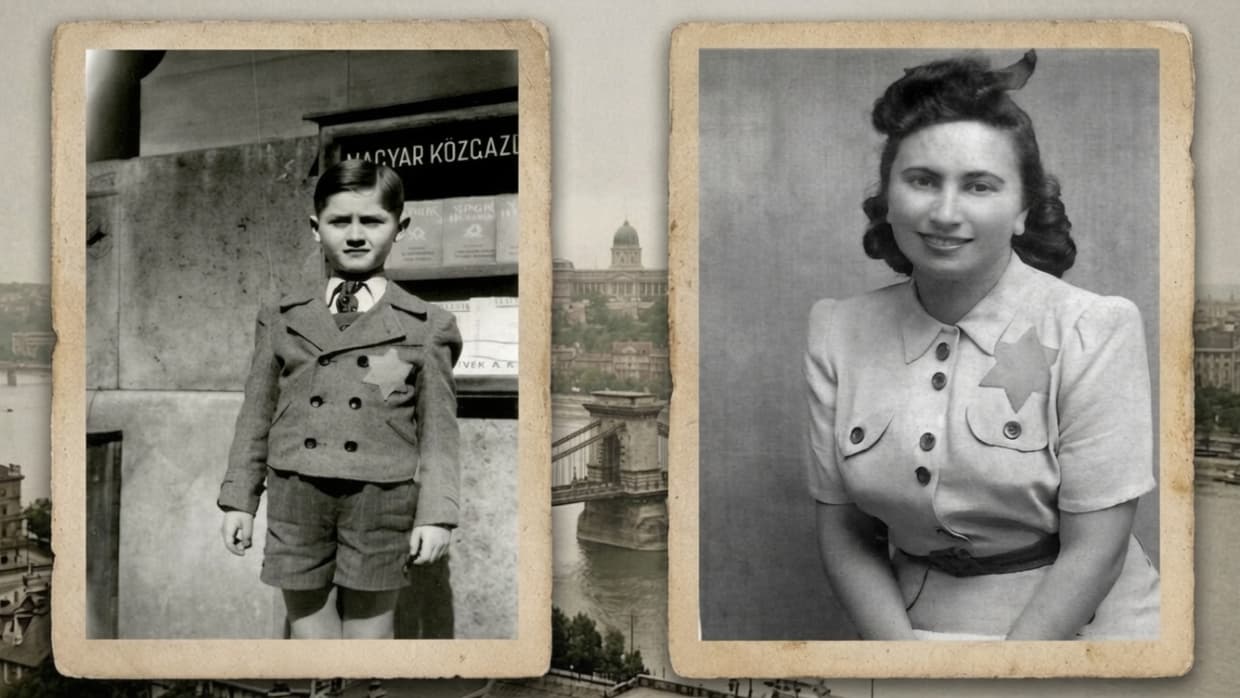








He forged thousands of passports and risked his life to save Jews from the Nazis, then exposed Auschwitz to the world.
In 1944, a wealthy Transylvanian businessman turned Salvadoran consulate’s First Secretary in Switzerland, typed up thousands of fake citizenship papers by hand, smuggled himself across enemy lines disguised as an airplane co-pilot, and forced 384 Swiss newspapers to print the truth about Auschwitz, breaking his adopted country's censorship laws in the process.
His name was George Mandl (later Mantello), and his one-man campaign helped stop the deportation trains and save over 100,000 Hungarian Jews. Yet for decades, almost no one knew his name.
Born into a well-to-do Jewish family in Transylvania in 1901, Mantello attended a commercial high school in Budapest, followed by military school during World War I. One of his instructors was the Romanian military hero General Dragenescu. This general would help him escape the Nazis.
A brilliant businessman, by the outbreak of World War II Mantello was a wealthy man. He could have retired from business and enjoyed leisure. Instead, he used his time, talent, and considerable resources to rescue his fellow Jews.
In 1928, Mantello married Irene Berger, a descendant of Transylvanian Sabbatarians who had converted to Judaism. The couple settled in Cluj, Romania, and had one son, Enrico. Later, the family moved to Budapest, Hungary.
Mantello continued to travel throughout central Europe on business, building relationships with influential people. He worked closely with his brother, Joseph. Due to his frequent travels, Mantello saw first-hand the treatment accorded to Jews under Nazi rule.
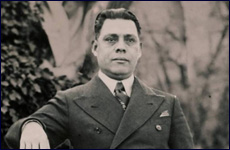
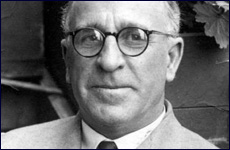
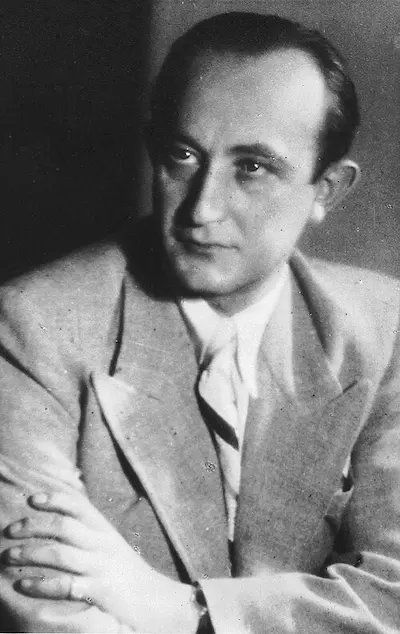 George Mantello. Wikimedia Commons
Among Mantello's business connections was Colonel Jose Arturo Castellanos, the Consul General of the Latin American country of El Salvador, based in Geneva, Switzerland. Before the war, Mantello had helped Castellanos acquire goods for El Salvador at competitive rates. In 1939, Castellanos appointed Mantello El Salvador's honorary consul for Czechoslovakia, Yugoslavia, and Romania.
At the time, it was common for small countries to appoint local businessmen to consulate positions. But for Mantello, fully aware of the political developments and approaching Nazi danger, the position, which came with a diplomatic passport, was his ticket to safety. At the same time, he changed his last name from the typically Jewish Mandl to the Spanish-sounding Mantello.
In 1940, Romania aligned itself with the Axis powers. In 1941, Mantello decided to leave Romania for Switzerland. He began liquidating his Romanian assets and settling his business affairs.
When the U.S. entered World War II in December 1941, Latin American countries, including El Salvador, aligned themselves with the Allies and declared war against the Axis.
As a Salvadorian diplomat, Mantello was now in enemy territory. Switzerland extended protection to foreign diplomats in Romania, and Mantello boarded a train headed there with other diplomats.
But Mantello was detained by the Nazis at the Swiss-Italian-Yugoslav border, likely suspected of being Jewish. The Nazis might have confused him with a French Jewish minister, George Mandel.
Mantello was taken to Zagreb and brought before a German diplomat. He tried to threaten him1, "The Salvador government is keeping track of my whereabouts. If you make any problems for me, I assure you that my government will bar Germans from leaving El Salvador."
The Germans treated Mantello with some respect but kept him under constant surveillance in a hotel for a few months. A Romanian business partner found him in Zagreb and proposed smuggling him out to Bucharest disguised as a Romanian plane's co-pilot. Mantello readily agreed.
The pilot brought a co-pilot's uniform to the hotel. Mantello put it on and walked out with him.
By the time they got to the airport, the guards had discovered that Mantello had escaped. Soldiers stopped him at the airport. Thinking he was a pilot, they asked him where Mantello was. He pointed to two young Germans standing nearby. While the soldiers confronted the Germans, who responded with a fistfight, Mantello and the pilot slipped away. Several days later, they left Zagreb.
Back in Romania, Mantello made his next attempt to reach Switzerland. He met with General Dragenescu and his brother-in-law, Captain Vasilescu, also one of Mantello's business partners. They arranged for Mantello to travel to Switzerland via Yugoslavia disguised as Vasilescu.
 George Mantello
In a Romanian officer's uniform, Mantello traveled first class to Switzerland. The train passed through Budapest. Unable to get off, Mantello could only wave to his wife, son, and in-laws, who caught a glimpse of him from the platform.
Eventually, Mantello arrived in Geneva with his fortune largely intact. There, he reunited with his brother, Joseph. A year later, Castellanos helped Mantello bring his teenage son from Budapest to Switzerland. His wife stayed behind, unwilling to leave her parents.
Later, Mantello recalled2, "Although I felt safe in Switzerland, I always saw before me heartrending scenes of the terrible Jewish martyrdom in Nazi-occupied Vienna and Prague. The moment that, with the help of God, I had escaped this fate, I promised myself to do everything to save my fellow Jews from their fate and to improve their lives."
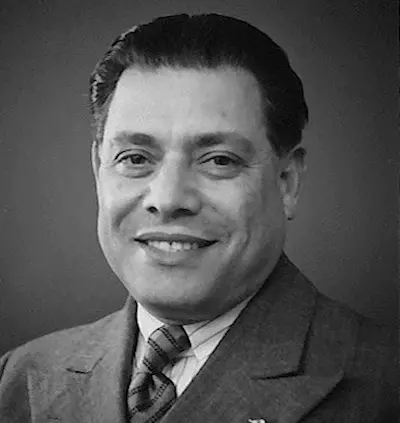 Jose Arturo Castellanos
Mantello's first attempt at rescue work failed. The Jewish organizations in Switzerland, spanning the religious and political spectrum, couldn't work together. He couldn't even get them in the same room.
So he shifted to a smaller scale. Mantello founded the Swiss Rabbis Committee, giving local rabbis a united voice to lobby the Swiss and foreign governments. The Committee also built relationships with Christian clergy, which proved instrumental later in the war.
Mantello cultivated other relationships too. As a diplomat, he got to know the British commercial attaché and found ways to help the Allies: accepting mail at the Salvadoran consulate to keep it away from Nazi spies, extending interest-free loans to the British, and once even supplying chronometers, watches, and other instruments to the Royal Air Force.
Six months after arriving in Geneva, Mantello found another way to help Jews under Nazi occupation. He discovered that other Latin American countries were selling their citizenship papers for large sums to desperate Jews on the black market. Furious that others were profiting from the tragedy, he committed to supplying as many Salvadoran papers as he could to Jewish refugees, free of charge.
The scheme wasn't his invention. Swiss Jewish rescuers, the Sternbuch family, had pioneered it in 1941. They'd learned that a Warsaw Jew holding a foreign passport had been allowed to stay outside the ghetto, exempt from wearing a yellow star. So they began buying foreign citizenship papers from Latin American countries and sending them to friends and family in Poland.
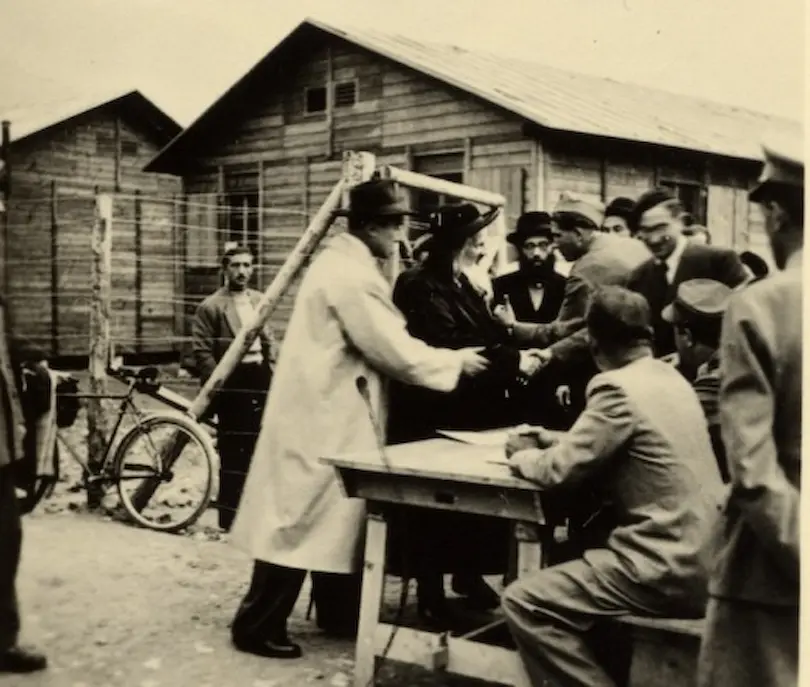 George Mandel-Mantello greets the Satmar Rebbe, Joel Teitelbaum, when his arrival in Switzerland on the Kasztner transport from Bergen-Belsen. —US Holocaust Memorial Museum,
The Nazis weren't sure what to make of these certificates, but they hesitated to deport foreign citizens. With no centralized policy on Jewish Latin American citizens, the certificates' impact varied by country, proving especially effective in Belgium, the Netherlands, and Hungary. After the war, Jonas Tiefenbrunner, who ran a Jewish orphanage in Belgium and received Salvadoran certificates for himself and the children in his care, wrote3:
[T]he holders of these papers were covered and could not officially be deported. If they were taken in a round-up while holding Salvadoran papers, they could only be interned as enemy aliens... Anyone who was still in Belgium when they received the papers was saved.
In Denmark, while most Jews were deported to Auschwitz or Sobibor, several holders of Salvadoran certificates were instead interned at Bergen-Belsen and later exchanged for German prisoners of war in a 1944 swap with the United States4.
Realizing how many lives these certificates could save, Mantello threw himself into producing as many as possible. With Castellanos's approval, and using his own funds, he set up a dedicated space and hired college students to type them up, personally stamping and sealing each one. Altogether, he produced thousands of certificates, sent to 12 European countries by regular mail, private courier, or diplomatic pouch. Since each certificate covered an entire family, every one sent multiplied the lives it could save.
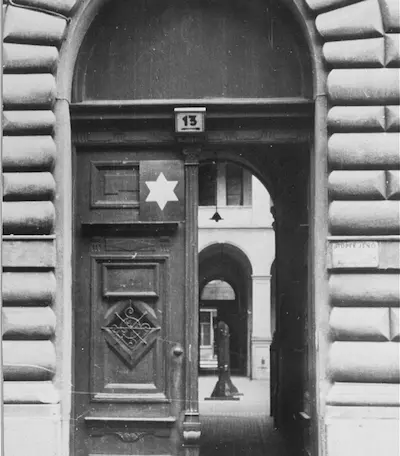 Entrance to the courtyard, marked with a Star of David, of a building designated for Jews. Budapest, Hungary, after April 2, 1944. (United States Holocaust Museum)
When the Nazis occupied Hungary in March 1944, the mission turned personal. Mantello's wife was still in Budapest, and his parents and extended family were in Hungarian-controlled Transylvania.
Desperate to save them, Mantello and his brother Joseph sent Salvadoran certificates to their parents via Florian Manoliu, a Romanian diplomat and Joseph's business associate, who wasn't Jewish. Manoliu was held up at the border and arrived in Transylvania just days too late. Mantello's parents and extended family had already been deported to Auschwitz.
Manoliu continued on to Budapest, where he delivered a certificate to Mantello's wife, Irene. It saved her life. She avoided deportation and survived the war.
While in Budapest, Manoliu met with Carl Lutz, the Swiss diplomat famous for his own rescue efforts. Lutz introduced him to Moshe Kraus, a leader of Hungary's Zionist movement who was hiding in the Swiss consulate under Lutz's protection.
At that meeting, Kraus handed Manoliu a copy of the Auschwitz Protocols. Compiled in Slovakia from interviews with Rudolf Vrba and Alfred Wetzler, two men who had escaped Auschwitz, the document laid out the camp's machinery of death in detail, complete with maps of the gas chambers and crematoria. It was the first eyewitness account of the genocide to reach Jewish community leaders.
Four weeks after leaving Geneva, Manoliu finally made it back. He went straight to the Mantello brothers with the news: their parents were gone, and in his hands, the Auschwitz Protocols, written in Hungarian.
The brothers tore their clothes in keriah, the traditional Jewish expression of mourning. But within an hour, grief turned to resolve. Despite wartime censorship, they would get the Auschwitz Protocols out to the world.
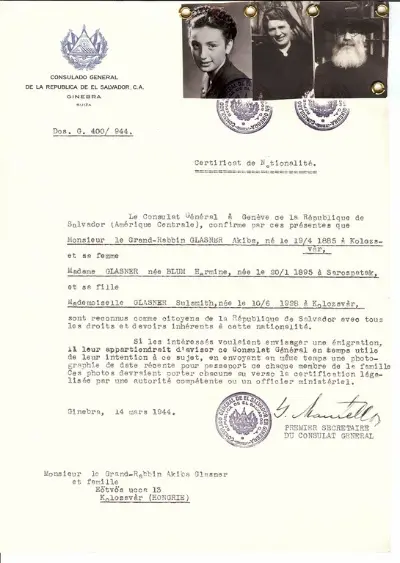 Unauthorized Salvadoran citizenship certificate made out to Rabbi Akiba Glasner (b. April 19, 1885 in Cluj), his wife Hermine (nee Blum) Glasner (b. January 20, 1895 in Sarospatak) and daughter Sulamith (b. June 10, 1928). Copyright: United States Holocaust Memorial Museum. Provenance: Enrico Mandel-Mantello
The Mantello brothers received the Protocols on June 21, 1944. By then, many religious and political leaders, both Jewish and non-Jewish, already had copies. For various reasons, they hesitated to make the information public5.
Mantello's first move was to get the Protocols translated into English, French, and Spanish. He turned to a group of Hungarian students in Switzerland he'd cultivated relationships with over the years, mostly children of Hungarian nobility who had fled to Switzerland during the short-lived communist revolution of 1919. Mantello had subsidized their studies and sponsored their club. Now he hired them to do the translations.
He added a few lines of his own, urging that the information be spread as widely as possible to spur rescue efforts, then made multiple copies in each language.
The next day, Mantello called an emergency meeting of the Swiss Rabbis Committee, which he'd helped establish earlier, along with the Swiss Hungarian Committee. He presented the Protocols and drove home the urgency of the moment, then issued instructions: Committee members were to contact clergy and the American representative of the War Refugee Board. Mantello himself went to see the British military attaché and the Switzerland-based representative of U.S. intelligence.
With the Allies and the clergy alerted, Mantello wanted to reach further still. He hoped to get the mainstream Swiss press involved, but they operated under strict government censorship. To protect its neutrality, Switzerland had made it illegal to publish anything negative about either the Allies or the Axis.
So Mantello traveled to Zurich to meet with Walter Garett, a reporter for the British Exchange Telegraph, an independent news agency exempt from Swiss censorship. He persuaded Garett to send telegrams to Western news agencies, legations, and embassies. The telegrams read6:
FOLLOWING DRAMATIC ACCOUNT ONE DARKEST CHAPTERS MODERN HISTORY REVEALING HOW ONE MILLION 715 THOUSAND JEWS PUT DEATH IN ANNIHILIATION CAMP AUSCHWITZ BIRKENAU
Press releases based on the Protocols went out to hundreds of news outlets. The next day, 384 Swiss newspapers ran front-page articles on the genocide at Auschwitz7. The news was out, and it could no longer be suppressed.
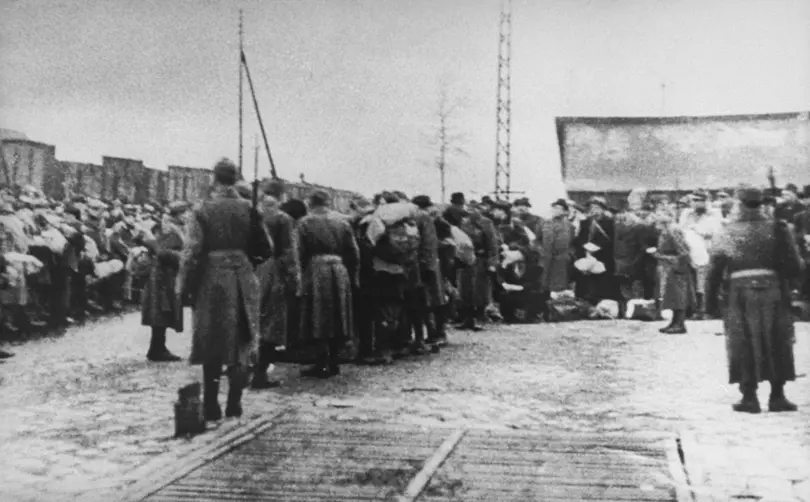 Deportation of Jews from the Jozsefvarosi train station in Budapest. Hungary, November 1944. (United States Holocaust Museum)
Mantello also met with Christian clergy and circulated a letter signed by four prominent Swiss theologians. It worked. Religious leaders across Switzerland spoke about the Holocaust from the pulpit, urging their congregants to take to the streets in protest.
Swiss authorities detained Mantello, but by then it was too late. Under mounting public pressure, governments, monarchs, and the Vatican condemned the Holocaust. The Pope wrote to Admiral Horthy, the Hungarian regent, demanding an end to the deportations. President Roosevelt and the King of Sweden issued their own stern warnings. British bombers dropped bombs over Budapest as a warning.
Under this international pressure, Admiral Horthy halted the deportations on July 7, 1944. The Nazis hadn't given up; they went on to send tens of thousands of Jews on death marches. But they could no longer murder hundreds of thousands within weeks. Over 100,000 Hungarian Jews were saved.
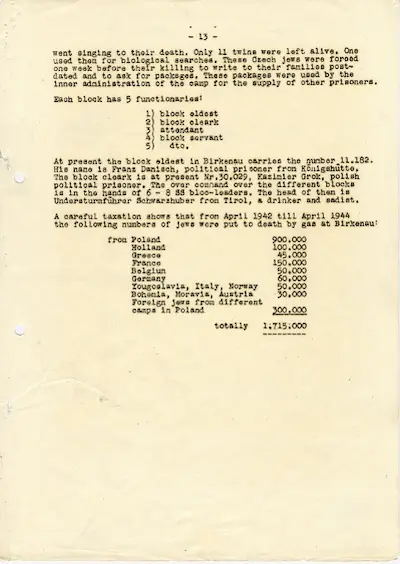 Abridged version of the Auschwitz Protocol sent by Miklos Kraus in Budapest to George Mantello in Switzerland. The document was translated into English by students hired by George Mandel-Mantello. Copyright: United States Holocaust Memorial Museum. Provenance: Enrico Mandel-Mantello
After the war, Mantello poured his energy and resources into helping survivors rebuild. He also helped smuggle people out of communist countries to the free world and financed a rescue operation for orphaned Jewish children from Romania.
Reunited with his family, Mantello settled in Rome, where he lived quietly, never seeking recognition for his rescue work or his ongoing support of Jewish causes. He died in 1992, at the age of 90.
Holocaust educator Rabbi Aubrey Hersh says that for decades, recognition of Mantello's work was actively suppressed, "because the Swiss government didn't want the world to remember that a refugee had broken their laws to stop a genocide. And the major Allied governments definitely didn't want to be reminded that they'd sat on the Auschwitz Protocols for weeks8." Despite the staggering scope of what Mantello achieved, the world barely knew his name.
But the people he rescued, and their descendants, never forgot him. Many wrote him personal letters of gratitude. Rabbi Akiva Glasner, who received a Salvadoran certificate, dedicated his book to Mantello, whose "selfless and altruistic actions saved the lives of untold numbers of Jewish brothers9."
It wasn't until the 1980s that Mantello finally received public recognition, in Israel, the U.K., and the United States, and was honored at Holocaust commemoration ceremonies.
Sources:
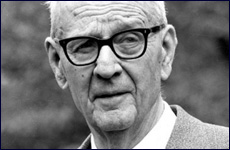







Just one point. The majority of the Jews of Denmark were not deported to Auschwitz. The Danes took the majority of the Jewish community by fishing boats to Sweden thus rescuing them.
Never heard about this great man before! Unbelievable!
Thank you for commemorating Mandl. But one paragraph is wrong! No Danish Jews were deported to the extermination camps. )5 percent of Danish Jewry were aided by fellow Danes to refuge in Sweden, and the app. 500 Jews captured by the Nazis were incarcerated in Theresienstadt with the Danish governement watching over them. I am the son af parents incarcerated in Theresienstadt from October 1943 until April 1945, when they were brought to Sweden by the Danish White Busses.
Ever since I learned about the Nazi Gas Chambers as a young child; I've been Haunted about it 😭
HOLLAND PROTECTED THEIR JEWISH ✡️ CITIZENS AS BEST AS POSSIBLE! WHEN I WAS IN ELEMENTARY SCHOOL WE READ ANN FRANK'S AUTOBIOGRAPHY 😭
Incredible article. Such an important and heroic man and family!