




 The Pope, the President, and What Judaism Says About AI


7 min read
5 min read



6 min read


An interview with Rachel Goldberg-Polin
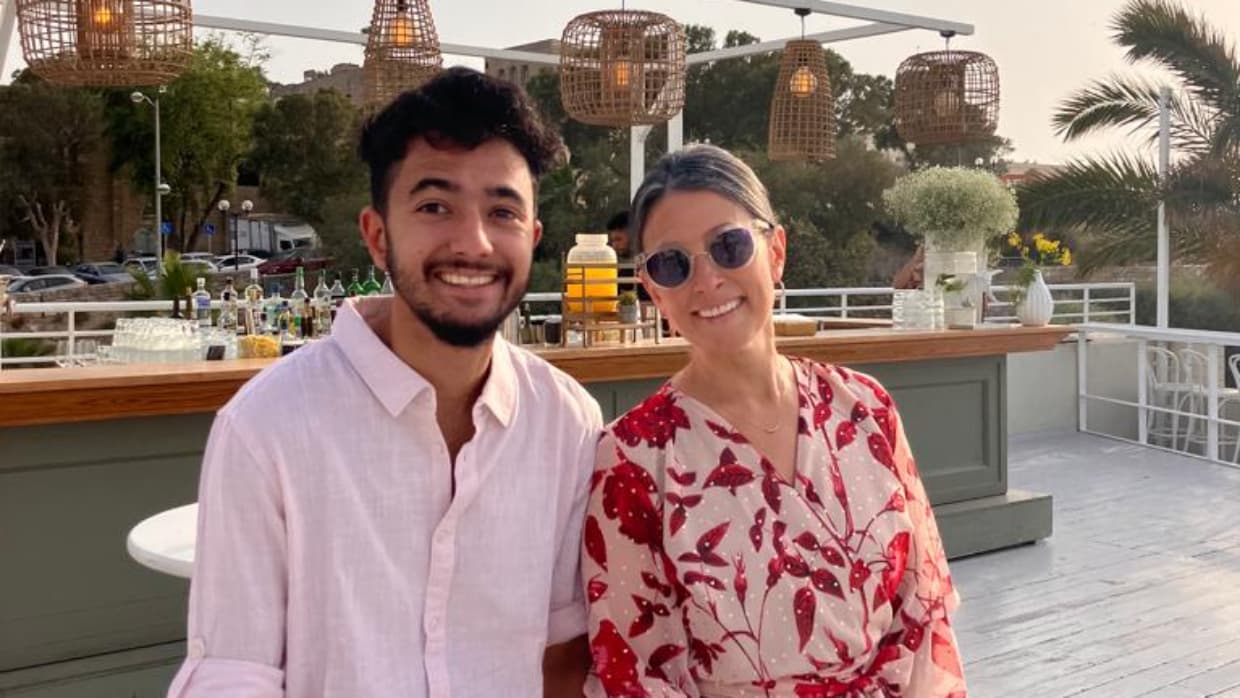
For the last 948 days, Rachel Goldberg-Polin has been on an impossible whirlwind journey: first, a 330-day sprint to save her only son, Hersh, taken from the Nova festival by Hamas terrorists on October 7, 2023; followed by 408 more days fighting to bring the remaining hostages home alive; and now, a book tour for her #1 New York Times bestseller, When We See You Again.
Still, she insists, her experience is not unique. “Everywhere I speak now, I say I know I'm not the only person in this room who's buried a child,” she told me. “Always, always, people afterwards say, it's me.”
“Burying a child is not unique. It's horrific, but it's not unique.
“What was out of the ordinary,” she said, “is the 330 days that preceded Hersh's burial — a confusing and torturous and active slow-motion terror experience for our family, and certainly for Hersh.”
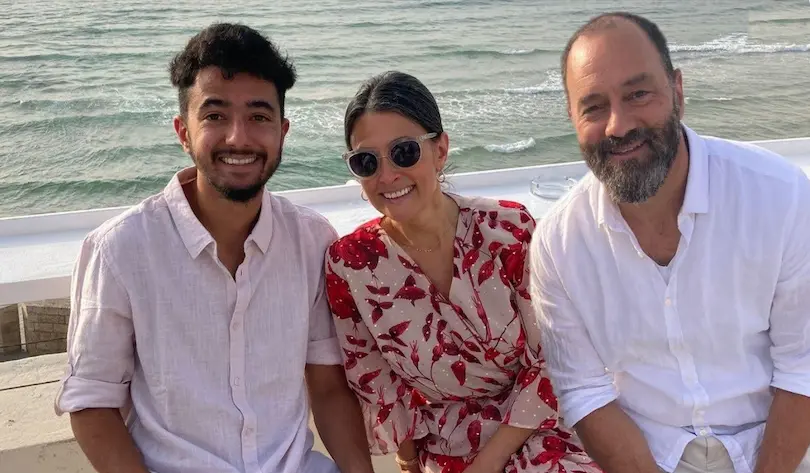
After living through the unimaginable, she has a message for the constant stream of well-meaning people who keep trying to lessen her grief: “The problem with burying a child is that it's not possible to ever get better. And I know that it's painful for people to hear that, but it's more painful for bereaved people to have to pretend that they're getting better —- it would be more kind and appropriate to allow for that reality.”
Writing When We See You Again has been about sharing her grief with the world in an effort to heal. “Rabbi Shimon Gershon Rosenberg, a leading Religious Zionist thinker, explained that Holocaust survivors who, because of their trauma, were not able to articulate in words the severe suffering that they endured forever. And what ended up happening because they were not able to articulate it is they ended up with incurable muteness. I don't want that.”
Rachel first arrived in Jerusalem when she was a 22-year-old graduate student in New York with what she called “questions and frustrations.” She signed up for a six-week Torah study program. She stayed five years.
“Torah is the treasure chest that every Jewish person has, whether we have it gloriously set out in a prominent place in our home, or like the toolbox shoved under the bed,” she told me. “We're tipping the pinky toenail of our foot into this ocean of Jewish knowledge,” adding that “it's a healthy addiction and during this period, especially, has brought me a lot of solace and perspective.”
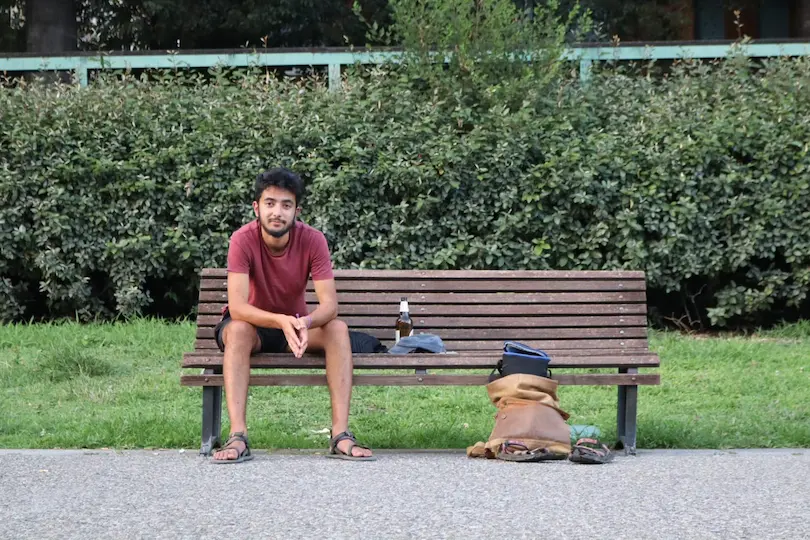
Years later, when Hersh was preparing for his bar mitzvah, Rachel brought him to the same beit midrash in Jerusalem where she had once been a student. For months, once a week, mother and son studied his Torah portion together. It happened to be the portion about Noah and the flood — also Rachel's, also her father's. “There's something in the DNA of our family,” she said, “that can't get away from the destruction of the world.”
She remembers Hersh being drawn to a commandment in that Torah portion called ever min ha-chai — the prohibition of eating a limb from a live animal. While he was “a huge carnivore” at the time, he would later become a vegetarian who was passionately inspired by the Torah’s message of compassion.
Through the 330 days of Hersh’s captivity in the tunnels of Gaza, Rachel credits her synagogue community, Hakhel, as one of the few things that kept the family from coming apart. “Hakhel scaffolded us from falling apart like shattered eggshells,” she said. “It is an extraordinary community of holy people.”
In a tragic turn of events, the founder of her synagogue Oshrat, had been the one chosen to pull Rachel up at the end of her own shiva, marking its completion. About 100 days after Hersh’s burial, it was Rachel who would pull Oshrat out of her own shiva, following the passing of her son Yuval in the war in Gaza.
“There was a huge, horrible symbolism,” Rachel said. “It was truly the blind pulling up the blind.”
“Most people,” she told me, “live entirely in Olam HaZeh — this world. Parents like Oshrat and I are no longer all the way here. When we put Hersh into the ground, we put part of ourselves into the ground, and so part of me is already living in Olam HaBa — the World to Come.”
When I asked Rachel about all of the murals depicting Hersh’s face around her neighborhood in Jerusalem and the dozens of chesed initiatives in his name and the other fallen, she paused.
“There's a big temptation to heroize and lionize and mythologize every single young person who is killed in a horrible way. Everybody's a hero, everybody. And that makes the word hollow.
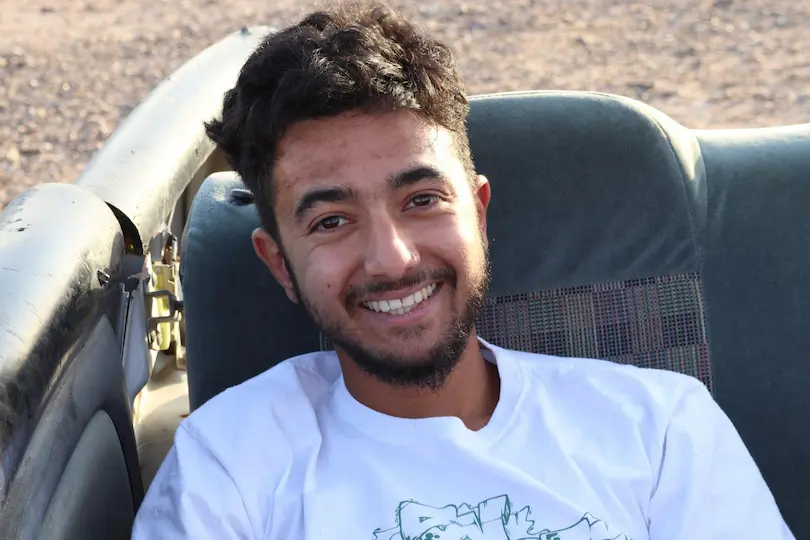
“What was so extraordinary about Hersh,” she said, “is that he was ordinary. He wasn't perfect. He was the perfect son for me.”
On the morning of Hersh's funeral, a friend wrote to Jon: May Hersh's memory be for a revolution. The message stuck, but not literally.
“When I hear the word revolution,” Rachel said, “I think of fires and pitchforks. That is completely not what we have in mind. We want a revolution for good.”
What was rare about Hersh’s personality, his mother added, was the way he listened. He sought out people he disagreed with “and was endlessly curious. ‘I don't have to agree with them,’ he would say, ‘but I want to understand them.’

“I thought, wow, that's actually a real revolution in a world where the mode of communication is solely screaming and there's no respect, if we could really listen to each other.”
In the summer of 2023, Rachel asked Hersh a question. He had told them a few years ago he no longer wanted to observe the Sabbath the way they did, and yet he kept coming to synagogue — even on mornings he had stumbled in at four or five AM, after being out with friends.
Why, she asked.
“I don't want Dada to sit alone.”
That, Rachel said, is holy. “When we do mitzvot because we want to, that is nice. It is good. It is impressive. But what's really impressive is when we don't want to do something, and we do it because we love someone and we have kavod, honor, for them. That, I think, is holy.”
As the days continue to pass by since the night of Oct. 6, 2023, when Hersh kissed her on the cheek saying “I’ll see you tomorrow,” Rachel has a simple way of explaining her grief.
“We have friends whose child went for a trip to South America after the army and she was supposed to be gone for three months. And after three months, they were so excited she was coming home. And then she said, actually, I'm going to prolong for another month because I'm loving it. And I'm going to go to, you know, Argentina. And they said, okay. And then it was four months. And then she said, actually, I want to go to Chile. And so it was five months.
“And you know what happened? They didn't miss her less. They missed her more. So why would a bereaved parent be any different? We miss them more. We're more hungry. We're more yearning. We're more craving.”









Reading about Hersh,and learning more every time I hear something more about him,I feel I get to know you a little more every time.I learned one thing;You were a wonderful mother to him.Todah.Thankbyou very much.
Through your activism you are keeping Hersh's memory alive. May His memory be a blessing and an inspiration to us all to "join the revolution" to do good. May Hashem continue to bless you and your family with strength.
How touching. She's an incredible human being. May Hersh's memory always be a blessing. Hersh was very lucky to have such a wonderful mother
I’m in tears…I’m a mother, grandmother and a great grandmother of a beautiful family…I understand and love Mrs Polin….each member of our family is a precious Neshama, and I do so love her words and her Emunah…please don’t stop sharing your motherly love with us…we need you more than ever NOW….Am Yisroel Chai🙏🙏🙏♥️♥️♥️
There are no human words or feelings to understand this tragedy (Ione of many) and to sympathise a parent's grief and pain. In the final analysis it is beyond comprehension. BDH