







 Seven Reasons for Hope on October 8
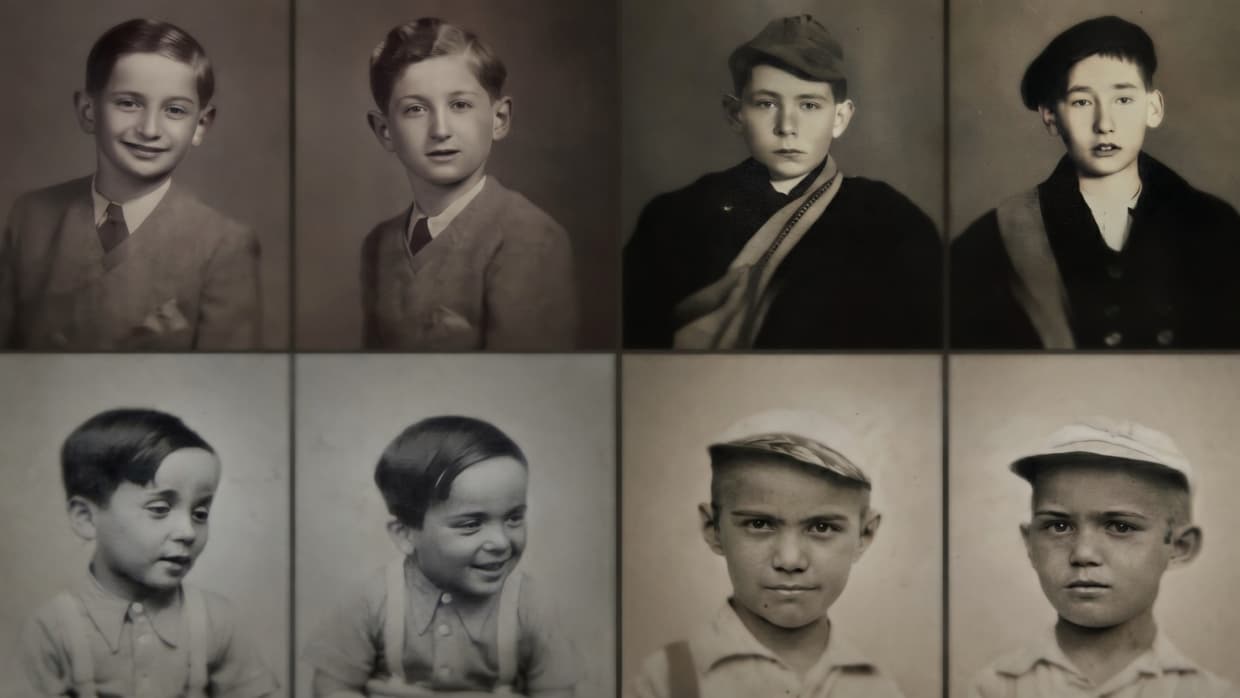






At Auschwitz, a 29-year-old Hungarian Jew named Erno "Zvi" Spiegel risked his life daily to protect boys from Josef Mengele. His story is finally being told.
Josef Mengele gave Erno "Zvi" Spiegel two choices: cooperate with his experiments on boy twins, or die. Spiegel chose survival — and used it to save as many boys as he could.
In 1944, Spiegel was a 29-year-old Hungarian Jewish prisoner at Auschwitz-Birkenau. He survived the gas chambers for a single reason: he was a twin. Nazi doctor Josef Mengele spared twins for his brutal experiments, giving Spiegel something rare in that dark place — a chance to act.
Mengele put him in charge of about 80 boy twins, forcing him to translate for the Nazis and document the details of the brutal procedures. Spiegel couldn't stop them from happening, but he tried to keep the boys alive in any way possible, becoming a father figure to them.
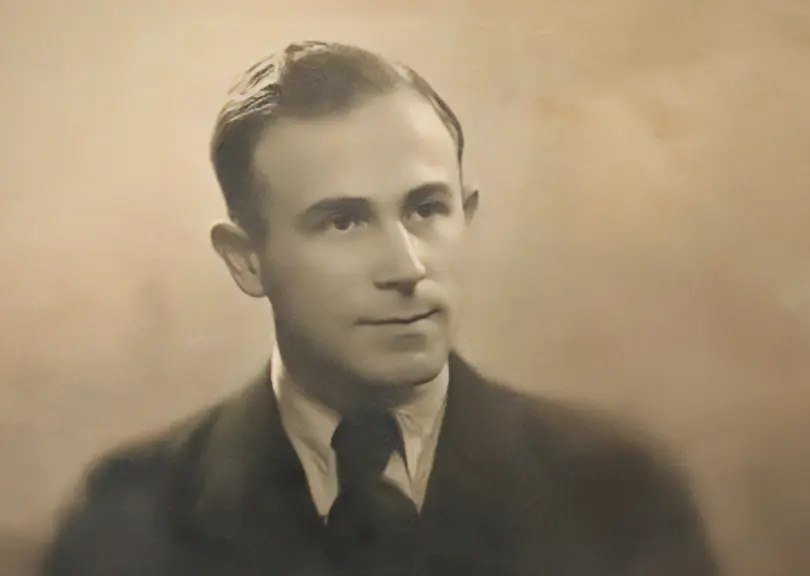 Erno Spiegel
After liberation, the boys begged Spiegel not to leave them, so he walked them all out of Auschwitz, braving a frigid winter and the mayhem of wartime Europe to bring them home to Hungary.
His story is the subject of a fascinating PBS documentary, "The Last Twins," narrated by actor Liev Schreiber.
For many years, Spiegel did not speak in detail about what occurred during the war.
"I grew up knowing fragments — I had only very basic information," said his daughter, Dr. Judith Richter, an executive producer on the film. "I knew that my father had been a twin in Auschwitz, that he had a number, and that his sister had been there with him — but beyond that, there was very little detail. It was not something he spoke about at length."
Still, there were a few facts that lingered with her.
"I knew he was liberated on January 27th by the Russian army. And I knew that exactly one year later, on that same date, he got married. That juxtaposition — between liberation and the beginning of a new life — always felt deeply symbolic, even before I fully understood the story behind it. Only much later did I begin to grasp the depth of what happened to him, and the choices he had made during that time."
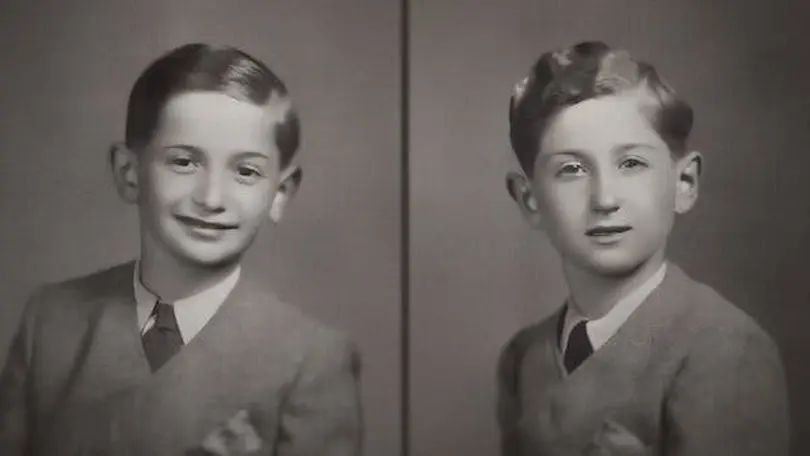 Twins Gvorgy and Istvan Kun who were saved by Spiegel
Richter hopes viewers will be inspired to make a difference in the world after seeing her father's story.
"The film is about the impact of choices, and holding on to humanity, even in the darkest circumstances. I hope people understand that every action matters — that they matter. You don't need power or position to do something meaningful. My father had none, yet he chose to act. He tried to protect the children, he would give them lessons in geography or math, creating moments of normalcy in an impossible reality. He also insisted on calling them by their names, not by the numbers they were assigned in the camp. These were simple acts, but they were his way of preserving their dignity."
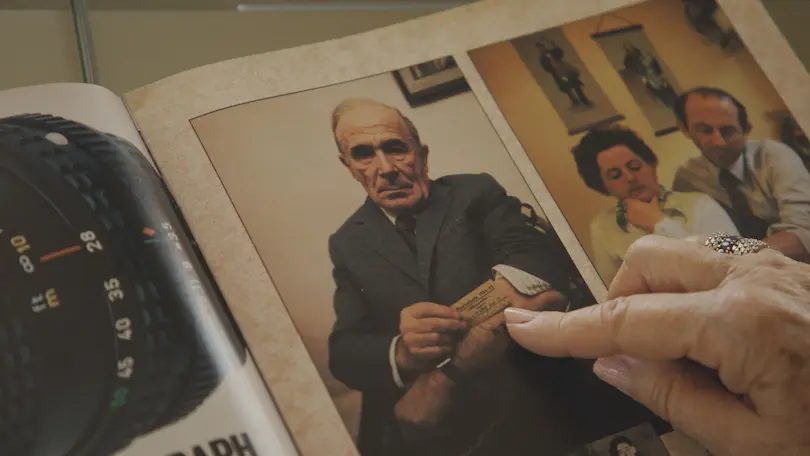
Richter discovered the full truth decades later, by chance, while reading a story on Mengele in LIFE magazine. That propelled her to launch a years-long journey to uncover his past.
"Over time, I began to understand that what he had done was not only extraordinary, but also deeply relevant to how we think about moral choice and responsibility."
Because of that LIFE article, Spiegel was able to reconnect with many of the Holocaust survivors he had helped, a few of whom are featured in the documentary.
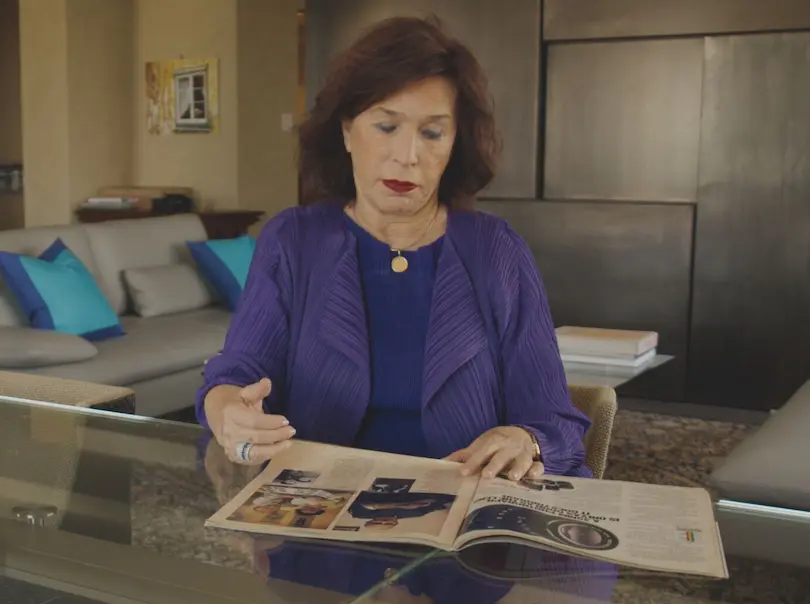 Dr. Judith Richter
"Meeting the men my father helped save was one of the most meaningful and emotional parts of this journey," said Richter. "They had gone on to build full lives — families, careers, entire worlds — and there was a quiet but powerful awareness that my father had been part of that chain of survival."
Finding them was a gradual and, in many ways, organic process. Some were identified through testimonies and archival records at Yad Vashem (Israel's Holocaust memorial and archive). From there, one connection led to another, as people shared names, memories, and relationships that helped piece the story together.
Richter first met a group in 1985, following a mock trial at Yad Vashem.
"And from that moment, the circle continued to expand. Not everyone I met is included in the film. Some of those who shared their stories with me over the years are no longer alive. Their absence is deeply felt, but their voices remain an essential part of the story we set out to preserve."
The decision to make the film came from Richter's sense that her father's life should not remain private.
"It is not only a family story — it is a human story. At a time when the number of survivors who can tell their stories firsthand is rapidly diminishing, there is an urgency to preserve and share accounts that speak not only to what happened, but to how individuals chose to act within it."
"The Last Twins" premieres on PBS on Monday, June 15th.







“Evil Triumphs When Good People(Christians)do nothing!!” Seen Holocaust-Survivor Bruno Bettleman at a special event Nassau Community College. Watching now on P.B.S. Television an important Historical-Holocaust Program: The Last Twins.Been studying and reading about the Holocaust since the late 1970s. Seen the unforgettable film:The Boys From Brazil based on an important work by Ira Levin. An old saying”:Life is stranger than Fiction”
If Erno" Zvi" Spiegel saved children from Joseph Mengele ( Y"S) then they are a big hero to me, because a lot of Holocaust Survivors ( obm) that went to Auschwitz-Birneau had the misfortune to meet Joseph Mengele ( Y"S) who with his( Y"S) finger pointed which side you should go, one side was the real shower the other side was the gas chamber, and his( Y"S),ni name was " the angel if death," and the remark you got when you got to Auschwitz-Birneau , how do you get out through the chimney, the lucky people that had miracles got out through the gates of Auschwitz-Birneau, my mom( obm) was there and any person that had relatives there, usually know the stories that went on there, but it was much worst, then the Holocaust Survivors( obm) described
Over the breadth of history - research has shown that - different peoples succumbed to & practiced a myriad of Cruel NON G-DLY PAGAN STYLE IDEOLOGIES. - including child sacrifices - medical surgeries on people whom they thought - were considered strange - were deformed - different skin color - religion etc., etc.. Unfortunately now - we can't ask those responsible for initiating these practices - (usually leaders & shamans) - why did they chose to perform these practices? Nor - can we ask those who were about to undergo - or after they went thru these deathly practices - how they felt. Even today - knowing these atrocious acts - how can enlightened people - still fall for - performing these atrocious & evil practices? Why can't/won't G-D stop this?
The German Nazis ( Y"S),were evil monsters that were very cultured, but they had a list who they deemed subhuman in their eyes, and in a ironic twist the child they showed to be the perfect Aryan, was in fact Jewish also I once try to read what ghe Nazis ( Y"S) doctors did to the Holocaust victims I got sick to my stomach, Joseph Mengele ( Y"S) had a obsession with twins for some reason, and people that werevon Auschwitz-Birneau which was one of the worst concentration camps and killing places, and the Holocaust Survivor victims there wanted someone should bomb the railroad track going to Auschwitz-Birneau, but nobody cared and once again nobody cares if it is Jews, because the world then and now is anti Semitic, my mother ( obm) and others told their descendants about it
This - all caring Jews - know. However - we STILL do not know - as I said above - WHAT CAUSES the horrific aberration of thought(s) - to accept & begin to practice these inhuman crazy ideologies.We still don't know why - the Jewish leadership - over the millennia - has not aggressively led us actively - in KEEPING G-D's "WRITTEN TORAH COMMANDMENTS" - & aggressively teaching - Non-Jews the truth - so that they don't fall prey - to false ideologies.
The people were evil, G _ d did not do it, and people in these places saw miracles, if your destiny was to live, that is why in the Torah it says not to do these practices, and you know who made atrocities in the Holocaust they had the title doctor, and the things they did was gruesome and sadistic, and I think some Holocaust Survivors ( obm) had nightmares about what they went through, also what happened on October 7, 2023 they will have nightmares too, in the past Holocaust Survivors(obm) did not get therapy then unfortunately
My mother survived Auschwitz as a young girl of 14, several years later marrying my dad in the DP Camp in Germany. Growing up in NYC, from the time of my earliest memory until I was about 7 or 8 years years old, my mother woke up screaming in absolute horror nearly every night. My twin brother Robert and I were born in 1958 and her memories of what went on in Auschwitz with twins haunted her nearly her entire life. This is a very important story that must be told and an incredible "Thank You" Erno "Zvi" Spiegel and to everyone involved in finally telling his story.
Richard David
Culver City, CA
So very moving. Looking forward to the documentary. I seldom watch films about the Holocaust or even read books about it - it hurts my heart too much. But this film, I think I'll be able to view.
Make time to watch this very moving documentary about Erno "Zvi" Spiegel a true hero of the Holocaust.
Such a gut-wrenching decision, to assist Mengele with the underlying motive of saving and helping as many children as possible. Horrific, yet inspiring for us to do what is possible in difficult situations,
You look at your own children and think how can people choose to do this to other people? How can this be?
I am so excited to see this documentary. So grateful to have learned about this wonderful, extraordinary man, who had such a great heart from Hashem. To know what to do and how to go about it all through love. Thank you for sharing this story. ❤️
I want to see the film.
Mrs. Richter, you are the richest of women - with the legacy of the choices your father made. Though exposed to vicious cruelty in that Valley of Death, your father managed to choose life, and to stretch himself beyond capacity, to try to bring life to others as well. Remarkable!