






 The Macklemore Mess: What Pink Got Right and Everyone Else Got Wrong


6 min read
6 min read
7 min read
12 min read





Simhah Tamar’s persistent search for truth led her from North Carolina to Sderot, Israel.
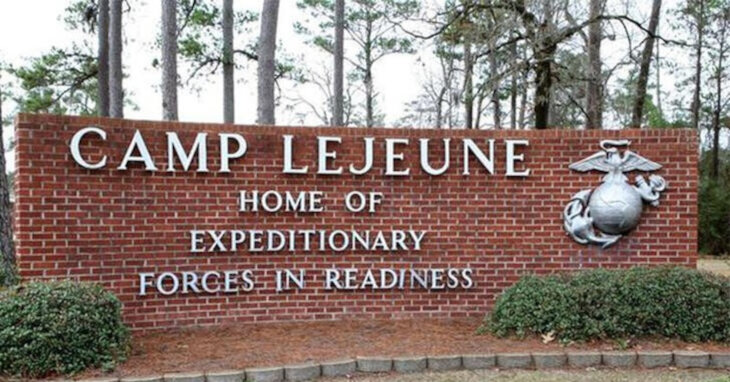
Growing up in the African American community in Camp Lejeune, North Carolina, Simhah Tamar had felt that she was born into the wrong family. She knew that her ancestors belonged to the Igbo people of Nigeria and were brought from West Africa to America by slave traders. But she didn’t know about the Igbo people’s oral tradition that taught they were descended from Eri, son of Gad, who was the son of the Patriarch Jacob, and that they considered themselves Jews.
When Simhah Tamar was very young, her grandmother became a Christian. “In hindsight, she was trying to keep the family together,” says Simhah Tamar. “She had 26 grandchildren, and she was trying to keep us all cohesively as a group, so she made all the grandchildren go to church.”
From the age of four, Simhah Tamar attended the local African Methodist church regularly. At Sunday school, she learned about the Bible. She was struck by the differences between the Old Testament and the New Testament. “I was questioning everything because I knew something wasn’t right in that system,” she says.
When she was nine, Simhah Tamar’s Sunday school teacher suggested that she write down all of her questions and take them to her grandmother. “I took these questions to my grandmother, one at a time. She absolutely answered every one of them. She is my heart!
“The first question was, who are those people in the New Testament and why aren’t they doing what Jews do? So she gave me the long of it, and I asked, ‘How can you change the Bible? I don’t like it, Grandma! I can’t do it! I want to be with the people in the Old Testament.’”
By age 11, after two years of discussing theological questions, Simhah Tamar’s grandmother said to her, “Go talk to the pastor and he will hear everything that we discussed, and then you don’t have to go back to church anymore. You’re not crazy. We used to be Jews of Africa. You go on and be the Jewish person of the family.”
“With that, I bowed out,” says Simhah Tamar.
Once she left the church, Simhah Tamar began exploring Judaism. “I had a makeshift education in Torah since I was 15 years old,” she says. She read books about Judaism and tried to learn more.
Along the way, Simhah Tamar married a Jew of mixed Hungarian and African descent. They had a son. Later, they got divorced.
Simhah Tamar’s Jewish learning has been a lifetime-long process. There were no synagogues in her town. The closest she could find was an alternative church that had rejected the Christian doctrine. “It was not Jesus-oriented at all,” she says. “As a matter of fact, they taught that Jesus was not the messiah. And they taught Torah. We kept all of the feasts.”
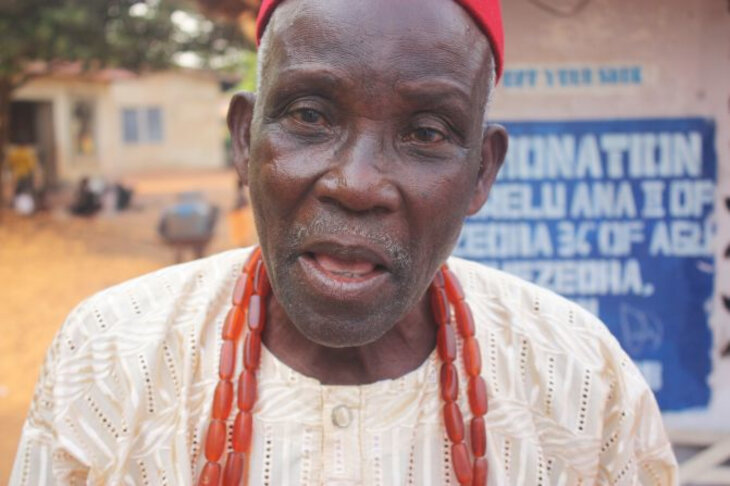 Onyibor Oloh, an Igbo Jew
The church leaders distinguished between Jews and non-Jews, encouraging the Jewish congregants to keep some level of Shabbat and eat kosher food. “Knowing what my grandmother taught me, that we were Jews of Africa, I was like, okay, sounds good to me,” says Simhah Tamar.
But the church encountered strong opposition from mainstream Christianity. The Protestant community called them a cult and the church was forced to disband.
After that, Simhah Tamar joined a Conservative congregation in Arlington, VA. But she was disappointed with the level of Jewish education and observance at the synagogue and began looking for more Jewish learning online.
One Shabbat, Simhah Tamar was watching a Torah lecture on her laptop when she heard about the prohibition of driving on Shabbat. She recalls, “I was shocked. I’ve always driven on Sabbath. No one told me differently.”
But something in the rabbi’s words spoke to Simhah Tamar. The drive from her home to the Conservative synagogue took about 45 minutes, and she’d always had negative feelings about the drive. She searched for more information about Shabbat and learned what she could.
When Simhah Tamar informed her Conservative rabbi of her decision to begin keeping Shabbat, the rabbi discouraged her. At that point, Simhah Tamar lived alone, with her son grown up and out of the house, and the rabbi was concerned that Simhah Tamar would be lonely on Shabbat. Simhah Tamar responded, “I have my Torah, and I will be fine.”
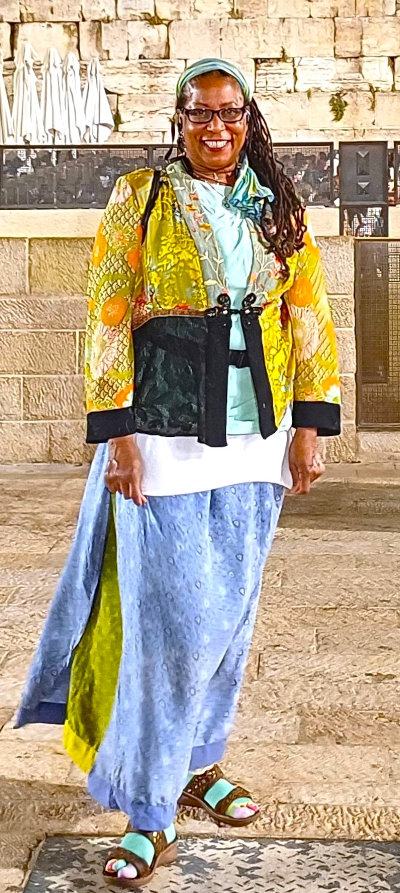 Simhah Tamar at the Western Wall
But Simhah Tamar wanted to go to synagogue for Yom Kippur. She arranged to stay with a family that lived within a walking distance from her Conservative congregation. She brought along food for breaking the fast.
As she was putting the food into her host family’s refrigerator, she noticed bacon sitting on the refrigerator shelf. That was when she decided she needed to leave the Conservative synagogue and look for a like-minded community elsewhere. There were no other synagogue options in the area. “I studied Torah, kept Shabbat, and observed the Festivals from my home,” says Simhah Tamar. At the same time, she began thinking about moving to a larger community.
It is never easy to leave one’s birthplace and family behind. For Simhah Tamar, the move was made even more complicated by the burst of the real estate bubble and high interest rates, which made it impossible for her to sell her house in Virginia.
In addition, Simhah Tamar wasn’t sure where to move. As she debated her next steps, she did more research about her heritage.
Researching her Heritage
Simhah Tamar searched for more information about her ancestors. A book she came across, The Interesting Narrative of the Life of Olaudah Equiano, written in 1757 by a freed Igbo man who was kidnapped and enslaved as a child, described the customs and traditions of the Igbo people. Simhah Tamar recognized some of them as also practiced in Judaism, such as circumcision, Rosh Chodesh (new moon), Shavuot, and ritual washing of hands before meals.
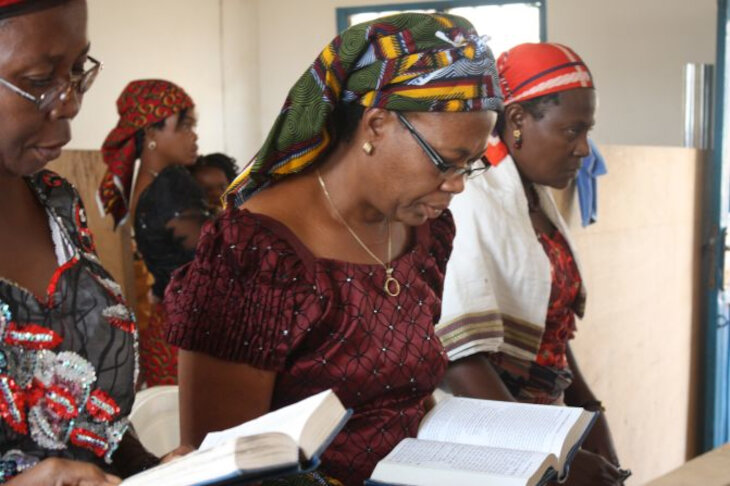
Simhah Tamar recalls her reaction, “I said, wait! Those are my people! I’m not in the wrong family. I was never in the wrong family. These people are doing things that the people of the Old Testament do. I think this is my God!”
With time, Simhah Tamar discovered other similarities between the Igbo traditions and Judaism, such as Hebrew words used in the Igbo language.
According to Simhah Tamar’s research, the Igbo people practiced Judaism in West Africa for a thousand years, until the arrival of Christian missionaries from Europe, beginning in the 17th century CE. The land came under British control in the beginning of the 20th century.
Though lacking written records, the Igbo passed down Torah teachings, which they called Omenana, orally from generation to generation.
In the 19th century, slave traders operated in West Africa. They kidnapped people, including children, and took them to America, where they sold them as slaves. Simhah Tamar learned that her ancestors were among a large group of Igbo people captured and brought to Virginia on seven ships. For several generations, they were enslaved, until slavery was finally abolished in America after the Civil War.
Meanwhile, Simhah Tamar was faced with another challenge. In 2003, the call center she’d worked for had outsourced the work to India, and Simhah Tamar found herself unemployed.
“Ever since then, it was pulling teeth to get a job that would allow me to work around Shabbat,” says Simhah Tamar. “I never had this problem. I was shocked.”
She tried applying to large call centers, hoping that it would be easier to get religious accommodations there. “They wouldn’t do it,” she says. “They would blatantly discriminate against me.” She complained to the Equal Employment Opportunity Commission (EEOC).
“I ended up with ten Equal Employment Opportunity charges against ten large call centers in America,” says Simhah Tamar. All ten were eventually dismissed, but she didn’t give up, attempting to take the cases to federal court.
“By 2016, I was back in the EEOC. Not only had I not received protection, but this time I was told, ‘We need to know what kind of a Jew you are… You don’t have to answer. We will just dismiss the charge and end the call.’”
Until then, Simhah Tamar was debating whether to move to New York or to Israel. The more Torah she learned the more she noticed the emphasis on the holiness of the Land of Israel. She had already filed an aliyah application, but Israel was so far from her family and from everything known and familiar.
At that point, says Simhah Tamar, “I finally understood the consistent unemployment discrimination by large call centers. God was kicking me out of the country that my ancestors came to in chains!”
Once the decision was made, things began to move. “The house that would never sell, sold within five days of ‘coming soon’ for full asking price! I got the hint and thanked God,” recalls Simhah Tamar.
In 2020, in the midst of COVID, Simhah Tamar moved to Sderot, in southern Israel. She wishes she had done that sooner, but ”God has His perfect timing. I love it here! I am making up for lost time.”
Even though Simhah Tamar had considered herself Jewish from a young age, she knew that due to the lack of definitive proof of her Jewish ancestry, she would need to complete the formal conversion to Judaism that is recognized by the Orthodox Jewish community and by the Israeli Rabbinate.
Immediately upon her arrival in Israel, Simhah Tamar sought out a Moroccan rabbi who could help her with the conversion. At an outdoor makeshift COVID minyan, she met one of her neighbors, who turned out to be a Moroccan rabbi. “I was overjoyed,” she recalls.
The rabbi was happy to help. He put Simhah Tamar in touch with English-speaking rabbis who run a conversion program.
Simhah Tamar enjoyed her studies in the conversion program, which was “more in depth” than her previous Jewish learning. She completed the program and received her conversion certificate in 2021. She finally felt that she had come full circle and was Jewish without any doubt.
Simhah Tamar was teaching English in local schools, seeking out ways to be involved in the community, when the war broke out on Oct 7.
That morning, as she was eating breakfast, Simhah Tamar heard automatic weapon fire. She says, “Since I grew up in a military town, home of the largest land amphibious base unit for the United States Marine Corps in North Carolina, I am familiar with war weapons. I went to the sliding glass door to make sure I heard what I heard.”
From the direction of the Sderot Police station, Simhah Tamar heard the second round of fire. She recalls, “I closed the wall to wall sliding glass door, unplugged my wifi-booster, checked the deadbolt as well as the lock on the front door, closed the room darkening blinds on the guest bedroom and office.” She went to the safe room in her home that served as a bomb shelter.
Due to the life-threatening nature of the events, Simhah Tamar turned on her phone and saw a message from her landlady warning her not to leave the house because there were terrorists in Sderot.
Instead of going to the synagogue as she had planned, Simhah Tamar spent the next two days in the safe room. She says, “An hour or so after entering the safe room, non-stop rockets began, then the power was cut. Two days later, the Iron Dome had intercepted an incoming missile from Gaza, and my apartment building was hit by shrapnel. The entire north side of the building's windows blew out. There was a flash fire and tremendous smoke that entered the living room/dining room and kitchen. The shrapnel then hit the paving stones on the patio which then hit a propane tank. When the propane tank exploded it rocked the room. The fire from the propane tank entered the already shockwave shattered windows. We were evacuated on October 9th.”
Despite the circumstances, Simhah Tamar remained calm. She says, “A few years before making aliyah, I dreamed this apartment and the evacuation. I knew everyone in our building would not even get a scratch. The social workers were baffled by my thankful joy!”
Naturally, Simhah Tamar’s family in America was very concerned. They even offered to mortgage their property in order to get her a ticket back to America. Simhah Tamar absolutely refused. “I told them throughout history, Israel has been the safest place to be in the world.”
After evacuation, she spent some time in Jerusalem and Beit Shemesh, and her teaching job was put on hold.
Since April 4th, Simhah Tamar is happily back in Sderot teaching. She is working on creating her own English curriculum.
Simhah Tamar is thrilled about the Jewish awakening taking place among the Igbo people in West Africa. Today, there are about 35,000 Igbo people living in southern Nigeria. Though most of them consider themselves Christian, since the 1990s there has been a growing movement of returning to their roots and rediscovering Judaism.
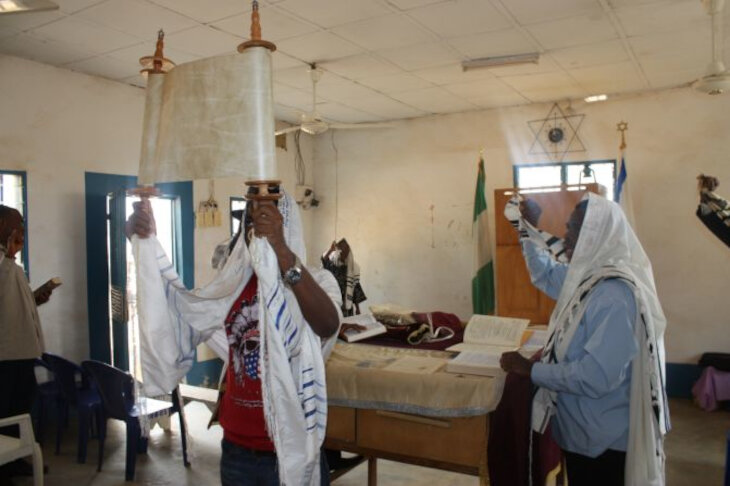
With the expansion of global communication, the Igbo people are able to access Jewish educational resources and to connect with Jewish communities around the world. Today, there are over 70 synagogues in Nigeria. Several thousand of the Igbo people practice Orthodox Judaism. Many of them went through the formal conversion procedure, like Simhah Tamar, and are currently recognized as Jews by Jewish communities worldwide.
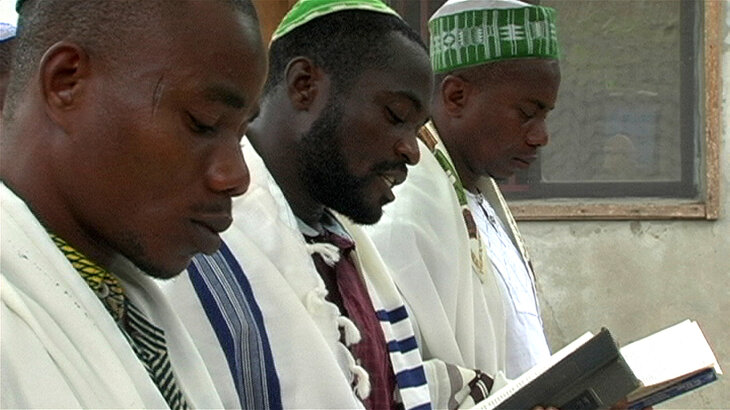
A Jewish visitor would be comfortable in a Nigerian synagogue. The services consist of traditional Jewish prayers, in Hebrew. They read from a Torah scroll, which looks just like Torah scrolls everywhere else. The men wear tefillin and tallit.
And yet, visitors note the unique atmosphere in these synagogues: the warmth, the hospitality, and the special joy of rediscovering a long-lost treasure. The Igbo people pray from the bottom of their hearts, occasionally using traditional Igbo tunes to sing the familiar prayers. Visitors find the experience powerful and meaningful.








I resonate with her story as my journey has been similar. I'm now recognizing that Hashem is guiding me away from this country where my ancestors arrived in chains, and leading me home. Though I've completed my Orthodox Jewish conversion, I often feel isolated - there are few women to study with, and many look at me as if I don't belong. DNA testing has confirmed my Igbo Tribe ancestry, validating what I've felt since childhood: that I don't truly belong here. B'ezrat Hashem, I will make aliyah to find my rightful community and people.
Give us your authenticated DNA links, please.
are you offering yours as well?
One has to love this woman! Strength and resilience. Welcome to the tribe!
Please contact me. I live in Beit Shemesh. Israel. I would like to invite Simhah to speak to my club of English speaking senior citizens
Igbos in Nigeria are more than 40 million people as against the 35,000 cited in the article. The Igbos could be divided into 3 groups based on their religious practice, group (1) are the traditional people who never succumbed to the pressure of the colonialists to convert to Christianity but practice Omenana a form of Torah Judaism peculiar to the Igbos of west Africa, group (2) are the forced converts to Christianity, this group are more in number, group (3) are the Igbos who now practice Rabbenical Judaism as obtained in any part of the world, this group are aided by the boost in Global interconnectivity that enabled them link to various Rabbis and bethhamidrash around the world. This group are zealous in Torah & Mitzvot, they majorly reside in the eastern Nigeria or Lagos and Abuja.
Daalụ nwanne m. Great piece!
Great piece!
I had the opposite experience. I was raised Jewish and while I do have Jewish ancestors I also have Christian ancestors and Asian ancestors (I do not know their religion). The Jews said I was not Jewish because while I have non Jewish ancestors on my father and my mother's side, having non Jewish ancestors on your mother's side disqualified you from being Jewish, the Jews do not care about the non Jewish ancestors on my father's side. REALLY??? I am Jewish if I say I am and nobody can tell me different, though I am upset at the Jews who will not recognize me as Jewish.
It is not a matter of people "recognizing" you as Jewish. JEWISH LAW is very clear ,you must be born to a Jewish mother or have a conversion by a recognized Orthodox Beit Din. If you don't want to recognize Jewish law as it has been observed for thousands of years, why do you want to consider yourself a Jew?
It's a good question. The question is rooted in the "OR" of your second sentence. Among these groups, there are those who are born to a Jewish mother but who are not interested in an archaic code of law and those who have no birth connection to Judaism but who are attracted by this ancient law and choose to "convert" to Judaism. Very different people and both are called "Jews".
Are you telling those of us who were born Jewish but are not adherent to the religion that we should reject our cultural heritage in its entirety? We remember where we came from and what our parents and grandparents gave to us, regardless of what meat we keep in our refrigerators or what we do on the Sabbath.
Israeli law may require a clear distinction but, outside of that, it isn't so black and white.
According to the Jewish law, you are Jewish if your Mother is Jewish. Elisheva states below, you can have a conversion, then you are fully recognised as being Jewish.
That said, I know many people who have Jewish Fathers and they consider themselves as being Jewish.
If you ever think of marrying a Jew, you have to go through conversion. Or your children won't be considered as being Jewish, which would exclude them from being Bar Mitvahd. And so on.
Jewish law states that we are supposed to accept anyone's claim to being Jewish. The only exceptions are in the case of marriage (where conversion is needed) or in death (where only those who meet the biblical standards of being Jewish can be buried in a Jewish cemetery). In all other situations, a person is supposed to be taken at their word.
sources?
Baruch Hashem she is home at last.
I am Nigerian Iam Igbo and I am unrepentantly Jewish
Bro, we Jews are very repentant. Repentance (Teshuva) is a very big part of our Avoda (Holy Service). So an "Unrepentant" Jew is not yet tuned in to something very core to Judaism.
I think he was trying to say that he is unapologetically Jewish. It's the wrong choice of word. That is my understanding.
Beautiful story. Jewish people come in all stripes and from many backgrounds. It is an incredible history.
This very interesting and heart-warmingly anti-racist article reminded me on the fact that the globally rare Y-DNA haplogroup T (which I belong to) has been found in 2 % of Askenasim and 3 % of Sefardim worldwide, whereas the local populations with the highest frequency of T worldwide are the strongly Jewish south-african Lemba (17,6 %) and the subject of the article, the Fulbe (18 %) of West Africa.
By the way, among northern Portuguese males the T-frequency is 4,7 %, as to 15,8 in Jewish communities of northern Portugal, and my Marrano ancestors germanized their surname Henriques probably in Amsterdam to Riqueman.
Sources:
https://en.wikipedia.org/wiki/Haplogroup_T-M184https://en.wikipedia.org/wiki/Genetic_studies_of_Jews
Thank you for the info!
Why is it that African descendent Jews always have to prove that they are Jewish? So hurtful !!
According to her story, she didn't have definitive proof of her Jewishness because her family had practiced Christianity and was a part of a Christian church community for several generations.
I’m a white, blonde, blue-eyed convert.When joining a new shul and registering my children in JEWISH Day school, I was asked to provide my conversion papers.
Heck - while I don't have blue eyes (my dad did) or blonde hair (my grandma from Ukraine did) - people are surprised, sometimes shocked, to find out that I'm a Jew...because I don't conform to the outward stereotypes often applied to Jews. Unfortunately, our own "brethren" will sometimes doubt our Jewishness. So I'm sorry that this happened to you, and in fact - I salute your dedication and perseverance!
Not just African. All backgrounds, nationalities, races, faiths, etc. All receive the same treatment of having to prove themselves or going through proper conversion. It has nothing to do with race,
Not true. Having worked in Kiruv (Jewish outreach) with hundreds of people from around the world, for decades, we ask a lot of questions. We have to. The color of one's skin has nothing to do with it.
I am happy of her never giving up , I wish her well.If she is interested in a chat ,she can chat me up.
This is so uplifting! Especially now. May Hashem protect and bless her!