







 I Will Not Apologize for Living

12 min read





Held by Hamas for 505 days, Omer Shem Tov, a non-religious kid from Herzliya, discovered a freedom no captor could take.
Omer Shem Tov, 23, spent over 16 months in the tunnels of Gaza. For over a year, he’s been sharing his story around the world — how he survived and the choices that sustained him through it all, including 450 days of total isolation, 50 of them in a pitch-dark dungeon where he couldn’t even stand up. How does a person stay sane in such an environment, let alone emerge to so grippingly share the profound insights of his ordeal and even write a book, as he recounts finding God in a place so dark it defies the imagination?
Omer was captured together with his friends, siblings Maya and Itay Regev, 21 and 17 years old. While attempting to escape to safety, they were blocked by Hamas pickup trucks and shot at. Itay and Maya sustained leg injuries, and the three of them were loaded onto a truck and taken to a Hamas tunnel. After Maya and Itay were released in November 2023, Omer was held alone.
In a riveting conversation following the publication of his book, Meeting Myself in Hell, Omer shares the memories you would assume he’d prefer to forget: severe abuse, beatings, starvation, isolation, refusal to cooperate with his captors’ demands to harm others; but then, encountering his true sense of self and his unbreakable bond with his Creator, specifically in the place where nothing else remained.
You’re a young man, with your life ahead of you. What drove you to write a book, and to dredge up all the pain most people would prefer to erase?
My main motivation was to show people that even in the darkest situations, it’s possible — and necessary — to find points of light. I think that during my time in Gaza, I went through a kind of self-administered psychological therapy, realizing that in every situation, I’m free because I still have a choice. In the solitude, inside the cage where I spent fifty days. I once heard a saying: “People search for freedom, yearn for it and pursue it, but they don’t know that it is a gift that anyone can attain on their own, at any time and in any place.”
Even if you put a Jew in a gas chamber or in tunnels deep in Gaza, with shells whistling all around him and his guards able to take his life at any moment, his soul will remain free. That gift came to me at the moment I realized that I had nothing — no family, no ability to influence my life or my future. I had only God, and suddenly I understood that it was enough. I had everything.
We have to have faith. Without faith, we can’t go on. Without faith, we’ll lose it.
That night, I begin talking to God. I say to Him, “Please, give Itay strength. He has no strength left. Make him believe that we’re going home.” The next morning, I wake up and began saying Modeh Ani — I must have learned it at some point in my life.
I believe that thoughts create reality. Faith creates reality. I’m not disconnected from the situation — I see it completely. If I’m happy, it’s because I’m working on emunah (faith in God).
Emunah is hard work, but from the very beginning I understand that I would have to work hard to get out of here. I told Itay, “We have to believe. We have to work at it. In order to get home, we have to fight the negative thoughts. I have to work on my faith and my trust in God.”
We also have a weekly routine: Kiddush.
We saved some grape juice from the package we received. Itay started drinking it, but I stopped him: “This could be wine for Kiddush.” He was happy. We saved it for Shabbat and made Kiddush. We did the same with the pretzels. We scraped off the salt stuck to them, took a piece of pita, and dipped it in the salt. Shabbat Shalom.
From then on, we decided to save the juice and make Kiddush every Shabbat. Every morning, we counted the days, and on the day when the terrorist comes freshly showered and dressed nicely to bring us our food, we know it’s Friday.
On Friday evenings, I fill a cup all the way to the top with juice and each of us takes a small sip, and then I pour everything that’s left back into the bottle.
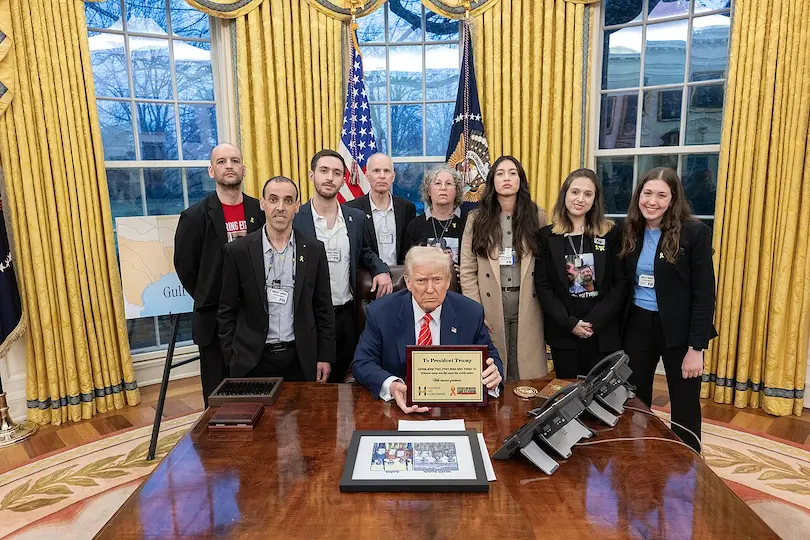
Shem Tov and other former hostages meeting with President Trump in the Oval Office (2025)
Kiddush gives us peace. It brings us back, even if only for a moment, to our roots. It helps me be who I am.
We make Kiddush, and then I look at Itay and tell him, “Itay, Shabbat Shalom. Soon we’ll be home.” We hug each other and begin Shabbat.
It was true. In a few weeks, Itay would be released. And I would remain alone in the darkness.
In the book, you describe many times how you spoke with God, how you prayed to Him in the depths of the darkness, and how you made an effort to observe Shabbat and recite Kiddush over wine. Did you feel this connection before your captivity?
I grew up in secular Herzliya, where God wasn’t part of the conversation, around the beaches and restaurants, people and parties — things that dazzled me and drew me into the material world. But I think I always believed in God. In my home, we kept kosher, and my father would make Kiddush on Friday night.
It’s true that I didn’t put on tefillin or keep mitzvot before my captivity, but whenever I went to a beit Knesset (synagogue), I felt a connection to holiness, to my soul. I understood that there was something special and genuine in prayer, in mitzvot, but the material world kept me at a distance.
And then I found myself alone — just an hour and a half away from home, but deep in an alternate universe of darkness, with no ability to do anything to improve my situation. Suddenly, I felt God in the clearest way.
You write that during your captivity you deeply regretted going to the Nova festival. What place does that regret have in your story?
It was my mother’s birthday that day. My father wanted me to stay with the family and not go to the party. Of course, after I was kidnapped, I regretted it with all my heart, and not just because of what happened to me.
 Shem Tov and his mother speaking with Israeli President Isaac Herzog and Michal Herzog after Shem Tov's release.
Since returning from captivity, I’ve begun putting on tefillin and observing Shabbat. My mother also began observing Shabbat for my sake while I was still being held hostage. It was truly incredible: She began keeping Shabbat on Parshat Mishpatim in 5784, a few months after I was kidnapped. Exactly one year later, on the next Parshat Mishpatim, I came home.
My father also began strengthening his religious observance. He began putting on tefillin every day and keeping kosher. We had always made Kiddush at home, and after I returned, we added Havdalah as well. My brothers also became more connected to tradition and Judaism. After I came home, all of us began strengthening our observance and continue to move forward — especially me. I made sure not to leave God behind.
This is, in a way, a big paradox in my life today. In the first few months after my release, I went from one end of complete darkness to the other extreme of blinding light. People photographed me, asked me to attend conferences and give lectures, and I experienced a kind of dazzling effect from it all. But very quickly I understood that all the stages and the fame, and material life in general, are not the real thing. It’s really not simple, It’s a constant battle between myself and myself.
When the guard comes in to bring me food, I try to feel him out — whether it’s day or night, and how much time has passed since the previous time he came — so that I can figure out when Shabbat is. Shabbat is a palace in time, the one fixed point that doesn’t dissolve into the darkness. I managed to sneak my grape juice into my mouth. When I realize it is Friday, I pour some from the bottle into the cap. It is quite possible that I made Kiddush the night before or the night after. I hope Shabbat will forgive me.
At first, in the apartments (before I was taken underground), it was important to me to know the time constantly. I felt that time was my connection to the outside world. I may be stuck in an apartment in Gaza with a terrorist guarding me with a Kalashnikov, but if I know that it’s two o’clock, I know that it’s two o’clock at home, too. My connection to time was my way of tearing myself away from the terrible place I was in and feeling connected to the people I loved, to the people who loved me.
Many hostages had been completely disconnected from Judaism and had not even fasted on Yom Kippur. They began observing Shabbat and keeping whatever mitzvot they could, specifically in the worst place imaginable. What happened?
God created us with a brain, intellect, and the ability to think, but the greatest gift we were given is free choice. We can choose whether to believe or not, whether to keep kosher and observe Shabbat. And specifically when you reach the depths of darkness, to a place where there is almost no hope of getting out, you suddenly discover how deeply the Divine soul that’s within each one of us connects with the Creator, and how much encouragement and comfort it can draw from any mitzvah, from speaking directly to God.
 Omer Shem Tov speaking at Hostages Square in Tel Aviv, 9 October 2025, following the announcement of the impending release of Israeli hostages. (Photo by Nizzan Cohen)
At every moment in captivity, I had a choice: Whether to choose life, to believe in the Creator and that there was some purpose for my captivity, or to sink into depression. I think most of the hostages understood that without faith, there would have been nothing holding them together. The moment a Jew is in trouble, he suddenly returns to his roots, to the source of his soul.
I believe with all my heart that it wasn’t the terrorists who took me captive, and they weren’t the ones who put me in the dungeon. God put me in that place. When I arrived in Gaza, I thought I was at the very bottom of the bottom. At first, I was with Itay, and after he was released, I went down into the tunnel. I was there alone, in complete darkness, and I understood that God was peeling away the layers of impurity from me like peeling an onion, until I reached my source. And there I found a stunning clarity.
Before your release, you had a dream that your grandparents told you your release would be imminent. How did you know this dream was true? You had been told many times that you were going to be released, and in the end, it didn’t happen.
Of course, at the time I didn’t know whether the dream was real, especially since I had many dreams during my captivity that gave me signs that I was coming home. But I felt very strongly that my grandparents, who are in the Next World, were watching over me, knew what was happening to me, and were bringing me good news. The dreams themselves gave me a good feeling.
Excerpt from Omer’s book:
We walk in complete silence. There is no light at the end of the tunnel. In fact, there isn’t even a single ray coming in from above or from the sides — only the focused beams of the flashlights the terrorists are carrying. Blast doors seal every opening. Each time a door closes, the sound is sucked in and swallowed. The air becomes heavy. Damp. Breathing begins to weigh on me.
We approach a small barred cell, seemingly empty. They open the bars of the cell. My breath suddenly catches. Don’t be afraid. My breathing begins to wheeze. The air is so damp and heavy; I can’t breathe. I’m suffocating, and there is nothing I can do about it. Don’t be afraid. The fear comes charging in, flooding my blood. My heart. My head. My breathing. I lose control of myself. Fear drives me crazy from within.
I lose confidence in myself and in my body inside this space. I tell myself, maybe I’m dying. I’ve never been dead before. Maybe this is what it feels like.
I toss and turn on the mattress. How desperately I want to fall asleep, to take a break from this nightmare, to let go — but I can’t fall asleep. Until now, throughout all my time here, even in the most extreme states of stress, I had been able to fall asleep.
I feel my heart contracting, as though someone is pouring boiling water over it every few minutes. I breathe deeply, trying to push away the layer of fear that has seized it, but my heart insists on staying alert, behaving as though it has been assigned to guard my body and make sure it doesn’t fall asleep. As though someone has given an order from above: If you fall asleep, something terrible will happen. It will be the end.
I spent 49 days plus one in that tunnel.
Unlike many hostages who were moved from place to place and encountered other hostages, you were alone for most of your captivity. Only at the beginning were you with Itay and Maya. Have you kept in touch with other hostages since your release?
Absolutely. I knew Itay and Maya before the captivity. They were released after a much shorter period, in the first negotiation after 53 days. I remained there another 450 days after them, and in total I was held captive for 505 days, including fifty days in a dungeon.
During the last three days of my captivity, I was with Eliya Cohen. I don’t talk about it in the book, but today Eliya and I are like brothers. He came from a religious home, and thanks to him I’m much more connected to Judaism. He taught me many things. He got married recently, and for me personally, the simchah was immense. My parents, too, continue to stay in touch with the families of the hostages. They went through so much together, they feel like family.
The terrorists bring me a pile of booklets that IDF soldiers had left behind. Among the stack is a booklet called Dvar Malchut. It’s a Chabad publication, containing the weekly study schedule and Torah reading, plus many high-level discourses that I couldn’t understand. But one of those weeks, the Torah reading was about Joseph being thrown in the pit. I’m interested in that moment when he’s in the pit. He must be in complete despair, thinking he’ll never get out. Feeling that his story has come to an end. The ending isn’t in the booklet, but I know it. I read the verses and want to tell him: Joseph, you’re in the pit now, but you’re going to get out. I know it.
He got out. He went on to become the ruler of Egypt. He even forgave the brothers who had thrown him there.
I look at the people around me. If I ever get released, will I forgive them for everything they have done to me? I will get out, too. I have a people. I have roots. I wasn’t born here in this tunnel, and I don’t intend to die here.
Joseph’s story gives me hope. Another greeting from the light. I will get out of here. I believe it with all my heart.
Did you know the story of Joseph before your captivity?
I knew the story in general from the Tanach classes we had in school, but my knowledge of Judaism wasn’t enough for me to understand the material, which was written at a very high level and in language I wasn’t familiar with. But as I read the story again and again, I began to understand that specifically from that pit, from that valley of death, Joseph rose to his greatest levels, in both the physical and spiritual worlds.
“I told myself that if Joseph rose to such heights after reaching the absolute depths of degradation, then there was hope for me too. I believe it was a remarkable instance of Divine providence that, among all the materials the soldiers had left behind in Gaza, right above my tunnel, here was the story of Joseph.
How are you feeling these days?
Medically, thank God, I’m back to myself. The captivity didn’t leave me with irreversible damage. The truth is that I was released on humanitarian grounds because I suffered from both celiac disease and asthma. Throughout my captivity, I had terrible stomach pains after eating flour, but I had no choice. All they gave was pita.
When they put me in that dungeon, I had a severe asthma attack, and the terrorists threw me an inhaler that saved my life. Throughout the time I was in the tunnels, and even earlier, when I was in houses that were being bombed, I suffered asthma attacks because of the suffocation and dust. But God watched over me in a truly miraculous way.
We’re marking the third anniversary of the massacre and your captivity, and one year since the last hostages were released. What do these dates mean to you?
There’s no doubt that this is an emotional time for me, a time of coming full circle. I was released nine months before the last group, and the feeling that you’ve been set free while others remain there is unbearable. I can speak for both myself and other released hostages, that the emotional burden cast a heavy shadow over our own sense of freedom.
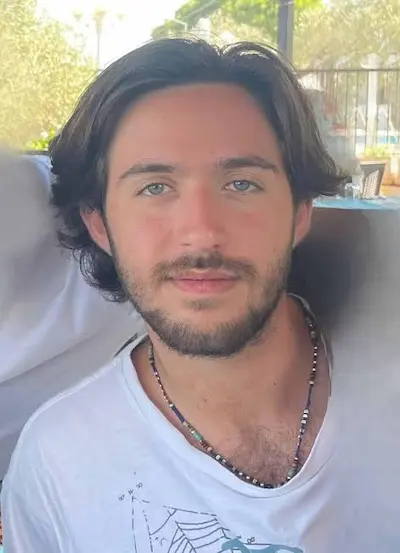
When I think about it, I realize that I should have been released later, with the last 20, but it was only because of my medical condition that I was released earlier. Today, now that all the hostages and missing persons have been released, and the deceased have also been brought home, Sukkot was truly a holiday of gratitude for the past and prayer for the future.
Life is uncontrollable. It can turn upside down in an instant. And just as it turns upside down, afterward, life happens and continues. Even if you have PTSD, even if you have been wounded or hurt — it doesn’t define who you are. It’s difficult, it stays with you, but you don’t always have to get stuck on things. You don’t have to remain angry or sad.
Since I came home, every morning when I open my eyes, get up on my feet, look out the window and see the sun, green trees and grass, the sky, I say Modeh Ani. I leave my room and I’m happy to see my parents. I look at all of Creation very differently from the way I looked at it before.
In the tunnels, I came to the clear realization that I decide nothing. My fate is not in my hands; it is entrusted to theirs. And they? They are in God’s hands. I know. I felt Him holding me up. He decides. He loves me. He knows.
And I know too.
Reprinted with permission from Mishpacha Magazine
Featured Image by Ariel Saar








Yasher koach: to the author for writing this piece so inspiringly, and to its subject, Omer Shem Tov, who experienced a living hell yet emerged unresentful, cognizant of Who is really in control, and growing ever closer to Him and to a meaningful life.
May the lessons he learned in pain be accepted by disconnected Jews in grateful comfort.
There is a new Jewish Group Ha Nigun - with excellent songs - on You-Tube. Many of them - are spiritually uplifting. One of them is - Still You Listen - & Bring Me Home. And - YES - G-D does listen - even to just your thoughts. HE knows your strength(s) - & can provide you - with what you need to go through - life's difficulties - that He allows you to experience, And He knows that you'll share the story - & be an inspiration for others - & a 1st hand witness - to the truth of what actually happened,