







 The Shofar Is Silent, Remember to Breathe

13 min read
12 min read
13 min view




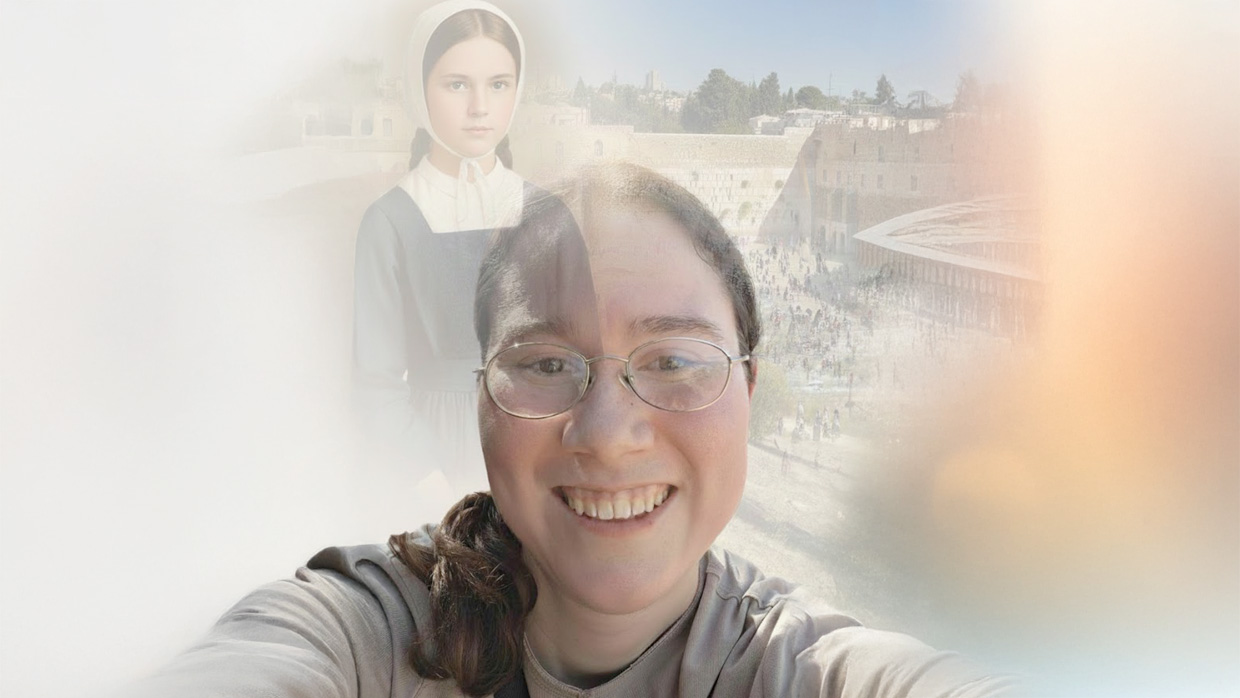
Raised in a devout Christian family that later became Amish, Nechama Leapley felt an unexplained pull to Judaism all her life—until she finally chased it home.
Born into a Christian household that prized simplicity, Nechama (Brianna) Leapley grew up feeling a strange, stubborn pull toward Judaism she couldn’t explain. That pull only intensified after her family spent years living alongside the Amish, embracing a life even further from the modern world. What happened next would take her across communities, identities, and finally toward the home her soul kept pointing to.
Nechama grew up in a family that stood out wherever they lived. Her father’s naval career meant being constantly on the move and, as the oldest of seven, Nechama was used to people staring. “Three kids is considered a large family in America,” she says. “Once we had five, people would look at us like, ‘What’s going on here?’”
Her parents were devout Christians, strictly vegan, and wary of technology. Nechama was an outdoor girl, happier in the forest watching birds than anywhere else. “Even as a kid, if I had a choice between being on a computer or being outside with a book, I’d never choose the computer.”
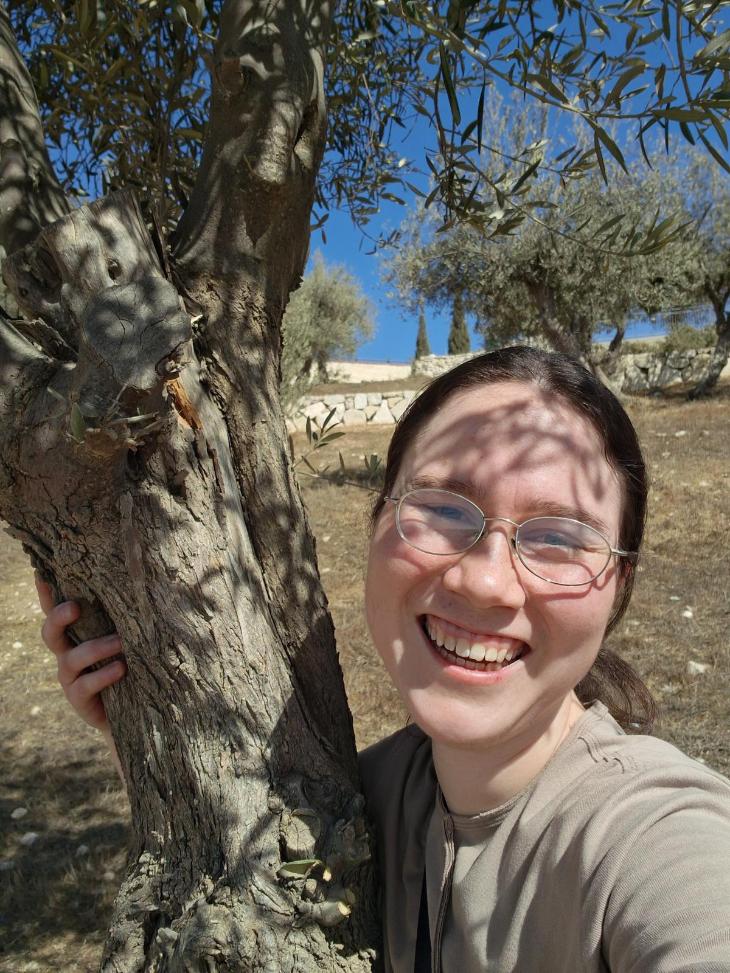
Despite having no connection to Judaism, her parents were drawn to Jewish holidays. “When I was seven, my parents started lighting Shabbat candles, having a Passover Seder, lighting Hanukkah candles, building a sukkah, and dressing up on Purim. Of course, they didn't have the same kind of Passover Seder that an observant Jew does…but something about Jewish holidays spoke to them.”
Those early forays into Jewish observance sparked something deep inside her. “It was like they threw a match on a bonfire inside me. I became obsessed with Judaism, with Israel—anything Jewish.” Her mother crafted her an “Israeli passport” out of construction paper, which she treasured. Her father taught her to read Hebrew from the Bible.
Convinced she must be Jewish, she once begged her mother, “Mom, I have to be Jewish. Don’t we have any Jewish blood anywhere?” They checked. They didn’t.
Still, she couldn’t let go. “I just knew my soul was Jewish. It wasn’t a want. It was a need.”
The Leapley children were homeschooled and mostly isolated. “We didn’t really have friends or a community. We had each other, and honestly, we had a happy childhood.”
When Nechama was 14, her family began spending time with a nearby Amish community. Drawn to its conservative values, simplicity, and family-friendly environment, her parents hoped it would provide a stable community. They were well aware, however, that they could not keep Jewish customs if they wished to join fully. Wanting stability, the family decided to let go of their Jewish observances, and became Amish when Nechama was 16.
Nechama convinced herself she didn’t care. She wanted friends, a community, and she already disliked technology. Still, suppressing her attraction to Judaism was painful.
“My siblings and I went from having no friends to being in a farm community with tons of children our age.” But despite how easily she made friends and adapted to the new environment, Nechama felt a constant, inexplicable loneliness. “I had fun but I was looking for something I didn’t know how to find.”
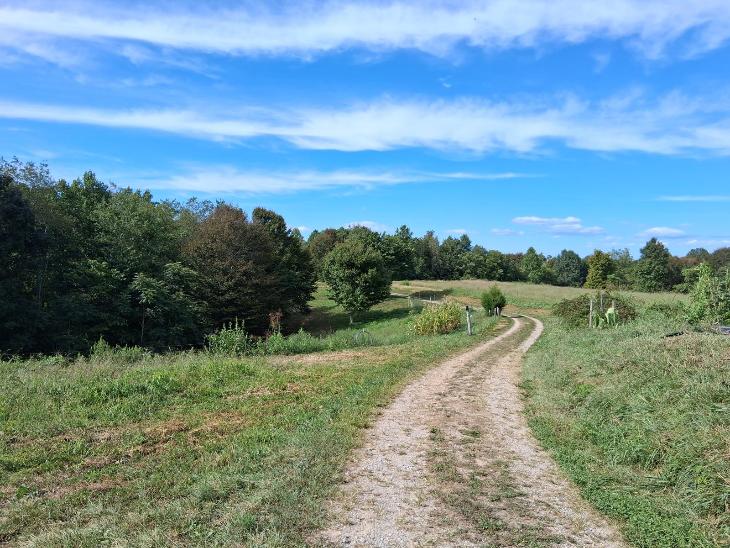 In her Amish community
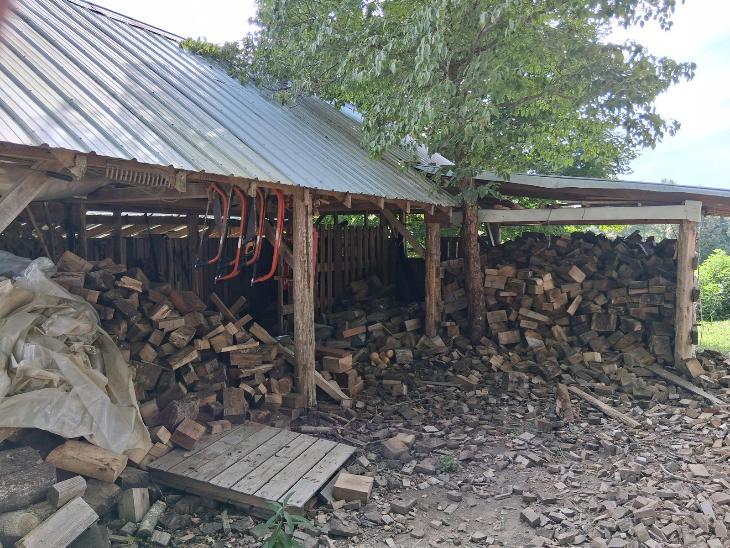
Her parents struggled more. Her father, who had worked in a nuclear power plant, suddenly found himself in a world without electricity. Clothing was plain and handmade, and life was labor-intensive. Their community had no running water or plumbing. Laundry was washed by hand in basins and hung to dry. Water—whether for cooking, cleaning, or irrigating potato fields—had to be hauled manually.
They grew produce to sell, especially sweet potatoes. The entire family worked: planting, watering, harvesting. Inside the home, they preserved food for winter—drying fruit, canning vegetables, and preparing beans. “If you wanted hot water, you heated it on the stove.”
For five years, this was her life.
By age 20, Nechama felt a growing pull to leave.
“I felt like there was more to my life. I knew I couldn’t stay. I never wanted to leave my family, but I had to. It was the hardest decision I’ve ever made.”
She later realized it was the first step toward becoming Jewish.
“I know this sounds crazy, and I’ve never told anyone this publicly, but I knew God wanted me to leave. I don’t know how. I just knew.”
Shortly after turning 21, she said goodbye.
In November 2022, Nechama called her aunt and uncle in Raleigh, North Carolina, with assistance using a phone from a non-Amish neighbor. They welcomed her immediately.
The culture shock was overwhelming. “It felt like moving from Earth to Mars. I didn’t know how to make a phone call or how to go into a store and pay for things.” Everyday conveniences were astonishing. “Seeing a faucet turn on—wow. Getting into a car. Toilet flushing. Light switches. A washing machine—you just push a button!”
Her first visit to a large church left her in tears from the overstimulation. It took months for her nervous system to adjust.
During orientation for her first job, she needed to take the elevator to the second floor, but she had never seen one used. Determined not to embarrass herself, she approached it cautiously.
“First I touched the doors, thinking they might open automatically. Nothing. Then I knocked—instinct, I wasn’t thinking! Finally, I noticed the button.”
She pressed it, panicked she might have set off an alarm somewhere, but the doors opened.
Inside, she pressed “2,” and when the doors opened, she leapt out. “I survived the elevator!” she thought triumphantly.
As she began adjusting to modern life, she still felt directionless—until October 7. After hearing about the war, she began to pray for Israel.
“Suddenly everything came rushing back—how much I love Israel, how much I want to be Jewish. I fell to the ground sobbing. I told myself: Never again. I’m not forgetting this. I’m going to find Jews. I’m going to go to Israel. I’m going to become Jewish.”
The question was: How?
She returned to visit her parents and told them she wanted to convert. They didn’t agree but they didn’t react with anger either.
With a phone charged by a non-Amish neighbor, she googled: “Where can I find the most Jews?”
The answer: Brooklyn or Jerusalem.
Brooklyn was more realistic, just barely. She had little money, no plan, and almost no ability to navigate the Internet.
She searched “Jewish classifieds.” Luach.com appeared but it seemed to be mostly furniture. Frustrated, she said, aloud, “God, I give up. If You want me to find Jews, You have to make it happen. I can’t do this.”
She decided to scroll one more page—and there it was:
“Companion wanted for elderly Orthodox Jewish woman in Flatbush. Free room and board, with time for a day job.”
It felt miraculous. She called immediately.
The man who answered asked, “Where are you calling from?”
“North Carolina,” she said, then clarified she was actually in Kentucky visiting family, hoping to move to New York. She had no license, no connections, no experience. Still, he agreed to a video call.
She dreaded telling him she wasn’t Jewish. But he was kind and open, even advising her not to convert because of the difficulties involved.
“I hear you,” she replied, “but I want to be Jewish for myself.”
Days later, he called back. The job was hers.
She hired a driver from Kentucky to Flatbush. A couple hours in, the car broke down. Determined, she waited for a Greyhound bus. It arrived an hour late, and once aboard, she realized the jar of homemade shampoo her mom sent with her had shattered, soaking her bag and clothing.
After a grueling 24-hour journey, she finally arrived in Manhattan. The intensity of the city hit her immediately. She adopted a confident air so she wouldn’t look vulnerable, eventually catching her first taxi to Flatbush.
When the cab pulled away, reality hit: She was alone in New York City with a suitcase and backpack, a shampoo-soaked handbag, no plan, and no guarantee she’d be welcomed.
She knocked.
The brother of the lady she'd be living with opened the door, welcoming her warmly. “You must be exhausted.” She was fed, then brought to the house where she would stay. She collapsed into bed.
The next morning she was awakened by honking horns. Welcome to Brooklyn.
Nechama walked to a synagogue on Shabbat, picked up a prayer book, and tried following along, but everyone was on different pages. She felt lost and embarrassed and didn’t speak to anyone.
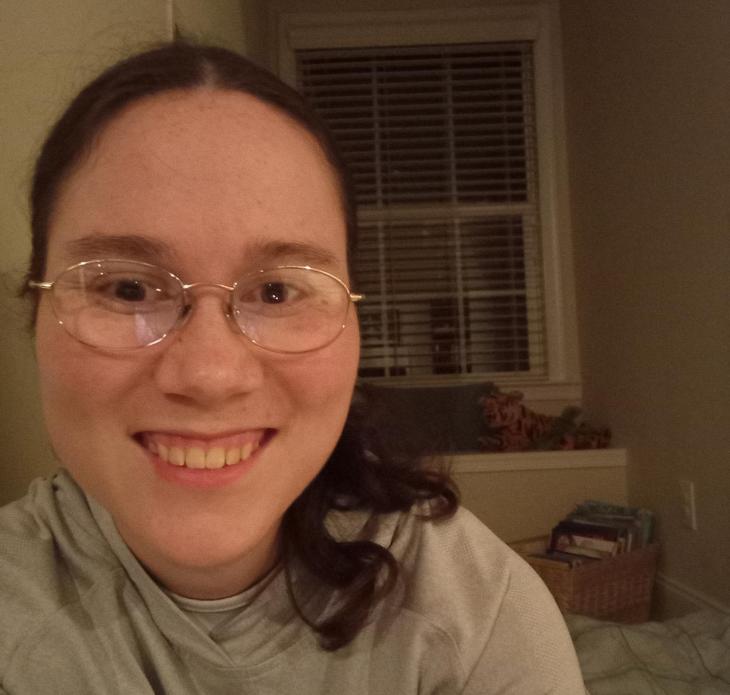
The next week, she opened up to people. The community was warm and connected her to someone from the Rabbinical Council of America.
She devoured Jewish books and was moved by the enormous responsibility and privilege to keep the Torah’s commandments. By her third Shabbat, she was observing Shabbat.
When Nechama was finally accepted by the Beit Din for conversion she was overwhelmed with joy.
“The day I went to the mikvah and became a Jew — I was screaming, crying, laughing. It was the best thing that ever happened to me. I was finally a Jew. I knew God had let me come home.”
She thought back to her lonely night at the Greyhound station. “Even when I felt completely alone, He hadn’t left me. If He put me in the world for a reason, He wouldn’t abandon me.” She believes if God puts you in a difficult situation, He also gives you the tools to overcome it.
Nechama recently returned from her first trip to Israel.
“I'll never forget that landing. On the plane, I kept watching the map. When we got close, I cried. When the shoreline appeared, I couldn’t contain myself. When we landed, I jumped out of my seat, cheering, clapping, sobbing — I had finally come home.”
“If you become Jewish, it’s because your soul was at Mount Sinai—it’s where you belong. That’s why I chose the name Nechama (comfort). My soul had come home, and I’m more deeply comforted than I’ve ever been in my life.”
Click here to watch an interview with Nechama.








Mazal Tov! I heard that Nechama is now a kallah! What an inspiring story.
Nechama I have no words!! You made me cry and happy at the same time! Wow what a beautiful and holy neshama you have and what a beautiful nation we are! Kol hakavod to nechama with the neshama!!!
Nechama, you are so beloved! After your interview and the article, you are becoming known. I believe what strikes everyone is your complete purity of heart. It captivates us and we welcome you as our Jewish sister with open arms
Nechama's and my circumstances may have been different, but when I went to the mikveh and became the Jew I always have been, and then the synagogue service to complete it, taking Batshevah as my Hebrew name, it's one of two days that have been the happiest and joyous of my life. The other was the birth of my son. My son will be 56 on December 15th, and my conversion to Judaism was 36 years ago 17 Elul.
so cool!
What a beautiful story of awakening and the return of her soul to Judaism.
What an absolutely beautiful story. It brought me to tears. May Hashem continue to bless Nechama with simcha and nachas. Welcome to Knesset Yisrael. May you go from strength to strength.
Thank you for this wonderful conversion story. May you all be Blessed .
What a lovely read that has been, ta
Nechama Brucha Haba'a to you, welcome into our wonderful and loving family, we know it is a hard and possible long way to get there but when it is finalized, there it is, you are jewish. How do I know it is a hard and long way?My wife and me followed the same route into Truth and into the Light, you did it in America we did it in The Netherlands, B-H in 2004 we had out Beis Din and are living in a small but orthodox community. Sincere greetings Avrohom Yitzchok
Nechama - Once you realized that G-D - has planted in your heart & soul - that HE - has called you to become Jewish - & you respond to HIS CALL. There is an OVERWHELMING SENSE OF JOY! Especially when you see that - G-D - removes all the barriers - & enabling your path to Judaism. Then - as you proceed on your path that G-D has set for you - especially - in times of trouble - to see the responses G-D makes to your prayers. As you proceed - may G-D BLESS YOU - SUCCESSFULLY - SPIRITUALLY - MENTALLY - EMOTIONALLY - PHYSICALLY & FINANCIALLY.
My book on reincarnated souls from the Holocaust, I've Been Here Before, has a whole chapter on "Emergency Landings: Jewish Souls in Christian Bodies." The chapter contains many stories like Nechama's. The Klausenberger Rebbe (who lost his 11 children in the Holocaust) said in 1970 that there were so many Jewish souls from the Holocaust needing to come back to this world, and there were not enough Jewish mothers to receive them, so they were going to non-Jewish mothers.
Every Jewish soul was at Sinai. Most of us are lucky to be born to it. Others yearn and find their way. Kol Hakavod to Nechama for her strength and resilience.
I loved this story. I can identify with it, in that I feel the same way about my conversion. It was meant to be. HaShem gives us opportunities, and we can choose them, or not. I chose to be a Jew, and I’ve never regretted it.
i cried when i read this article. god holds the hands of each one of us in this exact and calculated way. we just need to open our eyes and see it!
I cried too!
Brought me to tears. What a lovely, heartfelt story. My husband and I have been very interested in the concept of the soul and reincarnation according to Judaism lately. These stories only reaffirm these beliefs. What a beautiful soul, so happy she has found comfort and meaning in her life.
I saw the video interview.. and now this article. Nechama is such a wonderful person.. What she says and how she says it, is so much of an inspiration for us regular Jews.. She conveys the great joy and excitement of the zechus to have our spiritual heritage from Sinai. Clearly she had this Jewish soul from ancient times. I wish, though, that she would say clearly, from her background and culture in which she grew up in, as to how she views Christianity. Is it wrong to ask? I don't want to encourage any criticism of others, chas vehalila, but doesn't such a person as Nechama have a meaningful understanding from her background of this faith? For such a person, to be Jewish surely means a rejection of Christian faith. Surely this needs to be spoken of.
To become Jewish one does have to renounce Christianity, or any other former religion. People’s reasons to convert and how they view their former religion differs from person to person.
In my experience Christians who convert have a problem with God having a son. I believe she still carries her belief in non violence a mark of the Amish faith which many of my Jewish friends also have.
Perhaps she is trying to honor her father and mother by not publicly denouncing their faith.
This is exactly it. My wife also converted. Of course, with the Beit Din she answered the questions and renounced her past beliefs. Of course, she had done that long before they asked. But she has a devout Christian mother whom she loves and would never want to hurt. So, in any setting as public as an article or interview, she would never talk of such things because they would be hurtful to her mother. All we need as the family to any convert is to know that they converted before a proper Beit Din, trust the Rabbis, and embrace them into our arms. We don't need all the particulars, frankly, it's none of our business.
Wonderful story. So glad you were called home.
Profoundly moving! It brought tears to my elderly eyes. Keep up the good Nechama! You're a miracle!