








 The Red Cross’s Jewish Problem

17 min read
4 min read





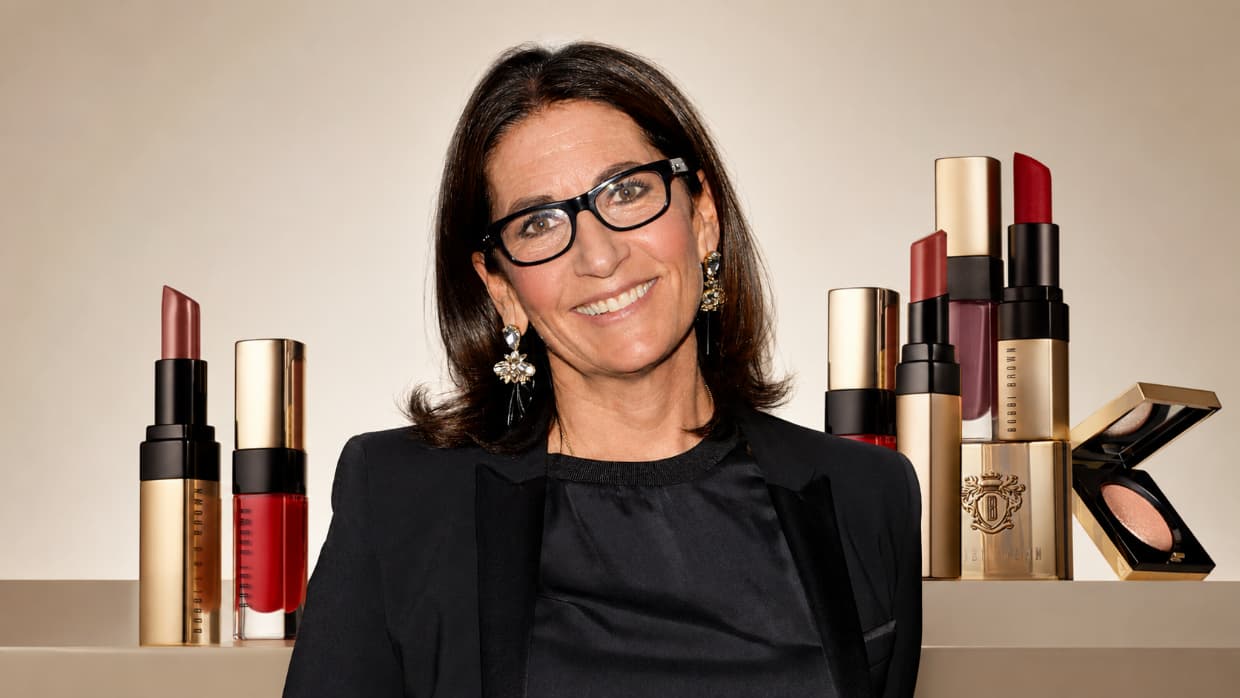
What makes someone truly beautiful? Bobbi Brown says it's not the makeup. It's the alignment between who you are and how you look.
Beauty mogul Bobbi Brown, the first to build a makeup company around skincare, is a visionary. In the ‘80s, when everyone was caking on makeup to hide imperfections, she took a different approach—enhancing your natural beauty by using less product. Her definition of beauty is more than skin deep.
At a time when the industry piled on heavy coverage to hide a person's features, her philosophy was the opposite: minimal coverage that reveals the skin's natural beauty. Now she's focused on something deeper: how inner wellness shows up on the outside, which she sees as the truest mark of beauty.
In 1991, soon after launching her line, she landed in Bergdorf Goodman. Leonard Lauder, then-CEO of Estée Lauder, wanted the brand and acquired it for a substantial, undisclosed sum. Bobbi was young and later admitted, “I didn’t know what I was doing.” Being bought out sounds like a dream but she lost her autonomy, was suddenly expected to show up to work in stilettos, and had products released without her approval. Worst of all, a 20-year non-compete clause meant she’d have to wait to start a competing company.
Twenty years later, to the day, she launched Jones Road Beauty, a holistic makeup company. And Bobbi, now 68, has taken a radical approach to publicity. Rather than following a scripted social media rollout, she simply filmed herself saying, “Hi, I’m Bobbi. Do you have any questions?” She was flooded with replies: “I’m 60 and I look tired. What can I do?” “How can I enhance this part of my face?” The video went viral, and she was back; this time, with a philosophy centered on beauty from the inside out.
Jones Road Beauty focuses on the balance between the inside and outside: Working out because it’s good for you, hydrating and focusing on mental wellness. She claims that all these actions affect how we look externally more than people realize.
Bobbi believes beauty isn’t about looking perfect—it’s about celebrating your individuality. To that end, the beauty industry has recently shifted from flawless faces toward authenticity and confidence. Judaism mirrors this approach, and goes one step further: true beauty is the symmetry between our outer appearance and our inner character.
Bobbi believes beauty isn’t about looking perfect—it’s about celebrating your individuality
Science has shown that people are drawn to symmetrical faces. Judaism speaks of a deeper symmetry: the harmony between who we appear to be and who we truly are.
The Talmud (Megillah 15a) names the four most beautiful women who ever lived: Sarah, Esther, Abigail, and Rahab. Sarah tops the list. When she dies, the Torah describes her age unusually: “Sarah’s lifetime was one hundred years, twenty years, and seven years” (Genesis 23:1). Commentators explain she was as beautiful at one hundred as she was at twenty, and as beautiful at twenty as she was at seven—not physically, but in the constancy of her inner purity.
Together with her husband, Abraham, Sarah transformed the world by introducing people to the belief in one God. By mentioning her beauty, the Torah isn’t reducing her legacy to mere physicality. It’s teaching that her greatness lay in the total harmony between her character and her appearance.
The Torah’s first mention of beauty appears in the Garden of Eden: “God caused every tree to grow that was pleasing to the eye and good for food” (Genesis 2:9). The fruit wasn’t merely beautiful—it was beautiful and nourishing. Before the sin, appearance and reality matched perfectly. Good looked good; evil looked evil. Sin introduced the gap: something could now look beautiful while being destructive, or look plain while holding real goodness.
Dina Coopersmith calls this the Beauty Deception and once you see it, you notice it everywhere.
A woman poses gracefully on a horse for Instagram, hair blowing, radiating an effortless life. In reality, she’s held that pose for three hours and it hurts. Or picture a perfectly organized junk drawer—the one corner of a room the camera shows, while the rest sits in chaos. One curated frame creates the illusion of a curated life.
True beauty is the alignment between body and soul, between appearance and essence.
The starkest example: visitors to Yad Vashem would once see, from a distance, what looked like a beautiful sunset painting. Up close, it wasn’t a sunset—it was ash from the crematorium. What looked beautiful was not beautiful. The Nazis, outwardly cultured, were not. The Beauty Deception is a call to look past the frame—the pose, the filter, the single clean corner—and ask what’s actually there.
True symmetry is the alignment between body and soul, between appearance and essence. That’s why Sarah’s age is written the way it is: at seven, twenty, and one hundred, her inner purity never changed. Her outside always matched her inside. That’s what made her beautiful.
We spend enormous amounts of time, money, and energy making the outside beautiful. Judaism asks a different question: does your outside honestly reflect your inside? The most beautiful people are those whose kindness matches their smile, whose integrity matches their image, and whose inner light shines through.
Bobbi Brown is urging people to look inward so that what shows on the outside is an honest reflection of what’s already there.












i loved and LOVE bobbi brown cosmetics and was so sad to see see Bobbi leaving that wonderful world.
I am so sad to have to say that the new cosmetic company bobbi created is simply not as good and simply not the same. As my dear Bubby use to say (ZL"): "if its not broke, why fix it?" and i am afraid that is how i feel . sorry Bobbi that is how i feel. I. tried your new line and i just don't like it.
I was always so curious to understand how her company had been—and so pleased to see she’s back! She is amazing and I admire her!
I agree with Bobbi Brown concept of beauty, your outer beauty should match your inner beauty, and the Jewish concept of beauty believes the same
Bobbi is such a wonderful role model for women of all ages. I own several of her books as well as her products. No, this is not any type of paid endorsement at all! I just admire her on many levels.
I love the idea that “True beauty is the alignment between body & soul, between appearance & essence!” Aish always teaches the beauty and relevance of Judaism in our everyday lives! With Hashem’s help our beloved R’ Noach Weinberg Ztl was the genius who taught those concepts and ideas in such a relatable way!
He didn’t just want his bochers to graduate to the next yeshiva, he wanted them to go out and Change. The. World!.
❤️
Thank you for this article. My daughter updated me on Jones Road by Bobbi Brown and bought me the Miracle Balm. This comment is not meant to be an endorsement, but using this product everyday does exactly what your article describes which is helping me feel beautiful inside and out. That, and - of course - a daily prayer routine, connecting to the true Source of beauty!
Wonderful!