








 The Red Cross’s Jewish Problem

6 min read




A childhood copy of Winnie-the-Pooh unlocks a hidden history: forged papers, buried names, and the Jews who survived the war in Poland by disappearing.
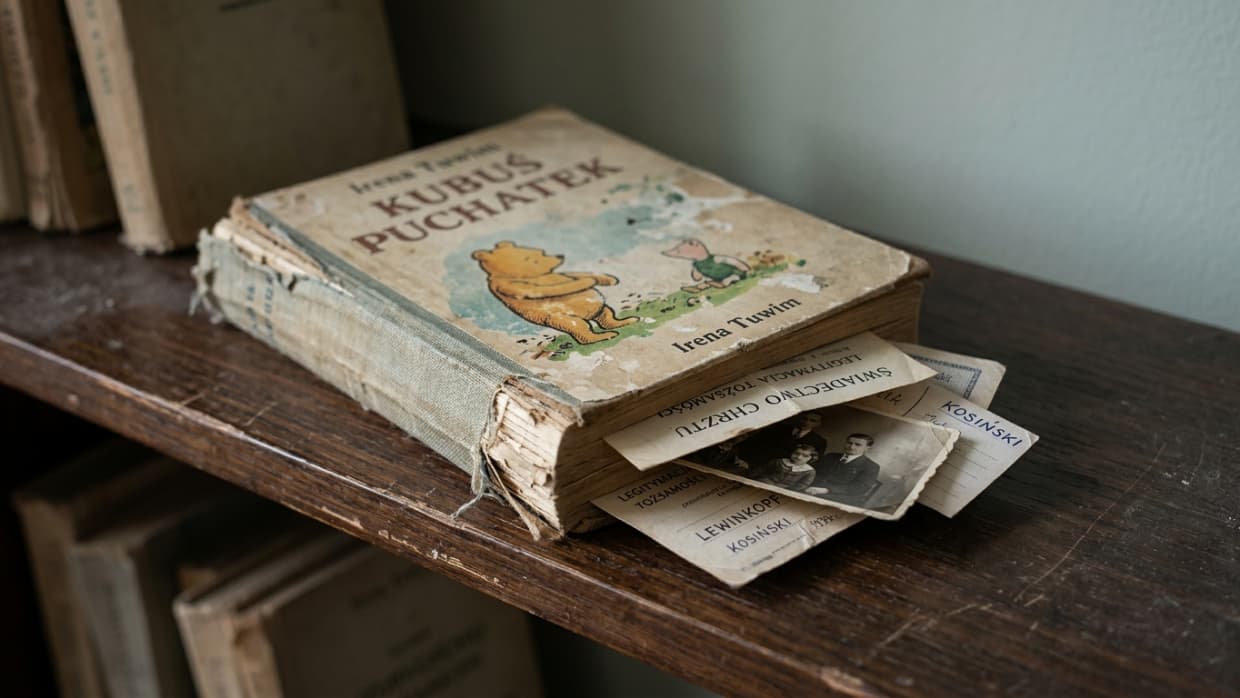
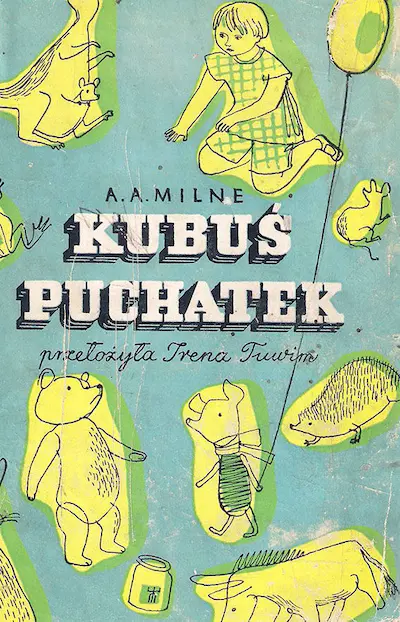
The book is thin, the spine coming apart. On the cover is a bear every child in the world knows. Under the title is a name almost nobody knows: Irena Tuwim.
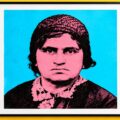
She gave Polish children their Winnie-the-Pooh. Her brother Julian gave us "The Locomotive," the poem I learned to read on. Their mother, Adela, was shot by the Germans during the liquidation of the ghetto in Otwock, outside Warsaw.
I put the book back on the shelf.
This is a story about the Polish Jews who did not die and did not leave. A minority survived the war here, on baptismal certificates forged by Catholic priests, hiding in other people's apartments under other people's names. Many of them kept those names afterward. They did not tell their children, and in 1968, when the government turned on its Jews again, that silence proved to be the right call.
 Three generations later, their grandchildren are finding out the truth, in a culture their own families helped build, where almost no one can see a Jew standing in front of them.
"Polish Jewry was destroyed." That sentence is true, but it’s not the whole truth.
Before the war about 3.3 million Jews lived here — one in ten citizens of the country. Warsaw alone held close to 370,000, making it the second largest Jewish city in the world after New York.
Around 350,000 survived, most of them waiting out the war deep inside the Soviet Union. Many survivors kept their Jewishness a secret for the rest of their lives.
Catholic priests issued baptismal certificates to people who were never actually baptized. There was no ceremony and no profession of faith; just a slip of paper and an entry in a parish register.
Sacramentally, nothing happened. On paper, everything did.
Thirty priests were murdered for hiding Jews.
About a thousand priests took part in helping Jews. The parish office of All Saints Church on Grzybowski Square, a church that stood inside the Warsaw ghetto, issued hundreds of forged certificates, and its parish priest, Marceli Godlewski, has been recognized as Righteous Among the Nations since 2009. Any Pole who helped a Jew faced the death penalty. Thirty priests were murdered for hiding Jews.
The certificate worked on a German checking papers in the street. It did not work on a neighbor who remembered living with them in the building before the war. It did not work on a blackmailer.
Krzysztof Kamil Baczyński, a poet Poles memorize in school, survived the occupation with his mother on Aryan papers. Stefania came from an assimilated family named Zieleńczyk. Baczyński himself was killed as a soldier of the Warsaw Uprising on August 4, 1944.
In 1942, in Lwów, today Lviv, in Ukraine, Zuzanna Ginczanka ran into a neighbor. He was the caretaker of her building and denounced her to the Germans, but she got away. She hid for two more years, and in the spring of 1944 the Germans shot her at the Płaszów camp outside Kraków; she was 27. After the war a Polish court sentenced the caretaker to four years for collaborating with the Germans; the evidence was a poem in which Ginczanka had named him.
Many survivors never went back to their own names. Author Jerzy Kosiński was born Józef Lewinkopf and survived the war on a certificate issued to him by a priest named Eugeniusz Okoń. The name from the forged papers stayed with him for good; he published "The Painted Bird" and "Being There" under it.
The ones who had not hidden their origins after the war learned, 23 years later, that they had made a mistake.
On March 19, 1968, Poland's communist leader, Władysław Gomułka, spoke at the Palace of Culture in Warsaw and announced he would hand out exit passports to anyone who "considers Israel their homeland." He had already called the Jews who celebrated Israel's victory in the Six-Day War a "fifth column." That was the end of organized Jewish life in Poland.
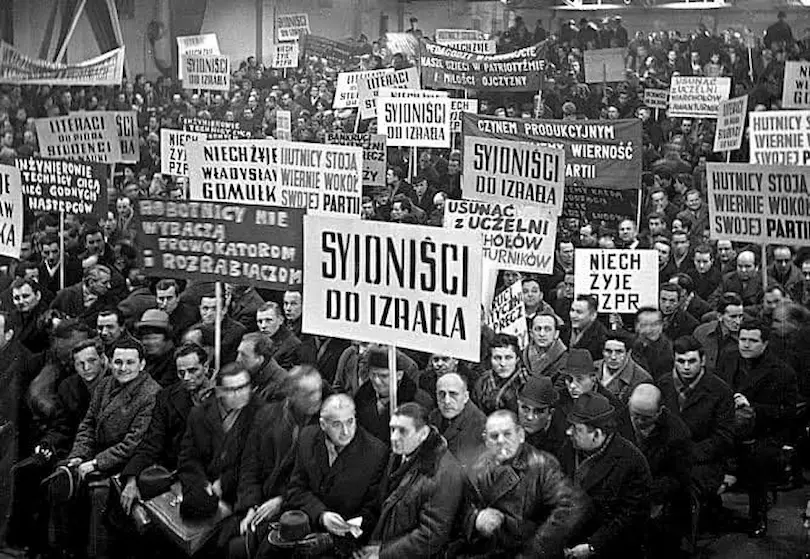 “Zionists to Israel” placards at a rally in Poland in 1968
Between 1968 and 1971 about 13,000 Jews left the country. They did not get passports. They got a "travel document" stating that the holder was not a citizen of the Polish People's Republic. It was a one-way ticket.
About 500 scholars left — the sociologist Zygmunt Bauman and the philosopher Leszek Kołakowski among them — along with some 200 journalists and nearly a hundred artists.
One of them was Aleksander Ford, born Mosze Lifszyc. Eight years earlier he had directed "Knights of the Teutonic Order," still the best-attended Polish film ever made, with more than 32 million tickets sold. There is no more patriotic picture in the history of Polish cinema. In 1968 the man who made it was thrown out of the country.
Jews made a sizeable impact on Polish culture. The Tuwim siblings are only the start of a long list. After Pooh comes "Professor Inkblot's Academy" — a fairy-tale yeshiva run by a tzaddik (righteous sage) named Inkblot, written in 1946 by Jan Brzechwa, born Jan Wiktor Lesman, a cousin of the poet Bolesław Leśmian. Then "King Matt the First," which is to Polish children roughly what Peter Pan is to American ones, written by Janusz Korczak, born Henryk Goldszmit. Then, in high school, the stories of Bruno Schulz and the science fiction of Stanisław Lem.
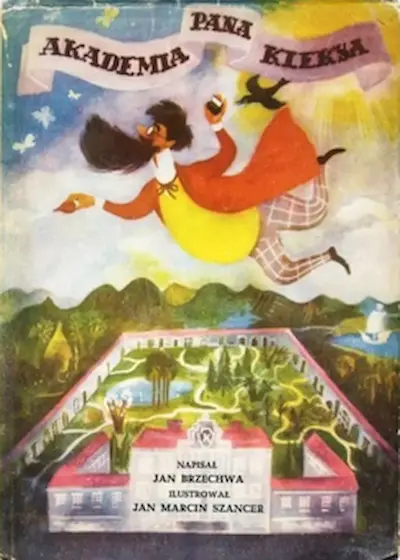 Professor Inkblot's Academy
Warsaw's main artery is called Aleje Jerozolimskie, Jerusalem Avenue — after New Jerusalem, a Jewish settlement founded in 1775 and wiped out by court order six months later. The settlement lasted a few months. The name has lasted two and a half centuries.
Almost every Polish town has a Tuwim Street or a Zamenhof Street, named for the man from Białystok who invented Esperanto. Many have a street named for the poet Antoni Słonimski. His grandfather Chaim Zelig founded "Ha-Tsefira" in 1862, the first Hebrew weekly of popular science. Łódź has a monument to Artur Rubinstein and a room devoted to him in the museum that occupies the palace of the Poznańskis, a family of Jewish industrialists.
In Poland we have a deeply Jewish culture in which Jews are almost invisible.
I know people who, in the third generation, are starting to notice that something in the family story doesn't add up. A photograph in which no one can be named. A grandmother who would not say where she came from. A surname that stops somewhere.
Some run toward Polishness to be left in peace. Others go looking for ancestors so they can stop being strangers in their own lives. Sometimes they live on the same floor.
For the ones who go looking, a particular cruelty is waiting.
In Judaism, Jewish status passes through the mother. Either you know the answer or you don’t. But for many Jewish Poles the papers were destroyed and the traces covered so well that 20 years in the archives brings no clarity. Their grandparents hid it well, in order to survive.
The Warsaw Jewish community, however, accepts anyone with a single Jewish grandparent — the standard of Israel's Law of Return. And anyone without papers is invited to sit down with a rabbi.
It is not easy to be a Jew in Poland today.
There is not a single Jewish town left here, and barely a handful of working synagogues. The Jewish communities counted 1,704 members in 2021, and estimates of all the Jews in the country run from 8,000 to 40,000 — which means nobody knows. The Jewish Theater in Warsaw has had no building of its own since 2016.
In Warsaw, a city of two million, there is one kosher store, with prices that belong to a richer country. And Poland's chief rabbi does not eat meat.
Meanwhile about 30 percent of Polish meat exports come from ritual slaughter, halal and kosher — a segment valued at close to $1.8 billion a year.
Poland exports kosher and has almost none of it at home.
At my first Hebrew class, at the Moses Schorr Foundation, I sat wondering who the other students were and why they had come. Nobody volunteered it, and nobody asked. But when the teacher read the first words out loud, half the room had wet eyes.
My Hebrew class meets in the building beside the Nożyk Synagogue, and there is a guard at the door and a police patrol outside it.
It is 2026. A party whose leader emptied a fire extinguisher into a Hanukkah menorah in the Polish parliament, and who is now on trial for inciting hatred against Jews, has been polling around ten percent. My Hebrew class meets in the building beside the Nożyk Synagogue, and there is a guard at the door and a police patrol outside it. I understand generations of silence better than I did a year ago. And it frightens me.
They were not traitors. They chose life, which is exactly what the Torah requires.
I take the Winnie-the-Pooh book down off the shelf and read it to my little cousin. I don't explain yet who Irena Tuwim was, or what happened to her mother in Otwock — she is too small for that.
But one day I will tell her everything.








Thank you so much for this informative article. I’m so grateful that my greatful that my great grandmother came from Poland and has an older sister who came before her to stay with. I had her in my life until I was 24 years old. Baruch Hashem. May her memory continue to be a blessing.
Amazing article! Very informative. I have daughter in law who was born in Poland, whose grandmother still lives. Amazing how a country of over 3 million Jews can become so desolate. We live on. Am Yisroel chai
Thank-you so much for this article. It is interesting to read about Jewish children's literature written in other languages. My library has a copy of "Kaytek the Wizard," by Korczak in English translation put out by Penlight Publications. Kaytek must be "Matt" in Polish. I think there is also an English translation of Professor Inkblot's Academy which came out around 2020 and is available online. I read that Jan Brzechwa wrote the Professor Inkblot books when he was trying to evade capture by the Germans during World War II, which is truly amazing!
Do not submit to pessimism.
The greatest battles are won, and lost, first, in the human mind.
Creator and Instructions are truth. This all you really need to know. Exist in the light.
The body is a fleeting vehicle for your soul.
The rest of the world is behind schedule.
Thank you!
Thank you for reading the article!
I would like to know a great deal more about the Polish Winnie the Pooh. I am Canadian, and you may know that the real Winnie the Pooh was a Canadian bear. I possess the first edition of this book.
Thank you for reading the article. Fun fact: Polish Winnie the Pooh is actually a boy. Since the Polish word for bear(miś) is masculine, Irena Tuwim, decided it would be simpler that way and named him Jacob the Bear.
With Israel available, I do not understand Jews who remain in places where they are dangerously not wanted - Poland being chief among them. It's like an abusive wife staying with her husband because he might get better. They won't. I am here in the United States and I see the signs coming here as well, but when they come, it will not be a thought in my head to stay and hope for the best. There should be no Jews in countries outside of Israel and the United States (and I don't know how long the latter will last to tell you the truth). It's time for everyone else to come home.
Or maybe someone in Poland needs to take care of the last synagogues, cemeteries and historical sites?
Amen!
I understand what you mean, but things can change very quickly under the pressure of antisemetic governments. In Poland after the war, things went quite wll for Jews, but in 1968 it changed fast, and many Jews were mistreated badly...which it carried on to this day. In countries were the Jews were allways safe, such as the U.K., Canada, the U.S.A. and others the situation is slowly changing.....especially in the U.K. were many muslims have moved.
Israel is probably not so safe anylonger if the arabs, especially the muslims have their way. As in all cultures there ARE good and understanding people. Let us all hope that we can live in peace for the future.
amen
What a fascinating story. BTW, one of the signs held up in the photo reads "Literature from the pen of Zionists."
Wonderfully chosen illustrations for the article!
Thank you for reading the article. I'm glad you liked it.
Wow! Thank you for that translation.
What an insightful and moving essay - thank you
Thank you very much
When the world is out of balance, hate becomes the irrational answer; all forms of hate.
This is why it becomes very important to guard your own emotions.
I never heard the Jewish connection to Winnie the pooh, I heard about the Jewish Holocaust connection to Curious George and about the Paddington Bear, but I never knew this story read, it was very interesting to hear this story after so many years after the Holocaust
Thank you for reading the article.