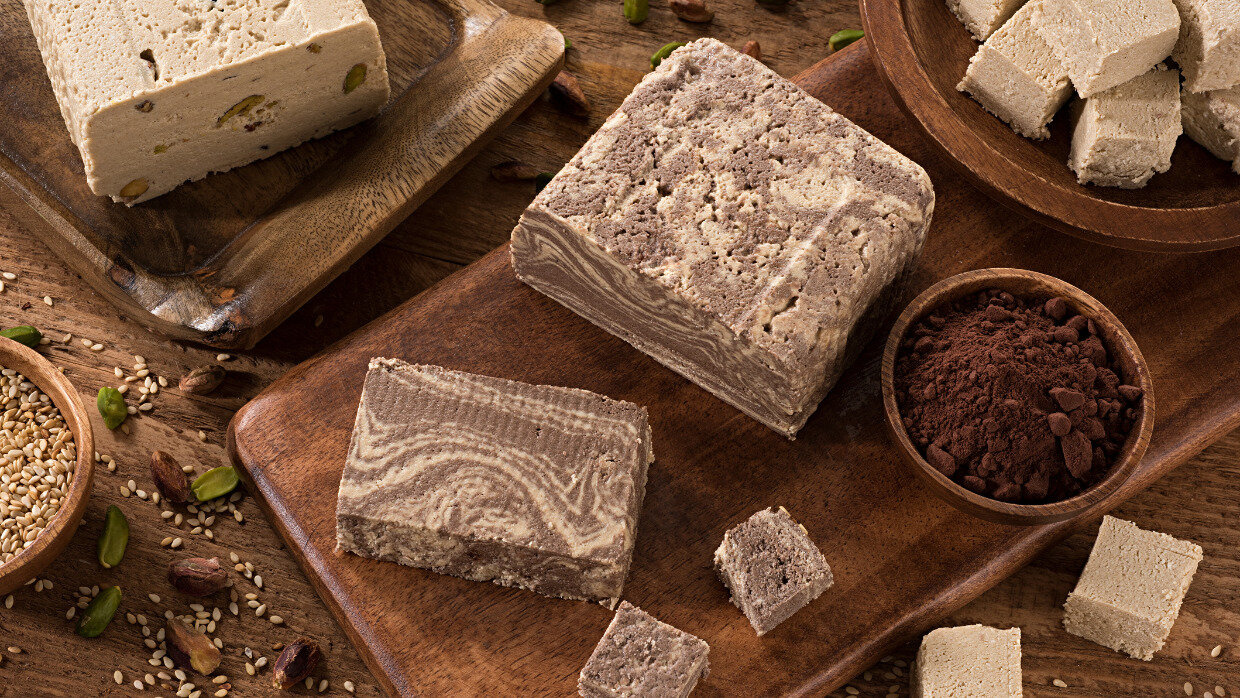
Hit any market in Israel and you'll be greeted by a sight that'll make your sweet tooth sing. Stacks of colorful halva, a dense sesame candy, line the shelves. From traditional flavors like pistachio to trendy takes like Oreo and Nutella, free samples tempt you to try them all.

But what exactly is this unique treat, and where does it come from? With a crazy long shelf life of at least 4-6 months at room temperature, it's no wonder halva has become a Middle Eastern favorite.
What is halva made of?
Halva's main ingredient is sesame seeds, ground into a paste known as tahini. But the taste and texture are hard to describe. Forget scarfing it down like a Snickers bar – halva's dense sweetness is meant for savoring.
It has strong, nutty notes and a toasted sesame flavor and just a touch of sweetness. Back in the day, when food was scarce, desserts needed to pack a punch. Halva's long shelf life and filling nature made it the perfect sweet treat.
Where did halva come from?
Halva's origins are hotly debated with almost every Middle Eastern country claiming ownership of the confection. According to some scholars it may have originated near Byzantium (modern day Istanbul) around 1100 C.E. While other historians have found reason to believe the dessert goes all the way back to 3000 B.C.E.
In Indian cuisine there's a dessert called halwa, a similarly thick and slightly sweet treat made of oil, flour and sugar. A Persian recipe dating back to the 7th century, refers to a mixture of mashed dates and milk, while possibly tasty it's a far cry from the sesame-based dessert we know and love today. If you look hard enough in several of the Greek Islands you can find a special cheese based halva, that is unlike anything else in the world.
By the time the thirteenth century rolled around there were already so many variations of halva that in an ancient cookbook from Baghdad you could find over 9 different recipes under the chapter “halva and its varieties.”
Halva's Royal Treatment in the Ottoman Empire
Halva's popularity soared during the Ottoman Empire's peak in the 16th century. The demand was so high, the king even had a special kitchen dedicated solely to making halva! This royal kitchen is credited with creating new varieties like Semolina Halva and Grape Honey Halva. Back then, sesame seeds were sprinkled on these types of halva as a garnish.
As the Ottoman Empire expanded eastward, halva's journey continued. By the empire's peak, it had reached Eastern Europe, where countries like Romania and Hungary discovered this delightful treat. Jewish communities in the region, particularly fond of halva, embraced it wholeheartedly. The popularity then spread to nearby Jewish communities, further solidifying halva's place as a beloved dessert.
Is halva healthy?
Halva occupies a fascinating niche in the world of sweets. The star ingredient, sesame seeds, are a nutritional powerhouse loaded with protein, healthy fats, and essential minerals like iron and calcium. This makes halva a naturally vegan and gluten-free treat. However, the processing often involves significant amounts of sugar, which can overshadow the benefits of the sesame seeds.
Additionally, depending on the variety, halva may contain other ingredients like honey or chocolate, further impacting the sugar content. While not a health food by definition, halva can be enjoyed in moderation as part of a balanced diet. Opting for varieties made with natural sweeteners like honey and skipping those with added chocolate or excessive sugar is a healthier choice.
How do you eat halva?
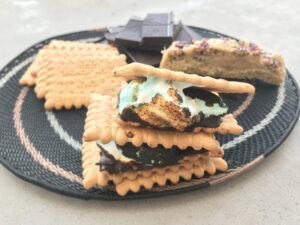
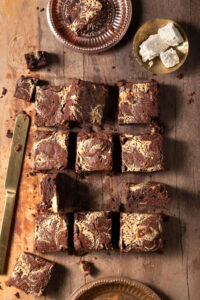
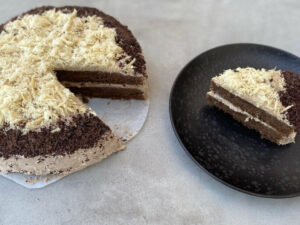
Like I said you savor it, halva's dense texture and sweetness call for a different approach than your typical candy bar, but it also makes a delicious addition to other desserts. Check out our Tahini Halva Brownies, Halva Cheesecake, Chocolate Halva Torte, and Halva S’mores.
Tahini Halva Brownies
No Bake Cheesecake with Chocolate and Halva

Chocolate Halva Torte
Israeli Halva S’mores