Click here to buy
Wisdom for Living
Rabbi Noah Weinberg on the Parashah






"Jacob settled in the land of his father's sojournings, in the land of Canaan" (Bereishis 37:1).
After Jacob sought to dwell in tranquility, the troubles of Yosef sprang upon him. The righteous seek to dwell in tranquility. Said the Holy One, blessed is He, “What is prepared for the righteous in the World to Come is not sufficient for them, but they seek [also] to dwell in tranquility in this world!” (Rashi on Bereishis 37:2)
Jacob wanted some peace. After a difficult life – confrontation and struggle with Eisav and his angel, dealings with the dishonest Lavan, and the defilement of his daughter Dinah in Shechem, to name just a few – surely it was reasonable to desire a period of tranquility. But God answers, "Olam Haba, the Next World, is not enough? You want peace in this world, too? No way!" And Hashem brings upon him the misfortunate of Yosef’s disappearance for 22 years.
What was Jacob’s mistake? He certainly did not want to retire and spend his waning days golfing in Florida. He wanted to live b'shalvah, in tranquility, so he could learn Torah without distractions and interruptions. He wanted to grow closer to Hashem without stress or conflict. In short, he wanted a piece of the Next World in this world. What was wrong with that?
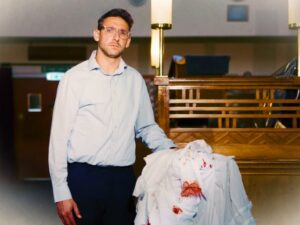
Since God’s reprimands always come to focus our attention on what we are doing wrong, we can discern Jacob’s mistake by working backward and examining his punishment. Jacob’s desire for tranquility caused Yosef to be taken away. After Jacob’s sons showed him Yosef’s torn, bloodstained coat, Jacob assumed that Yosef was dead, and he became inconsolable: “He refused to comfort himself, and said: ‘For I will go down to the grave [avel she’olah] mourning for my son’” (ibid 37:35).
Based on the word “she’olah,” grave – which can also mean Gehinnom, purgatory – the Midrash teaches us that Jacob thought Yosef’s apparent death was a sign from God that he needs to journey through Gehinnom, since he had a tradition that he would be assured a place in the World to Come if all twelve of his sons would remain alive in his lifetime (Tanchuma, Vayigash 9; see also Midrash Shocher Tov, Vayigash 44:29).
What did Jacob really want? He wanted to feel that he accomplished his mission. He fathered the 12 tribes, and built the foundations of the Jewish people. To him, tranquility was knowing that his job was completed and that he could now focus exclusively on learning Torah. But God replied, “You are not done until this world is transformed back into the Garden of Eden. You cannot live in peace when the world is filled with idol worshippers and is in such moral decay and turmoil. Your job is not at all done. It only ends once you leave this world and receive your reward in the Next World.”
Let us contrast this lesson about Jacob with the next few verses that introduce us to Yosef.
“These are the chronicles of Yaakov: Yosef, at the age of seventeen years, was a shepherd with his brothers by the flock, but he was a youth with the sons of Bilhah and the sons of Zilpah, his father's wives; and Yosef would bring evil reports about them to their father. Now Yisrael loved Yosef more than all his sons since he was a child of his old age, and he made him a fine woolen tunic. His brothers saw that it was he whom their father loved most of all his brothers so they hated him; and they could not speak to him peaceably. Yosef dreamt a dream, which he told to his brothers, and they hated him even more” (Bereishis 37:2-5).
Yosef has a prophetic dream that he is going to be a king over his brothers. What information does the Torah give us to shed light on why Yosef deserves to become king? In these few sentences the only action attributed to Yosef is that he brought evil reports to his father Yaakov regarding his brothers.
What was the evil report? Rashi tells us:
Any evil he saw in his brothers, the sons of Leah, he would tell his father: 1) that they ate limbs from living animals, 2) that they demeaned the sons of the handmaids by calling them slaves, and 3) that they were suspected of illicit relationships.
God punished him, measure for measure, for misjudging and speaking badly about his brothers. As Rashi says:
For these three reports he was punished: For [the report that his brothers ate] limbs from living animals, “they slaughtered a kid” (Bereishis 37:31) when they sold him, and did not eat it alive. For the report that he related about them that they called their brothers slaves, “Yosef was sold as a slave” (Tehillim 105:17), and concerning the illicit relationships that he related about them, “his master’s wife lifted her eyes.” (Bereishis 39:7).
God made it abundantly clear to Yosef that giving these reports was wrong. How, then, does this explain why Yosef should be king?
The Torah is teaching us a very important lesson: Yosef was trying to correct his brothers. In the end he was mistaken and was punished for his misplaced criticism, but his motivation was good; he wanted to help his brothers. He saw an issue and he took personal responsibility for it. That is what made him king. When you take responsibility for the world, you become master of the world. You are its caretaker.
If Jews in the world are trapped in Syria or Iran, can we live in peace? If Jews in Israel are being bombarded by rockets, forced to run for cover in bomb shelters, can we live in peace? If we care about the Almighty, can we rest if His children are estranged from Him? We cannot sit in peace when there is so much suffering.
Although he made a mistake in judgment, Yosef nonetheless took responsibility for his brothers, and by doing so he merited to become their leader.
The ascendancy of Joshua as the leader of the Jewish people is another example of how taking responsibility is the key to leadership. Although Joshua was 56 years old at the time of the giving of the Torah, he is nevertheless described as a naar, a lad: "God would speak to Moses face to face, as a man would speak with his fellow; then he would return to the camp. His servant, Joshua son of Nun, a lad, would not depart from within the Tent" (Shemos 33:11).
A naar is a youth, a lightweight, someone not very important. Why is Joshua described in this derogatory manner?
It was the Jewish people who described Joshua this way. They pointed a finger at him and said, "This guy is immature, he's a nobody." What did they have against Joshua? They thought he was unimportant because his primary role was in assisting Moses. The Midrash says that the Jewish people learned Torah every day from Moses, Aaron, and the Elders. They would all come together in the tent to learn Torah, and go home at the end of the day to eat and discuss what they learned. After everyone was long gone, Joshua would stay behind to clean up, organize all the benches and chairs, and put away the books. He wanted to make sure there would be no wasted time the following morning. So the Jewish people viewed him as a maintenance man, the guy who cleans up because he has nothing else to contribute. (Yalkut Shimoni, Pinchas 776)
They were wrong.
As King Solomon said, "Notzer te'einah yochal piryah – the protector of a fig tree will eat its fruit” (Mishlei 27:18). The one who cares enough to take responsibility, without concern for his own standing, will be the next leader (based on Tanchuma, Pinchas 11).
Imagine entering an exclusive art gallery where everything costs a fortune. Many wealthy, distinguished people are milling around, and it is impossible to discern who the owner is. Suddenly water starts gushing out of a broken pipe and a man quickly takes off his jacket, rolls up his sleeves, and starts fixing the pipe, getting soaked in the process. Now everyone knows who the owner is. He is the one who cares. He is the one who takes responsibility, rolls up his sleeves, and gets dirty fixing the pipe if that’s what’s needed.
Notzer te'einah yochal piryah, the protector of a fig tree will eat its fruit. The leader is the one who thinks about the needs of Klal Yisrael. He thinks about the tumult that will ensue the next morning when everyone returns to learn and the chairs are in disarray. Yehoshua was no lightweight. Servicing Moses and taking responsibility for the needs of the Jewish People, whatever they may be, is precisely what made him the next great leader of the Jewish people. "God said to Moses, 'Take to yourself Joshua son of Nun, a man in whom there is spirit, and lean your hand upon him'" (Bamidbar 27:18). The naar, the boy, became a man.
Jacpb wanted to sit b'shalvah, in tranquility, to learn Torah and grow. After dedicating himself to building the Jewish people, and all the suffering and conflict that it entailed, he yearned to climb to greater spiritual heights, unencumbered by the needs of the community, and finally focus on his own growth. Now, he thought, it was time for the 12 tribes of Israel to take the lead.
God corrected him and showed him that as long as you are living in this world you cannot retreat from your responsibilities and focus only on self-perfection. “You are My partner,” God reproved him, “and I am suffering. My children still do not know Me; the job is not yet done. Your responsibility for the world ceases only once you enter the Next World.” So Jacob was punished with the disappearance of his son Yosef in order to teach him this lesson.
In contrast, Yosef was concerned for his brothers and took responsibility to correct them. Even though he was mistaken in his judgments, he merited to become a king because he took responsibility for them. Joshua, a descendant of Yosef, was concerned for Am Yisrael and as a result became the leader of Klal Yisrael.
We must ask ourselves: What responsibility can we undertake to help the Jewish people? We need to feel the pain God feels, so to speak, over the assimilation and intermarriage of His children. When you truly care you will take responsibility. And when you take responsibility, you attain greatness and become a leader.