
 After the Manchester Synagogue Attack, They Danced Through Their Tears

5 min read




A grieving Manchester synagogue danced the Friday after a terror attack. That same tension shaped one of Judaism's oldest Shabbat songs, and defines the essence of being a Jew.
This Yom Kippur marks a year since the terror attack on the synagogue in Manchester, England. Terror attacks always hit home and hit deeply, wherever and whenever they occur. But for me, this one hit harder.
I’ve been thinking about why.
Perhaps it’s the timing. We had just come out of the high of the end of Yom Kippur: shouting Shema Yisrael together in unison, hearing the shofar sound, the joyous feeling of forgiveness, of the great annual restart. And then to switch on the phone and see the scenes of horror.
Perhaps it’s because it happened in Manchester, the town I grew up in at a synagogue I knew. I went to school with the rabbi.
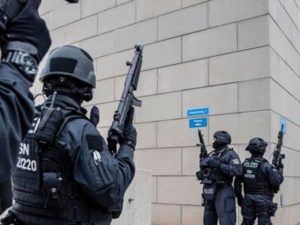
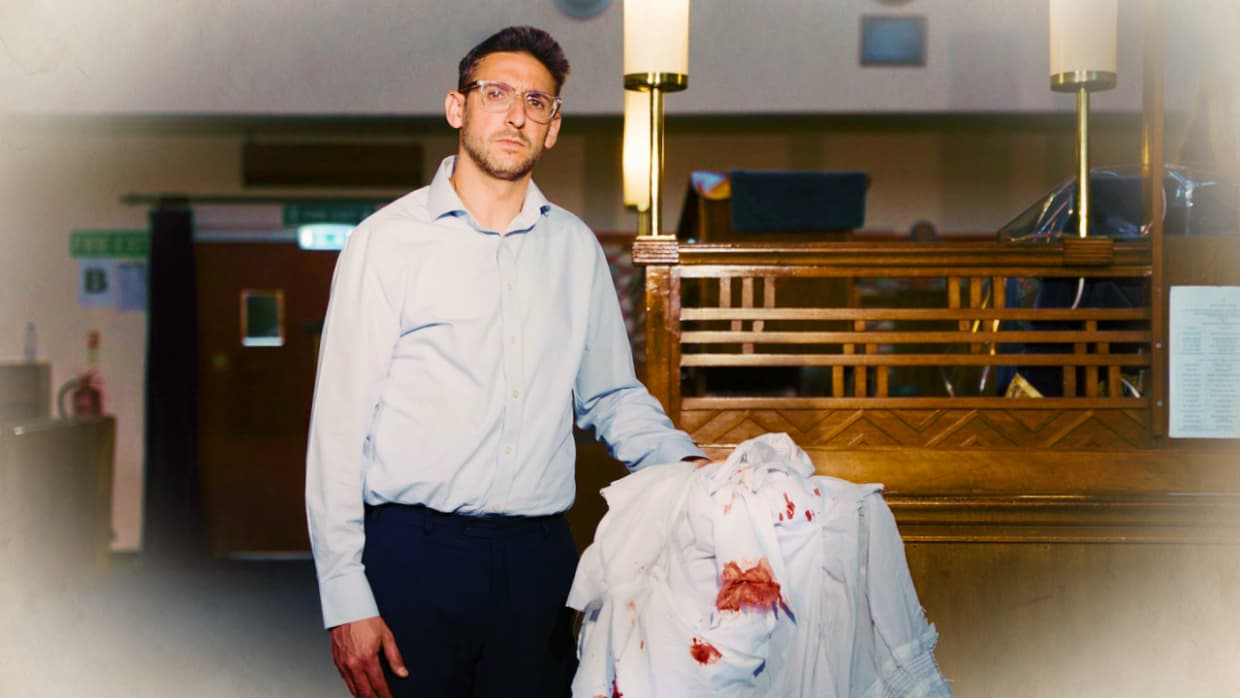
Though I no longer live in Manchester, I’ve been back to visit. I met with Rabbi Walker, and he and other members of the community took me to where the attacker stabbed and killed Melvin Cravitz; the door Rabbi Walker and others held shut while the terrorist tried to break in; the spot where Adrian Daulby was killed by a stray bullet from a counter-terror police officer.
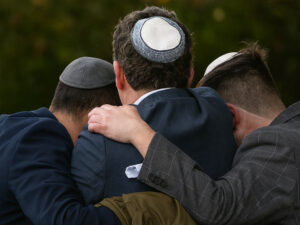
But what struck me most about that visit was Rabbi Walker describing how his congregation, a reserved, typically English community, danced through their tears the very next Friday night as they sang "Lecha Dodi" to welcome Shabbat.
They were dancing and crying at the same time. That’s the Jewish people.
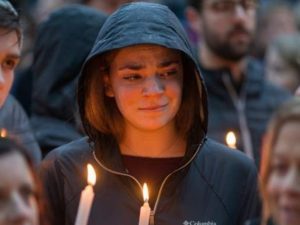
I spoke to other members of the shul and heard the same thing. It wasn't that the tears disappeared and joy took over. They were dancing and crying at the same time. The pain was real. The dancing was real. Neither one canceled out the other.
That's not a contradiction. That's the Jewish people.
We cry and we dance. And the song "Lecha Dodi" was born out of exactly that tension.
"Lecha Dodi" was composed in the wake of one of the greatest tragedies of the many that have littered Jewish history: the expulsion from Spain in 1492 and the centuries of inquisition that followed. Hundreds of thousands of Jews who refused to convert were forced onto boats. The single largest Jewish community in the world was shattered.
The journey that followed was brutal. There was no food. People died by the thousands. The center of Jewish life had been crushed, and for a while it genuinely looked like the Jewish people might not survive.
Refugees wandered through the Ottoman Empire and beyond for decades before a group settled in Tzfat, a small town in northern Israel. And it was there, among people who had lived through catastrophe, that they felt the need to remind the Jewish world of something essential: We cry but we dance! So they wrote "Lecha Dodi."
Look closely at the words and you'll find both emotions built into the song itself. We still sing it every Friday night, usually to two different melodies. There is a slow, mournful tune for "kumi tzei mitoch hahafeicha – rise up out of the ruins” – "rav lach shevet b'emek habacha – you have dwelled too long in the valley of tears.” That is us speaking directly to the Jew who feels lost, who has lived through their own Manchester, times a thousand, times a hundred thousand.
Then the melody shifts, and we sing "v'nivneta ir al tilah – the city will be rebuilt on its ruins.” We can do it.
That Friday night was not the first time that community had held both at once. They had done it a week earlier, on Yom Kippur itself, and so had every one of us. Yom Kippur has its moments of tears. We speak of the awesome power of a day on which it is decided "who will live and who will die; who in their time and who not in their time." We say Yizkor, remembering those we most loved who have left us behind in a world bereft of their presence. We feel the regret of where we fell short during the year, people we may have hurt, damage done to ourselves and others.
But there are also moments of joy. The Talmud describes Yom Kippur as one of the happiest days of the year because it is a day on which a sincere desire to change is met by God's forgiveness. It is the day we remind ourselves what we are living for, who we truly wish to become, and that through long, slow, painstaking growth we can improve each year. It is the day we confront the incredible power of change, and our capacity to rebuild and move forward.
That was the note we had all just ended on – the Shema and the final blast of the shofar – when the phones came back on.
And it isn't only Yom Kippur. Our prayers are stained with the tears of countless tragedies. We have prayers added after the destruction of the Temple, the massacres that ended the Bar Kochba revolt, the Crusades, the expulsion from Spain and many others. But the prayer service is filled even more with the joyous anticipation of the better world we have always sung and danced towards. The Rosh Hashana and Yom Kippur prayers both describe that time, "the righteous will see and rejoice, the upright will exult and the pious will burst into song; corruption will be silenced and all evil will dissipate like smoke, for You will remove the rule of evil from the earth."
When I went back to that community in Manchester, I felt it firsthand: the beauty of belonging to a people who can cry and dance, who can carry the pain of Jewish history and the glory of Jewish history in the very same breath. Tears and joy; pain and the unshakable confidence that in the end good will win and evil will be defeated.
That capacity to live simultaneously with grief over the present and unshakeable faith in the future is about as close as I can get to defining what it means to be Jewish. We can hold the deepest tears of real pain and still know that we will dance again.
This Yom Kippur we will say Yizkor, and some of us will have new names to remember. And at the end of the day, as we did a year ago, we will shout Shema Yisrael, hear the shofar, and sing "Next year in Jerusalem" – and in Manchester, as in every shul, people will dance. Yom Kippur, too, is sung to two different tunes, one sad and one joyous. We have never dropped either.
Watch survivors and community members describe the terror attack in their own words in the video below.