







 The Toy Torah a Soldier Found in Gaza
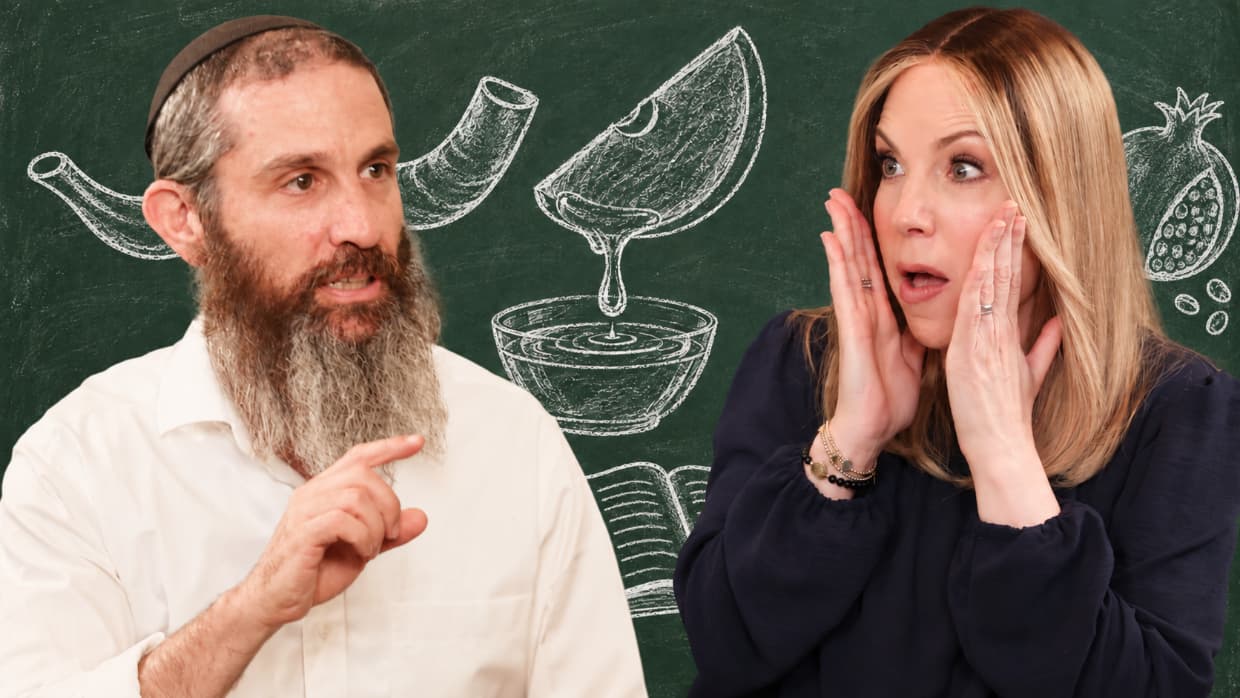








Rabbi Dov Ber Cohen busts five myths about Rosh Hashanah and Yom Kippur.
Watch the full video below.
Rabbi Dov Ber Cohen has an unusual resume: six years studying meditation and martial arts in Asia, a stint as a monk, and now the host of "Rabbi in the Hot Seat." He joined Jamie Geller to dismantle five of the biggest misconceptions people carry about Rosh Hashanah and Yom Kippur -- and to make the case that the High Holidays aren't heavy at all. They're happy.
Jamie Geller: Rabbi Dov Ber Cohen, welcome to the show. I'm calling this episode "Everything You Learned in Hebrew School Is Wrong: High Holidays Edition."
Dov Ber Cohen: I love it. And it's true -- these days are supposed to be uplifting. They're called the High Holy Days for a reason. But because of the misconceptions people carry, they end up feeling more like a cultural obligation than a spiritual experience. Let's fix that.
Jamie: Growing up, everyone wished each other a good inscription "in the Book of Life." So is there literally a book up in heaven -- and a Book of Death to go with it?
Dov Ber: Jewish tradition uses ritual and metaphor to teach something deeper. The real idea is this: physical life and death aren't the main point. Spiritual life and death are. Are you spiritually alive? Most people are walking around dealing with their kids, their marriage, their finances -- just putting out fires. That's not what Judaism calls being alive. Real life means living with vitality, connected to your purpose.
Jamie: I always pictured God up there with a quill pen, deciding.
Dov Ber: That's not it. The Torah says, "I have placed before you life and death -- choose life." God isn't choosing for you. He's handing you the pen. Every time you act out of love, kindness, and connection, you write yourself into the Book of Life. Every time you give in to jealousy or anger, you write yourself into the Book of Death. But it's not permanent -- you get to rewrite it constantly.
Jamie: So we hold the pen, but it's really a pencil with an eraser.
Dov Ber: Exactly. Rosh Hashanah kicks off that process, but really, every conversation, every interaction, is another chance to choose.
Jamie: But people do die. We bury loved ones. So how does the metaphor square with the fact that some decisions really do get made on Rosh Hashanah?
Dov Ber: Good question -- and you actually answered it yourself. Truly righteous people are described as being "written in the Book of Life" immediately, yet some of them still pass away that year. That tells you the book was never only about physical survival. That said, some things genuinely are decided on Rosh Hashanah -- like how much money a person will earn that year.
Jamie: Okay, now you're talking. Give me a real blessing, Rabbi.
Dov Ber: [laughs] Here's the catch: God sets aside the amount, but how much of it actually reaches you still depends on your choices. Think of it like rain -- God decides how much rain falls in a given year, but if we don't act well, that rain can fall into the sea where nobody benefits from it. Act well, and the rain falls exactly where it's needed. The decision is made on Rosh Hashanah, but how it's distributed through the year is still in our hands.
Jamie: And what about matters of life and death themselves? Can those decisions be reversed?
Dov Ber: They can. Think about how prayer works. When someone gets sick, we believe it happens for a reason -- sometimes as a wake-up call, sometimes to awaken others spiritually. My son was born three months early, weighing two pounds, in an incubator on a respirator. Because of his condition, people started doing extra mitzvot (good deeds) and praying in his merit -- and he benefited from that. When I pray for someone, I'm drawing down blessing that can genuinely change their outcome. But not every prayer results in healing, because there's also a higher order at work. My father, may he rest in peace, died at 76. I prayed for him constantly. That prayer wasn't wasted -- I believe it went to someone else who needed it. No prayer goes to waste. Part of faith is doing everything we can through prayer and action, and then trusting that God knows what we don't.
Jamie: People treat Yom Kippur like a scary deadline. Fast well, and you get a favorable verdict. Is that what's happening?
Dov Ber: Let's reframe the whole thing. A lot of people think repentance means saying "I'm bad, I'm bad, I'm bad." Judaism says the opposite: repentance starts from "I'm good. I'm whole. I'm loving and kind -- and sometimes I let myself down." And here's the real twist: if any day deserves the title "Judgment Day," it's Rosh Hashanah, not Yom Kippur.
Jamie: Wait, say that again.
Dov Ber: If any day is called Judgment Day, it's Rosh Hashanah -- not Yom Kippur. And remember who's doing the judging: we're judging ourselves. That judgment has two parts. First: do I have the right values? Second: am I actually living up to them? Take something simple -- being good versus looking good. Most people invest far more energy in looking good than in being good. Maybe you value family, but you're not calling them. Maybe you value health, but you're smoking. Starting the new year is about closing that gap.
Jamie: Isn't that basically a New Year's resolution?
Dov Ber: That's likely where the custom comes from. But 92% of New Year's resolutions fail within two weeks, because they're superficial: "I'll go to the gym," "I'll quit smoking." Rosh Hashanah asks for something deeper -- a full internal shift in identity. "That's just not who I am anymore." The external habits follow naturally once the identity changes.
Jamie: What actually happened on the very first Rosh Hashanah?
Dov Ber: Not the creation of the world -- that happened six days earlier. Rosh Hashanah marks the creation of humankind. There's a striking verse where God says, before creating man, "Let us make man" -- plural. One explanation: God is speaking to us. It's a partnership. God supplies the raw material -- your strengths, your struggles, your advantages, your challenges -- and you have to build the person. So Rosh Hashanah is the birthday of humanity, and every year is a chance to rebirth yourself.
Jamie: You also mentioned Rosh Hashanah is about crowning God as King.
Dov Ber: "King" means whoever is in control of you. There's always something ruling you -- either your lower cravings or your higher spiritual drive. Declaring God as King means choosing to let your higher self lead. We all know that inner tug-of-war: one voice says stay in bed, another says get up and run. Rosh Hashanah asks which voice gets to be king. When I became religious, a friend told me I'd become a "slave," giving up the freedom to do whatever I wanted. I told him the opposite is true: doing whatever you crave makes you a slave to your cravings. Real freedom is knowing your purpose and having the discipline to walk toward it.
Jamie: And Yom Kippur -- the Talmud actually calls it the happiest day of the year, which is the opposite of how most of us were raised to see it.
Dov Ber: It really is one of my favorite days. Yes, there's deep reflection, but there's also singing and dancing. Kippur comes from the word kapara, atonement -- but the English translations of "atonement" and "Day of Judgment" make it sound so heavy.
Jamie: You're saying it's happy, not heavy.
Dov Ber: One hundred percent. Atonement literally breaks down into "at-one-ment" -- becoming one again. If I hurt my wife, the love between us never actually left, but I need to clear the obstacle I created. I own it, I tell her I'm sorry, and we return to closeness. God does something even more remarkable: once we own our mistakes, it's treated as if they never happened. The slate is wiped completely clean -- no residual guilt, no shame. That's what makes it a happy day, not a heavy one. That's also why we fast: to show, for one day, that we're not controlled by our physical cravings. And many people wear white on Yom Kippur, symbolizing that clean slate.
Jamie: People spend this season calling everyone they know to ask forgiveness. But what about people who've genuinely wronged you? Some of us are carrying real damage. Are we obligated to forgive?
Dov Ber: This one tends to blow people's minds: Judaism says you don't have to forgive someone who hasn't truly repented, felt remorse, and asked for forgiveness. If they haven't come to you sincerely, owned what they did, and changed, you're not required to forgive them in your heart.
Jamie: But I always heard: if you can't forgive others, how can you expect God to forgive you?
Dov Ber: That principle only applies to people who genuinely changed and asked for forgiveness. If someone never changed -- or worse, kept abusing you -- you don't owe them forgiveness, because forgiveness means "I accept who you are now," and they haven't become someone different.
I once led a trip to Nicaragua with a 29-year-old woman who'd just left a seven-year emotionally abusive relationship. She told me she was full of resentment and didn't want to let it go, because letting go felt like letting him off the hook. I told her: he's not the one on the hook -- her resentment was keeping her on the hook. If he really is who she said he was, he's probably glad she's still carrying the pain, because she's continuing the abuse on his behalf, internally. So I told her: you don't need to forgive him. But you do need to forget -- not literally, but stop replaying it, stop feeding it. Judaism actually flips the popular saying. People say, "I can forgive, but I can't forget." Judaism says the reverse: I don't have to forgive someone who hasn't changed, but I can still let go of the grip the memory has on me.
Jamie: That might be the single biggest takeaway from this conversation.
Dov Ber: It matters just as much when the person you can't forgive is yourself. I run an online Jewish mindfulness course, and a 52-year-old Orthodox woman, a mother of eight, called me in tears, unable to forgive herself for things she'd done as a secular 20-year-old, three decades earlier. I told her: you don't need to forgive that woman -- she isn't you anymore. You're a completely different person now, someone who wouldn't dream of doing what she did. There's nothing to forgive, because it wasn't really "you." If anything, you should feel proud of how far you've come.
I see this constantly with students at the yeshiva where I teach. Guys arrive with real misconceptions about Judaism -- that God is an angry judge waiting to punish them. As they spend time here, they genuinely transform: less cursing, less phone time, more self-control. One student, a few months in, came to me looking crushed. He'd gone out for a friend's birthday, had a few drinks, smoked some weed, and felt like he'd completely relapsed into his old self. I told him: this is wonderful news. Five months ago, you wouldn't have felt bad about any of this -- you'd have bragged about it. The fact that you feel remorse now proves how much you've actually grown.
There's a real difference between remorse and self-punishment. Remorse says, "I feel bad because I let myself down" -- and that pain fuels growth. Beating yourself up ("I'm such an idiot") doesn't help anyone change. And the opposite extreme -- feeling nothing at all -- means you're not growing either. Judaism asks for the middle path: feel the sting, but never stop believing you're fundamentally good.
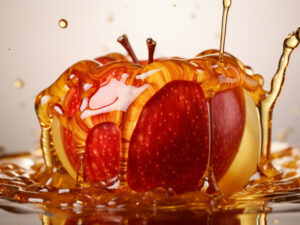
Jamie: Apples and honey -- cute custom, wish each other a sweet year, nothing more to it. True?
Dov Ber: Nothing in Judaism is "just" a ritual. The word spiritual literally combines "spirit" and "ritual" -- you need both. Some people have spirit but drop the ritual (they'd never dip an apple in honey); others perform the ritual with no spirit behind it. We need the balance. Here's the deeper layer: why honey specifically, and not sugar, or syrup? Because to get to honey, you have to get through the bees.
Jamie: Meaning?
Dov Ber: True sweetness in life usually comes from overcoming something, not from everything simply going your way. When we dip the apple in honey, we're saying: I refuse to be a victim of the sting. I'm going to find the sweetness that's actually produced by the difficulty -- by my own struggles, my own past, my own pain. Nothing you've been through is meaningless. It's producing something.
There's a related idea from Chanukah -- when the Greeks defiled the Temple, the Maccabees found one small jar of oil that remained pure and untouched. That's teaching the same thing: no matter how much trauma or damage happens, there's always a place inside a person that stays untouched -- the soul. Healing means reconnecting to that place, not endlessly identifying with the wound.
Jamie: And the apple itself?
Dov Ber: In Kabbalistic sources, the apple represents healing. There's a popular idea that the forbidden fruit in the Garden of Eden was an apple -- there's actually no textual source for that. It likely comes from the idea that Eden itself is described as an orchard: the place of ultimate healing, where everything broken gets repaired.
Jamie: Last one: the shofar. Ram's horn, part of the service, check the box. Or is there more?
Dov Ber: There are close to a dozen classical reasons given for the shofar. Here's one: the Torah describes God breathing a soul into the first human, directly into the nostrils -- which is actually why, in Jewish meditation, we breathe through the nose. It calms the nervous system and reconnects you to your soul. The word for "breath" and the word for "soul" in Hebrew come from the same root. On the day humanity was created, God breathed that soul into us. Blowing the shofar is us breathing it back out -- declaring that we're using our life force for something greater than ourselves.
There's also Maimonides' explanation: the shofar is a wake-up call. Most people move through life half-asleep, running the same routine, on autopilot. Jewish mindfulness has a term for this: pizur nefesh, a "scattered soul." We're all juggling -- health, career, relationships -- with no idea where we're actually headed. The shofar says: stop juggling. Get a clear vision of where you're going, and the rest stops feeling like chaos.
There's a story I heard from a teacher in India, where I lived for a year and a half: A pregnant lioness died after falling off a cliff, and her cub was born right there. The cub wandered over to a flock of sheep and, having no other reference point, assumed he was one of them -- ate like a sheep, walked like a sheep, believed he was a sheep. Years later, a full-grown lion came upon the flock, hungry, and spotted this strange sheep-lion. He picked the cub up and showed him his reflection in the water. The cub finally saw himself -- and the lion let out a roar. Something inside the cub woke up. I'm a lion.
That's what the shofar is doing. You're not a sheep -- you're a soul, dressed in a body, who forgot who he really is. The blast is meant to wake that up.
Jamie: That reminds me of something from the Holocaust. All four of my grandparents were survivors. Some Jewish children were hidden in convents during the war, raised as Christians to keep them alive. After liberation, when rabbis came looking for them, many of the children were indistinguishable from the other orphans -- they'd been raised entirely as Catholics. So the rabbis would recite the Shema, the first prayer Jewish children are taught. And the hidden children -- now years removed from any Jewish life -- would answer back the words instinctively, or cover their eyes the way we're taught to during that prayer. They knew, on some level, exactly who they were.
Dov Ber: That's precisely it. You can be dressed as something else entirely, raised as something else entirely -- and the truth of who you are is still there, waiting to be called back. Jewish tradition teaches that when the world eventually reaches its healed, peaceful state, the shofar will be sounded one final time -- not just for the Jewish people, but for all of humanity, since Adam, the first human, wasn't Jewish. Every year, blowing the shofar is a rehearsal for that: a declaration that we want it, we're praying for it, and we believe it's coming.
Jamie: Rabbi, I think this needs to become a series.
Dov Ber: I'm in.







I thoroughly enjoyed listening to Rabbi Dov Ber Cohen. Will you be planning more sessions with him?
Maybe one of the best essays published by Aish.com!
I really liked the take on forgiveness.
That's not so unusual - as there a many customs & traditions - that we learn - throughout our lives.
Dear Jamie, why did you give the rabbi devil horns in the picture?
eye of the beholder!