
 The Shofar: Beyond Words





Confronting death encourages you to live life more fully.
Western culture works overtime to make us forget that we are all going to die. No matter how many green juices you drink or how little gluten or carbs you eat, death is the only thing in life that's certain.
Death is seen as a distant reality, something we don’t need to think about. That is, until we have no choice.
Yom Kippur forces us to confront our mortality head-on, and in doing so, it gives us the opportunity to live more meaningfully.
The Talmud says, "Do teshuva (repentance) one day before your death" (Shabbos 153a). The simple understanding is that since we don’t know when that day will come, we must do teshuva every day.
We need a reminder to live meaningfully, and ironically, the place to find it is in death.
If that’s the case, why not just say, ‘Do teshuva every day’? Rabbi Mordechai Gifter explains that the Talmud chose its words carefully. Contemplating the day of our death energizes us. The irony is that when we think about death, we are actually motivated to live. Not in fear, but with a renewed sense of purpose.
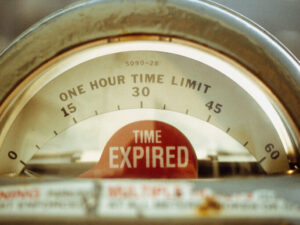
We realize that time is our most precious resource and that we must use it wisely.
Joshua Bolton, the Chief of Staff for President George W. Bush, distributed "countdown clocks" to the staff. These clocks tracked the exact number of days, hours, and minutes remaining until the end of the administration's term. The intention behind the clocks was to remind the team that while there was still enough time to accomplish their goals, they couldn’t afford to waste any of their precious minutes. It served as a constant reminder to make the most of the time they had left.
We need that reminder to live meaningfully, and ironically, the place to find it is in death.
Studies have shown that reminders of mortality push people to focus on long-term meaning rather than short-term gratification.
For years researchers have tried to understand the “paradox of aging.” While we might assume that getting older means becoming more anxious or depressed, the opposite is often true. Older people tend to be happier because they focus more on meaningful relationships and service to others.
Yom Kippur is our own “time-check.” It’s a day when we pause and ask ourselves: What are we really trading our time for? Are we wasting our precious moments on trivial things, or are we focusing our time intentionally to live the life we truly want to live?
The haunting prayer Unetaneh Tokef, with its chilling words, “who will live and who will die”, is a reminder that our future is being written. It captures the gravity of the High Holidays as we reflect on the coming year and our hopes and aspirations.
We conclude the prayer with the words “and every person’s signature is in it.” Who asked me to sign my name on this decree?
Whether we realize it or not, we are signing our names every single day. We inscribe our Book of Life not with pen and ink, but with the choices we make every day.
The High Holidays are a time to recalibrate, to step back and reflect on how we’ve used our time up until now, and how we want to invest it moving forward. It’s an opportunity to reconsider our priorities and make sure that when we do sign, it's with intention, purpose, and clarity.
To aid us in this process, many of the rituals of Yom Kippur are designed to remind us of our mortality. We wear white on Yom Kippur, which resembles the traditional burial shrouds. We fast and abstain from physical comforts, reflecting the separation of the soul from the body. We recite Viduy, a confession similar to the one traditionally said before death. The theme of judgment also mirrors what takes place after death, when our deeds are weighed and accounted for.
This focus on death isn’t meant to depress us. In fact, Yom Kippur is known as the happiest day of the year, because when we come face to face with our mortality, we’re given the chance to live more fully. Death can be the source of our greatest clarity and motivation.
Since October 7, this awareness has become all too real. We are acutely reminded that we have no guarantee of tomorrow. We can’t afford to live on autopilot.
So how do we begin to live more meaningfully? Here are three practical suggestions.
A great way to prioritize the things most important to us is to begin framing our lives in terms of the experiences we have left. Here are some examples I’ve begun using:
When you aren’t sure if you should skip the family reunion or sit down for Shabbat dinner, thinking of how many opportunities you have left puts it all in perspective and reminds you that every conversation you have with a loved one, every trip and time spent together, these moments are finite. This is what makes them so precious.
Ask yourself: When I’m on my deathbed, will I regret not having done this? What do I want to be remembered for? Once you have the answer, you can ask yourself: What’s holding me back from doing it right now? What is something I’d be willing to die for?
Rabbi Noah Weinberg famously said, “Know what you are willing to die for and then start living for it.” Once you know what you’re willing to die for, you know what you’re truly willing to live for.
If you knew you had only one day left, what would you do? Would you spend more time on your phone? Would you chase after temporary pleasures, or would you choose to connect with the people you love?
I was putting off writing our will. My friend Kevin was trying to encourage me to do it. He said, “You totally don’t have to do this… unless you care about your children.” I would apply his advice here as well. If you care about your family, also write an ethical will, a document that expresses your values, your beliefs, and what you hope to pass on to the next generation.
Articulating your spiritual legacy will be one of the greatest gifts you can give your children, allowing them to understand what you want to leave behind.
Yom Kippur is our reminder that life is short, but it is also full of meaning. As we enter this holy day, let’s take the time to reflect on what truly matters. Let’s ask ourselves: Are we trading our time for the things that will matter in the end? Are we living the life we want to be remembered for?