






 What Two Hebrew Words Reveal About Israeli Democracy


9 min read
8 min read
13 min read




Why contemplating your death is valuable.
At this time of year, we are given the opportunity to think deeply about how we can grow and improve ourselves. These days between Rosh Hashanah and Yom Kippur are days of introspection and reflection.
A major theme in our prayers is an acknowledgement that our lives hang in the balance and that our fate is to be sealed for the coming year on Yom Kippur. We ask God to “Remember us for life” and to be inscribed in the Book of Life, recognizing that our very existence is a gift to which we are not entitled.
Jewish tradition gives us many ways to focus on living our lives as mindfully as possible. One key way is by giving us opportunities to face the reality of our mortality. Confronting death affirms life and jars us into focusing on the work we have to do to live well.
On Yom Kippur, the holiest of day of the year, we traditionally wear white, similar to the dead who are also dressed in white. We fast to allow our soul to slightly disengage from our body to try to experience more connection to God. We step out of our leather shoes to move a little bit away from the things that ground us in the physical world. And we become more focused on ourselves as a spiritual soul with a body, versus seeing ourselves primarily as a body with a soul.
Another example of facing the reality of death is the work of the Chevra Kadisha (Jewish burial society) where volunteers help fellow Jews transition from this life to the next. I’ve had the honor to be a member of my local Chevra for many years. Walking into the morgue we are confronted with the reality of death. The lifeless body in our care is shocking to behold. We are taught to use this jarring experience as a motivator to work on ourselves, to appreciate our lives more, and to contemplate how we use our own lives.
When performing the tahara, the purification, the Chevra Kadisha cleanse and pour water on the deceased. The waters represent, among other things, kindness and the knowledge of God. The water, the prophet Ezekiel tells us, will bring about a divine transformation. God promises that a little bit of water will be enough to completely forgive, cleanse and purify.
Similarly, Yom Kippur is a day that God promises will cleanse and purify us. The day itself has innate powers to bring atonement and return us back to the pristine way we were when we started this journey called life.
On Yom Kippur during Temple times, the High Priest would change into plain white garments to enter the Holy of Holies. This was the inner sanctum of the Temple which was only accessed once a year. The High Priest would enter to have an intimate encounter with God to ask for forgiveness and bring atonement for the people.
Similarly, after death, the deceased is dressed by the Chevra Kadisha in plain white linen garments modeled after those same ones worn by the High Priest on Yom Kippur. This is clothing fit for the occasion since after death we will have an experience of God in the spiritual realms unlike anything we can have while alive.
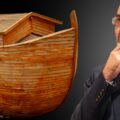
Outside of Israel, we are buried in a plain pine box (coffin) which we refer to as an ark (or an Aron). Our body is likened to a Torah scroll. The parchment of a Torah scroll has absorbed holiness and become elevated from having the holy words of God’s Torah written on it. A Torah scroll is not thrown in the trash or burned; it is buried.
Similarly, our body has absorbed holiness after a lifetime of being in intimate relationship with our God-given soul. Like the Torah scroll which is treated with utmost respect, we take the holy-infused body, clothed in white linen garments and wrapped in a white sheet, and lovingly place it in an ark (casket) and bury it. There is no escaping the reality of the transition that is occurring and what they are witnessing and participating in.
Judaism teaches that our life is a miraculous coupling of a holy soul with a physical. organic body. God is constantly breathing our soul into the vessel that is our body.
Judaism passionately celebrates life. Every moment of life has infinite value. Our refrain is L’Chaim, To Life. We bless each other that we should live long and fruitful and healthy lives.
We are commanded to drop everything to save a life.
Yet we, and all those we love, will experience the transition to the next world that we call death. But most of us live as if we are going to live forever, denying that inevitability.
The truth is we do live forever. When we have finished this phase of existence, when we die, our soul and body will uncouple - allowing the spiritual soul to ascend into the world of souls and the physical body to be planted lovingly back in the ground from where it came. The soul merely sheds the garment that is its body to continue to exist in a different dimension. It doesn’t end or die; it changes form. Death is a misnomer as there is no end to the existence of the soul.
Jewish tradition teaches that this world is a lobby or a corridor that links to the next world. Along with this comes an understanding that we matter, that God has faith in us to achieve something only we can achieve, to rectify one piece of our world that only we can fix. We are alive because we are important and necessary for the functioning of the world which God oversees and is intimately involved with. Our lives here, are of the greatest importance. Our soul travels through life with a body because it has a purpose for being here. It has work to do.
On Yom Kippur, we pray and ask for God to give us long, healthy, and meaningful lives filled with many opportunities to grow and to be and do good. We express gratitude for our lives, recognizing that it is all a gift. We appreciate that we all have work to do to maximize the enormous potential each of our lives has and to partner with God to bring more goodness and kindness to the world. We ask God to give us more life so we can work on the things we have control over and to improve ourselves and live well.
Thinking of our own mortality is an important and healthy motivator for living mindfully and purposefully. We do everything in our power to prolong life and at the same time we are enjoined to not deny death. We need opportunities like these days leading up to and including Yom Kippur to think deeply about the finite nature of our existence here so we can focus on evaluating how we live.










Hello Elissa--
Back in November 2019 I took my very first trip to Israel via a women's group of which you were a guide. I didn't get to meet you then because you were unable to make the trip. It is good to see you here. Wishing you a meaningful fast and a good year.
Amen and wishing you the same.