







 The Shofar Is Silent, Remember to Breathe

13 min read
9 min read
7 min read




According to the Talmud, there are 903 ways to die. My son's may have been the worst.
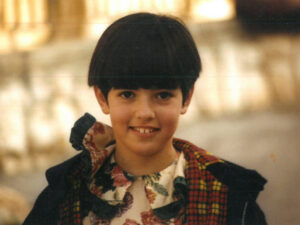
Our son, Koby, was murdered in 2001 by Palestinian terrorists when he was 13. He and his friend Yosef Ish Ran cut school to hike in the wadi near our home in Tekoa. They were beaten to death with rocks the size of bowling balls.
According to the Talmud, there are 903 ways to die. The way that Koby died may be the worst way. There are probably 902 easier ways to die. In fact, the Talmud has a discussion of which is the harder death: stoning or fire, and most sages agree that stoning is the most difficult death. In the hierarchy of pain, I am a winner.
Abraham brought his son to be sacrificed, but in the end, Isaac was spared. A Midrash tells us that Sarah died when she heard that Isaac had almost been killed. Her keening is the origin of the wailing sound of the ram’s horn, the shofar, that is blown on Yom Kippur and Rosh Hashanah, the sound that is supposed to awaken us to repentance.
I also serve that function. I feel that people look at me and love their kids more. When I’m in the supermarket in Efrat, I see how people look at me. I know that now when I walk around, many people look at me and think: thank God I’m not her, thank God I still have my kids, my family intact. Thank God I still have my wholeness.
And they’re right. Koby’s murder is a robbery, an amputation, and a rape. I stand naked, battered. Yet I also stand with my angels, my belief, my openness to life.
Still, the other mothers console themselves by comparing the deaths of their children to Koby’s death, which seems more brutal to them. A mother whose daughter was killed in a drive-by shooting near Jerusalem said to me: “I suffer, but not like you. I know my daughter died instantly.”
Another mother, whose daughter died of cancer, says: “I suffer, but not like you. I know my daughter died peacefully. I was with her when she died. But you?”
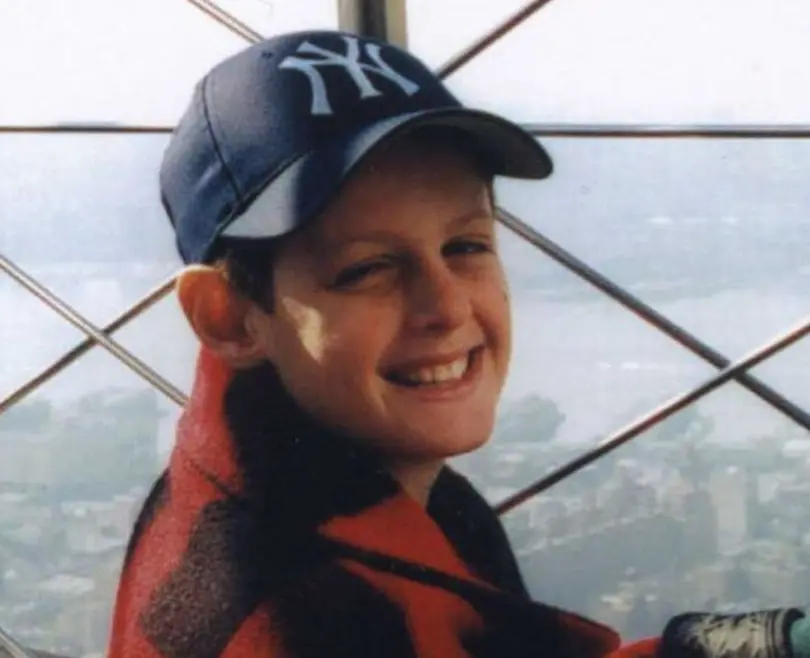 Koby Mandell (Photo: Nancy Lederman)
In fact, my friends tell me I’m famous for my pain, famous because of Koby. Few have had a son killed as cruelly as I.
And yet I believe that the minute that Koby saw the hate on his murderers’ faces, he went into shock and his soul left him. He went into a safe, protected place in his soul. He watched his death, but he was already with God. He was already being comforted, sheltered.
Rabbi Yitzhak Breitowitz told me that dying because you are Jewish means that you die sanctifying God’s name. As a result, your soul goes straight up to God. Usually, according to Jewish sources, the soul undergoes a waiting period, a period of purification before ascending to God.
But Koby was pure. In fact, Rabbi Breitowitz told me, the usual procedure of cleansing the body of a dead person was not necessary for Koby and Yosef, since they died as pure souls.
There are different opinions but our tradition tells us that the soul hovers around the body for a year, because the soul misses the body. But not Koby. He was free of his body the moment he died. He was already one of God’s beloved, sitting on God’s lap. That’s why I didn’t feel him at his grave the day of his funeral.
And now I am the woman whom people don’t know how to address. I fill people with the dread of death. I remind them that death is around us.
But by being the person nobody wants to be, I can console others because I am not separate from anybody’s pain. I can’t distance myself. I don’t have that luxury. I can be there for others because my suffering includes so many of the permutations of pain.










I have read years ago Sherri’s book about her heartbreaking thoughts and feelings of her dear son Koby and his murder. I would like to meet this seemingly very special woman. From :Leah Kalichman.
Sherri, your story, your reality, your journey through this tragedy and your ability to write about it, expand on it and dive into the painful innermost depths give me the chills. Your child is in the highest level of Shamayim, in peace with Hashem. I also either heard or read that the soul exists the body instantly in what you described. You are possibly one of the strongest Jewish females in the world. Your courage, your strength, your ability to talk about the hard things is inspiring to me. There are so many people sufffering in silence. You provide this comfort, this sort of understanding and calm about you. Thank you for sharing this, you have no idea how deeply it touches people who read this. May Hashem shine light on you, provide you peace and keep you. May you see abundance!
such beautiful words, i really appreciate it
I am so sorry for the loss and the pain you endure every day. Your article brought tears to my eyes. Thank you for sharing.
Unlike Sarah Imeinu who could not endure the thought of her son as a sacrifice, Sherri Mandel survived the horrendous tragedy of her son’s murder. She stands among the outstanding Jewish women of our times. Sherrie’s courage, her beauty, and her ability to empathize with suffering and pain of others is exemplary, worth pointing to, even in the supermarket. Her renewed commitment to Judaism, and her choice of life found expression in acts of kindness. Together with her husband, she created a camp for youngsters suffering from the trauma of tragedy. May Sherri’s extraordinary example inspire us all to respond with compassion and faith to those in despair.
faigie, thank you. you are the best!!!
Thank you for sharing your heart and your process with us. Hearbreaking and uplifting all at once.
The pain of your loss feels beyond words and yet you write with power, strength and even beauty . You are a special Women Sherri. Thank you fir sharing
Sherri .The pain is so strong .I once told you that if we feel your pain maybe but maybe just a little bit help you carry it..
you did help me carry it
Sherri, I had the good fortune of meeting you in person the other day. You are a beautiful beacon of light, hope, and life following your unspeakable tragedy and grief. Your family brings possibly the most healing gift to our nation and that is laughter through Comedy for Koby which, in turn, supports your work with families of terror martyrs. What a powerful narrative. May G-d continue to bless you and your family with strength, healing, light, and love always.
Thank you Sherri for sharing your heart with us. I comfort myself with knowing that we will be reunited with our loved ones one day. But this world? It's just too hard to be here sometimes.
thank you Sara Rivka
Thank you, wonderful Sherri!
I agree with the author. I believe Kobi's soul left his body immediately. I'm reminded of a story some teacher in elementary school told us. One Jew witnessed the killing of another Jew who was burnt to death, but the murdered Jew was so thin that the flame was extinguished almost immediately. The Jewish onlooker was disturbed to see that a Jew can be killed so quickly and that it is barely noticed. He determined then that he would not go so quickly and he began to eat excessively so that if he were to be similarly killed, the flames would persist and tell the world that a Jew has been killed. And so it was to be. When he became the victim his body burned for a long time. Presumably, he also suffered, but his suffering was not his concern. קידוש השם was his goal.
Again, sister, you touched me deeply with this article.
thank you sister
Those who justify acts of evil as retributive and justifiable believe without question that their gods approve of the darkness they bring into the world. Good people who have suffered great loss may question of even lose their faith but within their broken hearts, they continue to carry light into the world. And isn’t that why we are here? Thank you, Sherri, for reminding us.
Thank you Ruth
Your ability to so skillfully share the depths of your pain is remarkable. It’s a privilege to know you and learn from you, Sherri.
May you find plentiful solace in Hashem’s providence.
Thank you. I do.
It was bizarre to read how others compared the death of their loved ones and were comforted by this comparison. I think it was very cruel to also mention their taking comfort in this comparison. A kind of competition whose death way easier on whom. A kind of missing the point. The point being: comforting each other (for heaven’s sake!!!)
Thank you Malka. I always wondered how they could be so insensitive to my feelings. It was really painful and shocking. Maybe because they saw me as strong because my husband and I ran the organization that was helping them
Forgive me for speaking, because I really have no right. But I wonder, Sherri, if they are not taking comfort in the comparison, but rather admitting that your pain is worse and attempting to show empathy. Saying I am in agonizing pain, but I know, (as you yourself say,) that you are still the "winner," and I ache for your pain too.
During those first years, whenever I saw you at the Alon Shvut pool, swimming, I would ask myself, how does she do it??? I want to thank you….
for you have shown me ways of how to think, treat, react and accept death.
You are Brave, you are Strong, and you are Humble!
May you and your family be forever Blessed.
It wasn’t easy but the tekoa women really kept me going and took care of me for a very long time. Thank you Lea
You and your family's dedication and amazing work in supporting families who are victims of terrorism and other losses has become a source of comfort and rays of light to thousands who are going through heartbreak and dark times. May you and your loved ones be blessed with besorot tovot and nachat!
Love you
Sherri, your pain is so palpable. Your vulnerability and dignity too. My heart goes out to you as I read your words and hold them close. May Hashem bless you, comfort you, and give you strength to keep shining your light into this world.
Amen. Thank you!
And despite Koby's terrible death, you and your husband and family bring so much chessed and healing to those who need it the most! May you be blessed with much beracha and happiness and koach to continue spreading goodness in the world.
Your belief is the reason I envy you, as a non-believer. I, too, lost a daughter who died a peaceful death. I can’t begin to understand why she had to go before me. Why she had to leave two beautiful children, one of whom was your son’s age. I just had to accept it. I could t blame god which would have been easier. I could have said it was god’s will which would have made it easier to bear. Not easy, but easier. I think that is the only thing religion is good for. But then your son died, was taken away from you because of who he was. I have no answers. My heart goes out to you. And it’s great that your belief makes you strong.
I'm so sorry for your loss. It's true that belief in G-d makes our suffering easier to bear. But that is far from "the only thing religion is good for" 🙂
Hoping that you find comfort and meaning on your journey and know no more pain
May HaShem bless you and keep you always.
Thank you for sharing your pain, it's very hard and real. You are a spokesperson for thousands of people. May you and your family be comforted and not suffer anymore.
Thank you
Hello Sherri. I am a member of "the club nobody wants to be a member". I've been a member since 2023. My heart goes out to you. May we all be reunited with our precious loved ones with the arrival of Moshiach speedily and soon.💚
So sorry that you are one of the club. You might want to read my book. The blessing of a broken heart. Sorry for your pain.
It so sad that people joined the same club, as a child of a Holocaust Survivor ( obm) I feel I am in the club too, my mother's( obm ) whole family were murdered in the Holocaust, while my mother ( obm) was in Auschwitz-Birneau, so what happened on October 7, 2023 was a mini Holocaust and people that had a connection to the Holocaust feel the pain, not having any family left, and then Holocaust Survivors ( obm) had to rebuild their lives despite the pain and lost, these tragedies and trauma effects/ affects future descendants too, and you have to be strong to endure it which isn't easy to do
May HaShem grant you
Great Comfort to you and yours🙏🏼
Amen
My heart breaks for this mother. I learn from Rabbi Breitowitz on his podcasts. He is a brilliant and compassionate Rabbi. If he said that the boys' souls immediately left their bodies and went immediately to be with the Holy One we can believe him. And, still I cry for these boys and their families.
Thank you Debbie
Thank you Sherri for sharing a glimpse of your pain with us so by chance, somehow, you can feel held in the grief.
I am privileged to know you and to watch you carry your grief with such strength and dignity.Through the Koby Mandell Foun, you have shared your pain with so many bereaved people, and you have created an invaluable resource and source of comfort for them all. You are truly an exceptional woman.
Thank you my friend
I am in tears.
So grateful you share your voice with the world Sherri.
This essay somehow manages to break my heart and up lift me at the same time. To know that that is possible. Thank you Sherri.
A truly beautiful, insightful, and heart-rending piece
An exceptionally powerful piece. Thank you, Sherri, for confronting that which is left unsaid.
May G-d grant you the merit to continue being of help to others. I was deeply moved by what you wrote about his soul going straight to G-d.
I’ve known Sherri many years. I’m the one who told them that koby was murdered. Our lives stay connected. Their pain was and still is at times excruciating. They as a family and individually walked through it together and separate. They are an honor and teachers to us all.
out of their horrors they created the Koby mandell foundation. They have helped heal thousands of children and families. They understand 💕🇮🇱🦅
You were my guide and friend and teacher
Sherri, I know you as someone who is so full of life. You don’t fill me with the dread of death but rather the fullness of life (which happens to include death).
This is from my book the blessing of a broken heart which I wrote 22 years ago
Rawness and deepest pain, wield it—somehow—for future good. For everlasting legacy of a loved one.
Thank you Anna
Absolutely heart breaking. You give so much strength.