







 The Red Cross’s Jewish Problem

17 min read
10 min read
16 min read
6 min read





Daniel Lewin was an elite Israeli commando, a devoted father, and a billionaire tech founder. Then he became the first person killed on 9/11.
At age 31, Daniel Lewin had served in an elite IDF unit, married and had two children, studied at Technion and MIT, co-founded Akamai Technologies, and became a billionaire. His life was tragically cut short when he fought hijackers on the flight that hit the North Tower of the World Trade Center.
Known to his friends and family as Danny, Daniel Lewin was born in 1970 in Denver, Colorado, the oldest of three children. His father, Charles, worked as a psychiatrist, and his mother, Peggy, is a pediatrician. They lived a comfortable lifestyle but felt that something was missing. Seeking to deepen their Jewish identity, they moved to Israel in 1984, when Danny was 14 years old.
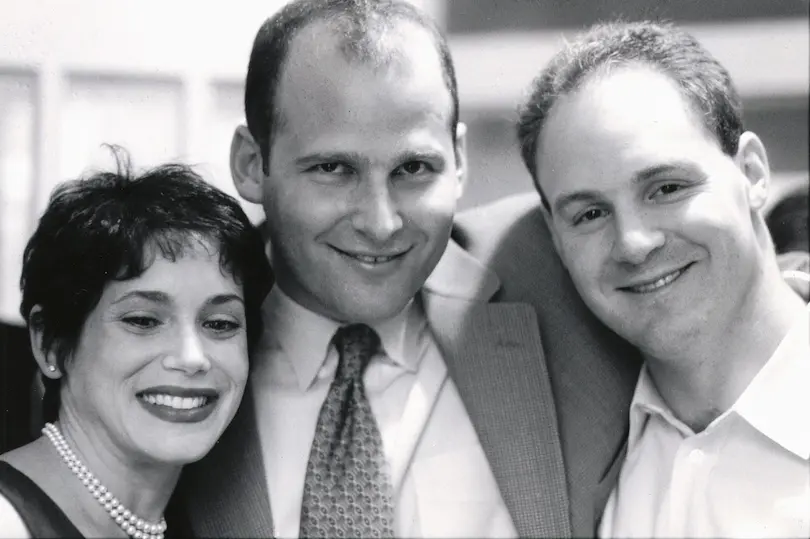 Daniel (on the right) with Marco and his wife, Stacey Nelkin.
Unhappy about the move and feeling out of place in the Israeli high school, Danny found his happy place in Samson’s Gym, an American-style weightlifting gym in Jerusalem. Marco Greenberg, a close friend, met Danny at the gym while spending the summer at Hebrew University at age 22. Danny had been only 16, but he was unusually mature for his age and training on par with the adults.
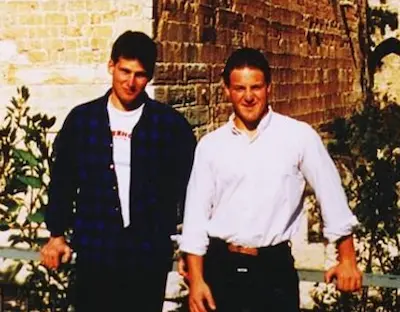 Danny (left) and Marco (right) in Jerusalem in 1987.
Marco recalls, “Danny was just an extraordinary athlete, incredibly formidable from a physical point of view.” Danny won the title of Teenage Mr. Israel in a nationwide bodybuilding competition. “His drive, his effusive nature, his passion, his can-do spirit were unbeatable,” says Marco.
Soon, Danny “was like a fish to water when it comes to life in Israel,” recalls Marco. “Danny was not just proud to be an American, not just proud to be an Israeli, but proud to be a Jew. He loved Israel and the Jewish people.” His family grew more observant, and Danny found himself learning more about Judaism and sharing what he learned with others. “He was always intellectually curious,” says Marco, who found himself connecting more deeply to his own Judaism through his interactions with Danny.
Marco describes Danny as “a bridge between secular and religious.” He felt comfortable both among religious Jews in Israel and in the non-Jewish world. “He knew how to form bonds with people, how to find those points of connection,” explains Marco.
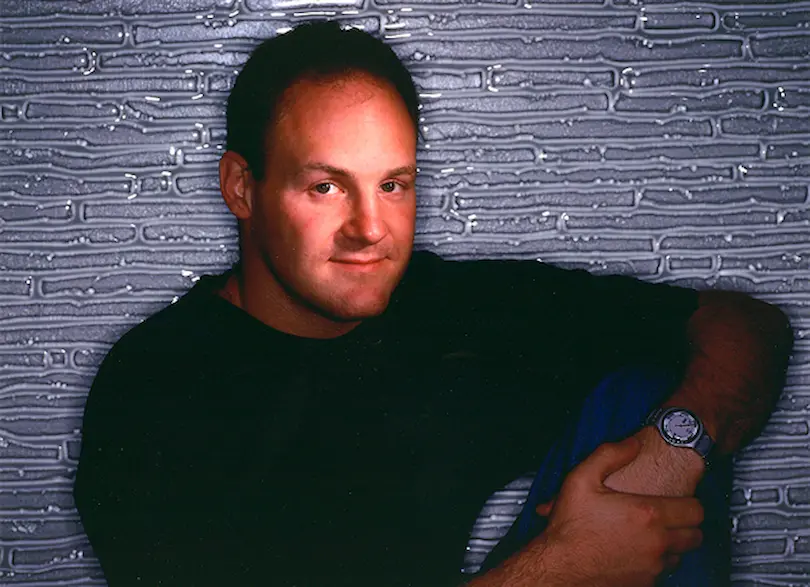
At age 16, Danny told his friends at the gym that he wanted to join an elite IDF unit, Sayeret Matkal. “People laughed at him,” recalls Marco. They didn’t think that an American who was still learning Hebrew stood any chance of getting accepted to an elite commando unit. But once Danny set a goal for himself, he would not give up until he reached it. “He proved them wrong, and I think he relished that,” says Marco.
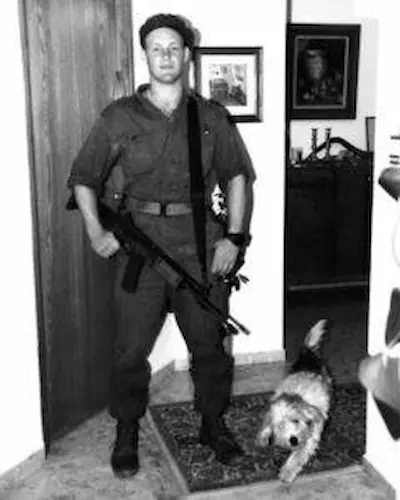 Danny in his army uniform
Lior Netzer, another close friend, met Danny in the army as they were getting ready for a strenuous training exercise. “Danny was always very enthusiastic about everything he did,” recalls Lior. “He was just sitting there, all in eagerness and suspense, hyper focused on what was about to come.”
Lior and Danny clicked immediately and ended up spending a lot of time together in the army. “Danny had to excel at everything he did,” says Lior. “He was incredibly competitive.” During drills, the soldiers had to carry heavy bags with equipment. “Because of his physique and attitude, it never seemed hard for him,” recalls Lior. “And one day I saw Danny walking really slowly and falling behind. It was very unlike Danny.” Concerned, Lior asked if Danny was okay. It turned out that, in order to challenge himself even more, Danny tripled the amount of equipment he was carrying. He was never satisfied with the basics, always reaching above and beyond.
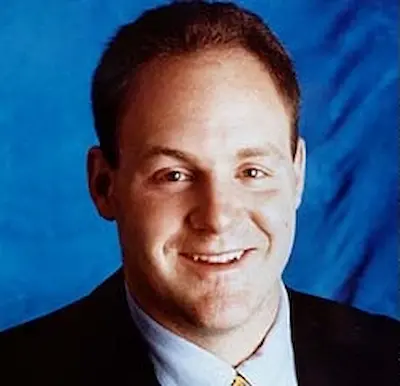
Due to the nature of Sayeret Matkal, stories of Danny in action are classified. Lior can only share that Danny “was a very good soldier. Some of the things he did were physical, some were more mental, and some required more intellect and planning. He was good at it all.”
During his army service, Danny met his future wife, Anne Pardes, an art history student originally from Belgium. When Danny introduced her to Marco, “she struck me as very sophisticated and cultured,” he recalls.
Like everything in life, Danny took his relationship with Anne seriously. They got married in 1991, when Danny was 21.
A few months after his wedding, Danny completed his army service and enrolled in the Technion, the Israeli Institute of Technology. The couple settled in Haifa. They had two sons, Eitan and Itamar.
At the Technion, Danny studied mathematics and computer science, completing two undergraduate degrees. Anyone who came in contact with Danny in the academic world recognized him as a genius. In 1995, Technion named him the year's Outstanding Student in Computer Engineering. Simultaneously, Danny worked full time at IBM’s research laboratory in Haifa.
At the same time, Danny was a devoted husband and father. “He was crazy about his kids,” says Lior. “He was total in everything he did, so he was also total as a parent. They were very physical boys, so he loved to rough it and just play with them.” Marco recalls Danny helping him prepare for a job interview while simultaneously changing his son’s diaper. He was very hands on as a parent.
Danny didn’t forget his friends either. Marco recalls Danny telling him, “You're coming to our house for Shabbat. You'll stay over for Shabbat.” Marco enjoyed spending Shabbat with Danny’s family.
From a young age, Danny had varied interests, which he pursued relentlessly. That didn’t change when he grew up. While at Technion, Danny came across a textbook on parallel algorithms. Impressed by its brilliance, he was determined to meet its author, MIT professor Tom Leighton. Never one to put his dreams on hold, Danny applied to MIT. He was accepted and offered a scholarship.
Though hesitant to leave Israel, Danny followed his dream. The family moved to Brookline, MA, and Danny began studying under Professor Leighton. Later, Danny and Professor Leighton founded a company together.
At MIT, Danny worked on the problem of what computer scientists at the time called the World Wide Wait – the frustratingly slow loading time of the early Internet. Marco says, “Danny was very impatient, and I mean that in a good way. Danny was built for speed. Hence, he speeded up the Internet like never before.”
Danny came up with an innovative idea, which received Leighton’s enthusiastic endorsement. In May 1998, he completed his Master’s thesis, presenting his original ideas.
But it wasn’t enough for Danny to remain in the realm of theory, like most of his friends at MIT. His vision involved bringing theory to practice.
At the time, the Danny and his young family were struggling financially. With his usual drive, Danny determined to make money with his computer science innovations. He assembled a formidable team, including Professor Leighton, as well as Marco Greenberg, and, in his thorough and systematic way, set out to found a start-up.
Lior recalls, “When I heard Danny was running it, I just said I got to work in this company. I moved from Israel to the U.S. just for this, because I knew if Danny's building a company, it's going to succeed. And it turned out to be fantastic!”
After some initial challenges, the company, Akamai Technologies, was incorporated in August 1998, received funding from venture capitalists and unveiled itself in January of 1999. It launched commercial service that April and Danny became the company’s CTO. The founders were determined to revolutionize the Internet by making it faster and more accessible.
Lior headed Akamai’s technical consulting. He describes the office in its early years as very simple: Danny and Professor Leighton “both had standing desks. The office was kind of this hallway, and they were sitting in the middle of all the engineers.”
Always hands on, Danny demanded a lot of others but even more of himself. Lior says that Danny was “an incredibly hard worker. He would work non-stop even on the weekends.” Lior describes an event at Danny’s house, attended by many guests. Every once in a while, Danny would go into the kitchen, reply to several emails on his Blackberry phone, and then return to his guests.
Despite his intense work ethic, Danny remained a warm and caring friend. Lior recalls, “He loved to goof around. As much as he was the CTO of a high-tech company, he was also like a boy inside. It would not be uncommon for him to walk by me in the hallway at Akamai and just punch me in the shoulder and then run off with the anticipation that I would chase him to try and hit him back. That was a very typical Danny thing to do.”
Danny motivated his employees with encouragement rather than criticism. “If he thought someone wasn't working hard, he would let them know,” says Marco. At the same time, he helped others see their own strengths and gifts and reframe their challenges. “Even though he knew that I was, as an example, deeply challenged in math, he would focus like a laser on my strong suit: you write so well, you talk so well, you know so many people. You're awesome. And the compliments were genuine. He knew how to uplift people.”
Marco believes that his competitiveness “came from a Jewish place of realizing that we have to maximize our potential.”
In business, Danny was extremely competitive. Marco believes that his competitiveness “came from a Jewish place of realizing that we have to maximize our potential, that we're given certain gifts and we have to take advantage of the time and the talents that we are given.”
Danny was an engaging public speaker. Lior recalls attending sales conferences with Danny: “everybody would always wait for Danny’s speech. Danny would get up, and everybody would just look at him, riveted, because he was so charismatic. He had the ability to inspire everybody to follow his vision.”
In October 1999, Akamai went public. Overnight, Danny became a billionaire. But he didn’t stop there. “Akamai was his baby, and he was very proud of it,” says Lior. “But he didn't take time to stop and smell the roses. He was constantly just grow, grow, grow.”
Israeli media outlets covering Akamai’s success story quoted Danny as saying1, “I wouldn’t hesitate to describe myself as a proud Israeli, who is on an extended shlichut (mission) abroad. So while I am convinced I will return to Israel one day, currently I am devoting my time and energy to building Akamai Technologies into a global high-tech power that we hope will have a big impact on the Internet.” He also suggested potentially opening an Akamai branch in Israel.
Danny was glad to have solved his financial problems for the time being. The family purchased a larger home, but they did not indulge in luxuries. The only luxury Danny allowed himself was several motorcycles, a hobby he enjoyed.
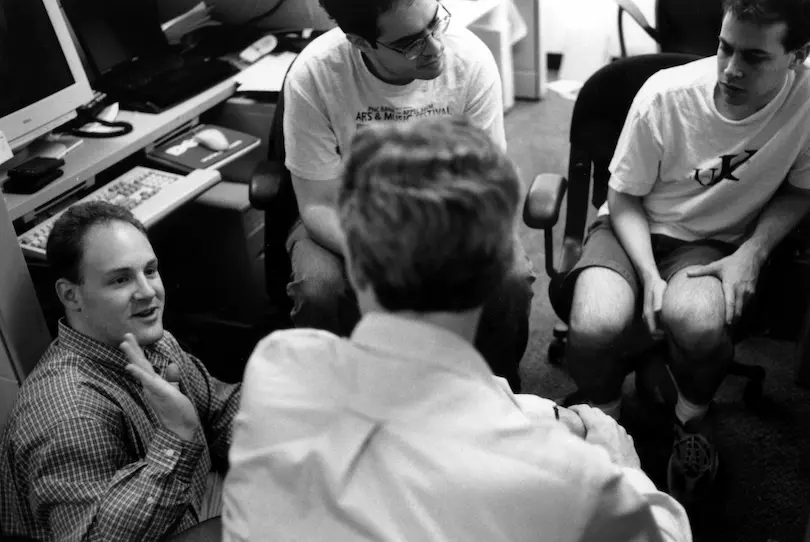 Danny with his colleagues at Akamai
After its initial soaring success, Akamai encountered hard times due to the dot-com stock market crash.
Lior recalls that at the end of every quarter, when the executive team scrambled for funds, “it always looked unachievable, and I think we hit it the majority of the time. I would say that is because of Danny. He had this blind faith that it could be done, and he made you believe it, and work day and night to get there. It was a charismatic, very personal type of leadership.”
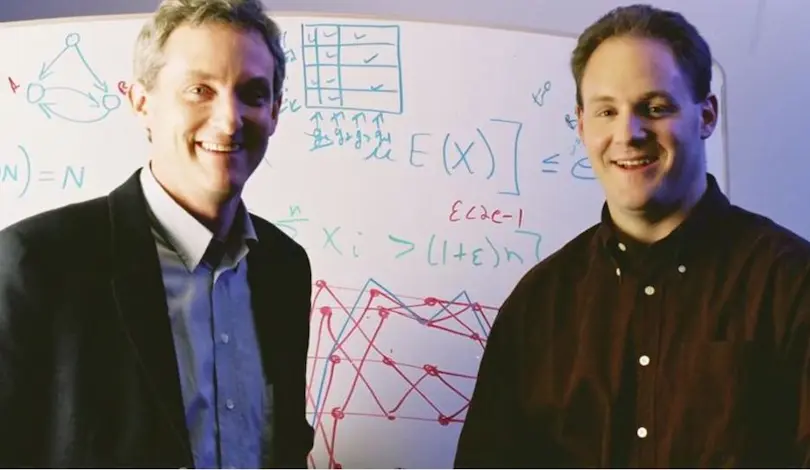 Tom Leighton and Danny Lewin founded Akamai in 1998.
Courtesy Akamai Technologies
By September 2001, the company was struggling, and Danny was forced to lay off many employees. Marco recalls, “It pained him to fire people that he had convinced to join. He cared so deeply that for him, to lay off people felt like abandoning them to a certain extent. He felt horrible about that. But he had no choice because he had to keep the business going.”
It was under such dire circumstances that Danny got onto a plane from Boston to Los Angeles on that fateful morning of September 11th, 2001. He intended “to save the company,” says Marco.
Seated in business class, Danny must have been among the first passengers to realize that the plane he was on was being hijacked. His army training kicked in and he fought the terrorists.
According to the Commission Report based on recordings and other available evidence, when two terrorists seated in front of Danny moved to the cockpit, he got up and attempted to stop them. He was stabbed in the neck by a third terrorist, seated right behind him. Thus, Danny became the first victim of 9/11. Twenty minutes later, the airplane hit the North Tower of the World Trade Center in New York City.
That day, when so many people were searching for news of their loved ones, Akamai technology was used like never before. Reeling from the shock of Danny’s death, the employees pushed through, determined to continue Danny’s work. They fielded the clients’ support requests as almost all news outlets relied on Akamai services. Professor Leighton later recalled2, “September eleventh was a day that proved everything Danny was saying—that this could be done, that this will work.”
Though the company struggled for the next couple of years, eventually it pulled through. Anyone who had known Danny was motivated to work hard for his sake. Since 2004, Akamai has remained profitable. Akamai is an S&P 500 company and delivers up to 30% of all the content on the Internet. The market cap is over $15 billion, and they are also part of the current AI revolution. Akamai now has offices all over the world, including Israel.
Danny’s widow, Anne, eventually remarried. His sons are now grown up with families of their own. Eitan works as a paramedic, and Itamar is an entrepreneur. Danny’s parents and brothers still live in Israel. The family, as well as Danny’s close friends, continue to perpetuate his legacy.
Sources:









I think my sister told me about about Danny( obm) that tried to stop the terrorists, unfortunately there were no more people to help him, fight off the terrorists and not the right training to do so
Wonderful to know about Danny Lewin. May his memory be a blessing
This story makes me so proud to be a Jew. It reminds me of the responsibility that Jews have to be an example to the world with moral, kind, and determined acts, and to continue pushing forward even when things get difficult.
An incredible, poignant story to read about Danny. I can’t help but fathom why Hashem put ‘free will’ as the ‘most’ important concept for man. It leaves too many unanswered questions.
Time to bring back the leather collar that the Marines wore when fighting the Barbary pirates.
This man pushed himself to excellence in all aspects of his life and did so much which what Gd gave him, and it was all snuffed out by worthless trash from.a worthless culture that can only destroy, not build. That is so painful. But they will be asked what they did with the talents Gd gave them, as well.
I have not been able to stop the tears from al the September 11 stories I have been reading. And the worst story of all is that the entire narrative has been inverted so that the monsters who perpetrated this are now considered brave freedom fighters, while the true heroes in Israel and the United States who try to eliminate them are now the monsters. World turned upside down. I am not Jewish nor religious at all, but this doesn't require religion. Just a brain able to discern the difference between good and evil. The biggest tragedy of all is that this is currently in short supply. How desperately we need more Dannys, not less.