




 Canada Is No Longer Safe for Jews


7 min read
5 min read



10 min read


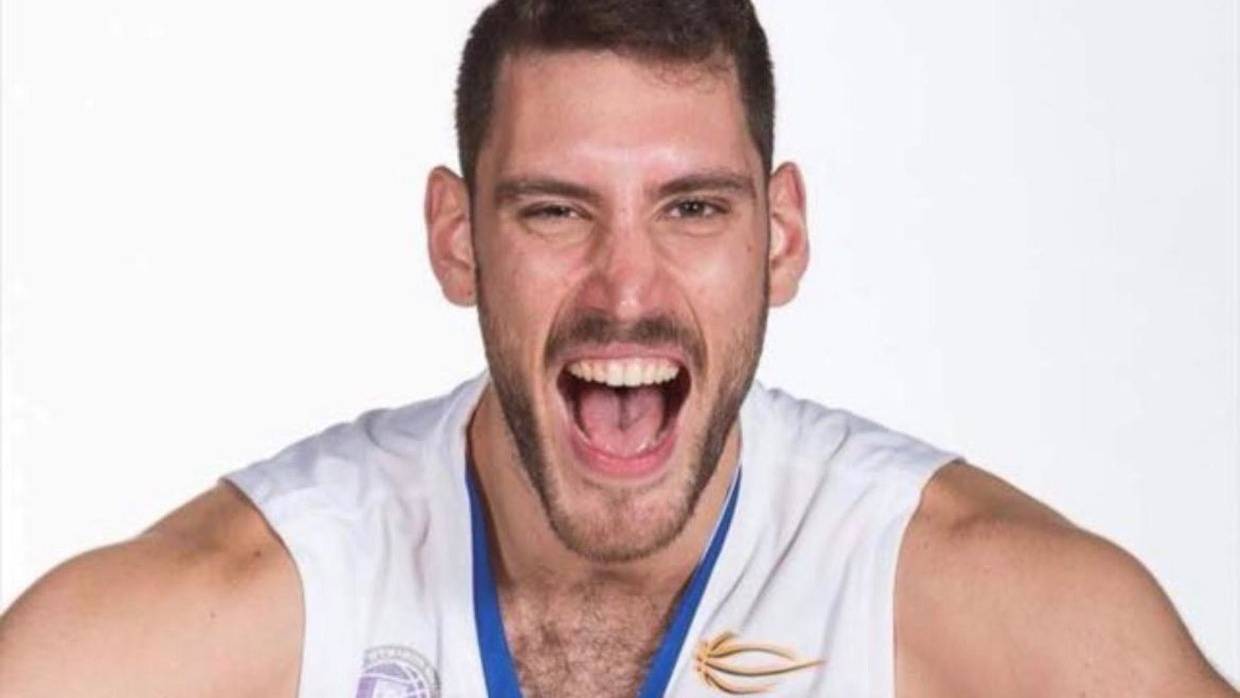
The 6’10” Israeli basketball star shares his secrets of success, on and off the court, and how Oct. 7 changed his life.
Daniel Tamir, 33, grew up in Israel with a basketball in hand. Born and raised in Jerusalem, his family groomed him to play professional basketball from a young age. His older brother, Amit, set the precedent; he played professional ball in Israel and Europe for 20 years. He was invited to the training camp for the Orlando Magic and almost made it to the NBA.
Growing up, Daniel was always known as “Amit’s brother.” He was projected to be taller and fans always told him, “You’re gonna be even better than him.You’ll be the first Israeli NBA player."
While everyone was sure of Daniel’s future stardom, the reality was that by the end of seventh grade, Daniel was overweight and barely able to run up and down the court.
When he felt his lungs exploding after less than a minute of running, he knew something needed to change.
Before the end of the school year, he asked his coaches for some drills to practice. That summer, he spent five hours a day practicing alone. Not only did he lose a ton of weight, he refined his skill to such a degree that the following year, he was named the best player in Israel for his age bracket.
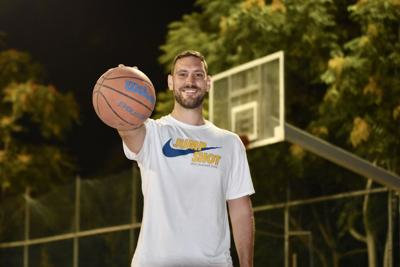
By the age of 15, Daniel was invited to join the Israeli National team and played in European tournaments. He received a lot of attention because of his brother, and eventually earned recognition for his own incredible skill.
When Daniel finished high school at the age of 18, he began to play professionally while completing his mandated army service. Because he was a professional athlete, the army offered him a unique status and allowed him to work with kids at risk instead of going directly into combat.
After Daniel completed his army service, he continued playing during the regular season. During the summer, he traveled to various Jewish camps around the world to teach in skill-based clinics.
His exposure to Orthodox Jews at these camps challenged his preconceived misconceptions. Growing up, Daniel hated Orthodox Jews; when he saw a religious person walking down the street, he would cross to the other side in abhorrence.
His positive encounters in America with observant Jews opened him up to reconsider some of his assumptions that were ingrained in him by the left-wing, secular media in Israel.
In 2016, Yeshiva University tried to recruit him to play for their team.
Daniel said, “I told them to leave me alone. Yeshiva and I are two things that do not go together.”
When YU continued the pursuit, Daniel began to see the benefits of playing basketball in America while attending college. He accepted their offer.
Daniel walked into Yeshiva University on the first day with a mohawk and a tank top. Rabbi Johnathan Shippel, who leads a synagogue on the Upper West Side, invited him to put on tefillin. Daniel refused and walked the other direction.
Another rabbi consistently invited Daniel for Shabbat, to no avail.
Before Yom Kippur, Rabbi Shippel offered to get Daniel a hotel room for the holiday. He said, “I’m paying. I don’t care if you only come to prayer services one time, just join us!”
Daniel realized these rabbis may actually care about him. Next, he was invited to spend Shabbat in Long Island, at the home of an affluent local family.
Daniel explained, “They had a beautiful home. I saw that they had financial success and a nice Jewish tradition. The whole environment was tremendous in my eyes.” In an effort to respect the family that evening, Daniel decided to put away his phone. After the meal, Daniel thought, Let me just keep my phone on the side and see what Shabbat is all about.
“I kept my very first Shabbat that weekend.”

On Shabbat afternoon, he was introduced to Rabbi Moshe Weinberger, the Rabbi of Aish Kodesh of Woodmere, New York. The Rabbi invited him to a singles mixer happening on Saturday night.
The Rabbi promised good food, music and tons of singles to mingle with. Daniel was intrigued, but when he got there, to his dismay, he saw a partition separating the women and the men.
Daniel groaned and wondered what he got himself into.
He decided that he would quickly eat and leave. While he was mid-bite, the Rabbi grabbed his hands and brought him to the middle of the circle to dance.
“I cannot explain why, but that moment caused me to have goosebumps all over my body. I knew there was a real spiritual connection. I thought, there is something here. I need to find out more.”
In the weeks to follow, Daniel started asking questions about Judaism. Shortly thereafter he decided to don tefillin for the very first time since his Bar Mitzvah.
Daniel prayed, “If there is something about me putting this cow’s leather on my arm, then show me a sign.”
Good things started coming his way. Daniel started to have more financial success, better grades and several “coincidences” that led to more opportunities. He kept meeting people who ultimately led him towards more success. Daniel understood it wasn’t just serendipity and he accepted the blessings and decided to start keeping Shabbat regularly. The more Daniel did to strengthen his connection to God, the more good things kept happening.
Daniel was introduced to the Ostrov-Biale Rebbe, a mystical rabbi who knew things about Daniel that no one else knew.
The rabbi cryptically repeated to Daniel, “Basketball and Torah.”
At Yeshiva University, Daniel started learning Torah with Tyler Hod, a fellow player, in the locker room before the games.
After they learned together for the first time, the team won the game. They began to notice that each time they learned, they won. They won eight games in a row.
Shortly after that incredible streak, the team had an away game in Farmingdale, New York. They didn’t have the chance to learn beforehand because they arrived late to the game.The team lost in overtime.

They decided to learn before each game, and had another winning streak.
Before the final game of the season, they got a Rabbi on the phone who learned a short passage with the whole team. They won the championship that night for the first time in YU's history.
Daniel shared, “That was the first championship we won in the history of the school. To this day, YU still has this learning tradition.”
Daniel eventually graduated from YU and worked for six years in finance. In the summers, he would teach Judaism for different outreach programs.
After October 7th, 2023, Daniel made a big life decision.
“When October 7th happened, I was on a leave of absence from my job. I was a Vice President at JP Morgan. I realized: I do not want to do this anymore. I want to teach kids. I had been doing that since I was in the army, and it was time to answer my life’s calling.”
Daniel gave up his position and began searching for the right job in education.
 Daniel with his family in Israel
In February of 2024, he was sending a lot of supplies to Israel and brought a group of Nova survivors to Ojai for a healing retreat.
The following week, he brought a group of displaced kids from Israel to the U.S. for some much needed respite. He brought them to a local Jewish high school and was offered a job on the spot.
“This was exactly what I wanted to do. I feel blessed for the opportunity, and receive tremendous satisfaction from my impactful work.”
Daniel combines lessons from basketball with Jewish wisdom to engage and inspire his students.
He learned from the sports psychologists that one of the most powerful tools is to be able to train your thoughts. He was taught to be as present as possible at all times on the court, and to stay in control of his mindfulness. Daniel believes the ability to do this makes you unstoppable in many real-life scenarios.
“Staying in the present is the most powerful gift. The past is past, the future is what God knows. But what’s happening right now is my choice.”
At every moment we choose whether we are enjoying life or not. “Imagine you are playing basketball and something does not work the way you wanted. You miss the shot, or your opponent drives by you. What now?”
Daniel conveys four basic steps to mental strength called Self Talk:
With these four steps, you can bring yourself into the present moment at any point, both on and off the court.

Daniel’s mental training helped him at his previous position with JP Morgan. “Imagine a prospective client would bring millions to the portfolio and to the team. You try to recruit him. You say all the right words and take the right steps. But the client goes elsewhere.”
You are devastated, but you can snap out of it with the four steps.
Daniel now loves all Jews, both religious and non-religious alike.
“A lot of what I always thought about Orthodox people was a misunderstanding. When it comes to making assumptions, before you go ahead and take something as a given and absolute truth, do research. Look at factual evidence, and then make a decision.
“If you do not give yourself a chance to look at both sides, you are doing yourself a disservice and causing damage to others.”
Today, Daniel is better known as Rabbi Tamir. He is happily married and following his dream, staying mindful and teaching basketball and Torah.












Awesome read! Super inspiring to see how much potential one has to change!
I really wanted to love this article but the emphasis on affluence and money is gross.
He gave up a lucrative position to teach- that sure doesn't seem like someone whose life revolves around status, money, and success!
Deb, did we read the same article? I did not notice any emphasis on materialism. And even if so, true Judaism encourages financial success which will lead to furtherance of spiritual growth, which is exactly the take away message of this interview.
@Deb: I think your take is reasonable as I see how you can read the article that way. However, I know Daniel personally from YU classes and don’t think this short article paints the entire picture of the man he is. He has depth, a heart of gold that’s full of love for all people, and he’s a genuine, down-to-earth individual. He’s an inspiring, hardworking guy who despite facing real adversity constantly keeps a positive mindset.
What I’d like to extract from the article’s repeated mention of Orthodox Jewish affluence is that the generous gestures of the community are not anecdotal, but indicative of its greater identity. It is a great blessing to have many who genuinely care and lovingly share the good they have in life. Their kind actions have the power to bring others closer to G-d.
I think thou protest too much. A kid from kibbutz wowed by a wealthy observant family who then gives up a lucrative career in finance is hardly "gross"
How wonderful!
Yasher Koach!
"mental strength called Self Talk:"
Love it! will be emphasized leading to discussion in class (teens)
Kol-Hakavod