








 Seven Reasons for Hope on October 8






This week we remember one of the most devastating attacks in Jewish history.
Imagine a series of physical attacks on Jewish communities that were denied, with the perpetrators held up as freedom fighters and heroes. Imagine a time when Jews fought their enemies in self-defense, only to be accused by their enemies of using disproportionate force and war crimes.
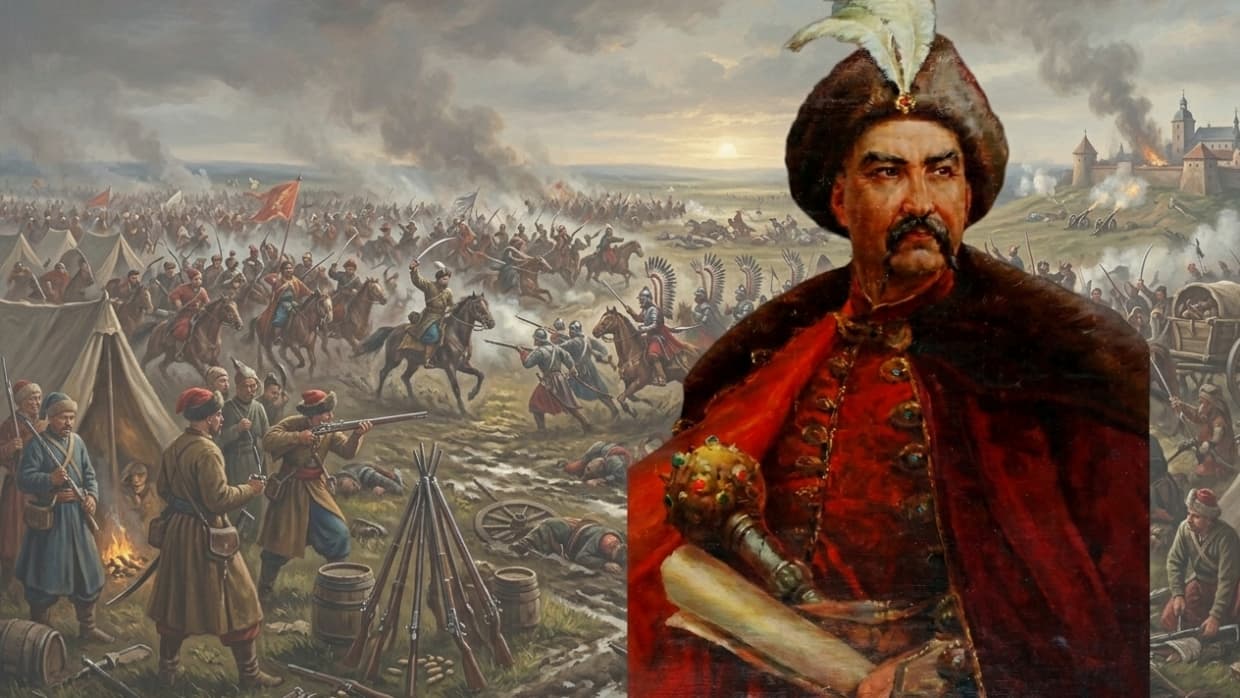
Over 300 years ago, the Jews of present-day Ukraine were terrorized in an orgy of unimaginable violence and vicious attacks. About 100,000 Jews were murdered in what became known as the Chmielnicki Pogroms.
 Jewish life still bears the scars. Yet few remember this reign of anti-Jewish terror, and Bogdan Chmielnicki, the leader of the bloodshed, is today hailed as a hero.
In the early 1600s, the Polish-Lithuanian Commonwealth dominated Europe. Lasting from 1569 to 1795, it brought together holdings from the Polish royal family and Lithuanian aristocracy, and included territories from present day Belarus, the Czech Republic, Estonia, Latvia, Lithuania, Moldova, Poland, Russia, Slovakia, and Ukraine. At a time when the population of Europe was immeasurably smaller than it is today, over 10 million people called the Polish-Lithuanian Commonwealth home, approximately 13% of the population.
Hundreds of thousands of Jews lived in the Commonwealth, many concentrated in the region that today is Ukraine. Jewish learning and culture flowered. The Jewish diarist Gavriel ben Yehoshua Schlossburg wrote in 1651 that the Commonwealth was “a delight to all the lands of the Exile for its Torah, honor, and greatness.”
Yet the Jews in this area were largely reviled. Most of the land in present-day Ukraine was owned by Catholic Polish noblemen, who treated the lower classes, including their tenant farmers, terribly. The peasants who worked the land were Ukrainian-speaking Eastern Orthodox Christians. They bore crushing taxes, religious oppression and were exploited mercilessly by their Polish overlords. Polish landowners didn’t collect their own taxes; they employed Jews to run their estates and collect tributes from the peasant class. Jews also worked at the behest of Polish lords as tavern keepers and money lenders. For many members of the lower classes, Jews were the most visible face of the unfair system that stymied their lives.
Lower class Ukrainians viewed Jews as hated outsiders, and so did the Polish lords who employed Jewish workers. Polish nobles took no responsibility for the rights and safety of their Jewish workers. Hated by all and protected by none, Ukrainian Jews were dangerously exposed to the popular discontent that was brewing in the middle of the 17th Century.
This toxic cauldron of exploitation and popular discontent was ripe for revolution. When it came, it began in the south of the Commonwealth. The south of the kingdom was home to semi nomadic, warlike tribal people. They called themselves Kazak, the Turkish word for a free man or an adventurer; today we know them as Cossacks. Cossacks were often employed by Polish noblemen in present-day Ukraine as private militias.
Further south, beyond the border of the Polish-Lithuanian Commonwealth, lay the Ottoman Empire, and an area that was home to the Muslim ethnic group, the Tatars. Traditionally enemies, Cossacks and Tatars had a history of staging raids on one another and taking members of each community as slaves. This historic enmity was soon to be overcome, as both Tatars and Cossacks rose up against Poles and Jews.
Tensions boiled over in 1635, and then again in 1636. Local peasants and Cossacks in the countryside near the town of Preyeslov joined together in rebellion against local Polish landlords. They succeeded in establishing a “free” territory for a few months and used this short-lived independence to massacre the Jews in their midst. About 2,000 Jews were murdered within a week. Thousands more fled the area before the rebellion was put down.
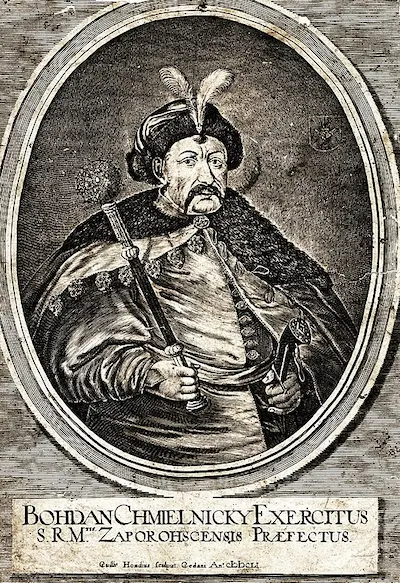
Bogdan Chmielnicki - his name is also spelled Khmelnitski in English - was a Cossack fighter who’d battled Tatars on behalf of Polish lords. By the time he was in his early 50s, he was a washed-up ex cavalryman who’d failed at numerous business enterprises. In 1647, Chmielnicki was living with his wife in the region of Czehryn when the Polish Governor committed a terrible crime which pushed Chmielnicki into unhinged violence. The Governor sent troops into Chmielnicki’s home and ordered them to kidnap his wife.
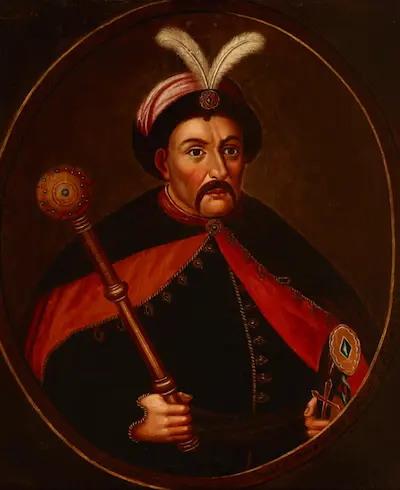 Bogdan Chmielnicki
Chmielnicki joined the Cossack Zaporozhians, a group of escaped convicts and slaves who lived by their wits and attacked local communities. He rose to the position of Hetman, or military commander, and imposed military order on them and enlisted the help of the Tatar khan of Crimea, who pledged Tatar loyalty to Chmielnicki’s fighting group.
In 1648, Chmielnicki’s soldiers launched a massive uprising against Polish noblemen, and were soon joined by peasants, townspeople, and priests throughout the Polish-Lithuanian Commonwealth. This new fighting force encountered enormous success, sweeping through much of the kingdom within months.
By October 1648, Chmielnicki’s forces captured Lwow (today called Lvov), one of the largest cities in Ukraine. By 1649, Chmielnicki was powerful enough to sign the Compact of Zborow, an agreement with Poland’s King John Casimir carving out an independent Cossack territory. (Chmielnicki’s territory continued to be subject to Polish landlords, and he renewed his war in 1651, finally offering his followers’ allegiance to Russia in 1654.) Bogdan Chmielnicki died in 1657, while he was still trying to secure Cossack independence and rights, this time from Russia’s tyrannical Czar.
The Cossacks inflicted unfathomable cruelty on all who stood in their way. They raped nuns and beheaded Roman Catholic priests and bishops before stripping Catholic churches of their finery and burning them. Polish nobles were seized and held for ransom, then often tortured to death despite their ransom having been paid.
The most vicious violence meted out to Jews. Rabbi Nathan Hanover lived through the Chmielnicki massacres and recorded the events in his work Yeven Metzulah, which means “The Abyss of Despair,” in 1653. A typical passage concerns Jewish communities near the Dnieper River, which was the heartland of Chmielnicki’s followers:
Some were skinned alive and their flesh was thrown to the dogs; some had their hands and limbs chopped off, and their bodies thrown on the highway…. Some had wounds inflicted upon them, and thrown on the street to die a slow death; they writhed in their blood until they breathed their last; others were buried alive. The enemy slaughtered infants in the laps of their mothers. They were sliced into pieces like fish. They slashed the bellies of pregnant women, removed their infants and tossed them in their faces. Some women had their bellies torn open and live cats placed in them. The bellies were then sewed up with the live cats remaining within. They chopped off the hands of the victims…. The infants were hung on the breasts of their mothers. Some children were pierced with spears, roasted on the fire and then brought to their mothers to be eaten. Many times they used the bodies of Jewish children as improvised bridges upon which they later crossed…
Other eyewitnesses included the famous rabbi Rav Shabbetai ben Meir HaKohen (1621 to 1662), who lived through the carnage and estimated Chmielnicki’s followers murdered about 100,000 Jews. Shemuel Faivush ben Natan Feitel witnessed the massacres and wrote about them in his circa 1650 work Tit Ha-Yavein (“Hell”). He counted 140 synagogues which were destroyed and estimated that 670,000 Jews were murdered. (Contemporary accounts put the number at anywhere between 20,000 and 100,000.)
Some Jews escaped. Tens of thousands fled north to Lithuania and Poland’s northern territories; others went to Holland and Italy. Jews generally fared better under the Tatars, who kidnapped about 30,000 Ukrainian Jews and ransomed them to Jewish communities in Italy, Morocco, Tunisia, Greece, Syria, and Jerusalem.
The cataclysm of the Chmielnicki massacres altered the geography of Jewish Europe, forcing Jews to move to new countries, bringing their customs and language with them.
Jewish life and thought also evolved after the horror of so much death. Some Jews began to embrace Kabbalah, mystical elements of Jewish thought. As Rabbi Berel Wein points out: “After surveying the wreckage of their lives and communities, Eastern European Jews decided that the outer world was cold, unfriendly, deadly, and frightening. The inner kabbalistic world held out hope, comfort, and purpose. (Triumph of Survival: The Story of the Jews in the Modern Era 1650-1990 by Rabbi Berel Wein: 1990).
Another important development was to increase the popularity of a major work of Jewish scholarship, the Shulchan Aruch, the Code of Jewish Law. Written in the mid-1500s in Safed, a northern city in Israel by Rabbi Yosef Karo, the Shulchan Aruch describes Jewish law in clear, easy to understand ways. When Jewish schools were shuttered, rabbis murdered, synagogues burned down, and entire Jewish communities wiped out, many Jews treasured their volumes of this work, which could answer religious questions when no rabbi was available to consult. As a result, the Shulchan Aruch became even more ubiquitous, resulting in greater Jewish literacy overall.
After the defeat of Chmielnicki, Polish nobles turned on the Jews in their midst, accusing them of siding with the Cossacks. For centuries after the uprising, many Ukrainians blamed Jews for creating conditions that made Chmielnicki’s actions inevitable and even reasonable. Historian Zenon Kohut has noted that even in modern times, Ukrainians often perceive “the Jew (as) a rapacious, deliberate, and at times, even independent exploiter of the Ukrainian people who lorded over them controlling and openly mocking the one true Orthodox faith.”
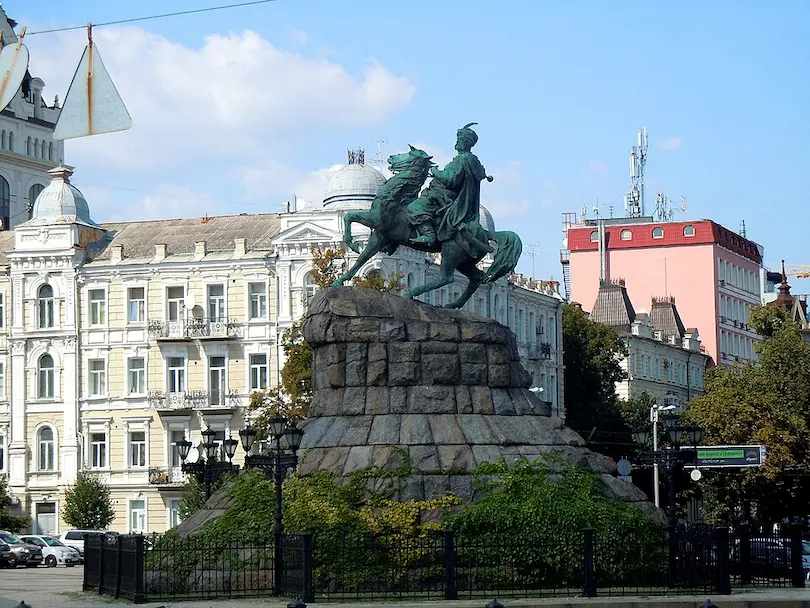 Chmielnicki monument in Kiev (Wikipedia, © Yuriy Kvach)
Meanwhile, when Bogdan Chmielnicki is remembered at all, it is as a hero. In Ukraine, a plethora of streets and awards bear his name. Chmielnicki’s likeness appears on the 5 Hryvnia banknote. In the capital city Kiev, one of the oldest and most famous monuments is a statue of Chmielnicki. In 1954, the city of Proskuriv in western Ukraine was renamed Khmelnytskyi City in his honor; the entire region it sits in also bears his name: Khmelnytskyi Oblast.
Chmielnicki exerts fascination outside of Ukraine, as well. He’s widely regarded as a hero in Russia. The Ukrainian Cultural Garden in Cleveland houses a portrait of Chmielnicki. In February 2026, the Band of the Irish Guards played a military march called Bohdan Khmelnytsky, about Chmielnicki’s exploits, at Buckingham Palace to mark the fourth anniversary of Russia’s invasion of Ukraine.
Jews commemorate the Chmielnicki Massacres on the 20th day of the Month of Sivan. In the year 2026, this date falls on the evening of Thursday, June 4, and lasts until sundown on Friday, June 5.
The 20th of Sivan chosen because it saw a particularly cruel massacre during the Chmielnicki uprising: the murder of 6,000 men, women, and children in the Ukrainian city of Nemirov.
Before 1648, Nemirov was known as a center of Jewish learning; thousands of Jews called this bustling city home. An old town, it was surrounded by a stone wall. As Cossacks advanced, Jews from nearby towns fled into Nemirov, swelling its Jewish population further.
Chmielnicki sent 300 fighters to conquer the city. They coordinated with Greek Orthodox peasants inside the city to deceive the many thousands of Jews sheltering there. On June 20, 1648, Cossack soldiers marched on Nemirov carrying Polish flags. When guards, including Jews helping to defend Nemirov, opened the city’s gates, they were attacked, with Nemirov’s non-Jewish citizens joining in the killing. Jews were given the option of converting to Eastern Orthodox Christianity to escape death, but the vast majority refused and were murdered in a bloodbath of epic proportions.
Polish Jewish leaders chose the date of their death to mourn all the many thousands of Jews who died in the Chmielnicki uprising.
For years, the 20th of Sivan was observed as a fast day. That practice was largely lost with the Holocaust, which wiped out most of Poland’s and Ukraine’s Jews.
With the Chmielnicki massacres largely forgotten, and with Chmielnicki hailed as a hero in much of the world, let us make an effort to remember this period of Jewish history.







This is an ongoing question in interpretation of US history. Only one (John Adams) signer of the Declaration of Independence did not own slaves. It’s immoral to own another human being. (The ancient Hebrews did not own “slaves” in the American sense.) I think humans are capable of horrible cruelty and tremendous bravery.
Does the saying"By any means necessary" ring a bell?
Using rape,burning and beheading as methods of revolt.
Nothing has changed in 500 years.
Not all present day Ukrainians admire Hetman Chmelnicki. Few have any issues with the massacres his men perpetrated against the Jews from 1648-54 but many dislike his selection of Muscovy-now Russia-as Ukraine's "protector" in 1654. Given the extreme animosity generated by the present Russia-Ukraine war,his historical reputation amongst Ukrainians is not likely to improve any time soon.
And yet, if Russia and Ukraine kill each other in this war and it lasts a generation and there is no Urkaine left anymore, I would not shed a TEAR for any of these anti-semitic pieces of crap.
Personally,I think they deserve each other.
Chmelnicki actually wanted the Ottoman Empire to be the protector of Ukraine but the Ukrainian Church revolted against the idea of an alliance with Muslims.
Constant Polish attacks meant that he had no alternative but to seek an alliance with Russia.
Unfortunately, the Russians became infected with Ukrainian anti-semitism.
Man’s inhumanity to man knows no bounds.
“ Imagine a series of physical attacks on Jewish communities that were denied, with the perpetrators held up as freedom fighters and heroes. Imagine a time when Jews fought their enemies in self-defense, only to be accused by their enemies of using disproportionate force and war crimes.”
We don’t have to imagine it, it’s happening today.
Yes, this has already been said by a previous commentor.
Bogdan Chmielnicki was a cruel tyrant who not only massacred Jews, but also violently persecuted and murdered Polish Catholics, and looked the other was as Tatar allies butchered and enslaved even some Ukrainians. While he ended the unfair Polish Lithuanian rule, he did so with sickening violence against civilians, and replaced it with other systems of oppression. A failed “hero.”
Nothing much has changed: Jews are still falsely accused by ignorant brutes who swallow the outrageous lies of their "saviors" and devote all their energy to the single thing they know how to do: wreak havoc.
(That's apparently much easier for them than taking ample opportunities to better their lives.)
Hatred drives them, and it's hatred that will bring about their well deserved end (like all dastardly and misguided enemies of the Jews, but fools refuse to learn from history)!
Hashem sends evildoers to punish evildoers. Russians now kill Ukrainians; Ukrainians are killing Russians.
So Hashem sent the Ukrainians to punish the Jews?
Thank you for letting us know of this maniac. My family came to this country from Ukraine which was Russia at the time. I certainly knew of the Cossacks who committed many pograms. That is why my family fled to America
I wonder if we would remain a minority if we were not killed in so many historical occurrences, such as continues killings and persecution of religious reasons.
The Cossacks who massacred your ancestors were Russian Cossacks. The Ukrainian ,or Zaporzhian,Cossacks were eliminated in 1775 when their order was dissolved by Catherine 2. This followed another series of monstosities perpetrated by this crowd under the leadership of one Ivan Gonta-another psychopath. Catherine cared nothing for the Jews he massacred but felt, if left unchecked, he could become a threat to Russian rule in Ukraine,
Russian Cossacks,mostly from the Don country, eventually became the mainstay of the late Romanoff regime. They protected the pogrom perpetrators-and frequently joined them.