
 The Shofar: Beyond Words




This year Rosh Hashanah opens in total silence – no shofar at all. Here's what that silence can teach us about faith and your inner essence.
There are moments when we suddenly become aware of our breathing. A frightening diagnosis, a phone call in the middle of the night, waiting for news about someone we love, an antisemitic incident that once seemed unimaginable – our chest tightens, our heart races, our breathing turns shallow.
In those moments, we instinctively take a deep breath.
As we enter Rosh Hashanah, many of us could use a deep breath. The last few years have been relentless: October 7 and its aftermath, a prolonged war, the confrontation with Iran, rising antisemitism worldwide, and a growing sense that assumptions we once took for granted can no longer be assumed. We're exhausted.
And that's before we even get to our individual lives. Some are waiting to find a spouse, yearning for a child, navigating illness, caring for aging parents, struggling with kids, worrying about money, or carrying a private pain no one else can see. We're functioning, moving, doing what needs to be done – but sometimes it's hard to breathe.
Maybe that's why one of Rosh Hashanah's most important messages is so simple: remember to breathe. Not as a meditation technique or self-help trend, but because of how the Torah describes the creation of the first human being, the very event we commemorate on this day:
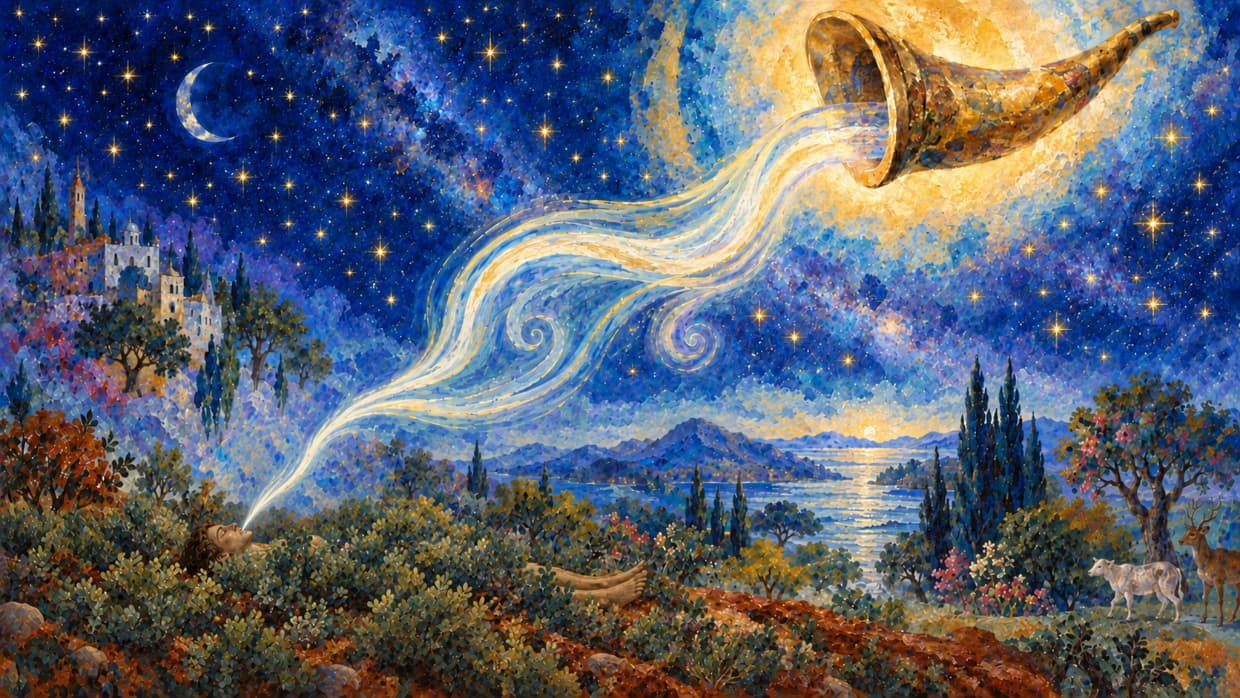
"God formed man from the dust of the earth, and He breathed into his nostrils the breath of life, and man became a living being."
Life began with a breath.
The body was already formed, the organs were there and the physical infrastructure was complete. But Adam wasn't yet alive. Life began with a breath.
The Nefesh HaChaim, a classic work of Jewish thought, zeroes in on the Torah's unusual wording: vayipach b'apav, God "blew" into Adam. When a person blows, the air comes from deep within them. The Torah is telling us something profound about ourselves: our neshama, our soul, originates from the deepest place of all – from God Himself. Our neshima, our breath, points us toward our neshama, our soul.
That connection surfaces again in the final words of Psalms: “Kol ha'neshama tehalleil Kah, Let every soul praise God.” The Sages hear another meaning in those words: Al kol neshima u'neshima she'adam nosheim, tzarich l'hallel laKadosh Baruch Hu, for every breath a person takes, he should praise God. Every breath is a gift, but perhaps there is something more. Breath isn't merely something for which we praise God. Breath itself can become an expression of faith.
When we panic, our breathing turns shallow and rapid. When we feel threatened or overwhelmed, our body often knows it before our mind catches up. Heart racing, muscles tight, breath shifting. That's exactly why controlled breathing is used by people operating under extreme pressure.
Navy SEALs use a method called "box breathing": inhale through the nose for four seconds, hold for four, exhale for four, hold again for four, repeat. The danger hasn't disappeared. What's changed is the ability to stay composed enough to respond instead of just react.
Emunah, trust in God, doesn't mean nothing frightening will happen, or that everything unfolds according to plan, or that we pretend danger and pain don't exist. Emunah means remembering, even from the narrowest place, that we're not alone. Sometimes a deliberate breath is itself an act of emunah – a moment of reconnecting our breath (neshima) with our soul (neshama), and remembering the Source of both.
On Rosh Hashanah, that entire journey has a physical expression: the shofar. It's a remarkably simple instrument – no strings, no reeds, no keys. It makes no sound of its own. It takes our breath and amplifies it. When we blow the shofar from deep within ourselves, we're returning to the original breath of creation, declaring that beneath all the distractions, mistakes, anxieties, and distance of the past year, the breath God breathed into us is still there.
When we blow the shofar from deep within ourselves, we're returning to the original breath of creation.
This year comes with a twist. The first day of Rosh Hashanah falls on Shabbat, so there's no shofar. We'll say the verses about it, recall its sounds, reflect on its meaning -- and the room will stay silent.
Maybe that silence carries its own message. The shofar may be quiet, but we're still breathing. The instrument isn't sounding, but the breath that would have moved through it is still inside us. Perhaps God is asking us to find the message of the shofar before we even hear it. Can we locate the breath without the shofar? Recognize the soul without needing the blast to wake us? Remember Who breathed life into us, even in the silence?
On the second day, when we finally hear the shofar, that breath will travel through the narrow opening and emerge from the wide end. The shape of the instrument tells the story on its own – narrow, then wide – echoing the words of Psalms: "We call out from constriction and seek expansiveness." We move from feeling trapped to finding space, from breathlessness to breath.
Even the sounds trace the same arc. We open with tekiah, a long, whole, confident blast. Then the broken shevarim, echoing the moments life breaks us, our breath catching. Sometimes it turns into teruah, short staccato bursts that sound almost like the breath of anxiety. But we never end there. After the broken sounds comes another tekiah. Brokenness doesn't get the last word. Neither does panic. We return to wholeness, ending with the tekiah gedolah – one final, sustained breath.
To breathe is to be alive. But Rosh Hashanah asks something bigger: are we only biologically alive, or spiritually alive too? Are we living deliberately, or just reacting constantly? Are we connected to the Source of our breath, or too distracted by the noise to remember where our life comes from?
Are we connected to the Source of our breath, or too distracted by the noise to remember where our life comes from?
Our world doesn't make this easy. We're hunched over screens, buried in notifications, breaking news, group chats, emails, and endless reasons to be outraged or afraid. We rarely sit still long enough to take a full breath before reaching for whatever's next. Maybe that's the hidden gift of this unusual Rosh Hashanah – a silent first day, no shofar to jolt us awake, just the quiet of Shabbat and a chance to notice the breath God keeps placing inside us, moment after moment.
Before asking what we'll accomplish this year, maybe we should ask something more basic: what's actually giving us life? What fills our lungs, and our souls – and what are we living for?
On Rosh Hashanah, we mark the birthday of humanity by returning to its first moment. God breathed into Adam, and Adam came alive. This year, before the shofar even sounds, we can take one slow breath and remember: we're alive, our lives are gifts, and there's a soul inside each of us that no failure, no distraction, no disappointment, and no hard year can put out. We don't control what happens next. But we know Who gave us this breath, and Who will be with us through whatever comes.
The world may still feel narrow. There are real things to worry about, real challenges ahead, real enemies, real problems we can't wish away. Emunah isn't pretending the constriction doesn't exist. It's believing there's an expanse on the other side of it – and that God is walking us there.
So sometime on the first day of Rosh Hashanah, close your eyes for a few seconds and take a slow breath. In for four, hold for four, out for four, hold for four. With the first breath: God gave me life. With the second: God is with me. With the third: I don't have to control everything. With the fourth: I can face whatever this year brings.
Then, on the second day, when the shofar finally sounds, listen differently. Hear your own breath inside its cry – the same breath God first breathed into Adam, the one He keeps giving each of us still. Hear it travel from the narrow opening to the wide one, carrying our prayer that whatever this year holds, we'll have the faith, the strength, and the presence to meet it.
Let this be the year we return to our breath – and through it, return to ourselves, and to God.