




 Unity: The Driving Force Behind the Jewish People

5 min read
7 min read
7 min read




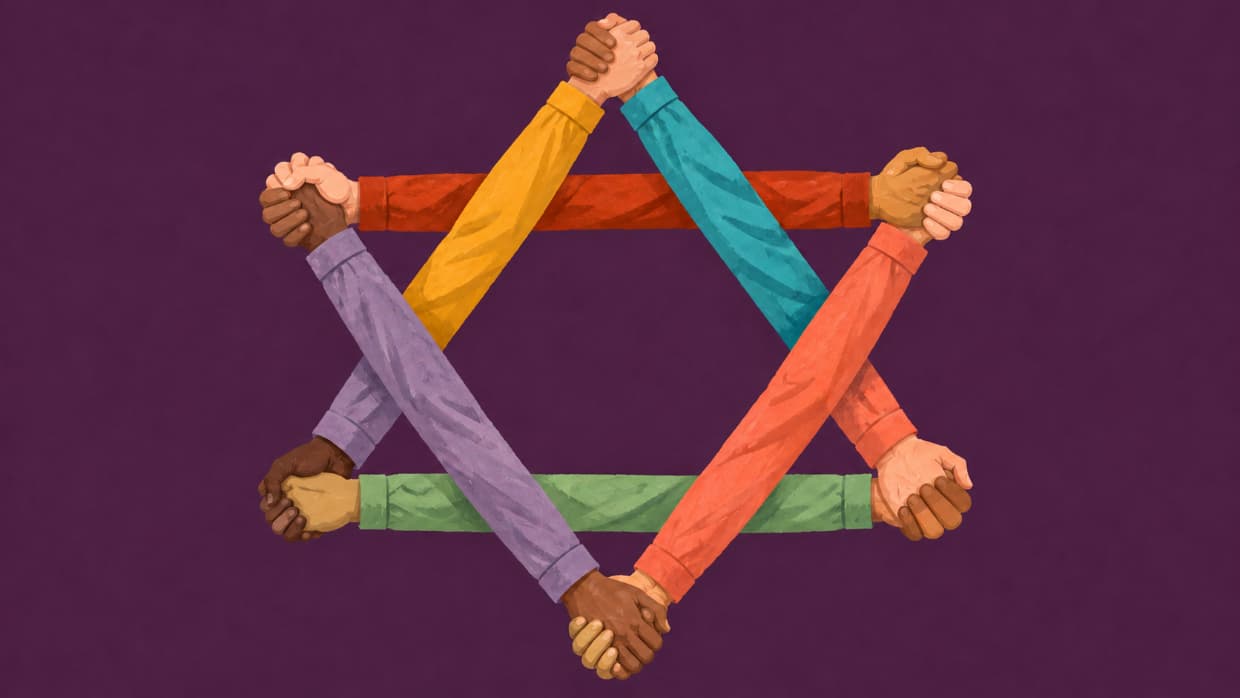
Unity leaves plenty of room for disagreement. Amid rising antisemitism and bitter politics, here’s what it asks of every Jew.
Something unexpected caught my attention amid the political turmoil surrounding the formation of Israel's next government.
Not another political accusation or angry speech. But a tent.
Outside the Knesset in Jerusalem, newly elected Likud MK Elisha Medan, an IDF veteran who lost both legs fighting in Gaza, pitched a tent and called for a national unity government.
A man who has already sacrificed so much for his country is now asking its leaders to put aside their political hostilities and remember their responsibility to the people they serve.
And I cannot help but think of another tent.
Jewish tradition describes Abraham's tent as open on all sides, welcoming visitors from every direction. It was a place of hospitality, kindness, and human connection.
Sometimes, before we can bridge our differences, we must first be willing to open our doors.
Another newly elected Likud member, Talik Gvili, is the mother of Ran Gvili, a police officer who gave his life defending Israelis on October 7.
Medan lost both legs defending his country. Gvili lost her son defending his.
One carries the physical consequences of war every day. The other carries the unimaginable grief of losing a child.
And now both have a voice in the Knesset.
Across the political divide, newly elected MK Shira Shapira carries her own devastating loss. Her son, Aner Shapira, died protecting others from grenades during the October 7 massacre.
Unity doesn't demand that we abandon our convictions. It demands that we never abandon one another because of them.
Medan and Shapira belong to opposing political parties, yet both have spoken about the need for a different political culture. Shapira has called for disagreement without shouting or humiliation.
Their political convictions may differ but their sacrifices belong to the same national story.
Unity, achdut in Hebrew, is far greater than politics.
"All Jews are responsible for one another" is a fundamental principle of Judaism.
These are not merely beautiful words. They represent an obligation that should guide how we treat one another, especially when we disagree.
Judaism has never required us to think alike. Our tradition thrives on vigorous debate, opposing interpretations, and profound disagreements.
The ability to question, challenge, and express different perspectives deepens our Torah learning. We do not have to agree to listen. Nor should expressing a different opinion mean being ridiculed or torn down.
Our sages distinguish between disagreement for the sake of Heaven and conflict driven by other motives.
Unity does not demand that we abandon our convictions. It demands that we never abandon one another because of them.
Somewhere along the way, we seem to have lost sight of that distinction.
October 7, the war that followed, and the unimaginable sacrifices of our soldiers and their families should have reminded us that our collective future is greater than political egos.
We rightly honor our fallen heroes. But what of those who survived?
The soldiers who returned without limbs. Those whose bodies healed while their minds continue to relive the horrors they witnessed. Families learning to live with loved ones forever changed by war.
Their sacrifices did not end when the fighting stopped. And neither should our responsibility toward them.
Honoring our fallen and supporting our survivors must extend beyond ceremonies and memorials. Their sacrifices must mean something in how we conduct ourselves as a people.
October 7 also confronted us with a painful reminder of hatred that many believed belonged to another era.
I have always been an avid reader of Holocaust stories. Even when I travelled to Poland and stood inside a gas chamber, seeing the ovens and the physical evidence of what had taken place, I struggled to comprehend the evil human beings were capable of inflicting upon one another.
How could one human being, with a heart, treat another with such unimaginable cruelty? It simply did not register.
October 7 did not make the Holocaust easier to comprehend. But it shattered the comforting belief that such hatred and brutality belonged safely to the past.
And now, in my own lifetime, I am witnessing levels of antisemitism I never imagined I would see.
In a world where hatred toward Jews has become so visible, surely we should be especially conscious of how we treat one another.
We can disagree passionately. We can demand accountability. But must we humiliate one another? Must every disagreement become a personal battle?
That is not who we need to be. We are capable of so much better.
I believe that beneath the anger and political rhetoric, many of these individuals would not hesitate to help one another in a genuine crisis.
We witnessed that spirit after October 7. Jews from vastly different backgrounds stood shoulder to shoulder, volunteering, donating, fighting, rescuing, and comforting one another.
Why must it take a tragedy for us to remember who we are?
Our sages teach that baseless hatred contributed to the destruction of the Second Temple. How tragic it would be if, after everything our people have endured, we allowed internal hatred to weaken the very bonds that have sustained us through generations.
And how beautiful it would be if we remembered that love for our fellow Jews is not merely a slogan. It is a responsibility.
A wounded soldier has opened a space for conversation. A bereaved mother from another political party has called for disagreement without humiliation. They remind us that our greatest strength is found in remembering that we belong to one another.
We have witnessed what hatred can destroy. It is time to demonstrate what Ahavat Yisrael, love for your fellow Jews, can build.